
ToolMage
Sign in

Best 1 Analytics AI tools for Tools

Popular Analytics AI tools in Tools include flightseatmaps, helping you work more efficiently.

flightseatmaps
Freemium

flightseatmaps

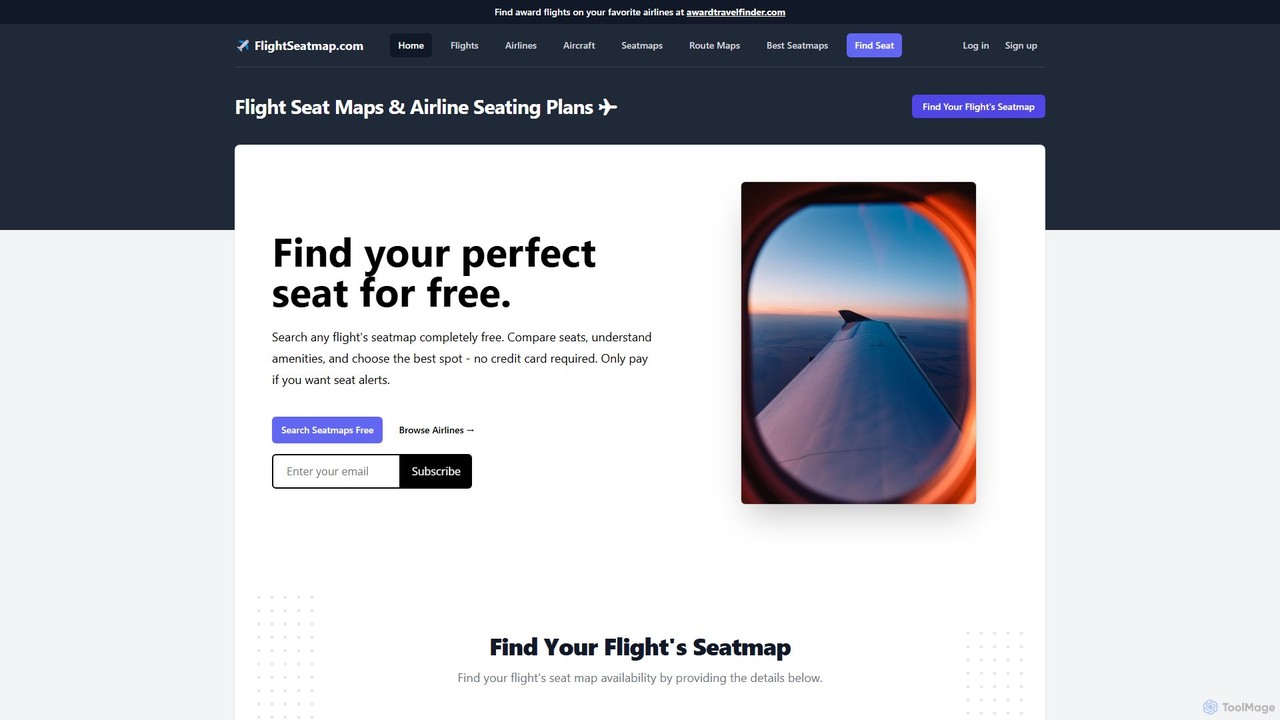
flightseatmaps is a comprehensive tool for air travelers to find, compare, and select the best airplane seats. Search any flight's seat map for free to view detailed layouts, amenities, and passenger reviews. Upgrade for real-time seat availability tracking and instant alerts to secure your preferred spot, ensuring a more comfortable journey.

Information Services
Visits 289.7KFavorites 146Likes 155

About Analytics

AI Analytics tools are a class of software that leverages artificial intelligence to analyze complex datasets. They go beyond traditional business intelligence by automatically uncovering hidden patterns, predicting future trends, and generating actionable insights from both structured and unstructured data. This enables organizations to make faster, more data-driven decisions without requiring deep statistical expertise. Their key advantage lies in automating the discovery process, turning raw data into strategic narratives.

Core Features

  • Predictive Modeling: Forecasts future outcomes, such as sales or customer churn, based on historical data.
  • Automated Anomaly Detection: Automatically identifies unusual patterns or outliers in data streams in real-time.
  • Natural Language Querying (NLQ): Allows users to ask questions about their data in plain language instead of writing complex code.
  • Automated Insight Generation: Proactively surfaces key findings and narratives from data without manual exploration.
  • Sentiment Analysis: Analyzes text data from sources like reviews and social media to gauge public opinion.

Use Cases

These tools are primarily used by business analysts, marketing managers, and data scientists in sectors like e-commerce, finance, and healthcare. Common applications include customer churn prediction, marketing campaign optimization, supply chain forecasting, and fraud detection.

How to Choose

When selecting an AI Analytics tool, consider the types of data sources it can connect to. Evaluate the complexity of its models and whether it offers a no-code interface for non-technical users. Also, assess its integration capabilities with your existing BI stack and its pricing model, which may be based on data volume or user seats.

Analytics use cases

1

Predicting Customer Churn for SaaS Companies

A marketing manager at a subscription-based software company aims to proactively reduce customer churn. Using an AI Analytics tool, they analyze user behavior data, including login frequency, feature usage, and support ticket history. The tool builds a machine learning model that assigns a 'churn risk score' to each customer. This allows the customer success team to focus their retention efforts on high-risk accounts, leading to a targeted intervention strategy that can reduce overall churn by 15-20%.

2

Optimizing E-commerce Marketing Spend

An e-commerce marketing analyst needs to allocate a large budget across multiple channels like Google Ads and Facebook. The AI analytics tool processes campaign performance data, conversion rates, and customer lifetime value. It then predicts which channels will yield the highest return on investment (ROI) for different customer segments. Based on these predictions, the team reallocates the budget to the most effective channels, increasing the overall return on ad spend (ROAS) by up to 25%.

3

Automating Financial Fraud Detection

A risk manager at a financial institution needs to identify fraudulent transactions in real-time. The AI analytics tool uses anomaly detection algorithms to monitor millions of daily transactions. It flags any activity that deviates from a customer's normal spending patterns or matches known fraud signatures. This system sends real-time alerts to the fraud team, enabling them to block suspicious transactions instantly and significantly reduce financial losses from fraudulent activities.

4

Gauging Public Sentiment from Social Media

After a new product launch, a brand manager wants to understand public reaction. An AI analytics tool connects to social media APIs and news feeds to gather mentions of the product. It uses sentiment analysis to automatically classify thousands of comments as positive, negative, or neutral. The tool also identifies key themes in the conversation, providing a clear, real-time dashboard of public opinion. This allows the brand team to quickly address negative feedback and amplify positive messages.

5

Forecasting Inventory for Retail Supply Chains

A supply chain manager for a retail chain needs to ensure optimal stock levels across hundreds of stores. The AI analytics tool analyzes historical sales data, seasonality, promotional events, and external factors like weather forecasts. It generates highly accurate demand forecasts for each product at each location. This data-driven approach helps minimize stockouts and reduce overstocking, leading to lower inventory holding costs, improved sales, and higher customer satisfaction.

6

Uncovering Insights with Natural Language Queries

A non-technical business executive needs to quickly understand last quarter's sales performance without waiting for an analyst's report. Using an AI analytics tool with Natural Language Querying (NLQ), they can simply type a question like, 'Show me the top 5 products by sales growth in Europe last quarter.' The AI interprets the query, retrieves the relevant data, and instantly generates an appropriate chart or summary. This empowers decision-makers to get immediate answers, fostering a more agile and data-informed culture.

Analytics FAQ

What are AI Analytics tools?

AI Analytics tools are applications that use artificial intelligence, especially machine learning, to analyze data. Unlike traditional BI tools that primarily visualize past data, AI analytics tools automatically discover patterns, predict future outcomes, and generate insights. They can process both structured data (like sales numbers) and unstructured data (like customer reviews) to provide a deeper understanding of business operations.

How do AI Analytics tools differ from traditional Business Intelligence (BI) tools?

The main difference is in automation and prediction. Traditional BI tools (like Tableau or Power BI) excel at descriptive analytics—visualizing what has happened. AI Analytics tools focus on predictive and prescriptive analytics—forecasting what will happen and suggesting actions. AI tools automate the process of finding insights, whereas BI tools often require a human analyst to manually explore data and draw conclusions.

Who should use AI Analytics tools?

These tools are valuable for a wide range of users. Business analysts and data scientists use them for deep modeling and forecasting. Marketing and sales teams use them to predict customer behavior and optimize campaigns. Executives and managers use them for quick, data-driven decision-making via natural language queries. Essentially, anyone who needs to move from simply viewing data to understanding its implications and future trends can benefit.

What are the key features to look for in an AI Analytics tool?

When choosing a tool, look for these key features:

  • Connectivity: The ability to connect to a wide variety of data sources (databases, SaaS apps, etc.).
  • Predictive Capabilities: Robust machine learning models for forecasting and classification.
  • Usability: An intuitive interface, especially features like natural language querying for non-technical users.
  • Automation: Features that automatically surface insights and detect anomalies without manual intervention.
  • Integration: The ability to integrate with your existing data warehouse and BI platforms.
Do I need to be a data scientist to use AI Analytics tools?

Not necessarily. While data scientists can leverage advanced features, many modern AI Analytics platforms are designed with a 'no-code' or 'low-code' approach. They provide user-friendly interfaces that allow business users without a background in statistics or programming to build predictive models, run analyses, and understand results through automated visualizations and explanations. This democratization of data science is a core benefit of these tools.