ToolMage
Sign in

Best 7 Interview AI tools for Video

Popular Interview AI tools in Video include Haire, ZappyVue, LueinHire, hiroscope, Ai Recruiter, Screenle, and intrvu, helping you work more efficiently.

Ai Recruiter
Freemium

Ai Recruiter

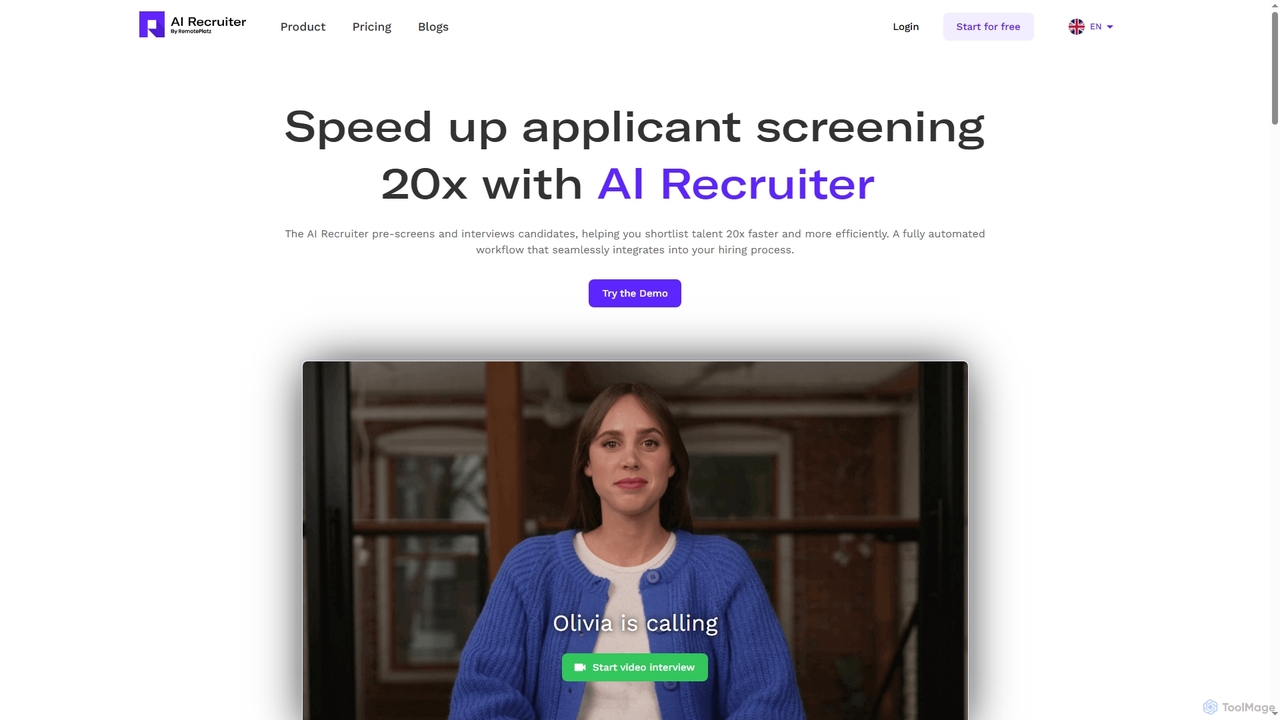
Ai Recruiter is an intelligent hiring platform that leverages AI to automate and accelerate the recruitment process. It conducts real-time video interviews, screens resumes, and provides data-driven talent analytics to help you shortlist the best candidates up to 20x faster.

Recruiting
Visits 3.5KFavorites 130Likes 126
Haire
Freemium

Haire

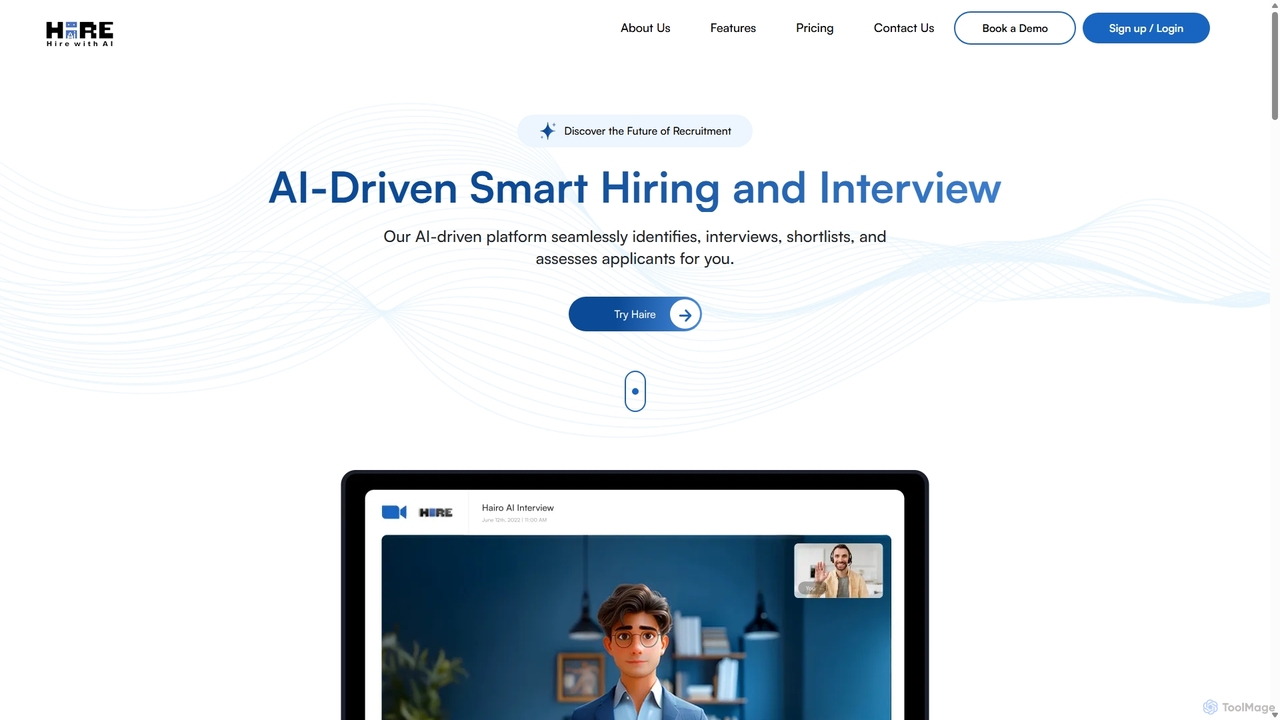
Haire is an AI-driven video interview and recruitment platform designed to streamline the entire hiring process. It automates candidate identification, interviewing, shortlisting, and assessment, using AI avatars and adaptive questioning to save time, reduce costs, and eliminate bias for recruiters and hiring managers.

Recruiting
Visits 9.8KFavorites 147Likes 115
hiroscope
Freemium

hiroscope

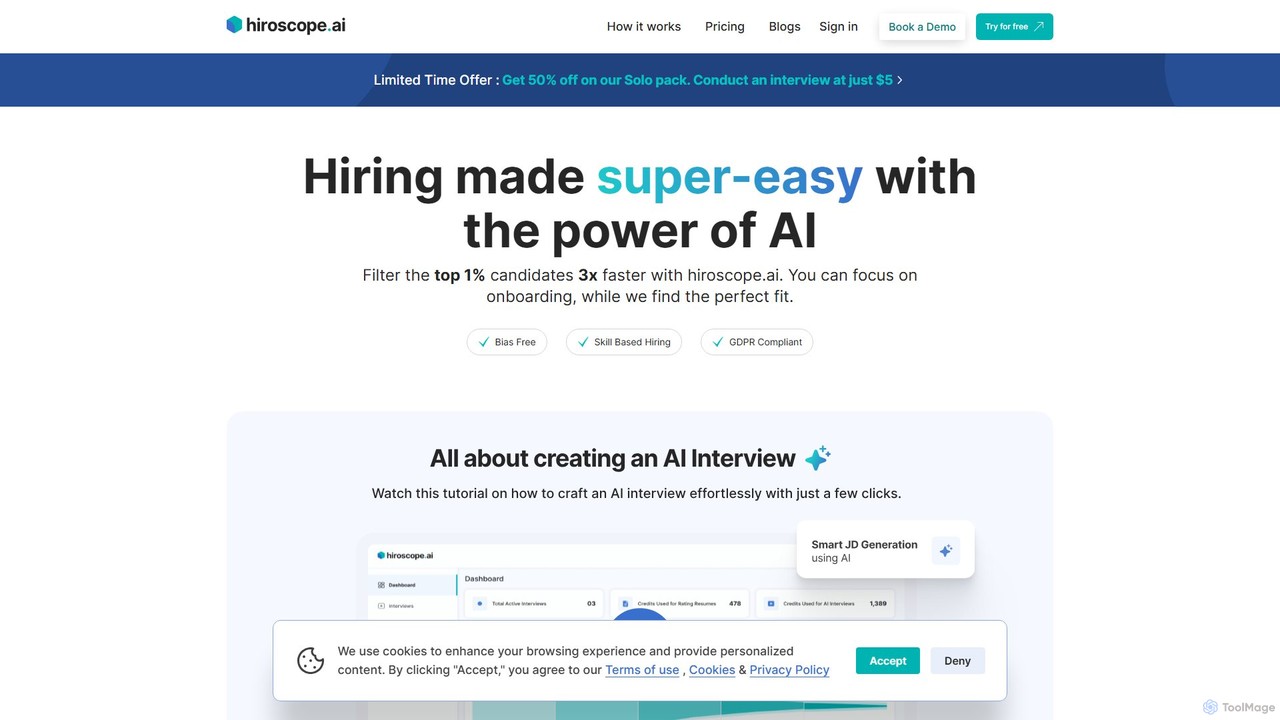
hiroscope is an AI-powered hiring platform designed to streamline the recruitment process. It uses AI video interviews, smart resume screening, and in-depth candidate reports to help companies identify and hire the top 1% of candidates 3x faster, while reducing costs and eliminating bias.

Recruiting
Visits 4.4KFavorites 136Likes 124
Screenle
Freemium

Screenle

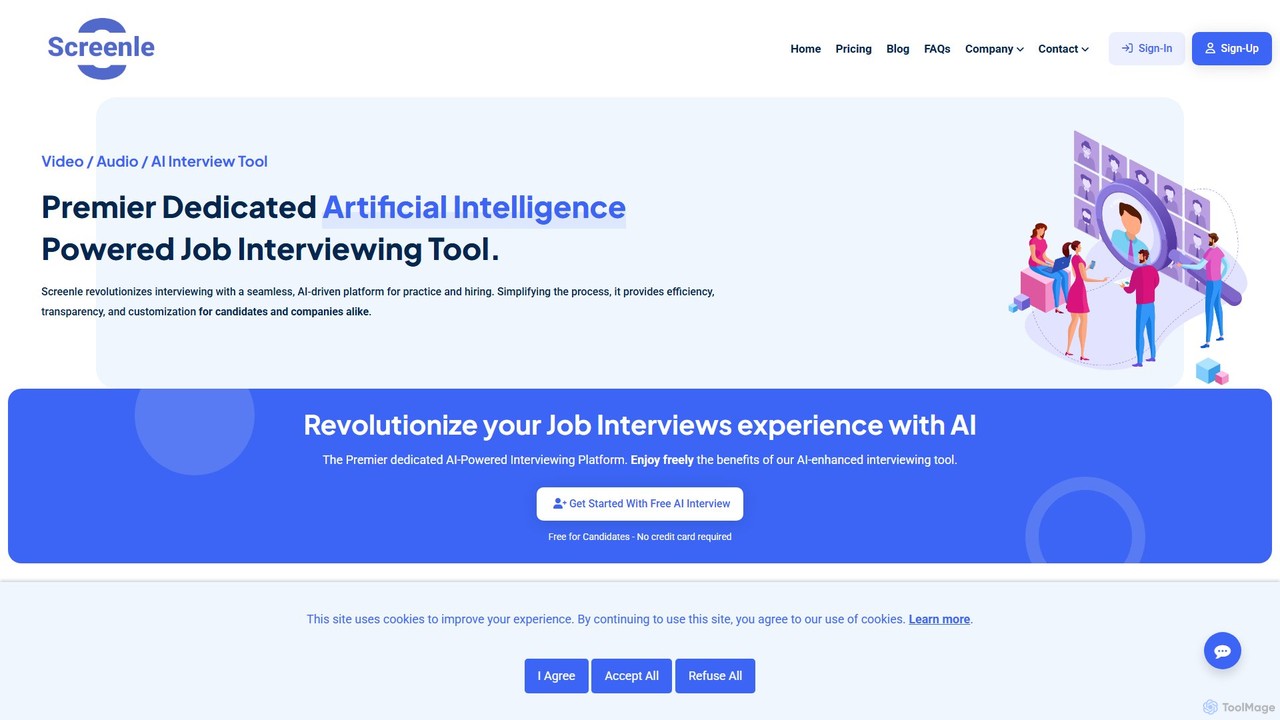
Screenle is an AI-powered job interviewing platform designed to revolutionize the hiring process for both candidates and companies. Job seekers can practice interviews with AI avatars, receive instant, detailed feedback on their performance, and access career coaching tools. For recruiters, Screenle streamlines screening with customizable AI-driven interviews, sentiment analysis, and data-backed evaluations, making hiring more efficient, fair, and insightful.

Recruiting
Visits 3.4KFavorites 99Likes 100
LueinHire
Freemium

LueinHire

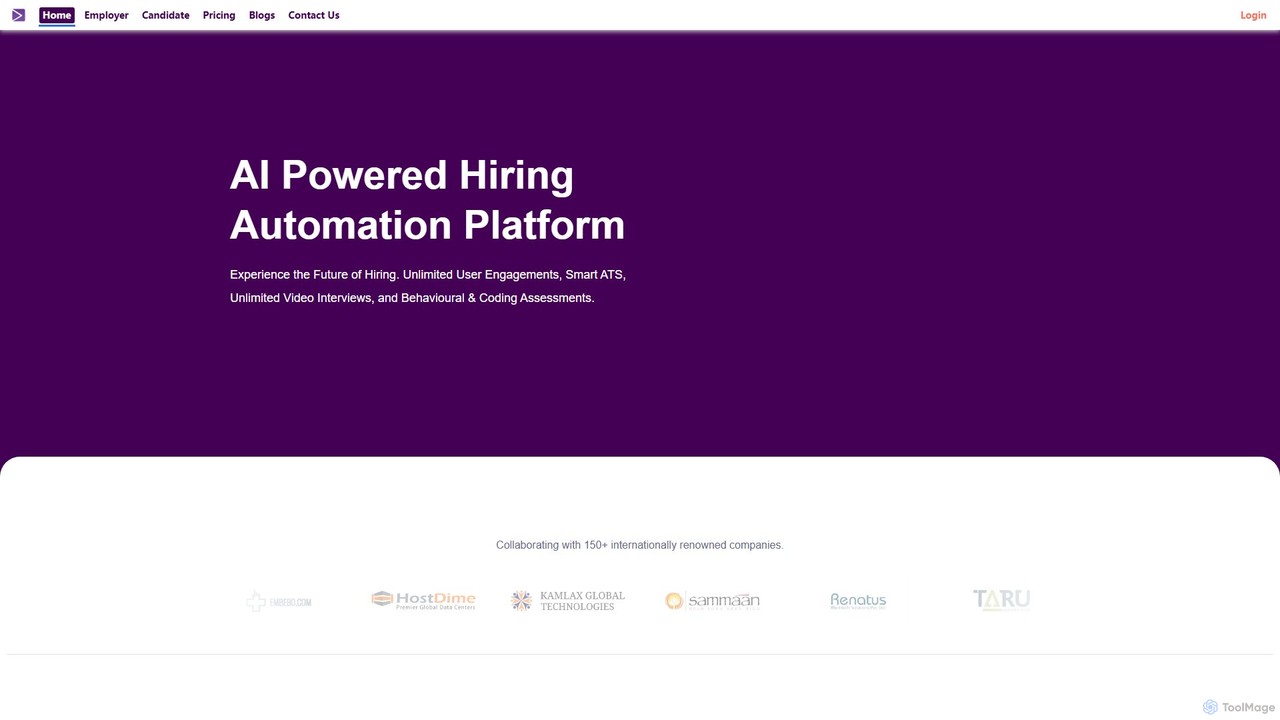
LueinHire is an AI-powered hiring automation platform designed to streamline the entire recruitment lifecycle. It offers automated candidate screening, one-way and live video interviews, coding assessments, and a smart Applicant Tracking System (ATS) to help companies hire faster and more effectively.

Recruiting
Visits 4.5KFavorites 93Likes 105
intrvu
Freemium

intrvu

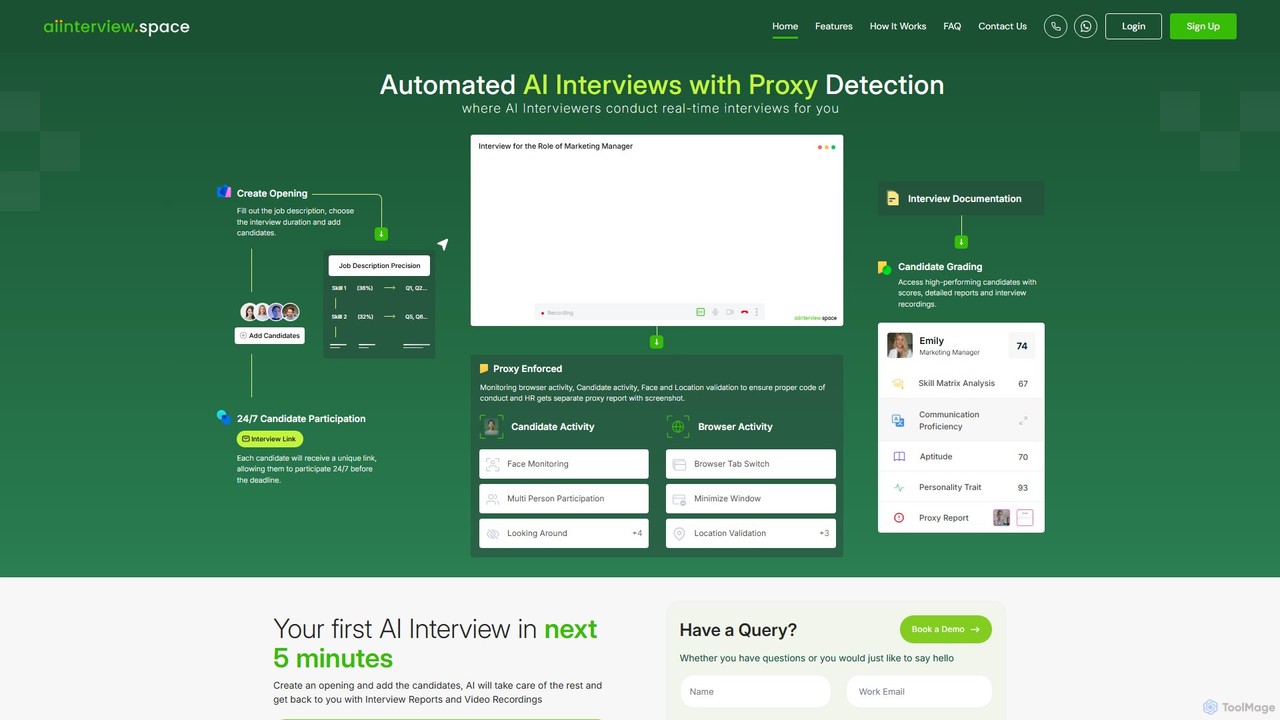
intrvu (AI Interview Space) is an AI-powered platform that automates the entire interview process. It uses a conversational AI interviewer to conduct real-time interviews 24/7, tailored to specific job descriptions. The platform features advanced proxy detection to ensure integrity, and provides comprehensive reports on candidate skills, communication, aptitude, and personality. It streamlines hiring by grading and ranking candidates, saving recruiters significant time and effort while improving the quality of hires. Ideal for companies hiring at scale across various industries.

Recruiting
Visits 3.3KFavorites 93Likes 90
ZappyVue
Paid

ZappyVue

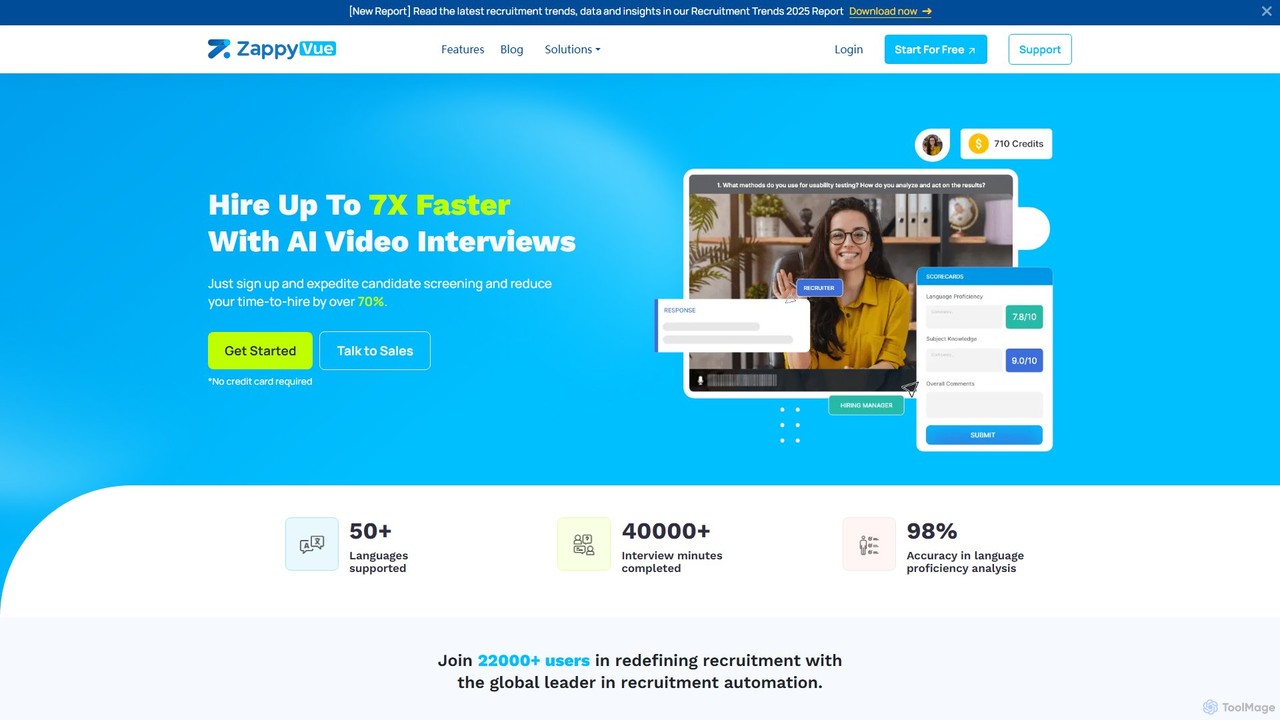
ZappyVue is an AI-powered automated video interview platform designed for recruiters to streamline candidate screening. It helps reduce time-to-hire by over 70% through AI-driven scoring, language proficiency analysis, and remote proctoring. The platform supports over 50 languages, ensuring a fair, efficient, and inclusive hiring process for global talent acquisition.

Recruiting
Visits 4.7KFavorites 125Likes 126

About Interview

AI Interview tools are a specialized type of video analysis software designed to automate and enhance the recruitment process. They utilize technologies like natural language processing (NLP) and computer vision to analyze a candidate's verbal responses, tone of voice, and non-verbal cues. This provides hiring teams with data-driven insights, helping to standardize evaluations and reduce unconscious bias. These tools streamline everything from initial screening to in-depth behavioral assessments.

Core Features

  • Automated Screening: Automatically conducts and evaluates initial one-way video interviews to shortlist qualified candidates.
  • Performance Analysis: Provides detailed reports on communication skills, keyword usage, sentiment, and alignment with job competencies.
  • Structured Questioning: Generates or uses pre-set, role-specific questions to ensure a consistent and fair interview experience for all candidates.
  • Interview Simulation: Offers a platform for candidates to practice and receive AI-powered feedback before a live interview.
  • Bias Reduction: Focuses analysis on objective criteria, helping to minimize the impact of human biases related to factors like age, gender, or background.

Use Cases

These tools are widely used in corporate HR departments for high-volume recruiting, especially for entry-level or customer-facing roles. Tech companies use them for initial technical screenings, while global organizations leverage them to standardize remote hiring processes across different regions. They are also valuable in training and development for practicing public speaking and communication skills.

How to Choose

When selecting an AI Interview tool, consider its integration capabilities with your existing Applicant Tracking System (ATS). Evaluate the accuracy and transparency of its analytical models and the level of customization available for questions and evaluation criteria. Also, prioritize platforms with robust data privacy and security compliance (like GDPR or CCPA) to protect candidate information.

Featured tool rankings

Interview use cases

1

Screening High-Volume Applicants for Retail Positions

A national retail chain's HR department needs to screen thousands of applicants for seasonal customer service roles. They use an AI Interview tool to send a one-way video interview link to all applicants. The AI asks standardized questions about customer handling and problem-solving. It then analyzes responses for key competencies like positive language, clarity, and enthusiasm, providing a ranked shortlist of the top 15% of candidates for human recruiters to review. This reduces screening time by over 70% and ensures consistency across all applications.

2

Candidate Practice for Technical Interviews

A software engineering student preparing for job interviews uses an AI Interview tool's simulation feature. They select a 'Data Structures & Algorithms' interview module. The AI presents common technical questions and a virtual coding environment. As the student explains their thought process and writes code, the AI provides real-time feedback on their communication clarity, problem-solving structure, and coding efficiency. After the session, it generates a report highlighting areas for improvement, such as explaining trade-offs more clearly, helping them build confidence and perform better in actual interviews.

3

Standardizing Managerial Interview Processes

A large corporation found that different hiring managers were asking inconsistent questions for the same role, leading to biased outcomes. They implemented an AI Interview tool to create a standardized question bank for all mid-level management positions. Now, when a manager conducts an interview (either live or recorded), the tool provides a structured list of behavioral and situational questions. It records the interview and provides a transcript and analysis, allowing HR and senior leaders to review interviews against a common rubric, ensuring fairness and improving the quality of hires.

4

Assessing Communication Skills for Sales Roles

A B2B software company needs to hire sales representatives with excellent communication and persuasion skills. They use an AI interview platform where candidates record a 2-minute pitch for a fictional product. The AI analyzes the video for specific metrics such as speech rate, use of persuasive language, filler word count, and overall sentiment. The resulting report gives hiring managers an objective score on each candidate's communication style, allowing them to focus live interviews on candidates who demonstrate the strongest potential for sales success.

5

Conducting Remote Language Proficiency Tests

An international call center needs to verify the English fluency of applicants from non-English speaking countries. Instead of costly live assessments, they use an AI Interview tool. Candidates answer a series of questions designed to test vocabulary, grammar, and pronunciation. The AI transcribes their speech, scores it against a standardized language framework (like CEFR), and flags pronunciation errors. This provides a consistent and scalable method for initial language screening, ensuring only candidates with the required proficiency move to the next stage.

6

Internal Mobility and Leadership Development

An HR department uses an AI Interview tool for internal promotion processes. Employees applying for a team lead position complete a video interview focused on leadership competencies like conflict resolution and strategic thinking. The AI provides an objective analysis of their responses, which is used alongside their performance history. This helps the promotion committee make more informed, data-backed decisions and provides constructive feedback to employees who were not selected, outlining specific areas for their professional development.

Interview FAQ

What are AI Interview tools?

AI Interview tools are software platforms that use artificial intelligence to automate and analyze job interviews. They leverage technologies like natural language processing (NLP) to understand what candidates say and computer vision to analyze non-verbal cues. Their primary purpose is to help recruiters screen candidates more efficiently, reduce bias, and make data-driven hiring decisions by providing objective analysis of a candidate's skills and competencies.

How to choose the right AI Interview tool?

When selecting an AI Interview tool, consider these factors:

  • Integration: Does it integrate smoothly with your existing Applicant Tracking System (ATS) and other HR software?
  • Customization: Can you customize the questions, competencies, and scoring rubrics to match your specific job roles and company culture?
  • Candidate Experience: Is the platform user-friendly, accessible, and does it provide a positive experience for applicants?
  • Analytics and Reporting: Are the insights provided transparent, easy to understand, and actionable for your hiring team?
  • Compliance and Ethics: Does the tool adhere to data privacy regulations (like GDPR) and is it designed to mitigate, not introduce, bias?
What is the difference between AI Interview and video conferencing tools?

The key difference is analysis. Video conferencing tools like Zoom or Google Meet are platforms for live, real-time communication; they simply transmit video and audio. AI Interview tools are built on top of video technology but add a layer of intelligent analysis. They can conduct asynchronous (one-way) interviews, transcribe speech, analyze language for sentiment and key competencies, and provide objective scores to help compare candidates systematically. They are specifically designed for recruitment, not general communication.

Can AI Interview tools completely replace human recruiters?

No, AI Interview tools are designed to augment, not replace, human recruiters. They excel at handling repetitive, high-volume tasks like initial screening and data collection, freeing up recruiters' time. This allows humans to focus on more strategic aspects of hiring, such as building relationships with top candidates, complex negotiations, and making the final, nuanced hiring decision. The best approach combines the efficiency and objectivity of AI with the empathy and critical judgment of a human recruiter.

Who benefits most from using AI Interview tools?

Several groups benefit significantly. HR departments in large companies benefit from massive time savings in high-volume recruiting. Hiring managers benefit from standardized data that makes comparing candidates fairer and easier. Candidates can benefit from a more flexible process (completing interviews on their own time) and a more objective, less biased evaluation. Finally, organizations as a whole benefit from a faster hiring cycle, improved quality of hire, and a stronger commitment to fair hiring practices.