Xobin
Xobin is an AI-powered talent assessment platform designed to streamline the hiring process. It features an AI Copilot …
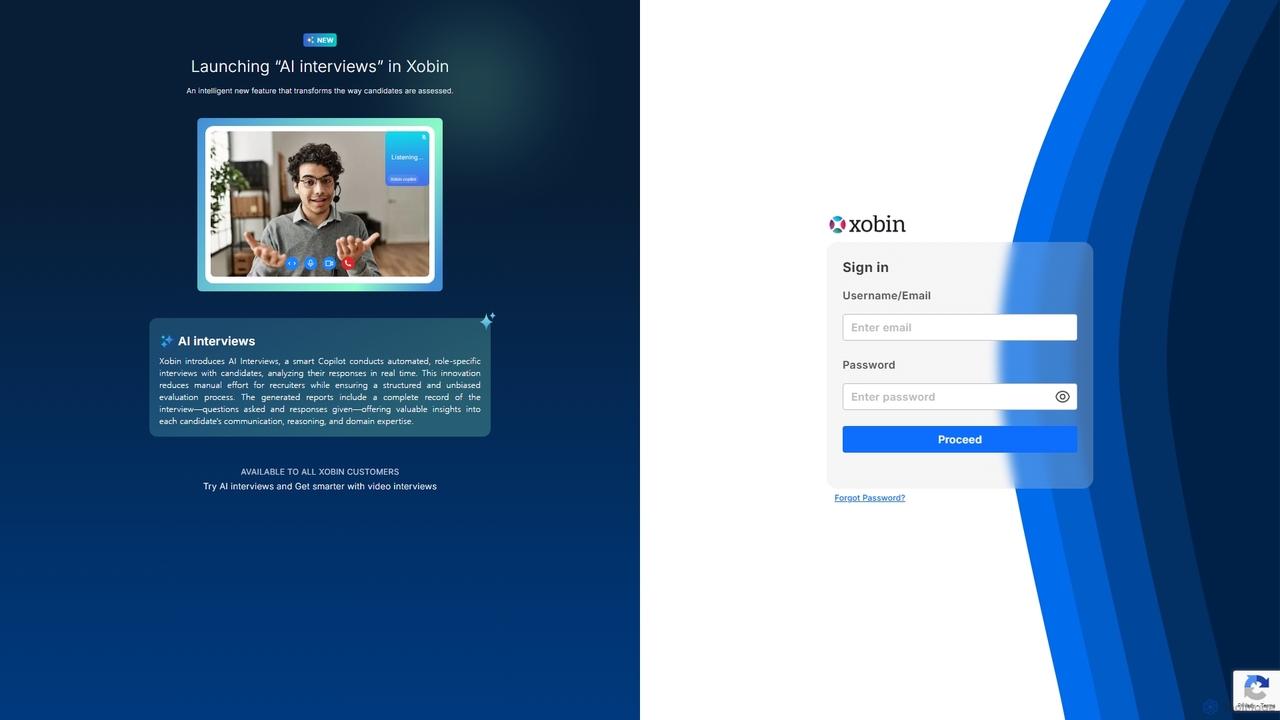
Xobin is an AI-powered talent assessment platform designed to streamline the hiring process. It features an AI Copilot that conducts automated, role-specific video interviews, analyzing candidate responses in real-time for communication, reasoning, and domain expertise. This helps recruiters reduce manual effort, eliminate bias, and make data-driven hiring decisions with structured, in-depth evaluation reports.
About Interviewing
AI Interviewing tools are specialized AI-powered platforms designed to streamline and enhance the recruitment and assessment process by automating various stages of candidate interaction. These tools leverage advanced natural language processing, computer vision, and machine learning to analyze verbal and non-verbal cues, providing objective insights into candidate responses and behaviors. Integrated within the broader category of video tools, they offer a structured and scalable approach to conducting pre-recorded or live virtual interviews, significantly reducing manual effort and accelerating hiring cycles for organizations of all sizes.
Core Features
- Automated Screening: Conducts initial candidate assessments through pre-set questions and AI analysis of responses.
- Behavioral Analysis: Evaluates communication patterns, sentiment, and non-verbal cues to provide deeper candidate insights.
- Transcription & Analysis: Automatically transcribes interviews and identifies key themes, keywords, and sentiment for review.
- Customizable Questionnaires: Allows creation of tailored interview flows and question sets for specific roles.
- Feedback Generation: Provides objective, data-driven feedback and scoring to aid in candidate comparison and decision-making.
Applicable Scenarios
These tools are invaluable for HR departments, recruiters, and hiring managers seeking to efficiently process large applicant pools, ensure consistency in early-stage interviews, and gain data-driven insights beyond traditional methods. They are particularly useful for remote hiring, high-volume recruitment, and standardizing initial candidate evaluations across diverse teams.
How to Choose
When selecting an AI Interviewing tool, consider its integration capabilities with existing ATS (Applicant Tracking Systems), the depth and accuracy of its AI analysis (e.g., sentiment, behavioral cues), the flexibility of its questionnaire customization, and its compliance with data privacy regulations. Evaluate the reporting features for actionable insights and ensure the user interface is intuitive for both candidates and hiring teams.

InterviewingUse Cases
Streamlining Initial Candidate Screening
For large enterprises and recruitment agencies, AI Interviewing tools automate the first round of candidate screening. Recruiters set up pre-recorded video questions, and candidates submit their responses at their convenience. The AI then analyzes responses for keywords, tone, and communication style, providing a ranked shortlist of candidates, drastically reducing the time spent on manual resume reviews and initial phone calls, and ensuring a consistent evaluation process for thousands of applicants.
Enhancing Behavioral Assessment in Hiring
Hiring managers use these tools to gain deeper insights into a candidate's soft skills and behavioral traits. Beyond just answers, the AI can analyze facial expressions, body language, and speech patterns to identify traits like confidence, empathy, and problem-solving abilities. This objective data complements traditional interviews, helping to predict job performance and cultural fit, especially for roles requiring strong interpersonal skills, and reduces unconscious bias in the assessment process.
Standardizing Technical Interview Evaluations
For tech companies, AI Interviewing platforms facilitate standardized technical assessments. Candidates can be presented with coding challenges or scenario-based questions, with their explanations recorded and analyzed. The AI can evaluate the clarity of their thought process, problem-solving approach, and technical communication skills, providing consistent scoring across all candidates, which is crucial for roles where technical proficiency and clear articulation are paramount.
Facilitating Sales Role-Play Practice and Feedback
Sales teams utilize AI Interviewing tools for training and development. Sales representatives can practice pitches, objection handling, and customer interactions in a simulated environment. The AI provides instant, objective feedback on their delivery, persuasiveness, and adherence to sales scripts, highlighting areas for improvement. This allows for scalable, personalized coaching without constant manager oversight, leading to faster skill development and improved sales performance.
Conducting Remote Customer Feedback Surveys
Product managers and customer experience teams deploy AI Interviewing tools to gather qualitative feedback from a diverse customer base remotely. Customers answer specific questions about product features, usability, or service satisfaction via video. The AI transcribes responses, identifies common themes, and performs sentiment analysis, providing actionable insights into customer needs and pain points, which informs product development and service improvements more efficiently than traditional surveys.
Accelerating Academic Research and Journalism Interviews
Researchers and journalists use these tools to efficiently conduct and analyze numerous interviews. Participants can record their responses to research questions or journalistic inquiries. The AI automatically transcribes the audio, identifies key topics, and can even flag emotional responses, significantly speeding up the data analysis phase. This allows for quicker identification of patterns, quotes, and insights from a large volume of qualitative data, enhancing the research and reporting process.