
ToolMage
Sign in

Best 1 Real Time AI tools for Video

Popular Real Time AI tools in Video include AiLuvio, helping you work more efficiently.

AiLuvio
Freemium

AiLuvio

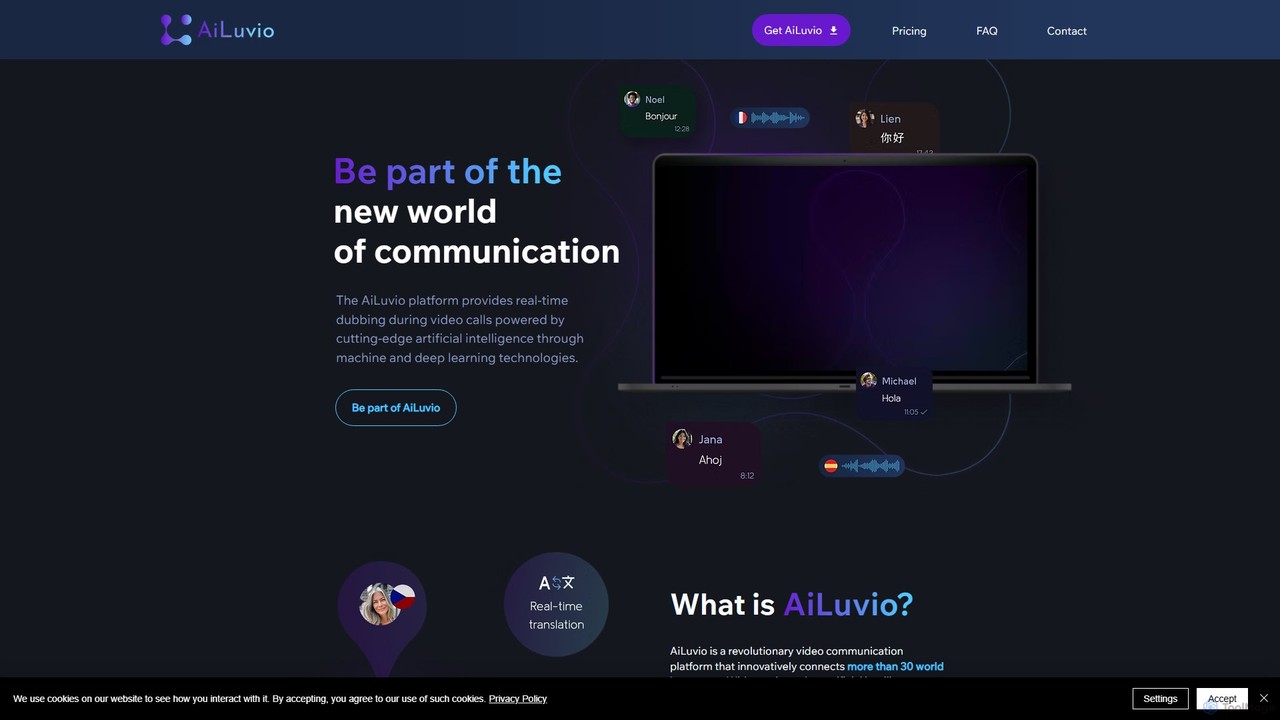
AiLuvio is a revolutionary AI-powered communication platform that provides real-time dubbing and translation during video calls. Supporting over 30 languages, it breaks down language barriers, enabling users to communicate fluently in their native tongue. It offers features like group calls, chat translation, and call transcription, all secured with end-to-end encryption.

Translation
Visits 5KFavorites 137Likes 128

About Real Time

Real Time AI video tools are a category of AI-powered solutions designed for the instant processing, analysis, or generation of video streams. They leverage advanced computer vision and machine learning algorithms to respond to dynamic video data with extremely low latency. These tools show immense potential in areas like live streaming, surveillance, interactive entertainment, and automated decision-making. Their core advantage lies in providing immediate feedback and decision support, significantly enhancing the responsiveness and intelligence of video applications.

Core Features

  • Real-time Object Detection & Tracking: Instantly identifies and tracks specific objects or individuals within a video feed.
  • Low-Latency Video Stream Analysis: Performs immediate content understanding and event detection on live or real-time transmitted video data.
  • Instant Video Enhancement & Restoration: Optimizes video quality, stabilizes footage, or reduces noise during live video transmission.
  • Immediate Content Moderation: Automatically identifies and flags inappropriate content in video streams for rapid intervention.
  • Real-time Interactive AI Generation: Instantly generates or adjusts video content (e.g., virtual avatars, effects) based on user input or environmental changes.

Applicable Scenarios

These tools are crucial for industries and roles requiring immediate video insights and actions. They are widely adopted in live broadcast platforms for content compliance, in security for proactive threat detection, and in interactive media for dynamic user experiences.

How to Choose

When selecting a Real Time AI video tool, prioritize its latency performance to ensure it meets your application's speed requirements. Evaluate its processing capacity for handling multiple streams and high resolutions, and check its integration capabilities with existing video platforms. Finally, assess the accuracy and robustness of its AI models in diverse and dynamic environments.

Real Time use cases

1

Live Stream Content Moderation

Live streaming platform operators utilize real-time AI video tools to automatically identify and filter out inappropriate content (e.g., violence, pornography, sensitive speech) from live streams. This ensures platform content compliance, avoids the lag of manual review, and enhances user experience and platform security.

2

Smart Security Video Real-time Alert

Security monitoring centers use real-time AI video analysis tools for 24/7 continuous analysis of surveillance footage. When abnormal behaviors (e.g., intrusion, loitering, unattended objects) or specific events are detected, the system instantly triggers an alarm and notifies relevant personnel, significantly improving response speed and incident handling efficiency.

3

Interactive Virtual Avatars for Live Events

Brand marketing teams use real-time AI video tools to drive virtual avatars for live interaction in online conferences or virtual events, or to instantly generate dynamic video effects based on audience feedback. This significantly enhances the immersion and attractiveness of events, providing a personalized user experience.

4

Real-time Sports Tactical Analysis

Sports coaches or analysts use real-time AI video tools to instantly track player movements, identify tactical positions, and analyze key events (e.g., shots, pass success rate) during a game. This helps coaching staff quickly adjust strategies during the match, providing data-driven decision support.

5

Automated Quality Control in Manufacturing

Manufacturing companies deploy real-time AI video inspection systems on production lines for high-speed, continuous visual inspection of products. AI tools can instantly identify tiny defects, dimensional deviations, or assembly errors on product surfaces, and immediately issue alerts when problems occur, thereby significantly improving product quality and production efficiency.

6

Live Video Background Replacement/Blur

Remote workers or online educators use real-time AI video tools for background replacement or blurring during video conferences or live teaching. This not only protects personal privacy but also creates a professional environment, avoiding cluttered backgrounds and enhancing communication efficiency and professional image.

Real Time FAQ

What are Real Time AI Video Tools?

Real Time AI video tools are software or systems that leverage artificial intelligence to instantly process, analyze, and respond to video streams as they are being transmitted or generated. Their core characteristics are low latency and high concurrent processing capabilities, enabling them to understand, identify, enhance, or generate video content within milliseconds, widely applied in video scenarios requiring immediate feedback.

How do Real Time AI Video Tools differ from traditional video processing tools?

Traditional video processing tools typically perform offline processing on pre-recorded or completed video files, focusing on post-production editing and rendering. Real Time AI video tools, however, focus on instant operations on 'dynamic' video streams, with their core being 'real-time' responsiveness. They use AI algorithms for real-time decision-making and content understanding, such as instantly identifying inappropriate content in live broadcasts or real-time alerting of anomalies in surveillance, which is difficult for traditional tools to achieve.

What are the key challenges in developing Real Time AI Video Tools?

The main challenges include: 1. Low latency requirements: Complex AI computations and data transmission must be completed in extremely short periods. 2. Computational resource consumption: Real-time processing of high-resolution video demands powerful GPU and CPU support. 3. Data transmission bandwidth: Ensuring stable transmission and processing of video streams. 4. Model optimization: AI models need efficient inference speed while maintaining accuracy. 5. Robustness: Maintaining stable performance in complex or dynamic environments such as varying lighting, occlusion, and multiple targets.

Who can benefit most from using Real Time AI Video Tools?

Real Time AI video tools offer immense value to industries and roles requiring immediate video feedback and decision support. For example, live streaming platform operators for content moderation, security monitoring personnel for anomaly alerts, sports analysts for real-time tactical adjustments, industrial quality inspectors for production line defect detection, and media content creators needing real-time interaction and effects.

What should I consider when selecting a Real Time AI Video Tool?

When selecting, focus on: 1. Latency performance: Ensure its processing delay meets your application's needs. 2. Functional accuracy: The precision of AI recognition, analysis, or generation results. 3. Concurrent processing capability: Can it handle multiple video streams or high-load scenarios simultaneously? 4. Integration convenience: Does it offer easy-to-integrate APIs or SDKs, compatible with existing systems? 5. Cost-effectiveness: Consider subscription fees, computational resource consumption, and maintenance costs.