ToolMage
Sign in

Best 2 Scriptwriting AI tools for Video

Popular Scriptwriting AI tools in Video include FilmFlow and Flashfeed, helping you work more efficiently.

FilmFlow
Freemium

FilmFlow

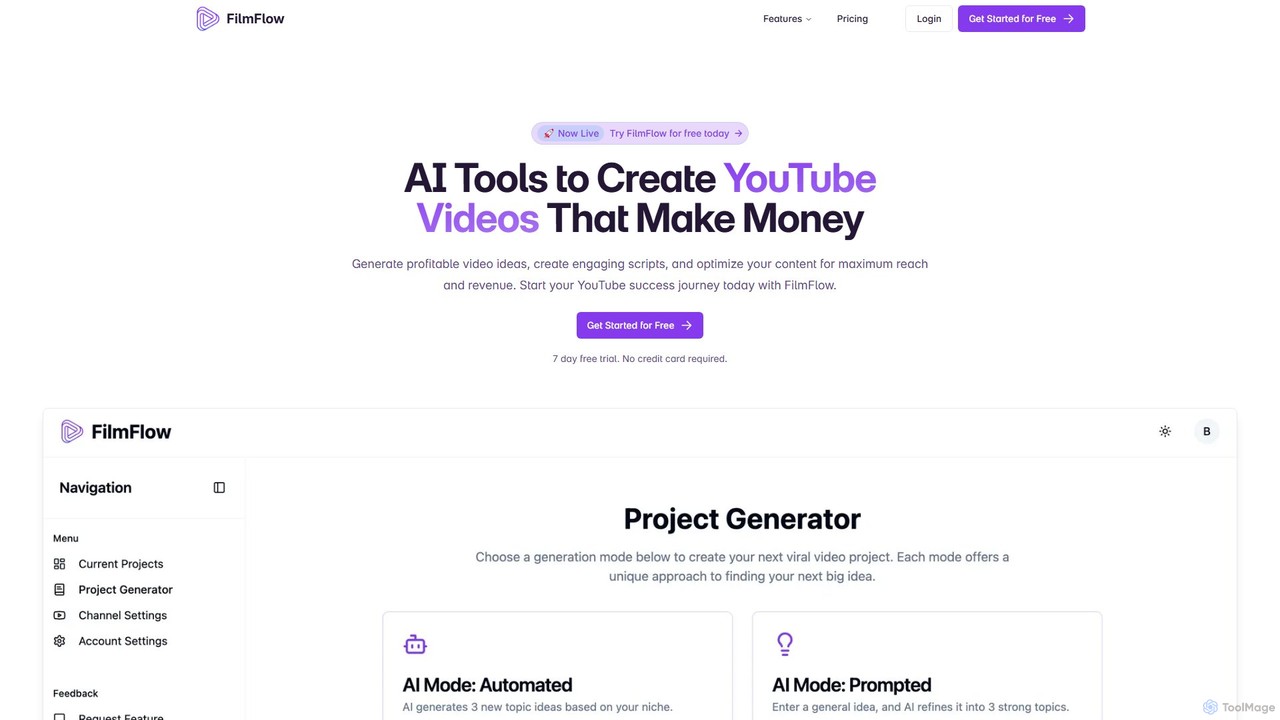
FilmFlow is an AI-powered platform designed for YouTube creators. It helps generate profitable video ideas, create engaging scripts with strategic CTAs, and provides complete SEO optimization (titles, descriptions, tags) to maximize reach, engagement, and revenue.

Content Creation
Visits 14.7KFavorites 135Likes 153
Flashfeed
Freemium

Flashfeed

Flashfeed is an AI-powered platform that generates winning video ad ideas, scripts, and storyboards in minutes. It analyzes top-performing ads to create tailored, high-engagement content for your brand. Streamline your entire video pre-production process, from concept to a production-ready plan, saving weeks of work.

Ad Copy
Visits 7.1KFavorites 141Likes 147

About Scriptwriting

AI Scriptwriting tools are specialized applications that leverage artificial intelligence to generate, refine, and structure scripts for video, film, and other media. They utilize advanced language models to understand context, character, and plot, enabling the creation of dialogue, scene descriptions, and story outlines from simple prompts. These tools significantly accelerate the pre-production phase of video creation, helping creators overcome writer's block and explore multiple narrative possibilities efficiently. They function as a creative partner, automating formatting and suggesting ideas while leaving final control to the writer.

Core Features

  • Plot & Idea Generation: Creates loglines, synopses, and plot points to kickstart the creative process.
  • Dialogue Crafting: Generates natural-sounding character conversations and helps refine existing dialogue for tone and pacing.
  • Automated Formatting: Automatically applies industry-standard script formats for screenplays, AV scripts, and more.
  • Character Development: Assists in building detailed character profiles, backstories, and motivations.
  • Structural Analysis: Provides feedback on pacing, story arcs, and scene structure to improve the narrative flow.

Use Cases

These tools are valuable for a wide range of creators, including YouTubers scripting weekly content, indie filmmakers developing their first feature, and marketing teams crafting compelling ad copy. They are also used by game developers for writing NPC dialogue and by educational content creators for producing explainer video scripts.

How to Choose

When selecting an AI Scriptwriting tool, consider its specialization in specific formats (e.g., screenplay vs. short video). Evaluate the level of creative control it offers, from full automation to collaborative suggestions. Also, check for collaboration features for team projects and its ability to export in standard formats compatible with other production software.

Scriptwriting use cases

1

Scripting Weekly YouTube Videos

A content creator needs to produce two high-quality educational videos per week. Using an AI Scriptwriting tool, they input the video topic and key points. The AI generates a structured script outline, including an introduction, main content sections, and a call-to-action. The creator then uses the dialogue generation feature to flesh out each section with engaging and natural-sounding narration. This process reduces scripting time from 4 hours per video to just 1 hour, allowing them to focus more on production and editing, thereby increasing their content output without sacrificing quality.

2

Developing a Short Film Screenplay

An independent filmmaker has a concept for a short film but struggles with developing the plot and characters. They use an AI scriptwriting tool to brainstorm ideas. By inputting a simple logline, the AI suggests several plot twists, character arcs, and scene sequences. The filmmaker selects the most compelling elements and uses the tool to generate initial drafts of key scenes and dialogues. The AI also ensures the entire script adheres to standard screenplay formatting, saving hours of manual adjustments. This collaborative process helps transform a raw idea into a structured, well-paced screenplay ready for pre-production.

3

Crafting Ad Copy for a Marketing Campaign

A marketing team is launching a new product and needs to create several short video ads for social media. Using an AI scriptwriting tool, they define the target audience, product benefits, and desired tone. The AI generates multiple script variations for 15-second and 30-second ads, each with a different hook and call-to-action. The team can quickly review and A/B test different versions to see which one resonates best with their audience. This approach streamlines the creative process, enabling the rapid production of a diverse set of ad creatives and improving overall campaign effectiveness.

4

Generating Branching Dialogue for Video Games

A game developer is creating an RPG with complex non-player characters (NPCs). Writing unique, branching dialogue for every interaction is time-consuming. They use an AI scriptwriting tool to generate dialogue trees. By providing the NPC's personality, backstory, and the context of a quest, the AI produces multiple conversational paths that reflect different player choices. The developer can then review, edit, and integrate these dialogue options directly into the game engine. This accelerates the narrative design process by 70% and enriches the game world with more dynamic and responsive characters.

5

Outlining and Scripting a Podcast Series

A podcast producer is planning a new 10-episode narrative series. To ensure a cohesive story arc, they use an AI scriptwriting tool to outline the entire season. They input the central theme and key events for each episode. The AI helps structure each episode with segments like intros, interviews, narrative sections, and outros. It also suggests transitional phrases and drafts host monologues to maintain a consistent tone. This structured approach helps the producer manage the complex narrative, ensuring all plot points are covered logically and saving significant planning time before recording begins.

6

Creating Scripts for Animated Explainer Videos

An instructional designer for an e-learning company needs to create a script for a 3-minute animated video explaining a complex scientific concept. They use an AI scriptwriting tool to simplify the topic. By providing technical documentation, the AI breaks down the information into a simple, step-by-step narrative. It generates a two-column AV (Audio/Visual) script, suggesting visual cues (e.g., 'show a diagram of a cell') alongside the corresponding narration. This streamlines the collaboration between the scriptwriter and the animation team, ensuring the visuals perfectly match the spoken content and making the final video more effective for learners.

Scriptwriting FAQ

What is an AI Scriptwriting tool?

An AI Scriptwriting tool is a software application that uses artificial intelligence, particularly large language models, to assist in or automate the process of writing scripts. It can generate ideas, create character dialogue, structure plots, and automatically format scripts into industry-standard layouts. Unlike a simple text editor, it actively participates in the creative process, acting as a co-writer to help users overcome writer's block and accelerate content creation for videos, films, and podcasts.

How to choose the right AI Scriptwriting tool?

To choose the right tool, consider these factors:

  • Format Specialization: Does the tool excel at long-form screenplays, short video ad copy, or podcast outlines? Choose one that aligns with your primary output.
  • Level of Control: Decide if you need a tool for brainstorming and suggestions (a co-writer) or one that can generate full drafts from a prompt (a generator).
  • Collaboration Features: If you work in a team, look for tools that support real-time collaboration, commenting, and version history.
  • Export Options: Ensure the tool can export to industry-standard formats like Final Draft (.fdx), PDF, or plain text to fit into your existing workflow.
What's the difference between AI Scriptwriting and a standard word processor?

A standard word processor (like Microsoft Word or Google Docs) is a passive tool for typing and formatting text. An AI Scriptwriting tool is an active creative partner. The key differences are:

  • Intelligence: AI tools understand narrative structure, character consistency, and pacing. They can generate content, not just record it.
  • Specialized Features: They include features like automatic screenplay formatting, character profile generators, and plot suggestion engines.
  • Workflow: They are designed specifically for the non-linear process of creative writing, allowing for easy outlining, rearranging scenes, and brainstorming, whereas word processors are linear by design.
Can AI tools write a complete, production-ready movie script?

Currently, AI scriptwriting tools are best used as powerful assistants or co-writers rather than fully autonomous authors. While they can generate impressive drafts, complete scenes, and coherent dialogue, a production-ready script typically requires human oversight for nuance, emotional depth, subtext, and unique creative vision. They excel at accelerating the drafting process, breaking through writer's block, and exploring possibilities, but the final polish and artistic decisions are best left to the human writer.

Who can benefit from using AI Scriptwriting tools?

A wide range of professionals and creators can benefit from these tools. This includes:

  • Content Creators & YouTubers: For quickly scripting videos and maintaining a consistent publishing schedule.
  • Filmmakers & Screenwriters: To brainstorm ideas, develop plots, and overcome writer's block during the drafting process.
  • Marketing Professionals: For rapidly generating copy for video ads, social media campaigns, and promotional content.
  • Game Developers: To create extensive branching dialogue for NPCs and build immersive game worlds.
  • Educators & Instructional Designers: For scripting clear and engaging educational videos and e-learning modules.