FineVoice
FineVoice is a powerful AI voice generator and audio creation suite. It offers realistic text-to-speech, instant voice cloning, …
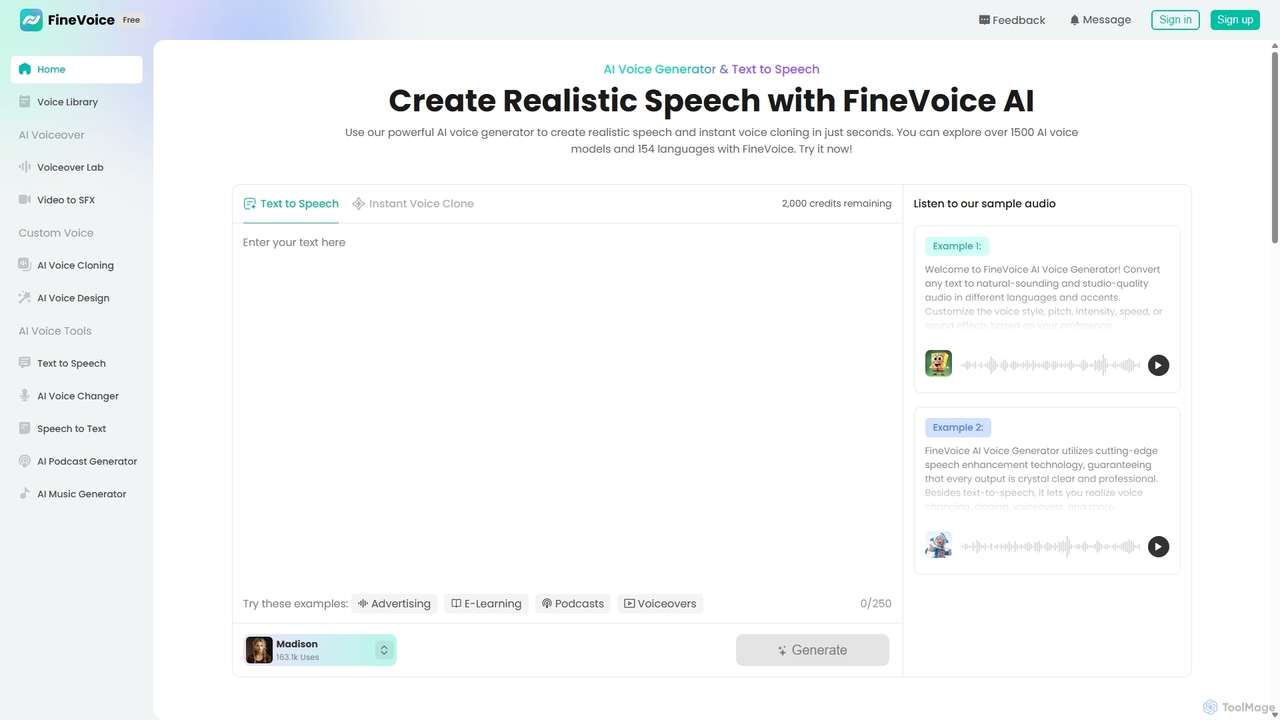
FineVoice is a powerful AI voice generator and audio creation suite. It offers realistic text-to-speech, instant voice cloning, a real-time voice changer, and professional voiceover tools. With a library of over 1500 AI voices in 154 languages, it's designed for content creators, marketers, podcasters, and developers seeking high-quality, customizable audio solutions.
About Sound Effects
AI Sound Effects generators are tools that use artificial intelligence to create unique, high-quality audio clips from text descriptions. As a specialized category within video production tools, they leverage generative models to synthesize everything from realistic foley to abstract soundscapes, providing a dynamic alternative to static stock audio libraries. This capability allows creators to produce custom, royalty-free sounds perfectly matched to their visual content. The technology is particularly valuable for adding immersive and specific audio layers to films, games, and other media projects.
Core Features
- Text-to-Sound Generation: Creates audio effects directly from descriptive text prompts, such as "a heavy wooden door creaking open."
- Sound Variation: Generates multiple unique versions of the same sound effect to avoid repetitive audio in a project.
- Ambiance Synthesis: Produces continuous background environmental sounds like "rainy city street at night" or "dense jungle atmosphere."
- Custom Foley Creation: Synthesizes specific action-based sounds like footsteps, object impacts, or cloth movements on demand.
- Style Transfer: Applies the acoustic characteristics of one sound to another to create novel audio effects.
Use Cases
These tools are primarily used by video editors, game developers, podcasters, and animators. For instance, a game developer can generate unique sounds for magical spells, while a filmmaker can create precise foley for a character's actions without hiring a foley artist. Podcasters also use them to build immersive background atmospheres for storytelling.
How to Choose
When selecting an AI Sound Effects tool, consider the realism and quality of the generated audio. Evaluate the AI's ability to understand nuanced text prompts and the level of customization available (e.g., duration, intensity, environment). Also, check the licensing terms to ensure the generated sounds can be used for commercial purposes and consider if an API is available for integration into your workflow.

Sound EffectsUse Cases
Custom Sound Effects for Indie Game Development
An indie game developer is creating a fantasy RPG and needs unique sounds for magical spells that can't be found in standard libraries. Using an AI Sound Effects tool, they input text prompts like "crackling arcane energy coalescing into a fireball" or "frost spell freezing the air with a sharp crystal sound." The AI generates multiple distinct variations for each spell. This allows the developer to assign slightly different sounds for charging, casting, and impact, creating a richer, more dynamic audio experience for the player without the high cost of a sound designer.
Rapid Foley Prototyping for Short Films
A filmmaker is editing a short film on a tight deadline and budget. Instead of hiring a foley artist, they use an AI generator to create specific sounds. For a scene where a character walks across different surfaces, they generate "footsteps on dry leaves," followed by "footsteps on a gravel path." For a tense moment, they create "a single water drop echoing in a cave." This process allows for rapid audio prototyping directly in the editing timeline, ensuring the sound design perfectly matches the pacing and mood of the visuals, saving significant time and resources.
Immersive Ambiance for Podcasts and Audio Dramas
A podcast producer is creating an audio drama set in a bustling cyberpunk city. To create an immersive background, they need a unique soundscape. Using an AI tool, they generate a continuous ambient track with the prompt "futuristic city with flying cars, distant sirens, rain on neon signs, and crowd chatter." The tool synthesizes a long, non-repeating audio file that can be looped seamlessly in the background of each episode. This provides a consistent and unique atmosphere that defines the show's setting, a task that would otherwise require layering dozens of individual stock sounds.
Unique UI/UX Sounds for Mobile Applications
A UX designer is developing the sound profile for a new productivity app. They need short, non-intrusive, and satisfying sounds for actions like task completion, notifications, and errors. Instead of using generic system sounds, they use an AI tool to generate options based on prompts like "a soft, positive chime for a completed task" or "a subtle, low-frequency buzz for an error message." They can quickly generate hundreds of variations, test them with users, and select a cohesive set of sounds that reinforces the app's brand identity and improves the user experience.
Enhancing Social Media Video Content
A content creator specializing in short-form videos for platforms like TikTok and Instagram needs a constant supply of fresh, engaging sound effects. To stand out, they avoid overused stock sounds. Using an AI generator, they create custom effects on the fly, such as "a comical slide whistle followed by a small pop" for a funny reveal, or "a dramatic cinematic whoosh" for a transition. This allows them to react to trends quickly and develop a unique audio signature for their channel, increasing viewer engagement and brand recognition without needing to search through vast audio libraries.
Creating Abstract Sounds for Animation
An animator is working on an abstract short film and needs sounds that don't exist in the real world. They require audio to represent concepts like 'a thought crystallizing' or 'a memory fading away.' Using an AI sound generator, they can experiment with abstract prompts like "shimmering glass texture combined with a soft, ethereal hum" or "a grainy, distorted echo that slowly dissipates." This empowers the animator to create a completely original soundscape that perfectly complements the non-literal visuals, a task that is nearly impossible with traditional foley or sound libraries.