
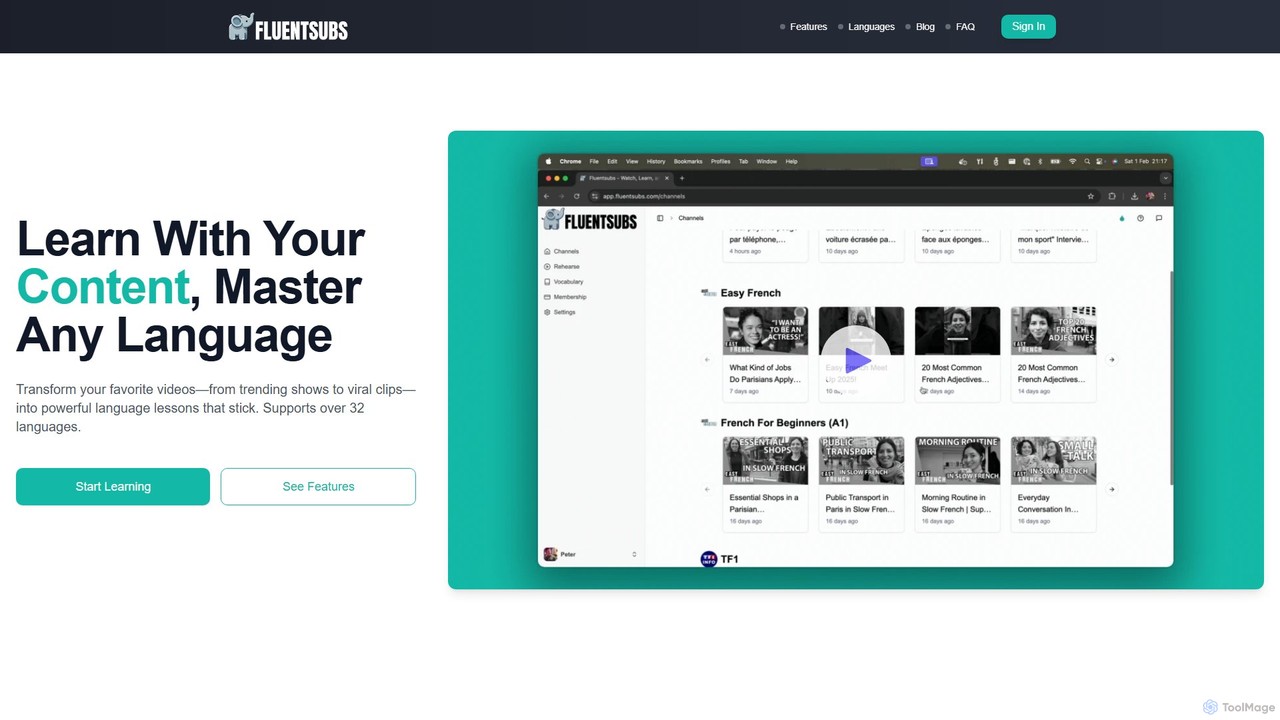
Fluentsubs
Fluentsubs transforms YouTube videos into personalized language lessons. Using AI, it generates accurate, interactive dual-language subtitles. Build your …
Fluentsubs transforms YouTube videos into personalized language lessons. Using AI, it generates accurate, interactive dual-language subtitles. Build your vocabulary by saving words, practice with spaced repetition flashcards, and improve listening comprehension with real-world content. Supports over 32 languages, making it an ideal tool for immersive and contextual learning.
About Subtitling
AI subtitling tools are specialized applications that leverage artificial intelligence to automatically generate, synchronize, and translate subtitles for video content. These tools utilize advanced speech-to-text (ASR) technology and natural language processing (NLP) to convert spoken audio into accurate text, significantly streamlining the post-production workflow. They are crucial for enhancing video accessibility, expanding global reach, and improving viewer engagement across various platforms.
Core Features
- Automatic Speech Recognition (ASR): Converts spoken dialogue into text with high accuracy, supporting multiple languages and accents.
- Time Synchronization: Automatically aligns generated subtitles with the corresponding audio and video timestamps.
- Translation & Localization: Translates subtitles into various target languages, adapting content for global audiences.
- Speaker Identification: Distinguishes between different speakers in a conversation, assigning names or labels to their dialogue.
- Customization & Editing: Provides tools to manually edit, format, and style subtitles, including font, color, and position.
Applicable Scenarios
Content creators on platforms like YouTube and TikTok use these tools to quickly add captions, making their videos accessible to a wider audience. E-learning platforms integrate AI subtitling to provide transcripts for lectures and courses, aiding comprehension and searchability. Media companies leverage them for rapid localization of broadcast content, ensuring compliance and global distribution.
How to Choose
When selecting an AI subtitling tool, prioritize accuracy of speech recognition, especially for diverse accents and technical jargon. Evaluate the range of supported languages for both transcription and translation. Consider integration capabilities with your existing video editing software or content management systems. Finally, assess customization options for subtitle appearance and the pricing model based on your usage volume.
SubtitlingUse Cases
Enhancing Accessibility for Educational Content
Educational institutions and e-learning platforms utilize AI subtitling tools to automatically generate accurate captions for online lectures, tutorials, and course materials. This ensures content is accessible to students with hearing impairments, non-native speakers, and those who prefer to learn by reading. By providing synchronized text, these tools improve comprehension and allow students to easily search for specific information within video content, significantly boosting learning outcomes.
Expanding Global Reach for Marketing Videos
Marketing teams and businesses aiming for international markets employ AI subtitling to translate promotional videos into multiple languages. Instead of costly manual translation, these tools quickly generate localized subtitles, enabling brands to connect with diverse audiences worldwide. This strategy not only broadens market penetration but also enhances SEO for video content in different regions, driving higher engagement and conversion rates.
Streamlining Post-Production for Content Creators
Independent content creators, YouTubers, and social media influencers use AI subtitling software to rapidly add captions to their vlogs, reviews, and entertainment videos. This eliminates the time-consuming process of manual transcription and synchronization, allowing creators to focus on content production. Accurate subtitles increase watch time, improve discoverability through search, and make videos more engaging for viewers in noisy environments or those watching without sound.
Ensuring Compliance for Broadcast Media
Broadcasting companies and media organizations rely on AI subtitling tools to meet regulatory requirements for closed captioning on television programs and online streams. These tools provide a fast and efficient way to generate high-quality, time-coded subtitles for live broadcasts and pre-recorded shows. This ensures legal compliance, expands audience reach to individuals with hearing disabilities, and supports multi-platform content distribution.
Improving SEO and Discoverability for Online Courses
Online course providers leverage AI-generated subtitles and transcripts to enhance the search engine optimization (SEO) of their video lessons. Search engines can index the text content of subtitles, making courses more discoverable through relevant keywords. This leads to increased organic traffic to course pages, attracting more potential students and improving the overall visibility and reach of educational offerings.
Providing Real-time Captions for Live Events
Organizers of live webinars, virtual conferences, and online meetings deploy AI subtitling solutions to provide real-time captions for attendees. This immediate transcription service ensures that all participants, including those with hearing impairments or non-native speakers, can follow the discussion effectively. Real-time captions enhance inclusivity, improve engagement during live sessions, and can be saved as transcripts for post-event review and content repurposing.