Flim
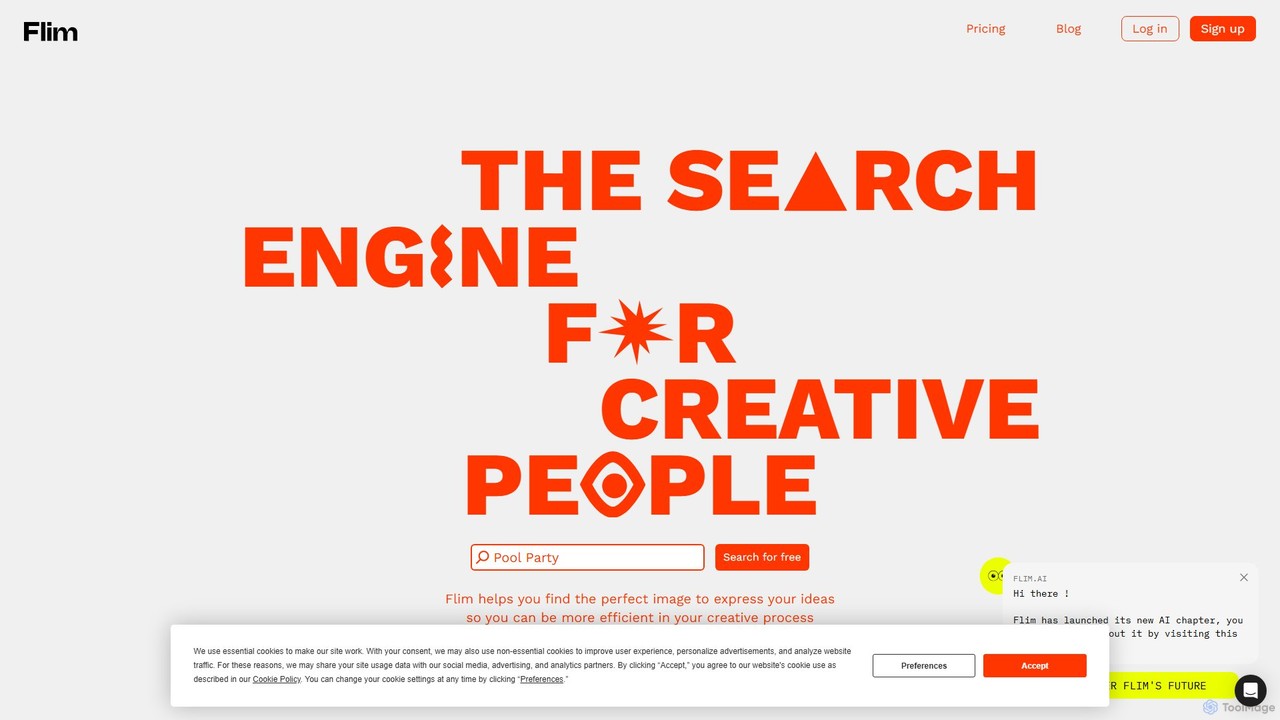
Flim is an AI-powered visual search engine for creative professionals. It provides access to a massive, constantly updated …
Flim is an AI-powered visual search engine for creative professionals. It provides access to a massive, constantly updated database of over 1.5 million stills and 384,000 video clips from films, TV series, music videos, and ads. Flim uses advanced AI to help users find the perfect image, create mood boards, and even generate new visual concepts.
About Video Search
Video Search tools are AI-powered platforms designed to analyze and make the content within videos searchable, moving beyond traditional metadata-based queries. These tools leverage advanced artificial intelligence technologies like computer vision, natural language processing, and speech-to-text to understand and index visual elements, spoken words, and on-screen text. They empower users to pinpoint specific moments, objects, people, or concepts within vast video libraries, significantly enhancing content discoverability and reuse.
Core Features
- Content Indexing: Automatically transcribes audio, detects objects, faces, and text, and extracts key metadata from video frames.
- Semantic Search: Understands the context and meaning behind search queries, delivering more relevant results than keyword matching alone.
- Moment-Level Retrieval: Allows users to jump directly to precise timestamps where specific events, words, or visuals occur.
- Multi-modal Analysis: Combines insights from audio, visual, and textual data streams for comprehensive content understanding.
- Advanced Filtering: Offers granular options to refine searches by time, speaker, emotion, scene type, or other detected attributes.
Applicable Scenarios
These tools are invaluable for organizations managing large video archives, such as media broadcasters, educational institutions, and corporate training departments. They enable content creators to quickly locate specific clips for editing, help researchers find relevant segments in lectures, and assist legal teams in reviewing video evidence by searching for spoken keywords or visual cues.
How to Choose
When selecting a Video Search tool, evaluate the accuracy of its AI models for transcription and object detection, its scalability to handle your video volume, and its integration capabilities with existing media management systems. Consider the range of supported video formats, the intuitiveness of the user interface, and the pricing model based on processing hours or storage.

Video SearchUse Cases
Media Asset Management & Archiving
A large broadcasting company needs to efficiently manage thousands of hours of news footage. Using AI Video Search, archivists can quickly find all segments where a specific politician spoke, a particular landmark appeared, or a certain event was covered, enabling rapid content reuse for new programs or documentaries without manual review.
E-learning Content Navigation
University students or corporate trainees often struggle to find specific information within long lecture or training videos. An AI Video Search tool allows them to type in a keyword like "supply chain optimization" and instantly jump to all relevant sections across multiple video courses, saving significant study time and improving learning efficiency.
Market Intelligence & Brand Monitoring
A marketing analyst wants to monitor how competitors are presenting their products in video advertisements or social media campaigns. By uploading competitor videos to an AI Video Search platform, they can search for specific product features, brand mentions, or visual cues, gaining insights into market trends and competitive strategies.
Legal Discovery & Compliance
In legal proceedings, attorneys often need to review vast amounts of video evidence, such as surveillance footage or deposition recordings. AI Video Search enables them to quickly locate all instances where specific individuals appear, certain keywords are spoken, or particular objects are present, drastically reducing the time and cost of discovery.
User-Generated Content Moderation
Social media platforms face the challenge of moderating millions of user-uploaded videos for inappropriate content. AI Video Search tools can automatically detect and flag videos containing prohibited objects, symbols, or spoken hate speech, assisting human moderators and ensuring community guidelines are enforced at scale.
Journalism & Investigative Reporting
Journalists frequently need to sift through public records, interviews, and news archives to gather information for their stories. With AI Video Search, they can rapidly find specific quotes, visual evidence, or background information by searching across numerous video sources, accelerating the research process for breaking news and investigative pieces.