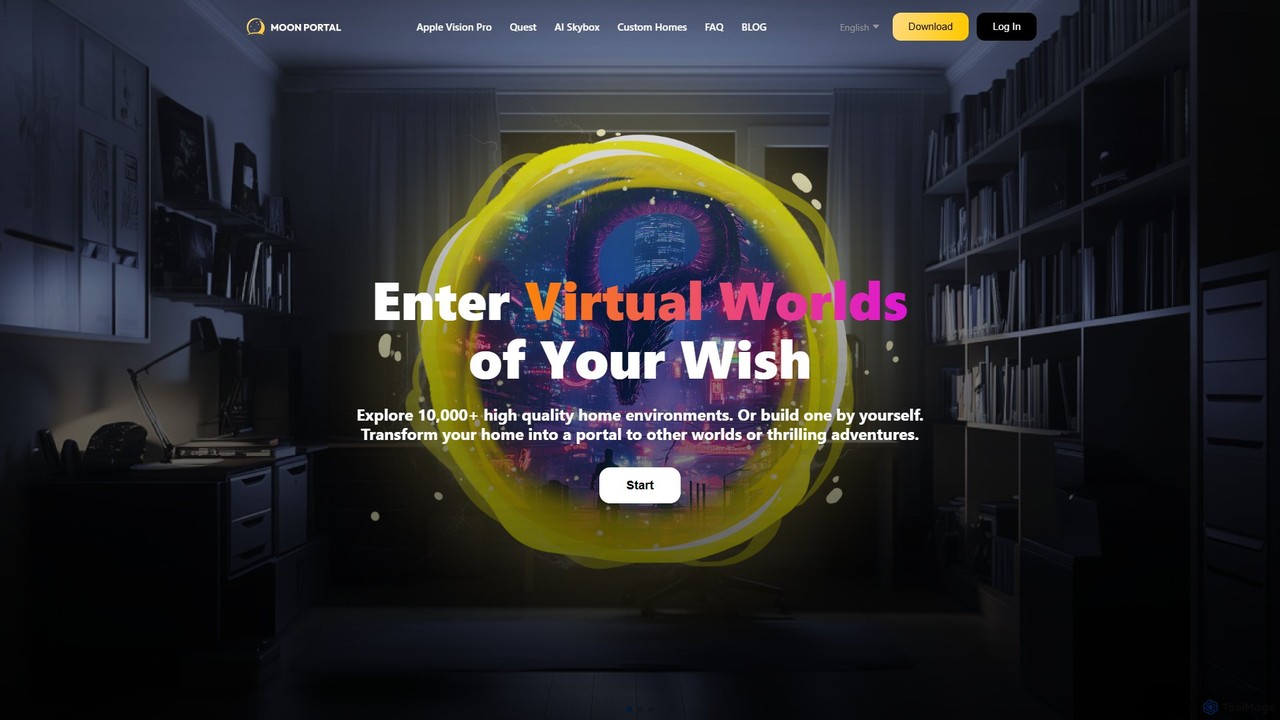
Environments are AI-powered tools designed to create, generate, and optimize virtual spaces and worlds for immersive experiences within Virtual Reality. These tools leverage advanced algorithms to procedurally generate detailed landscapes, architectural structures, and interactive elements, significantly accelerating the development of VR applications. They enable designers and developers to rapidly prototype, customize, and deploy rich, dynamic virtual settings, enhancing user engagement and realism.
Core Features
- Procedural Generation: Automatically creates diverse landscapes, buildings, and objects based on user-defined parameters.
- Asset Library Integration: Seamlessly incorporates pre-existing 3D models, textures, and soundscapes into generated scenes.
- Dynamic Adaptation: Adjusts environment elements in real-time based on user interaction, time of day, or scenario changes.
- Performance Optimization: Automatically optimizes generated environments for smooth rendering across various VR hardware platforms.
Applicable Scenarios
These tools are crucial for game developers creating expansive open worlds, architects visualizing complex building designs in VR, and educators building interactive learning simulations. They streamline the creation of diverse virtual settings, from fantastical realms to realistic urban landscapes, for various VR applications.
How to Choose
When selecting an AI environment tool, consider its generation capabilities (e.g., landscape, architecture, objects), integration with existing VR development platforms (Unity, Unreal Engine), the extent of customization options, and its performance optimization features for target VR devices. Scalability for large-scale projects and the availability of a robust asset library are also important.