AI ASMR
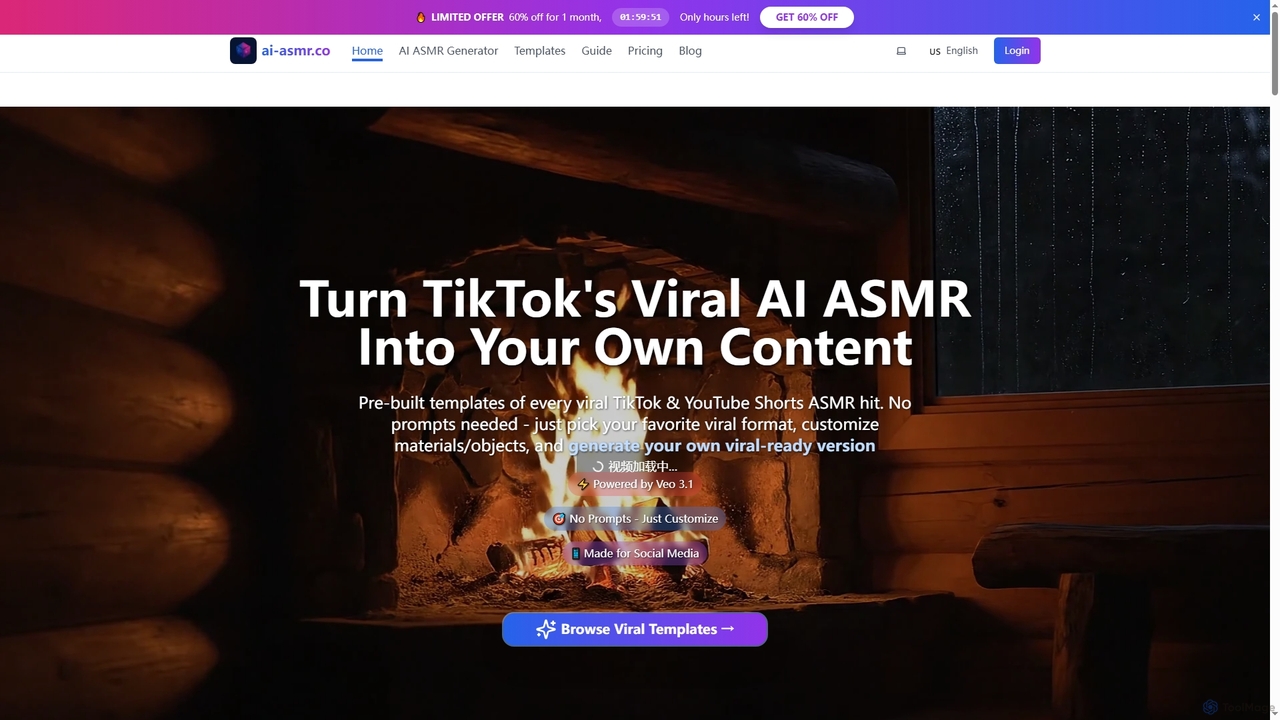
AI ASMR is an innovative AI-powered platform that enables users to instantly create viral ASMR videos for social …
AI ASMR is an innovative AI-powered platform that enables users to instantly create viral ASMR videos for social media. Leveraging pre-built templates and advanced AI (Veo 3.1), it generates synchronized audio and visuals without the need for complex prompts, making professional ASMR content creation accessible to everyone.
About Relaxation
AI Relaxation tools are applications that leverage artificial intelligence to create personalized and adaptive experiences for stress reduction and mental well-being. They often use generative AI to produce unique soundscapes, guided meditations, or visual patterns tailored to the user's real-time needs. By analyzing inputs like mood, heart rate, or user feedback, these tools dynamically adjust content to enhance calming effects. This approach offers a more interactive and effective path to mindfulness and relaxation compared to static, pre-recorded content.
Core Features
- Adaptive Soundscapes: Generates non-repeating, calming audio environments that change based on user preferences or biometric data.
- Personalized Guided Meditations: AI guides users through meditation sessions, adjusting pacing, focus, and language based on their experience level and stated goals.
- Biofeedback Integration: Connects with wearable devices (like smartwatches) to monitor physiological signs of stress, such as heart rate variability (HRV), and adapts the experience accordingly.
- Mood Tracking and Analysis: Uses AI to analyze journal entries or user check-ins to identify emotional patterns and suggest relevant relaxation exercises.
Use Cases
These tools are particularly valuable for high-stress professionals seeking quick relief during work breaks, individuals experiencing sleep difficulties, and students managing academic pressure. They are also used in therapeutic settings as a supplement to traditional mental health support, providing accessible, on-demand calming exercises.
How to Choose
When selecting an AI Relaxation tool, consider the level of personalization and adaptivity it offers. Evaluate its compatibility with any wearable devices you use for biofeedback. Also, review the variety of techniques available (e.g., breathing exercises, meditation, sound therapy) and carefully examine the platform's data privacy policy, especially when sharing sensitive health information.

RelaxationUse Cases
De-stressing During a Work Break
A software developer facing a tight deadline uses an AI relaxation app for a 10-minute session. They select a 'Focus & Calm' goal. The AI generates a binaural beats soundscape designed to encourage a state of relaxed concentration. Simultaneously, a guided breathing exercise appears on screen, with the visual pacer adjusting its speed based on the microphone detecting the user's breathing rhythm. This adaptive session helps lower their heart rate and clear their mind, allowing them to return to their complex task with renewed focus and reduced anxiety.
Improving Sleep Quality with AI Soundscapes
An individual struggling with inconsistent sleep uses an AI tool connected to their smartwatch. Before bed, they indicate their stress level for the day. The AI generates a calming, generative ambient soundscape—like a gentle rainfall that never repeats—to help them fall asleep. Throughout the night, the tool monitors sleep stages via the watch. If it detects restlessness, it subtly adjusts the audio's frequency or introduces new, soothing elements to guide them back into deeper sleep, improving overall sleep continuity and quality without jarring interruptions.
Managing Pre-Exam Anxiety for Students
A university student feeling overwhelmed before a final exam opens an AI relaxation chatbot. They type, 'I'm worried I'll forget everything.' The AI, trained on cognitive behavioral therapy (CBT) principles, responds by asking them to identify the evidence for and against this thought. It then guides them through a short, 5-minute visualization exercise, prompting them to imagine successfully completing the exam. This interactive, guided reframing helps the student shift from a state of panic to a more confident and calm mindset right before entering the exam hall.
Personalized Mindfulness Practice with Biofeedback
A user practicing mindfulness to lower their blood pressure uses an AI app connected to a heart rate monitor. During a guided meditation, the app displays their real-time Heart Rate Variability (HRV), a key indicator of relaxation. The AI provides gentle audio cues, like 'Your breathing is becoming more regular, your HRV is increasing,' when it detects positive changes. If it senses a rise in heart rate, it might suggest, 'Let's focus on extending your exhale.' This real-time, data-driven feedback loop helps the user understand the direct physiological impact of their practice, accelerating their ability to achieve a state of calm.
Creating a Dynamic Focus Environment
A writer working from a noisy home environment uses an AI relaxation tool to generate ambient sound. Instead of a simple static loop of 'rain sounds,' the AI creates a dynamic soundscape. It subtly varies the intensity of the rain, adds distant thunder that rolls realistically across the stereo field, and occasionally includes soft, non-distracting sounds like a bird chirping. The user can provide feedback like 'less thunder,' and the AI algorithm adjusts the generative model in real-time, crafting a personalized and immersive audio environment that effectively masks distractions and promotes deep focus.
Guided Meditation for Beginners
Someone new to meditation uses an AI coach. They start by answering a few questions: 'What's your goal?' (e.g., 'Reduce anxiety') and 'How much time do you have?' (e.g., '5 minutes'). The AI then crafts a unique guided meditation session. It uses a calm, synthesized voice to lead them through a simple body scan. After the session, the user provides feedback: 'The pace was too fast.' The AI learns from this and adjusts the pacing for their next session, ensuring the experience becomes progressively more tailored and effective for the individual user's needs.