ToolMage
Sign in

AI TOOL COMPARISON

Chatbot UI vs ChatKit

What is the difference, and which fits your workflow? Compare features, usage, pricing models and traffic side by side.

Jump to key differences

Product overview

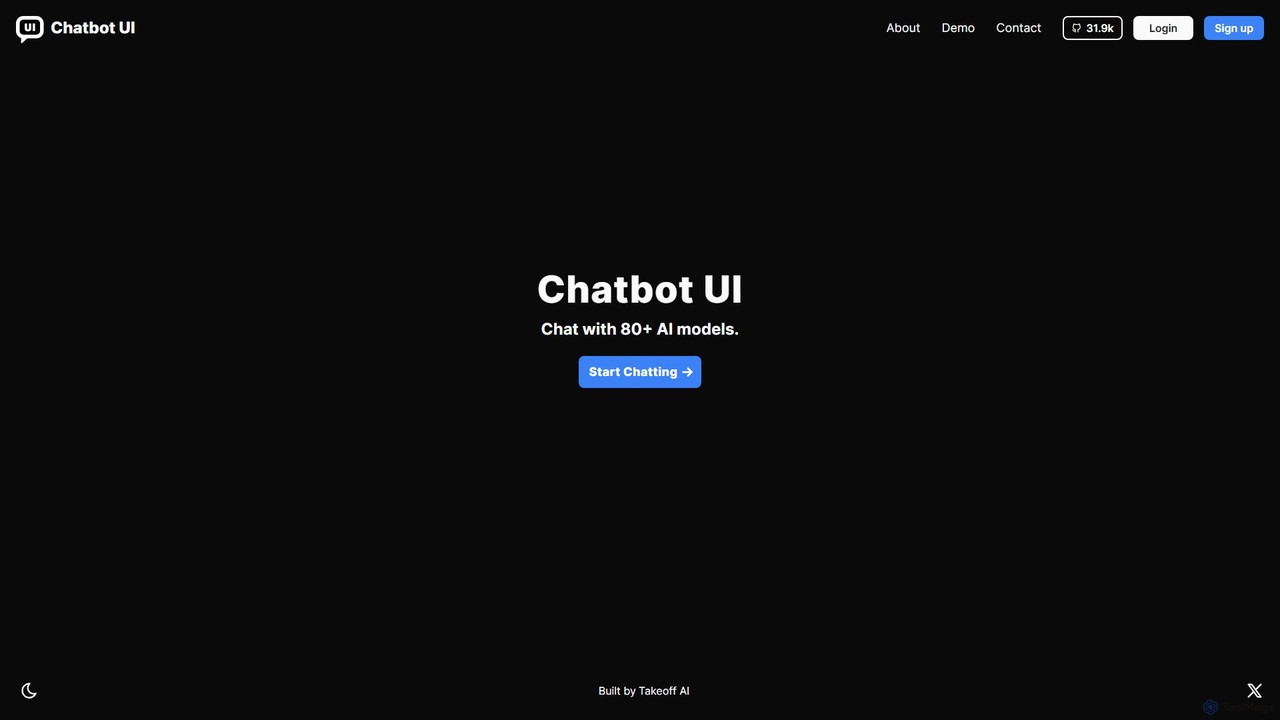
Chatbot UI Product overview

Chatbot UI is an open-source chatbot interface that allows you to connect with over 80 AI models, including those from OpenAI, Google, and Anthropic. It offers a self-hostable, customizable alternative to proprietary chat platforms, giving users full control over their data and conversations. Organize chats, create prompts, and seamlessly switch between models in a single, unified workspace.

Preview

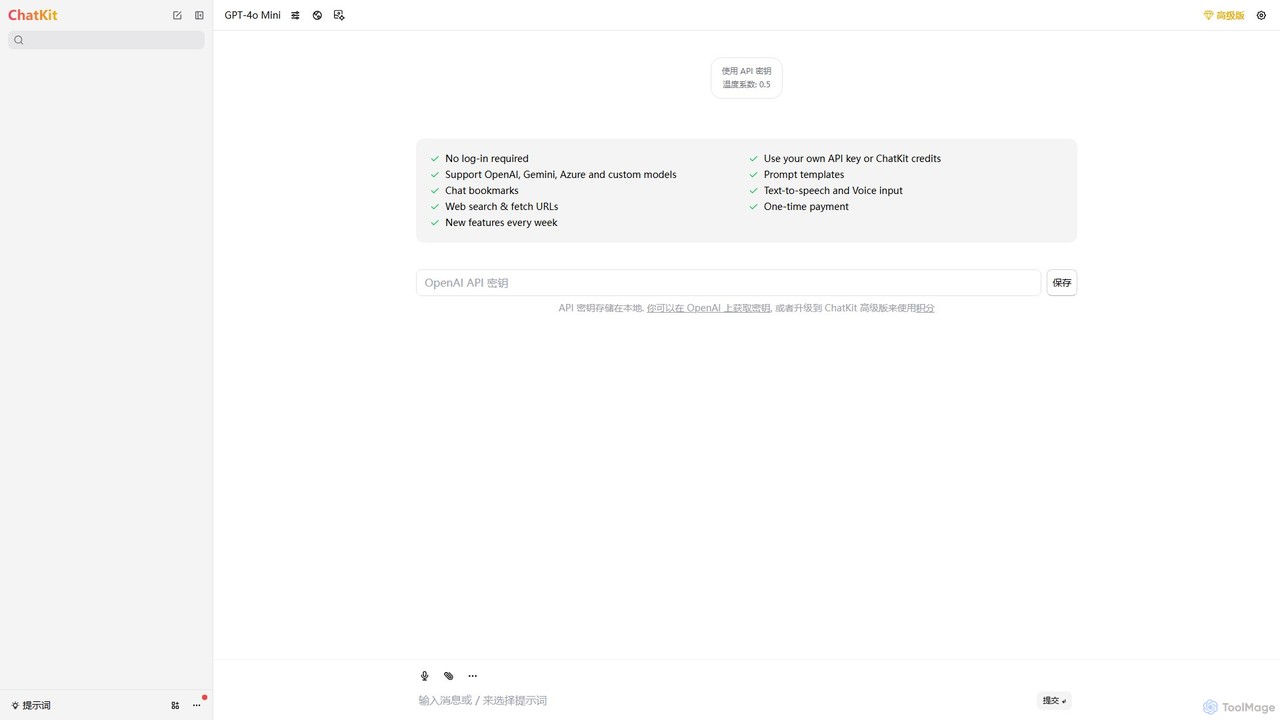
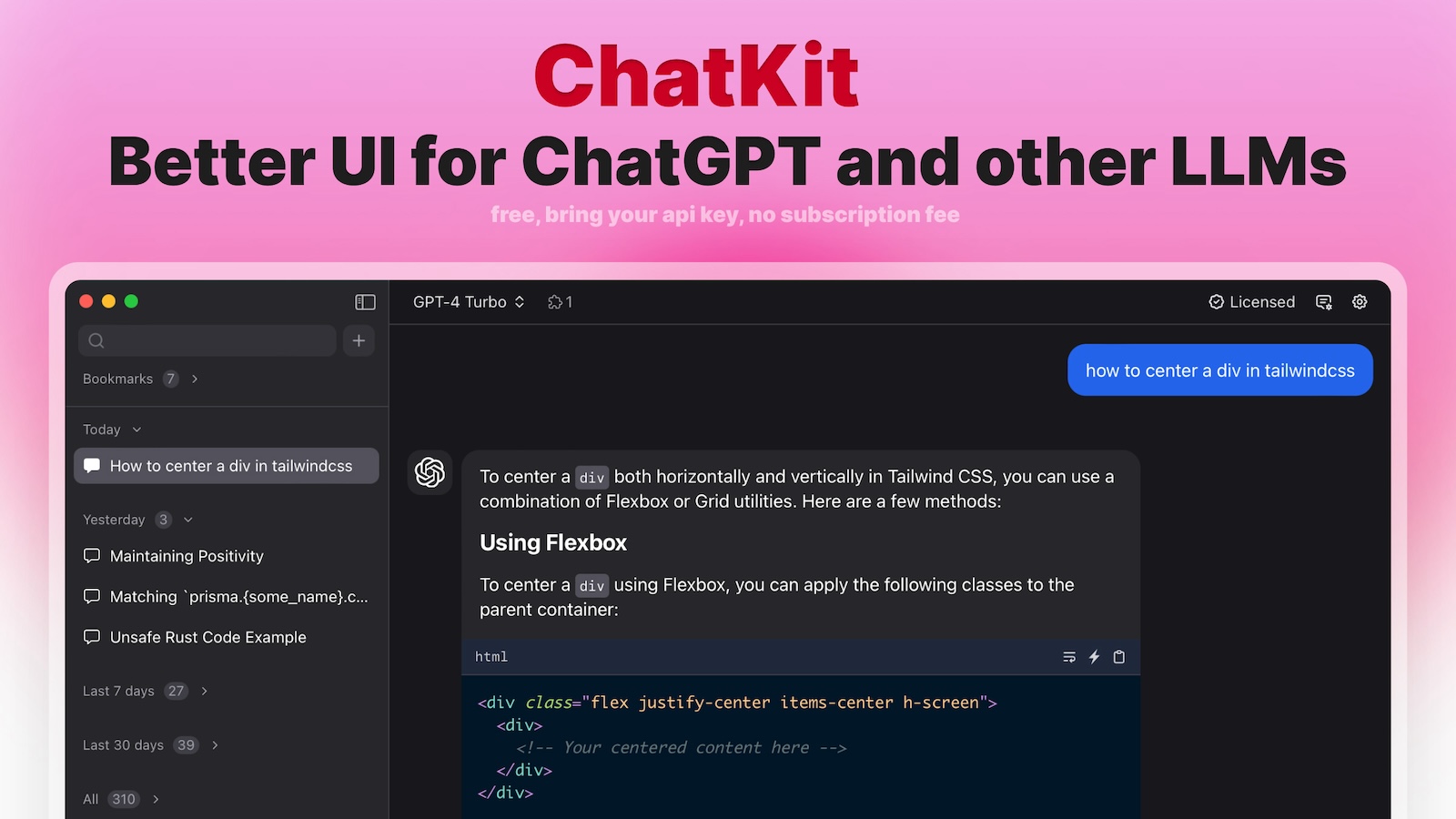
ChatKit Product overview

ChatKit is a refined, unified chat interface for top AI models like OpenAI, Gemini, and Azure. It enhances your workflow with features like web search, prompt templates, voice input, and chat bookmarks, all while prioritizing user privacy with local API key storage and no required login.

Preview

Quick facts

Compare product focus, pricing models and audiences. Highlighted rows indicate different listed information; unknown pricing does not mean free.

Chatbot UI VS ChatKit — Quick facts
Quick factsChatbot UIChatKit
Pricing modelFreemiumFreemium
Product typeWebWeb
Primary focusApi ManagementApi Management
Audience and rolesNo data availableNo data available
CategoriesApi Management · Chatbot · ProductivityApi Management · Chatbot · Writing Assistant
AddedAug 11, 2025Aug 9, 2025
UpdatedNov 19, 2026Nov 19, 2026

Features, usage and use cases

Explore the listed product descriptions, features and workflows. Taxonomy labels alone are not feature evaluations.

Chatbot UI

Chatbot UI is a leading open-source chat interface designed for interacting with a wide array of Large Language Models (LLMs). As a powerful alternative to closed-source platforms like ChatGPT, it provides users with the flexibility to connect to over 80 different AI models from top providers such as OpenAI, Google, Anthropic, Mistral, and even local models via Ollama. Built by Takeoff AI, Chatbot UI empowers developers, teams, and individuals to create a customized and secure chatbot experience, either by self-hosting the application on their own infrastructure or by using the convenient cloud-hosted version.

The core philosophy behind Chatbot UI is to provide a unified, powerful, and privacy-focused front-end for AI interaction. By bringing multiple models under one roof, it eliminates the need to constantly switch between different services. Users can directly compare model outputs, find the best tool for a specific task, and manage all their AI-driven conversations in a structured and efficient manner.

How to use Chatbot UI

Getting started with Chatbot UI is flexible and caters to different user needs:

  1. Choose Your Deployment Method: You can opt for the fully open-source, self-hosted version by cloning the repository from GitHub. This gives you maximum control and data privacy. Alternatively, you can sign up for the official cloud-hosted version for a quick, maintenance-free setup.
  2. Configure AI Models: In the application settings, you can add your API keys from various AI providers (e.g., OpenAI, Anthropic, Google AI). The interface allows you to enable or disable specific models you want to access.
  3. Start Chatting: Create a new chat and select your desired AI model from a dropdown list. You can also adjust model-specific parameters like temperature and max tokens to fine-tune the responses.
  4. Organize Your Workspace: Use folders to group related conversations. The search functionality allows you to quickly find past chats. You can also create and save reusable prompts in the prompt library to streamline repetitive tasks.
  5. Utilize Advanced Features: For supported models, you can attach files (images, documents) for analysis, expanding the range of possible interactions.

Core Features of Chatbot UI

  • Extensive Model Support: Natively supports over 80 LLMs, including the GPT series, Claude models, Google's Gemini, and open-source models.
  • Open-Source and Self-Hostable: Provides full access to the source code, allowing for complete customization and deployment on your own servers for ultimate data privacy.
  • Cloud Version Available: A managed, ready-to-use version for those who prefer not to handle hosting and maintenance.
  • Advanced Chat Management: Organize conversations with folders, search chat history, and archive old chats.
  • Prompt Library: Create, manage, and share reusable prompts to improve efficiency and consistency.
  • Multi-modal Capabilities: Supports file uploads (images, PDFs) for analysis with vision-enabled models.
  • Local Model Integration: Connect to local models running via Ollama, enabling offline and private AI usage.
  • Team Collaboration: The cloud version offers features for teams to share chats and prompts, fostering a collaborative AI environment.

Use Cases for Chatbot UI

Chatbot UI is a versatile tool suitable for a wide range of users:

  • Developers: Use it as a development and testing workbench to compare the performance and outputs of different LLMs for their applications.
  • Content Creators: Leverage multiple AI models for brainstorming, drafting articles, translating text, and generating creative copy, all within a single interface.
  • Businesses and Enterprises: Deploy a secure, self-hosted version for internal use, ensuring that sensitive company data remains private. It can be used for customer support, internal knowledge bases, and data analysis.
  • AI Researchers and Enthusiasts: Experiment with various models and their parameters in a controlled environment to explore the frontiers of AI capabilities.

Advantages of Chatbot UI

The primary advantages of using Chatbot UI include:

  • Unparalleled Flexibility: Avoid vendor lock-in by easily switching between dozens of AI models to find the best one for any task.
  • Enhanced Data Privacy: The self-hosting option ensures that your conversations and data never leave your own infrastructure.
  • Cost Control: By using your own API keys, you pay the providers directly for your usage, which can be more cost-effective than fixed subscription plans. The open-source software itself is free.
  • Full Customizability: As an open-source project, it can be forked and modified to add custom features, branding, or integrations.
  • Unified and Efficient Workflow: Manages all AI interactions in one place, saving time and improving productivity.

Pricing and Plans

Chatbot UI operates on a freemium model:

  • Open-Source (Self-Hosted): This version is completely free to download and use. Users are only responsible for their own hosting costs and the API usage fees charged by the AI model providers they use.
  • Cloud Version (Hosted by Takeoff AI): The managed service typically offers several subscription tiers:
    • Free Plan: Ideal for individuals, offering limited access to basic features and a certain number of monthly messages.
    • Pro Plan: A paid monthly subscription for professionals and power users, offering higher usage limits, access to all premium models, and priority support.
    • Team/Business Plan: Custom pricing for organizations, including features like user management, shared workspaces, SSO integration, and dedicated support.

ChatKit

ChatKit is a sophisticated and versatile AI chat client designed to streamline your interaction with a variety of leading large language models (LLMs). It serves as a single, powerful interface for models from OpenAI (including ChatGPT), Google Gemini, Microsoft Azure, and even custom models. By consolidating access, ChatKit eliminates the need to switch between different platforms, creating a more efficient and productive workflow for developers, writers, researchers, and general users alike.

The core philosophy of ChatKit revolves around user control, privacy, and an enhanced feature set. Unlike many other services, it offers a 'Bring Your Own Key' (BYOK) model, allowing you to use your personal API keys directly. These keys are stored locally in your browser, ensuring they are never transmitted to ChatKit's servers, providing a high level of security and privacy. For those who prefer a simpler approach or don't have their own keys, ChatKit also offers a credit-based system with a one-time payment.

How to use ChatKit

Getting started with ChatKit is designed to be simple and flexible:

  1. Navigate to the ChatKit web application at chatkit.app.
  2. Select your preferred AI model from the available options (e.g., GPT-4, Gemini Pro).
  3. Option 1 (Bring Your Own Key): Go to the settings menu and enter your API key from a provider like OpenAI or Azure. Your key will be saved securely in your browser's local storage for future use. You will only be billed by your API provider for your usage.
  4. Option 2 (Use ChatKit Credits): If you don't have an API key, you can purchase ChatKit credits via a one-time payment. This allows you to use the supported models without any external setup.
  5. Begin your conversation. You can type your queries, use voice input, or leverage advanced features.
  6. To get real-time information, use the web search feature by prefixing your query. You can also provide a URL for the AI to fetch and analyze its content.
  7. Fine-tune the AI's output by adjusting parameters like 'temperature' to control creativity.
  8. Organize your workflow by creating and using prompt templates for recurring tasks and bookmarking important conversations for easy retrieval.

Core Features of ChatKit

  • Multi-Model Support: Seamlessly switch between major AI models, including OpenAI's GPT series, Google's Gemini, Microsoft Azure, and custom-configured models.
  • Enhanced Privacy (BYOK): Use your own API key, which is stored locally on your device. No login is required, ensuring your data and keys remain private.
  • Web Search & URL Fetching: Grant the AI access to the live internet to get up-to-date answers and summarize content from any webpage.
  • Prompt Templates: Create, save, and manage a library of your most-used prompts to accelerate your workflow and ensure consistent outputs.
  • Chat Bookmarks: Easily save and categorize important or insightful conversations, creating a personal knowledge base.
  • Voice-to-Text and Text-to-Speech: Interact with the AI using your voice for input and listen to the responses, offering a hands-free experience.
  • Parameter Control: Adjust model parameters like temperature to fine-tune the balance between factual accuracy and creative freedom in the AI's responses.
  • Credit-Based System: An alternative to BYOK, offering a simple one-time payment for credits to use the platform's full capabilities.

Use Cases for ChatKit

ChatKit is a versatile tool suitable for a wide range of professionals and enthusiasts:

  • Content Creators & Marketers: Use prompt templates to rapidly generate blog posts, social media content, and ad copy. Compare outputs from different models like Gemini and GPT-4 to find the best result.
  • Developers & Programmers: Debug code, write documentation, and prototype with different AI models in a single, unified interface without constant context switching.
  • Researchers & Academics: Leverage the web search feature to gather and synthesize information from the latest research papers, articles, and news sources.
  • Students: Summarize long articles or web pages for study notes, use text-to-speech to review materials, and get help with complex topics.
  • Business Professionals: Draft professional emails, create presentation outlines, analyze reports, and brainstorm ideas with enhanced privacy and control.

Advantages of ChatKit

ChatKit stands out by offering several key benefits:

  • Unified Platform: Saves time and effort by providing access to multiple top-tier LLMs in one clean interface.
  • User-Centric Privacy: The local storage of API keys and no-login requirement puts you in full control of your data.
  • Cost-Efficiency: The BYOK model means you only pay for what you use from your API provider. The one-time payment for credits offers a clear, predictable alternative.
  • Productivity Boost: Advanced features like templates, bookmarks, and web search are specifically designed to streamline common tasks and save you time.
  • Flexibility and Customization: The ability to switch models and tweak parameters allows you to tailor the AI's performance to your specific needs.

Pricing and Plans

ChatKit operates on a flexible freemium model:

  • Free Plan (BYOK): Users can use the platform for free by connecting their own API key from services like OpenAI, Google AI, or Azure. In this model, users are responsible for the costs incurred on their own API accounts.
  • Premium Plan (Credits): For users without an API key or those who prefer a consolidated payment, ChatKit offers a premium option. This involves a one-time payment that provides a specific amount of credits. These credits can be used to access the various AI models through the ChatKit platform. For the most current pricing and credit package details, please visit the official website.

Positioning

Their taxonomy shows where the products overlap and where each one has a more distinct focus. Unknown fields are shown explicitly and are never filled with assumptions.

Categories

Shared
Api ManagementChatbot
Only Chatbot UI
Productivity
Only ChatKit
Writing Assistant

Tags

Shared
developer toolsgeminiproductivity
Only Chatbot UI
ai interfacechatbotClaudedata privacygptllmopen sourceself-hosted
Only ChatKit
AI chatazureBYOKchatgpt clientllm interfaceOpenAIprivacyprompt engineeringtext to speechweb search

Audience and roles

Shared
No listed items
Only Chatbot UI
No listed items
Only ChatKit
No listed items

Traffic comparison

Traffic is shown on the same scale so differences in market visibility are not visually understated.

How to interpret the traffic data

Both charts share the same months and vertical scale. Each tool identifies its latest reporting month; missing months are left blank, not counted as zero. Regional and source visit counts are estimates calculated from the reported shares.

Chatbot UI monthly traffic:

Latest traffic · 2026-05

Monthly visits
15.1K
Avg. visit duration
0:20
Pages per visit
2.65
Bounce rate
37.47%
Data updated 2026-06-15

Monthly traffic trend

  • 2025-09: No data available
  • 2026-01: 17.6K
  • 2026-02: 11K
  • 2026-03: 11.1K
  • 2026-04: 12.9K
  • 2026-05: 15.1K

Top regions

Top 5 countries/regions
Country/regionPercentageEstimated visits
🇺🇸United States31.58%4.8K
🇻🇳Vietnam31.27%4.7K
🇮🇳India15.52%2.3K
🇮🇩Indonesia12.08%1.8K
🇩🇪Germany9.55%1.4K

Traffic sources

Source typePercentageEstimated visits
Direct66.67%10K
Referral33.33%5K

Search keywords

ai chat uichainlit alternatives for javascriptchatbot uichatbotuichat ui

ChatKit monthly traffic:

Latest traffic · 2026-05

Monthly visits
3.4K
Avg. visit duration
0:00
Pages per visit
1.17
Bounce rate
51.3%
Data updated 2026-06-15

Monthly traffic trend

  • 2025-09: 1.5K
  • 2026-01: 8.6K
  • 2026-02: 3.5K
  • 2026-03: 4.4K
  • 2026-04: 5.1K
  • 2026-05: 3.4K

Top regions

Top 5 countries/regions
Country/regionPercentageEstimated visits
🇺🇸United States96.64%3.3K
🇩🇪Germany3.36%115

Search keywords

chatkitemoji finderemojifinderopenai chatkitpplx

Community signals

Ratings, comments, favorites, and likes are community signals—not a substitute for product fit.

Chatbot UI

Rating
No data available
Comments
0
Favorites
176
Likes
180

ChatKit

Rating
No data available
Comments
0
Favorites
178
Likes
187

Chatbot UI vs ChatKit · Comparison FAQ

What do Chatbot UI and ChatKit have in common?
Both tools are listed under Api Management、Chatbot. These categories indicate overlapping use cases; compare their detailed descriptions for workflows, capabilities and limitations.
Are Chatbot UI and ChatKit free?
Listed pricing models: Chatbot UI — Freemium; ChatKit — Freemium. Missing pricing is not proof of a free plan, and freemium does not mean every feature is free. Check official sites for current plans, limits and trials.
How should I choose between Chatbot UI and ChatKit?
The primary listed category is Api Management for Chatbot UI, and Api Management for ChatKit. Compare features, steps and use cases, then verify pricing, data permissions and deployment needs. This page does not include hands-on testing and does not declare a winner from traffic or tags.

Sources and comparison methodology

This page is assembled from ToolMage product listings, taxonomy, traffic statistics and on-site user feedback. It is not a hands-on test or an independent review.
  • Feature and plan descriptions reflect information in the listings, not real-time guarantees. Verify pricing, quotas, availability and privacy terms on the official sites.
  • Traffic uses the reporting months shown. Missing statistics do not mean zero visits, and different periods do not establish growth or superiority. Regional and source visit counts are estimates based on shares.
  • Different tags indicate differences in the listings, not proof that the other product lacks a capability. Ratings, favorites and visits are not used to declare a winner.

Related comparisons