ToolMage
Sign in
Graphzila
Learning · 4.2K monthly visits

Graphzila is an AI-powered knowledge graph generator that transforms any keyword or topic into an interactive visual map. It reveals interconnected concepts and hidden relationships, making it ideal for research, brainstorming, and deep topic exploration. Summon knowledge visually and uncover insights with ease.

VS
STORM
Learning · 4.9K monthly visits

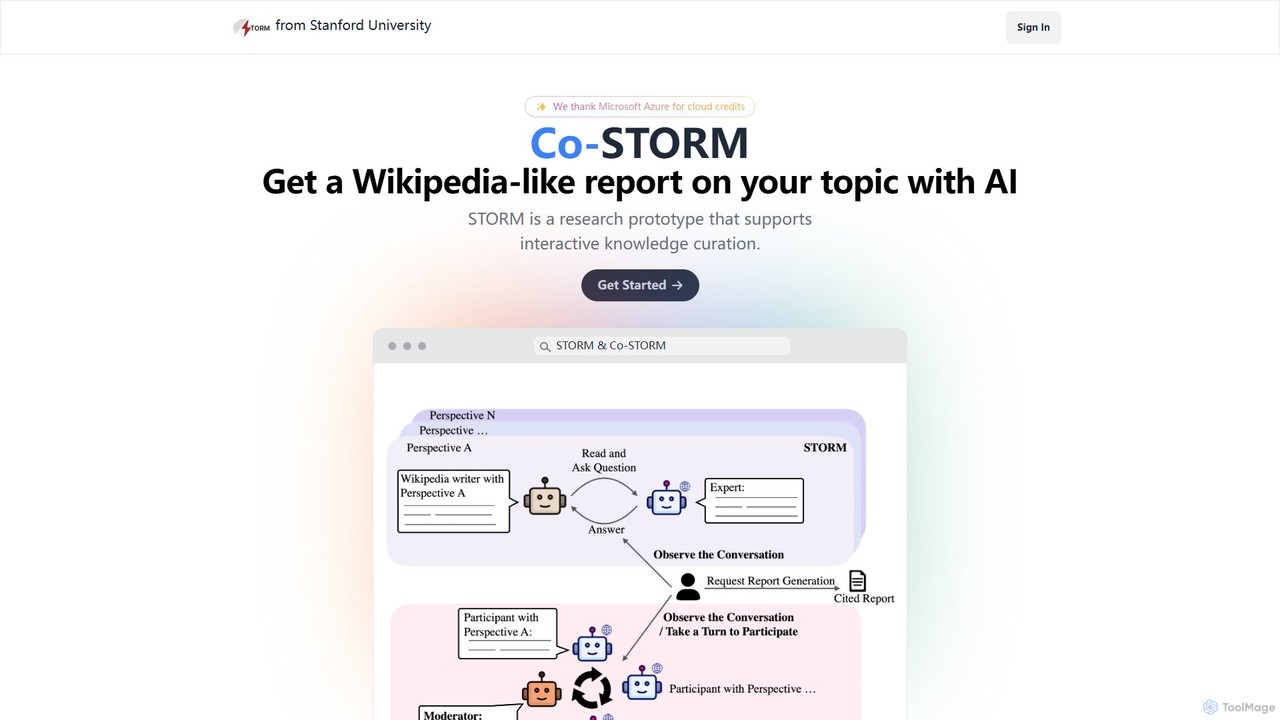
STORM is an AI research prototype from Stanford University that automates the generation of comprehensive, Wikipedia-like reports on any topic. It supports interactive knowledge curation, allowing users to guide the research process, edit outlines, and produce well-structured, cited articles efficiently.

Graphzila vs STORM: pricing, features, traffic, and use cases

Compare Graphzila and STORM across positioning, pricing, traffic, and user feedback using structured factual data.

Updated Aug 20, 2026

Product overview

Graphzila Product overview

Graphzila is an AI-powered knowledge graph generator that transforms any keyword or topic into an interactive visual map. It reveals interconnected concepts and hidden relationships, making it ideal for research, brainstorming, and deep topic exploration. Summon knowledge visually and uncover insights with ease.
Preview

STORM Product overview

STORM is an AI research prototype from Stanford University that automates the generation of comprehensive, Wikipedia-like reports on any topic. It supports interactive knowledge curation, allowing users to guide the research process, edit outlines, and produce well-structured, cited articles efficiently.

Preview

Detailed feature comparison

FeatureGraphzilaSTORM
Primary categoryLearningLearning
Added2025-08-092025-08-15
PricingFreemiumFree
Official websitegraphzila.comstorm.genie.stanford.edu
Product typeWebsiteWebsite
Performance data
User ratingNot verifiedNot verified
Comments00
Monthly visits4.2K4.9K
Monthly growthNot verifiedNot verified
Favorites98134
DetailsView detailsView details

Graphzila vs STORM monthly traffic

Compare Graphzila and STORM by monthly reach, traffic trend, visit depth, top regions, and acquisition sources.

How to interpret the traffic data

In the Graphzila vs STORM monthly traffic comparison, Graphzila currently shows 4.2K visits and STORM shows 4.9K; STORM has about 1.2 times the visible traffic of Graphzila, an absolute difference of about 744 visits. This reflects visible reach, not feature quality or paid users.

Both values come from visits recorded inside ToolMage. They can indicate relative interest on this site, but not total website traffic or global market share.

Graphzila monthly traffic:

Latest traffic

Monthly visits
4.2K

STORM monthly traffic:

Latest traffic

Monthly visits
4.9K
Traffic-based selection guidance: The current traffic scope is not sufficient for a reliable product ranking. Treat monthly visits as a market-interest signal, then decide using taxonomy, use cases, pricing, and a like-for-like trial rather than reading exposure as product capability.

Usage comparison

Compare the core capabilities of Graphzila and STORM

Graphzila Core features

Learning
Knowledge Management
Mind Mapping
Brainstorming

STORM Core features

Learning
Knowledge Management
Writing Assistant

Use cases

Graphzila Use cases

AI research
brainstorming
concept mapping
data visualization
knowledge graph
mind mapping
research tool
topic exploration
visual learning

STORM Use cases

academic writing
automated research
content creation
knowledge curation
knowledge synthesis
literature review
report generation
research
stanford

Graphzila vs STORM:In-depth comparison and selection guidance

First decide whether the products solve the same kind of need

This in-depth Graphzila vs STORM comparison uses only the product records, taxonomy, audience, traffic, and community signals available on this page. Graphzila is primarily listed under “Learning”, while STORM is primarily listed under “Learning”, so the first decision is whether your actual task matches their recorded scope.

The structured fields currently show these decision-relevant differences: Pricing (Graphzila: Freemium; STORM: Free); Monthly visits (Graphzila: 4.2K; STORM: 4.9K); Favorites (Graphzila: 98; STORM: 134); Website (Graphzila: graphzila.com; STORM: storm.genie.stanford.edu); Added (Graphzila: 2025-08-09; STORM: 2025-08-15). These facts are more useful for selection than brand visibility alone.

What market visibility and monthly traffic mean

In the Graphzila vs STORM monthly traffic comparison, Graphzila currently shows 4.2K visits and STORM shows 4.9K; STORM has about 1.2 times the visible traffic of Graphzila, an absolute difference of about 744 visits. This reflects visible reach, not feature quality or paid users.

Both values come from visits recorded inside ToolMage. They can indicate relative interest on this site, but not total website traffic or global market share.

The current traffic scope is not sufficient for a reliable product ranking. Treat monthly visits as a market-interest signal, then decide using taxonomy, use cases, pricing, and a like-for-like trial rather than reading exposure as product capability.

Product positioning, use cases, and roles

Graphzila and STORM currently overlap in shared categories: Learning and Knowledge Management. This can place both on the same shortlist, but it does not prove equal implementation, depth, or cost.

Graphzila's unique categories/tags are Mind Mapping, Brainstorming, AI research, brainstorming, concept mapping, data visualization, knowledge graph, and mind mapping; STORM's are Writing Assistant, academic writing, automated research, content creation, knowledge curation, knowledge synthesis, literature review, and report generation. These unique fields are the strongest differentiators: validate the product whose recorded scope matches the task instead of following traffic alone.

What ratings, comments, and favorites can tell you

Graphzila has no verified rating, 0 comments, 98 favorites, and 93 likes;STORM has no verified rating, 0 comments, 134 favorites, and 125 likes。

Neither product has enough rating or comment samples for a credible reputation ranking.

Selection guidance by actual need

When to evaluate Graphzila first

Put Graphzila on the priority trial list when the task aligns with “Learning” and especially Mind Mapping, Brainstorming, AI research, brainstorming, concept mapping, and data visualization. This follows recorded positioning and does not imply unlisted capabilities are absent.

Graphzila also currently records: pricing is freemium, product type is website, 4.2K on-site monthly views, no verified user rating. Verify any hard requirement around price, platform, or reach before trial, and do not let sparse review data substitute for testing.

When to evaluate STORM first

Put STORM on the priority trial list when the task aligns with “Learning” and especially Writing Assistant, academic writing, automated research, content creation, knowledge curation, and knowledge synthesis. This follows recorded positioning and does not imply unlisted capabilities are absent.

STORM also currently records: pricing is free, product type is website, 4.9K on-site monthly views, no verified user rating. Verify any hard requirement around price, platform, or reach before trial, and do not let sparse review data substitute for testing.

How to validate the recommendation before deciding

The available data describes positioning, public visibility, and community signals, but it cannot prove output quality, speed, integration effort, privacy, or long-term cost in your workflow. Before deciding, run the same representative tasks in Graphzila and STORM, then record completion time, accuracy, manual corrections, and the real paid threshold. A like-for-like trial turns this comparison into a defensible adoption decision.

Comparison FAQ

How should I choose between Graphzila and STORM?
Compare positioning, pricing, taxonomy, and traffic maturity, then verify the latest details on each official website.
Where does this comparison data come from?
The factual baseline is derived from product, taxonomy, traffic, and community data. Reviewed editorial conclusions show their source and verification date.
What do unknown fields mean?
Unknown means there is not enough reliable evidence; the page does not fill gaps with assumptions.

Related AI tools

Heuristica
Freemium

Heuristica

Heuristica is an AI-powered visual learning platform that helps students, teachers, and researchers create dynamic mind maps and concept maps. It integrates with various knowledge sources like academic databases, YouTube, and PDFs to visualize, organize, and expand complex ideas. Users can instantly generate study materials, chat with their maps, and personalize their learning experience with custom prompts on an infinite canvas.

Learning
Visits 93.7KFavorites 106Likes 99
The Visualizer
Freemium

The Visualizer

The Visualizer is an AI-powered tool that transforms complex information from text, PDFs, documents, images, and audio into clear, interactive mind maps. It helps users to quickly summarize, visualize, and understand any topic, making it ideal for students, researchers, professionals, and lifelong learners. By simplifying intricate concepts, it enhances focus, boosts memory retention, and fosters creativity.

Learning
Visits 4.3KFavorites 107Likes 117
SearchSaga
Freemium

SearchSaga

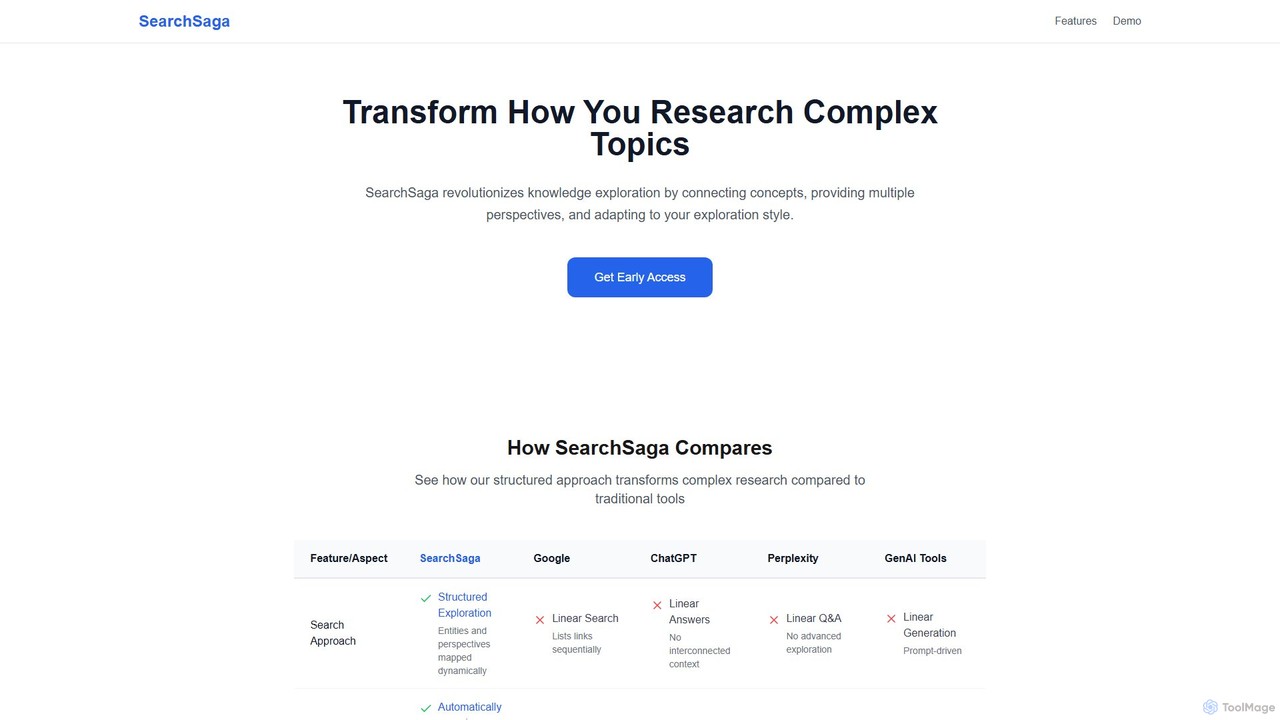
SearchSaga is an AI-powered research platform that transforms complex topic exploration. Instead of linear search results, it creates dynamic knowledge maps, connecting concepts and allowing users to analyze subjects from multiple perspectives like technical, economic, and environmental. Ideal for researchers, students, and professionals seeking deep, structured understanding.

Data Visualization
Visits 4.9KFavorites 128Likes 121
VisualMind
Freemium

VisualMind

VisualMind is an AI-powered tool that transforms your questions and ideas into interactive mind maps. By combining a conversational chatbot with dynamic visualization, it helps you learn complex topics 10x faster, brainstorm effectively, and organize your thoughts with ease. Simply type in a prompt, and watch as VisualMind builds a comprehensive, structured diagram, making it the perfect assistant for students, professionals, and creative thinkers.

Brainstorming
Visits 18.4KFavorites 146Likes 155
SocratiQ
Freemium

SocratiQ

SocratiQ is an AI-powered learning and research partner that utilizes the Socratic method to foster critical thinking and deepen understanding. Instead of providing direct answers, it guides users through topics with thoughtful questions, helping them explore concepts, connect ideas, and build a robust knowledge base. It's designed for students, researchers, and lifelong learners.

Learning
Visits 4.8KFavorites 94Likes 107
Structurepedia
Freemium

Structurepedia

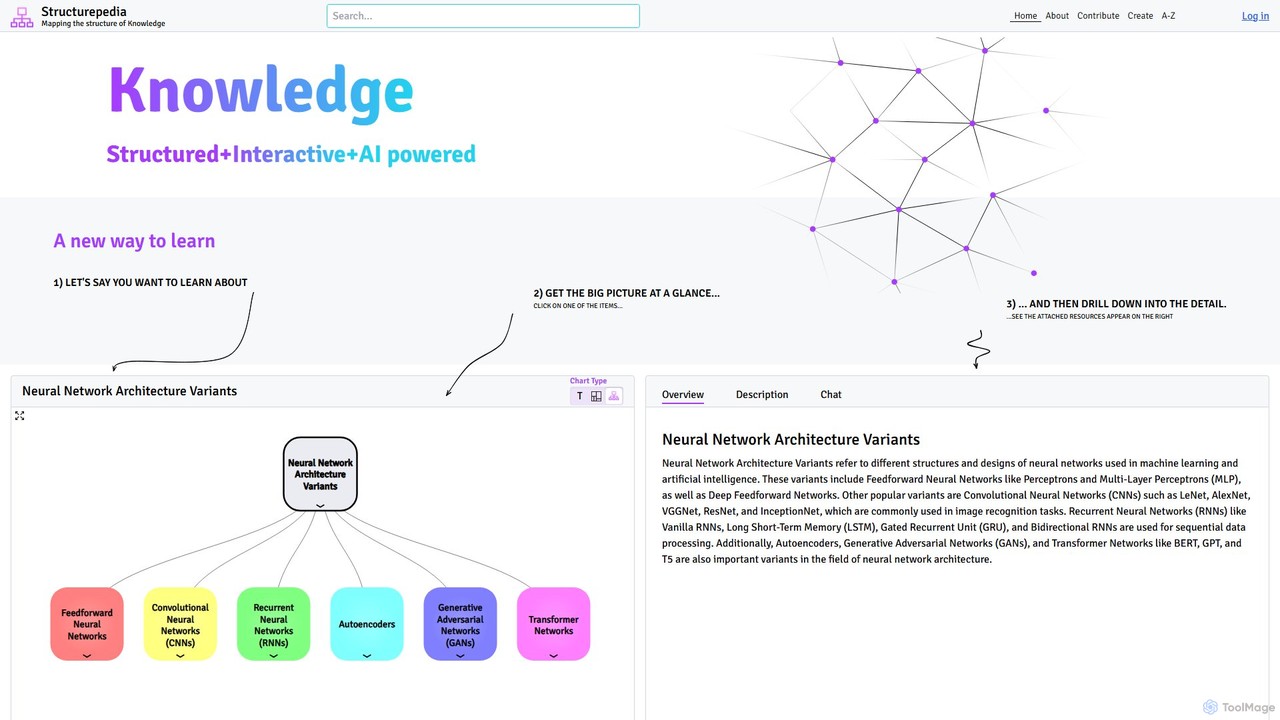
Structurepedia is an AI-powered knowledge platform that transforms complex topics into interactive, structured diagrams or "Knowledge Trees." It combines the features of a search engine and an encyclopedia to provide a visual, hierarchical way of learning, making it easier to grasp the big picture and drill down into details.

Learning
Visits 4.1KFavorites 94Likes 93
ConceptMap AI
Free

ConceptMap AI

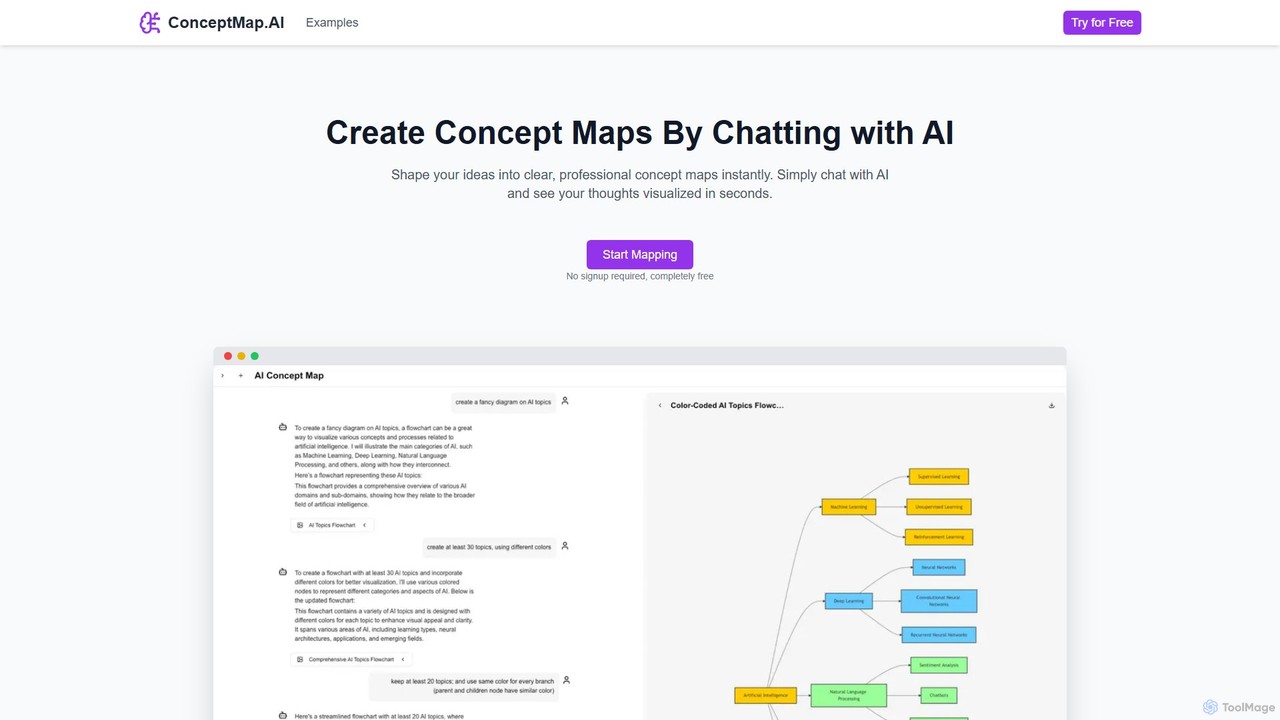
A free, chat-based AI tool that instantly transforms your conversations and ideas into professional concept maps, mind maps, and flowcharts. Ideal for knowledge workers, students, and researchers to organize complex information, brainstorm, and plan projects without any manual diagramming.

Learning
Visits 74.2KFavorites 130Likes 110
FunBlocks
Freemium

FunBlocks

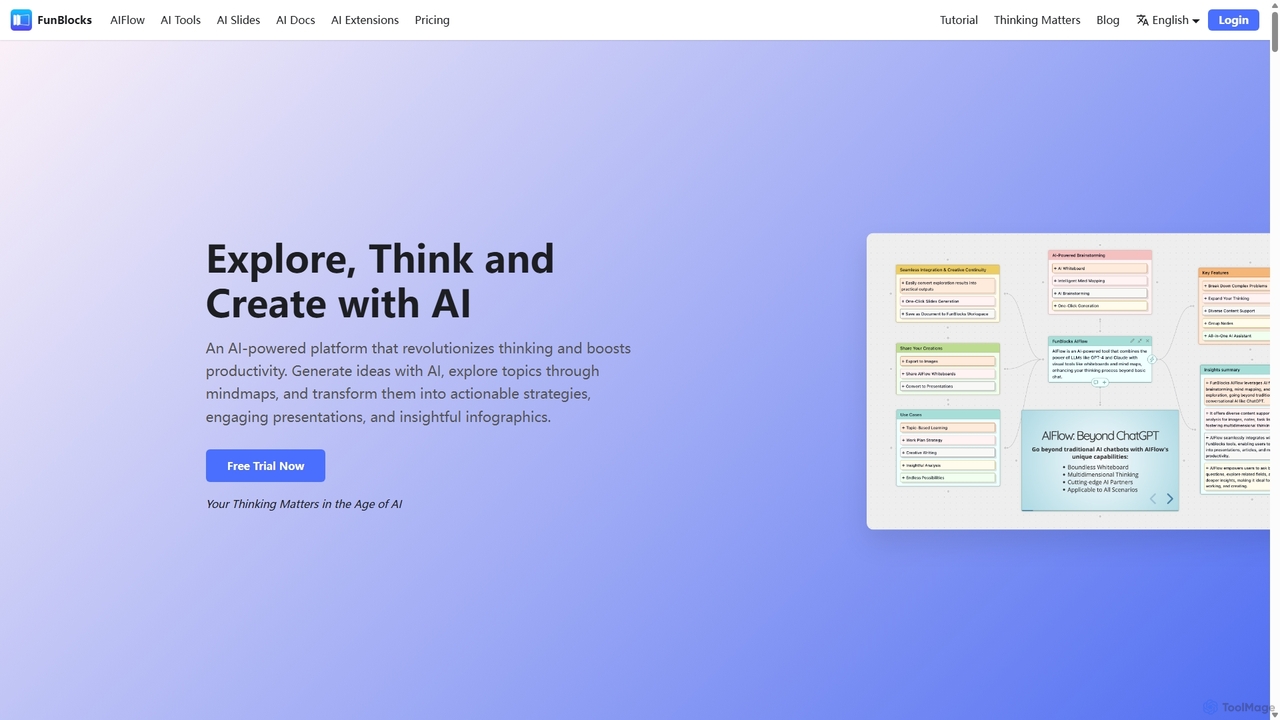
FunBlocks is an all-in-one AI workspace designed to revolutionize thinking and boost productivity. It seamlessly integrates AI-powered tools for mind mapping (AIFlow), document creation (AI Docs), slide generation (AI Slides), and web research (Browser Extension). From brainstorming complex ideas visually to producing polished documents and presentations with a single click, FunBlocks supports the entire knowledge workflow, enhancing creativity and critical thinking for students, professionals, and teams.

Presentations
Visits 47.9KFavorites 144Likes 137
ResearchGPT
Paid

ResearchGPT

An AI research assistant built on ChatGPT, designed to streamline academic literature searches. It finds relevant papers, synthesizes information, and provides answers backed by direct citations, transforming the way researchers and students conduct literature reviews.

Learning
Visits 7.3KFavorites 85Likes 89
mindlib
Freemium

mindlib

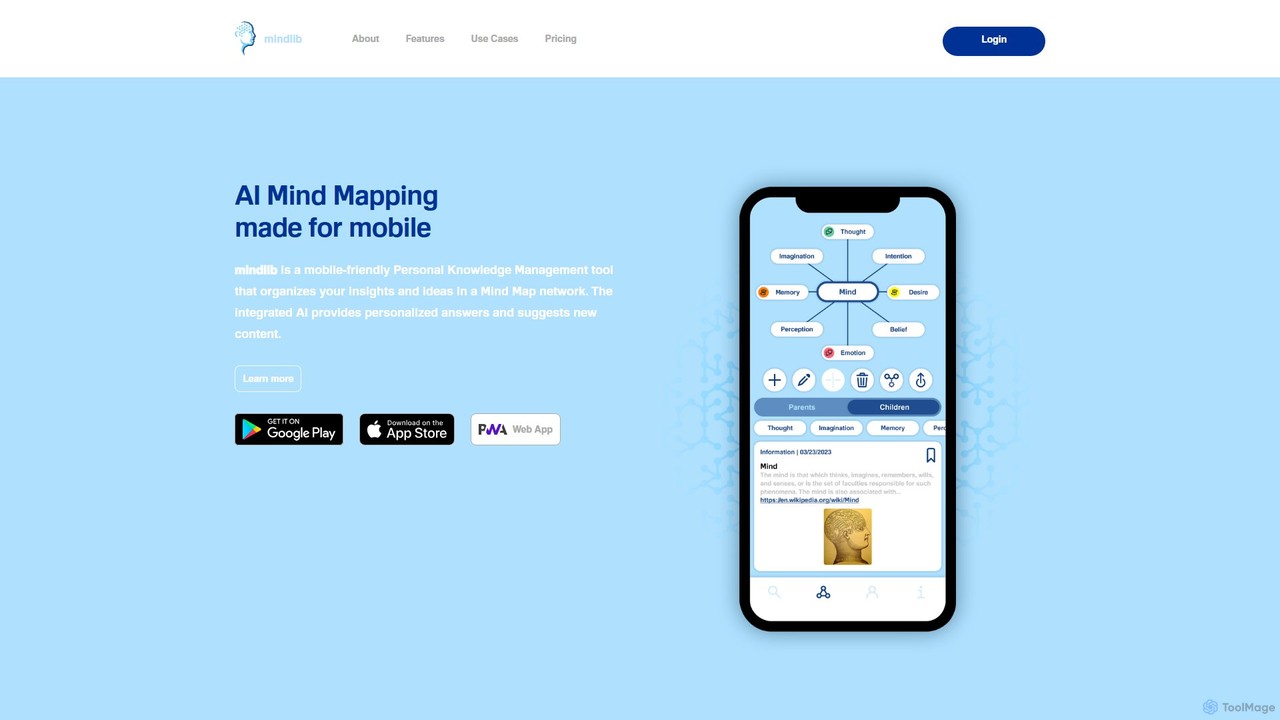
mindlib is a mobile-first AI mind mapping tool for personal knowledge management (PKM). It helps you build a 'second brain' by organizing ideas and insights into a connected network of mind maps. The integrated AI provides personalized answers based on your knowledge base and helps you explore and expand your ideas conversationally.

Learning
Visits 5.8KFavorites 136Likes 140
Connected Papers
Freemium

Connected Papers

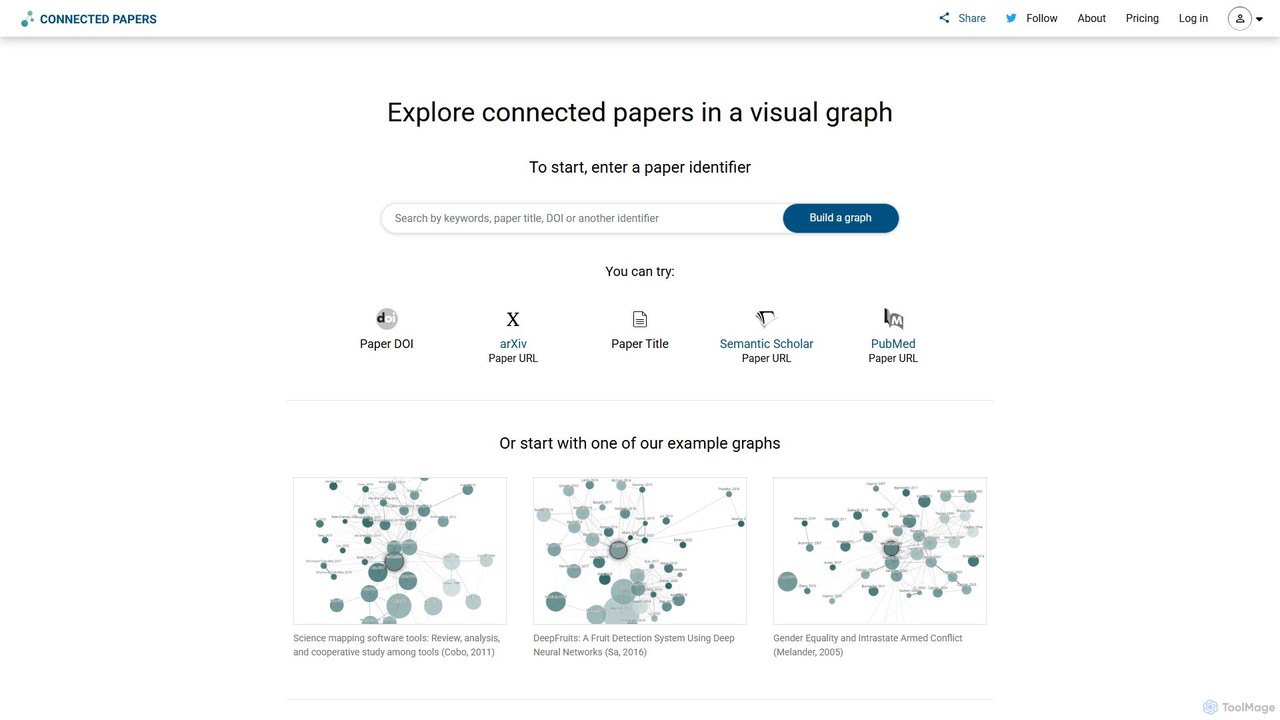
Connected Papers is a unique visual tool designed for researchers, students, and scientists. It helps you find and explore academic papers relevant to your work by generating interactive graphs. Instead of traditional lists, you get a visual map of a research field, allowing you to quickly discover trends, important prior works, and derivative studies, significantly speeding up your literature review process.

Academic
Visits 877.1KFavorites 152Likes 119
Open Knowledge Maps
Freemium

Open Knowledge Maps

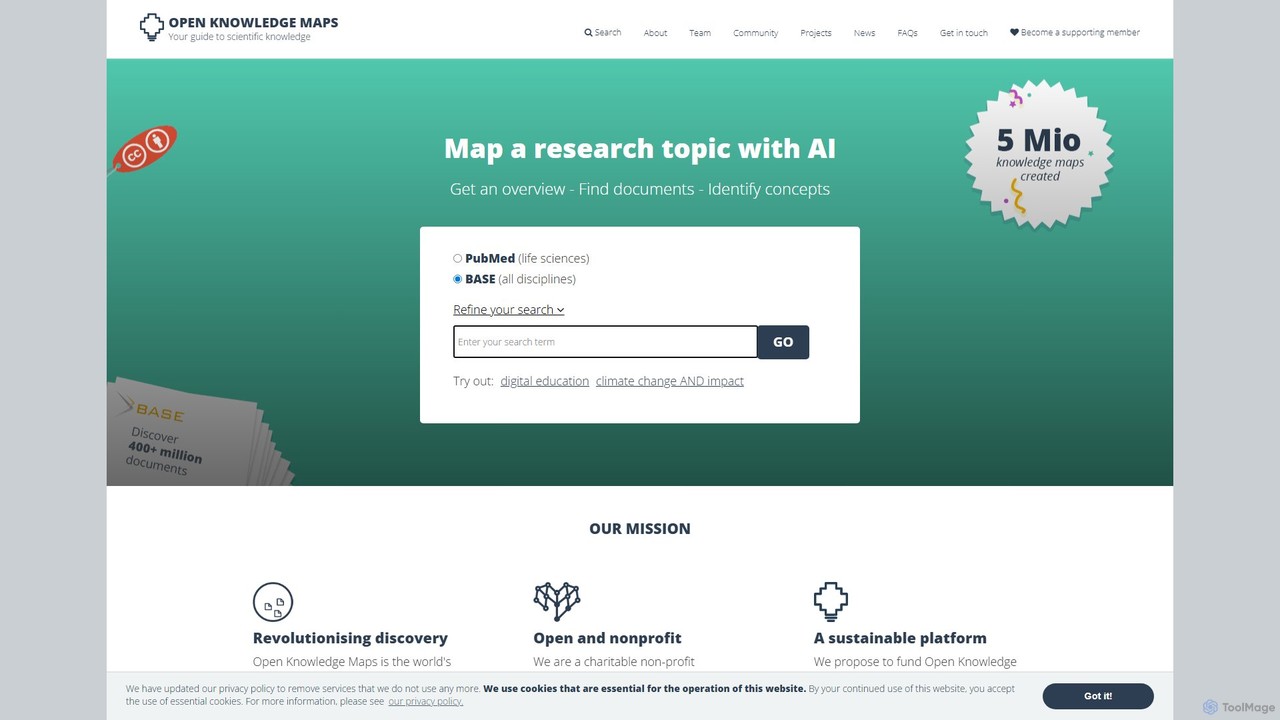
Open Knowledge Maps is a non-profit AI-powered discovery platform that transforms research discovery. It creates visual knowledge maps from millions of research articles, providing an instant overview of a topic. Instead of linear search results, it clusters documents by topic, helping users quickly identify relevant concepts and papers, especially in interdisciplinary fields. It emphasizes open access content and offers services for individuals, libraries, and institutions to enhance research visibility and assessment.

Visualization
Visits 116.8KFavorites 99Likes 85
JotBot
Freemium

JotBot

JotBot is an AI-powered writing and research assistant designed to streamline your workflow. It helps overcome writer's block with AI autocomplete, finds and cites sources instantly, generates drafts in your unique style, and allows you to chat with your documents and sources. Ideal for students, writers, and researchers.

Research
Visits 83.8KFavorites 113Likes 108
myStylus
Freemium

myStylus

myStylus is an advanced AI writing assistant designed for researchers, students, and content creators. It integrates powerful features like a research assistant with verified sources, intelligent text editing, and a conversational AI agent. The platform helps users brainstorm, draft, refine, and format content, adapting to their unique writing style and ensuring originality.

Research
Visits 57KFavorites 116Likes 90
genei
Freemium

genei

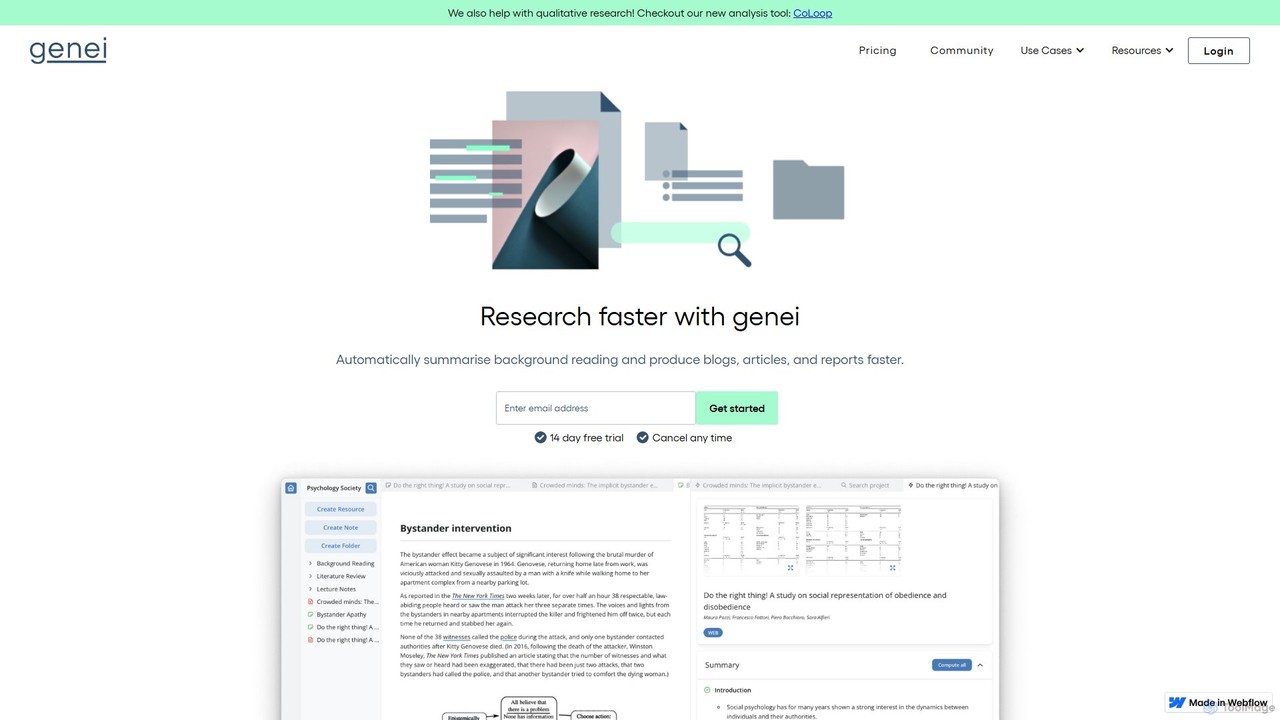
genei is an AI-powered research and summarization tool designed to enhance productivity for students, academics, and professionals. It helps users read faster, organize information, and uncover key insights by automatically summarizing documents, extracting keywords, and answering questions from your text. It supports PDFs and webpages, integrating research into a seamless workflow.

Study
Visits 29.1KFavorites 142Likes 151