

Open Knowledge Maps Overview
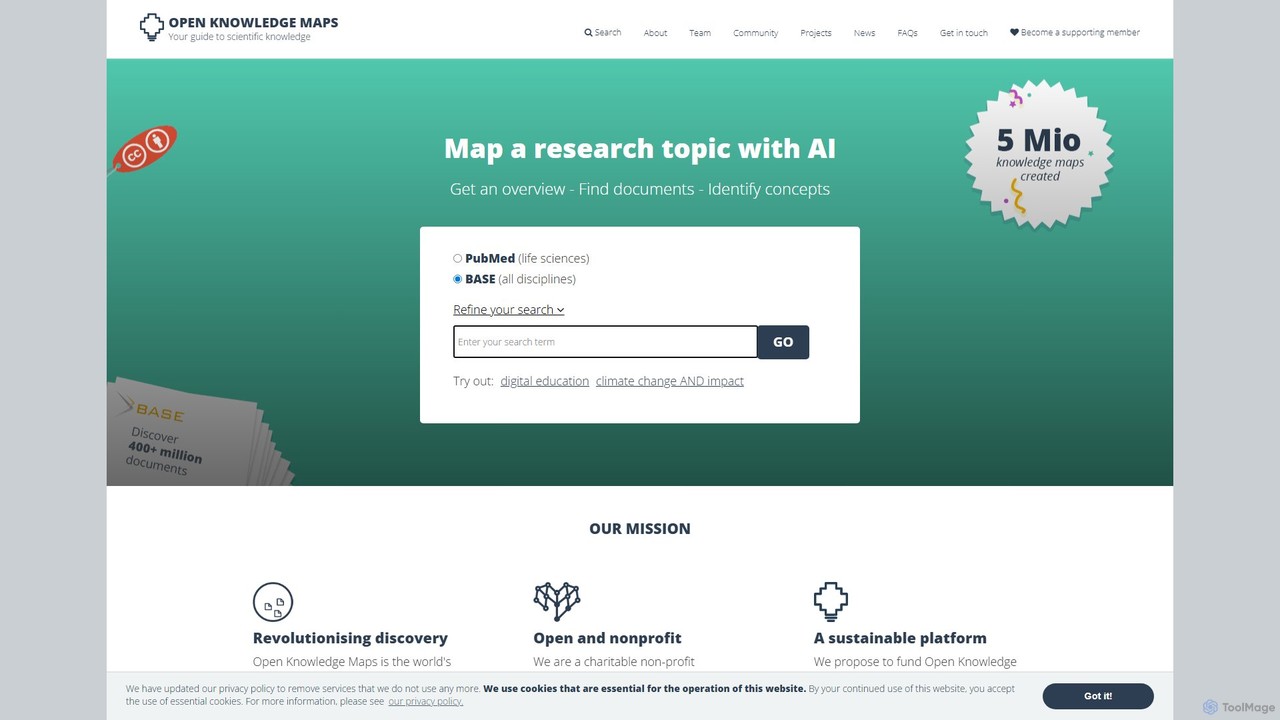
Open Knowledge Maps is a revolutionary, non-profit discovery tool designed to dramatically increase the visibility and accessibility of scientific knowledge. As the world's largest visual search engine for research, it moves beyond traditional, linear lists of search results. Instead, it uses artificial intelligence to generate interactive knowledge maps that provide a topical overview of any research field. By connecting to massive databases like BASE (Bielefeld Academic Search Engine) and PubMed, it can search through over 270 million documents, offering a comprehensive starting point for any literature review.
The platform is operated by a charitable organization with a mission to create a public good, ensuring that the tool remains open, free from advertising, and community-driven. It is supported by a global network of universities, libraries, and research funders who believe in a more open and equitable system for scholarly communication. This collaborative approach ensures that Open Knowledge Maps continuously evolves to meet the real-world needs of researchers, students, and the public.
How to use Open Knowledge Maps
Using Open Knowledge Maps is an intuitive process designed to streamline literature discovery:
- Start Your Search: Navigate to the Open Knowledge Maps homepage and enter a keyword, research topic, or author's name into the search bar.
- Refine Your Query: Before generating the map, you can refine your search. Choose your data source (e.g., BASE for all disciplines or PubMed for life sciences), select a time frame, and filter by document type (such as articles, datasets, or software). You can also choose to see only open access results.
- Generate the Map: Click the "Go" button. The AI will analyze the top 100 most relevant documents and organize them into a visual knowledge map.
- Explore the Overview: The map displays bubbles representing different sub-topics. The size of each bubble often corresponds to the number of documents within that cluster. This visual layout helps you quickly grasp the main areas of a research field and their relationships.
- Dive into Details: Click on any bubble to view a list of the documents clustered within that sub-topic. You can see titles, authors, and publication dates.
- Access and Export: From the document list, you can preview PDFs directly in the interface (with open access papers being highlighted), generate citations in various formats (APA, MLA, Chicago), and export document information to your preferred reference manager.
Core Features of Open Knowledge Maps
- AI-Powered Knowledge Maps: The core feature is the ability to visualize search results as thematic maps, providing a "big picture" view of a research field and making it easy to spot key areas.
- Streamgraphs: A unique visualization that shows how research topics have evolved over time, allowing users to identify emerging trends and historical patterns.
- Multi-Source Integration: Searches across major academic databases like BASE and PubMed, providing comprehensive coverage across all disciplines.
- Advanced Filtering: Users can narrow down results by document type, date range, and open access status, tailoring the search to their specific needs.
- Open Access Focus: The platform actively highlights and prioritizes open access documents, providing direct links and in-browser previews whenever possible.
- Institutional Services (Custom Services): Libraries and universities can integrate Open Knowledge Maps' visual search capabilities into their own catalogs and repositories, enhancing the discovery experience for their users.
- VisConnect for Research Assessment: An AI-driven service that creates rich, visual profiles of researchers, supporting a more holistic and responsible approach to research evaluation beyond traditional metrics.
- Citation and Export Tools: Built-in features to easily generate citations and export metadata to reference management software, streamlining the research workflow.
Use Cases for Open Knowledge Maps
Open Knowledge Maps is a versatile tool for various users:
- Students and Researchers: Ideal for quickly getting up to speed on a new topic, conducting a literature review, identifying research gaps, or finding collaborators in related fields.
- Librarians and Educators: Can be used as a teaching tool to introduce students to literature searching and to provide a more engaging discovery interface for library patrons.
- Institutions and Funders: Can leverage Custom Services to increase the visibility of their research output and use VisConnect for more equitable and comprehensive research assessment processes.
- Journalists and the Public: Provides an accessible way to explore scientific topics, understand the key areas of research, and find relevant open access papers without navigating complex academic databases.
Advantages of Open Knowledge Maps
The platform offers significant advantages over traditional search engines:
- Intuitive Visual Discovery: Transforms abstract topics into tangible maps, making it easier to understand complex fields and the relationships between different areas of research.
- Overcomes Information Overload: The AI-driven clustering helps to separate relevant from irrelevant information, which is particularly useful for ambiguous search terms or interdisciplinary research.
- Identifies Relevant Concepts: By labeling the clusters with key terms, the tool helps newcomers learn the specific language and concepts of a research field.
- Commitment to Openness: As a non-profit, open-source platform, it offers a transparent, community-owned alternative to commercial discovery tools, free from lock-in effects.
Pricing and Plans
Open Knowledge Maps operates on a sustainable, community-supported model:
- Free for Individuals: The core visual search engine is completely free for all individual users, in line with its mission to provide a public good.
- Supporting Membership: The platform is sustained through financial contributions from institutions like universities, libraries, research funders, and publishers. These organizations become supporting members.
- Institutional Services: Supporting members gain access to exclusive features like the Custom Services and VisConnect, allowing them to tailor and integrate the technology into their own systems. Membership tiers (e.g., Sustaining, Visionary) are available to fit different organizational sizes and needs.
Traffic
Latest traffic
Status
Monthly traffic trend
- 2025-9: 159.4K
- 2026-1: 131.4K
- 2026-2: 99.0K
- 2026-3: 70.4K
- 2026-4: 99.7K
- 2026-5: 112.7K
Geography
Top 5 countries / regions
- 🇮🇩Indonesia76.4%
- 🇩🇪Germany7.8%
- 🇺🇸United States7.6%
- 🇮🇳India4.1%
- 🇻🇳Vietnam4.1%
Traffic sources
| Source type | Percentage |
|---|---|
Direct | 85.7% |
Referral | 12.1% |
Email | 2.2% |
Top keywords
| Keyword | Cost per click |
|---|---|
| knowledge | $1.08 |
| maps | $0.21 |
| open knowledge | $0.60 |
| openknowledge map | $0.00 |
| open knowledge maps | $0.17 |
Open Knowledge Maps Alternatives
Citrus Search
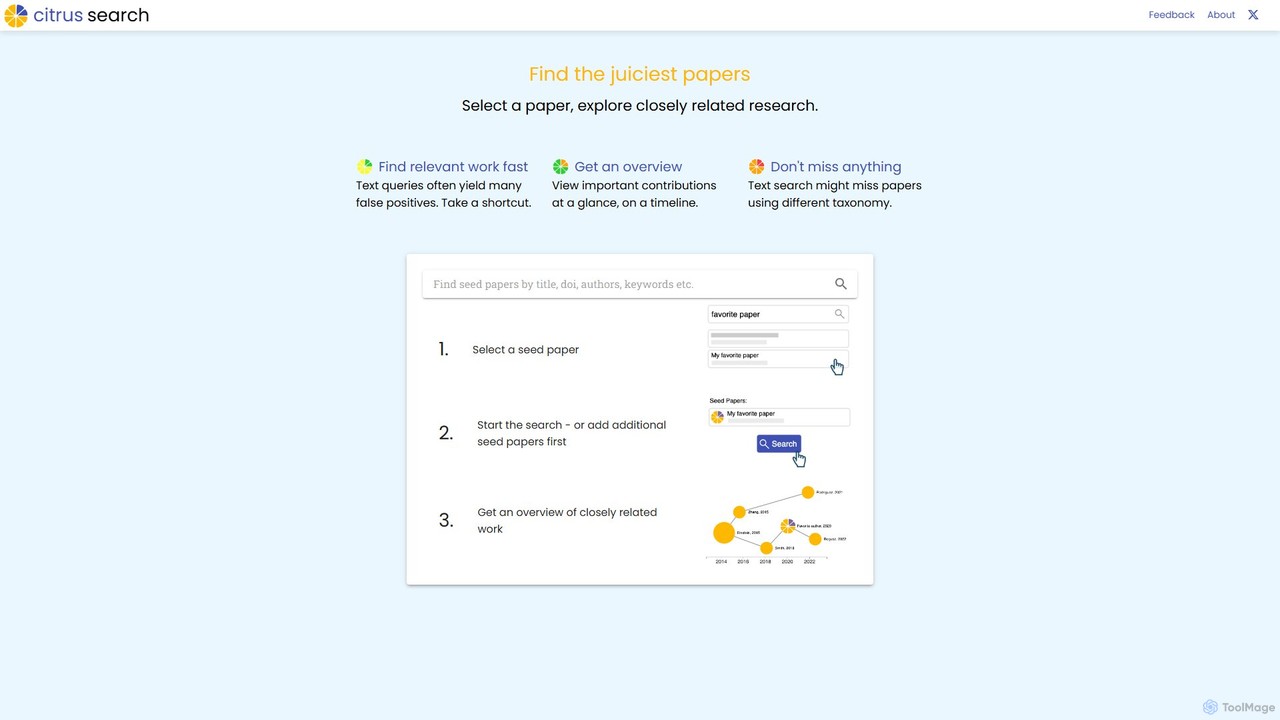
Citrus Search is an AI-powered academic search engine that revolutionizes literature discovery. Instead of keywords, you provide a "seed paper," and it finds closely related publications using advanced similarity metrics like citation networks and semantic content analysis. It's designed to help researchers quickly find relevant work, get a comprehensive overview of a field, and uncover papers that traditional search methods might miss.
Research Assistant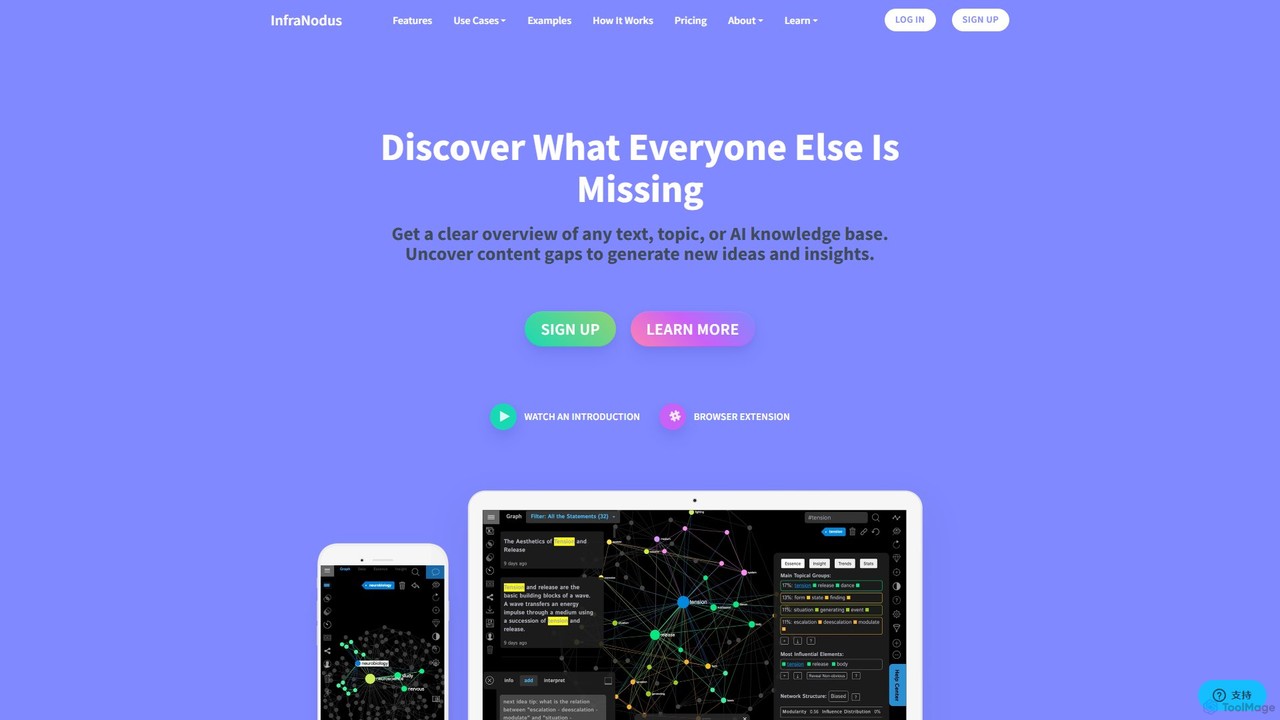
InfraNodus
InfraNodus is an AI-powered text analysis and visualization tool that transforms any text into an interactive knowledge graph. It helps researchers, writers, and strategists to identify key topics, uncover structural gaps, and generate novel insights using network analysis and GPT-4. It's designed to enhance thinking, not replace it.
Seo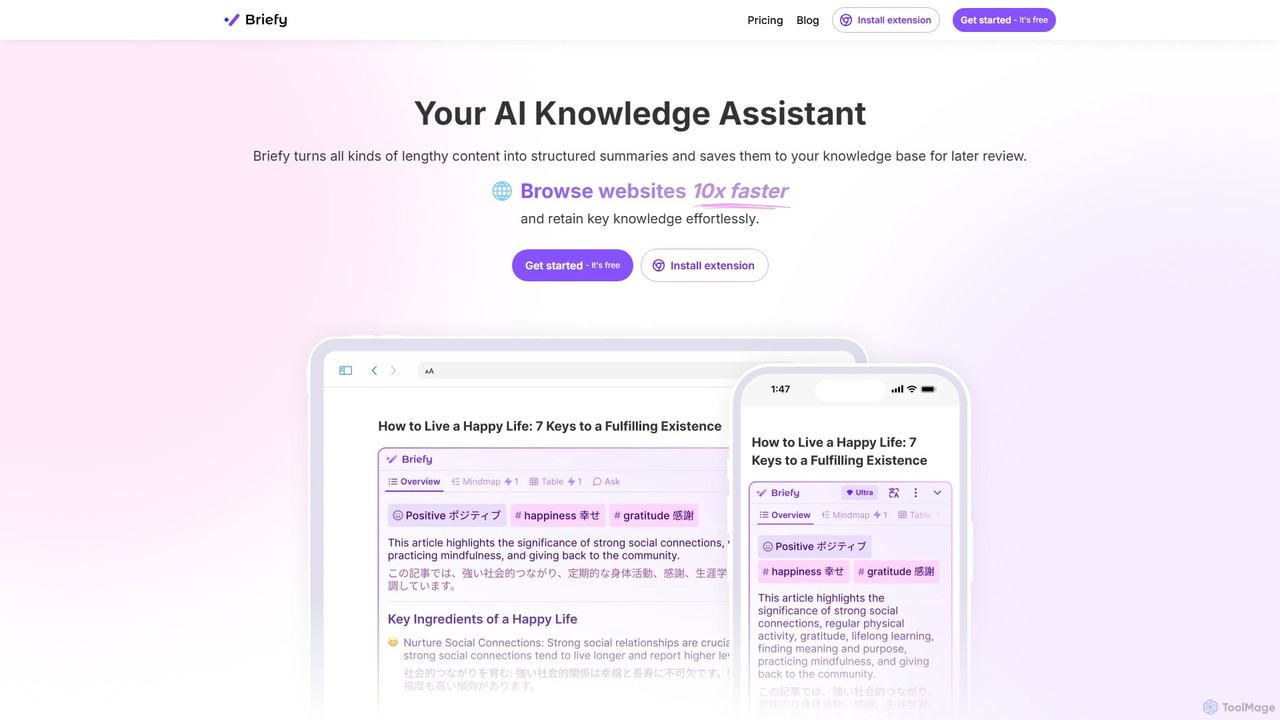
Briefy
Briefy is an AI-powered knowledge assistant that transforms lengthy content like articles, videos, and PDFs into structured summaries. It helps you conduct research 10x faster, retain key knowledge, and build a personal, searchable knowledge base for later review and interaction.
Research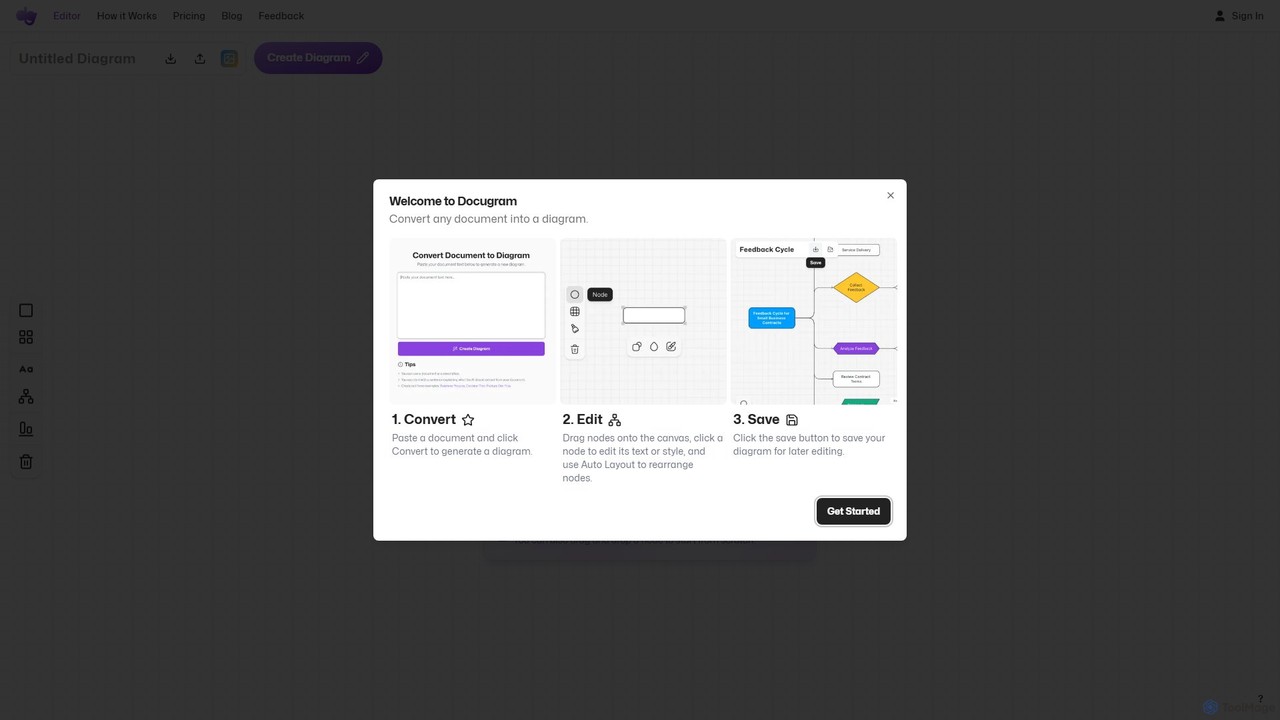
Docugram
Docugram is an AI-powered tool that instantly transforms text documents, notes, and prompts into clear, editable diagrams and flowcharts. It streamlines workflows by converting complex information from formats like Word, Excel, and PDF into visual maps, enhancing productivity for professionals in project management, development, and business analysis.
Project Management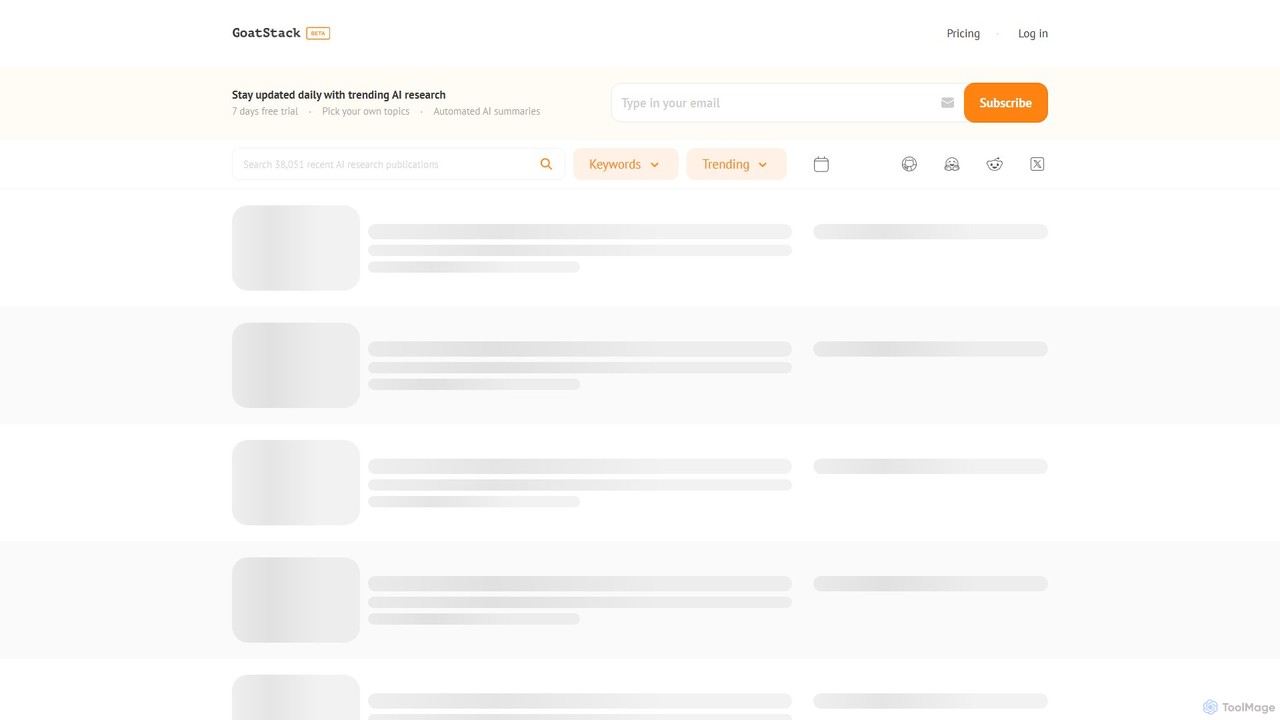
Goatstack
Goatstack is an AI-powered platform that helps researchers, engineers, and enthusiasts stay updated with trending AI research papers. It provides daily updates, personalized topics, and automated AI-generated summaries to accelerate literature discovery and knowledge acquisition in the fast-paced field of AI.
Academic ResearchOpen Knowledge Maps Categories
Open Knowledge Maps Embed Widget
Copy this embed code to place the badge on your blog, article, or product site and send readers directly to this ToolMage detail page.

Related AI tools
Citrus Search
Citrus Search is an AI-powered academic search engine that revolutionizes literature discovery. Instead of keywords, you provide a "seed paper," and it finds closely related publications using advanced similarity metrics like citation networks and semantic content analysis. It's designed to help researchers quickly find relevant work, get a comprehensive overview of a field, and uncover papers that traditional search methods might miss.
Research Assistant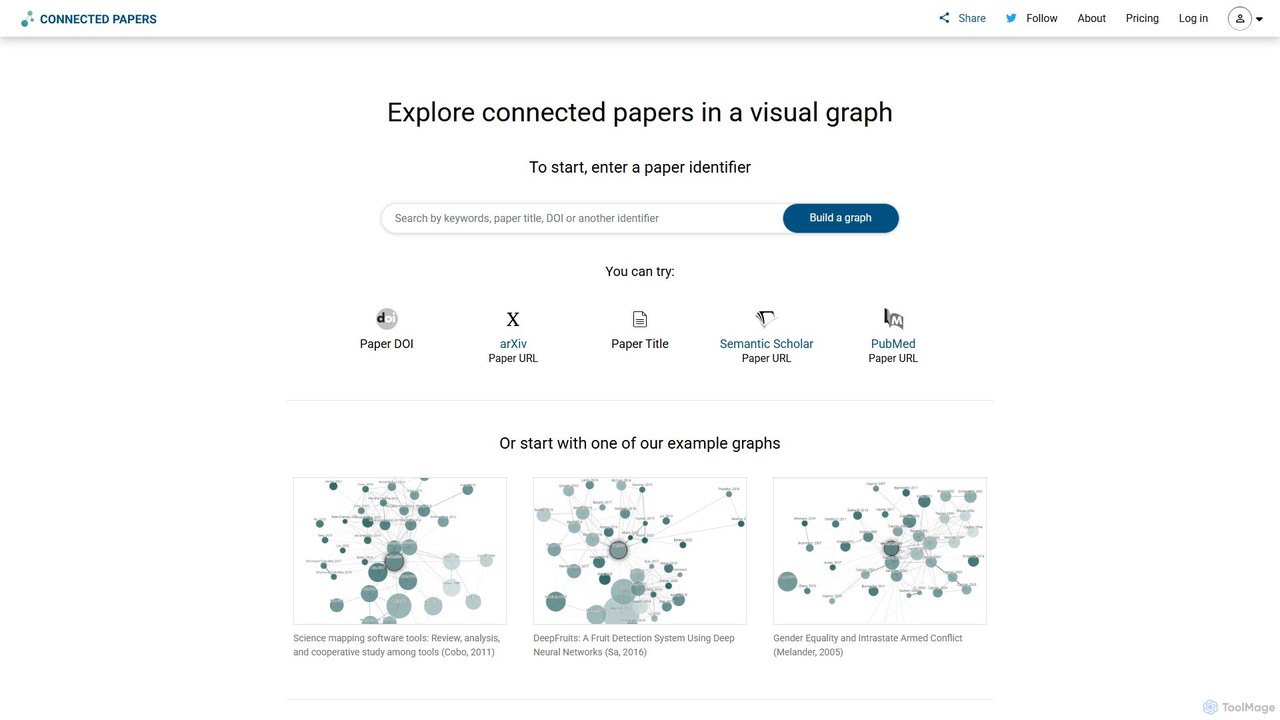
Connected Papers
Connected Papers is a unique visual tool designed for researchers, students, and scientists. It helps you find and explore academic papers relevant to your work by generating interactive graphs. Instead of traditional lists, you get a visual map of a research field, allowing you to quickly discover trends, important prior works, and derivative studies, significantly speeding up your literature review process.
Academic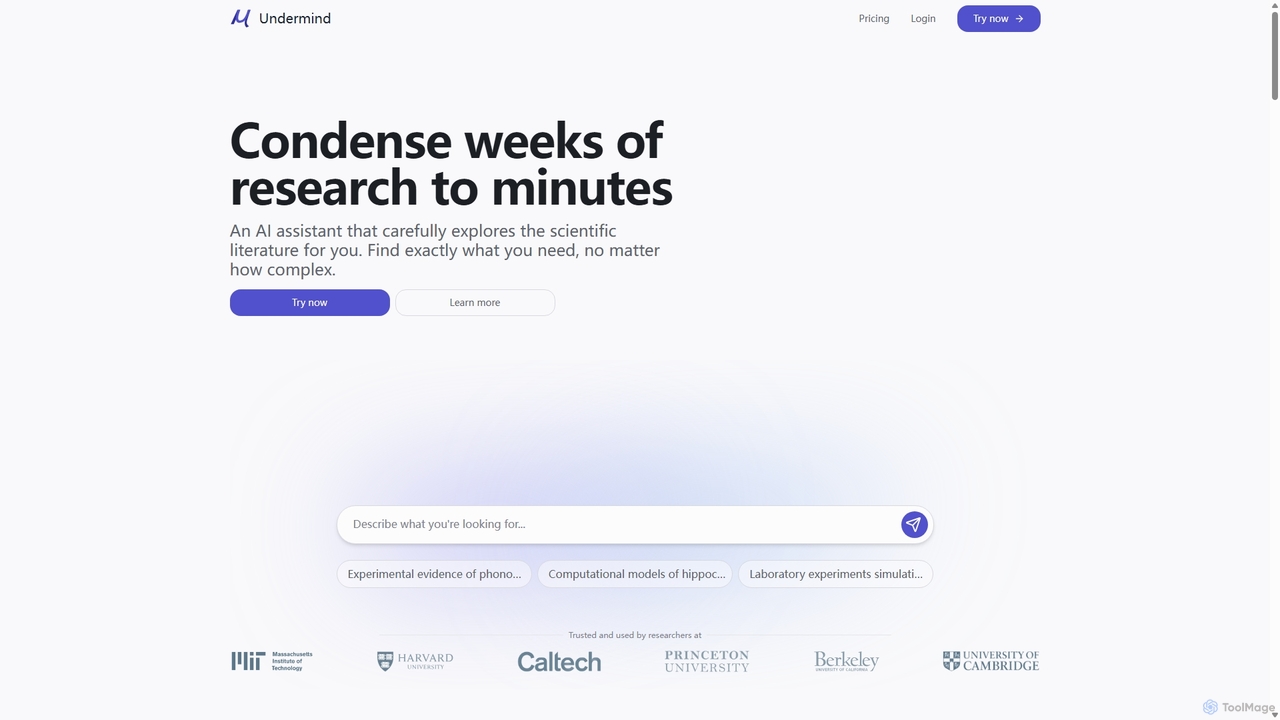
Undermind
An AI-powered research assistant designed for scientists and academics. It automates literature reviews by exploring thousands of scientific papers, traversing citation graphs, and synthesizing information. Undermind condenses weeks of research into minutes, helping users assess novelty, identify gaps, and uncover cross-disciplinary insights with verifiable, citation-backed responses.
Academic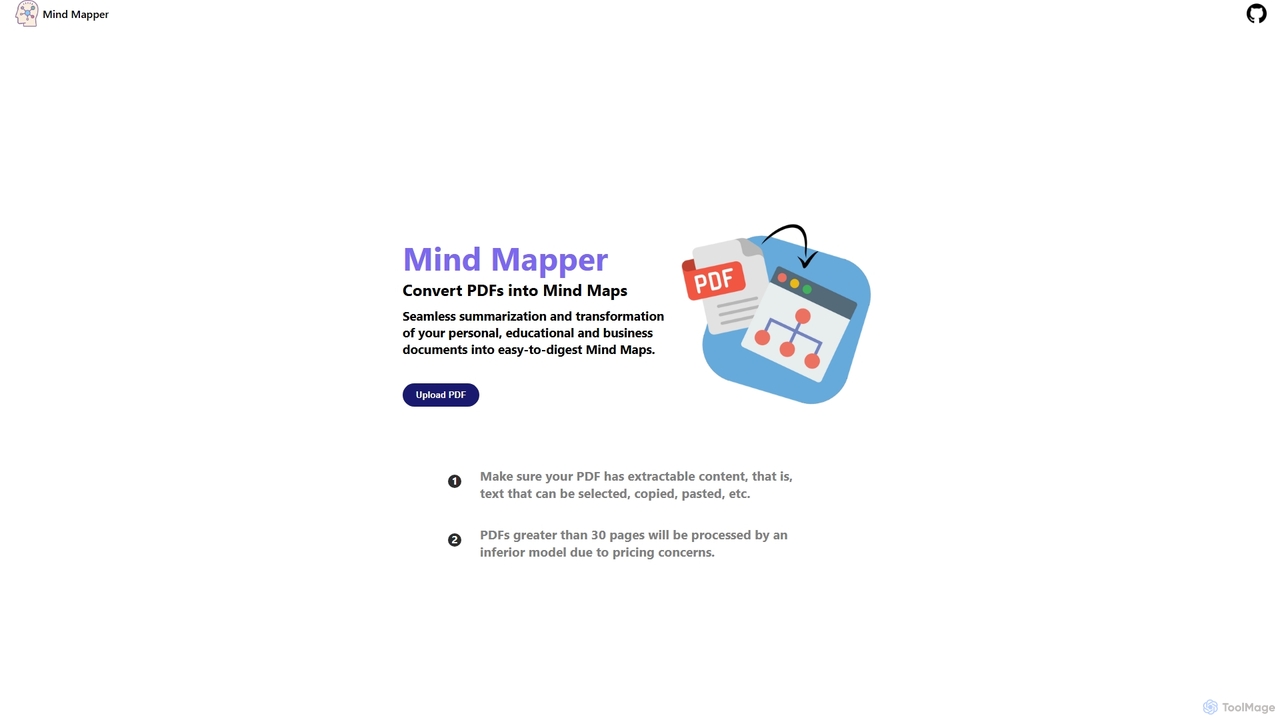
MindmapAI
MindmapAI is an AI-powered tool that transforms PDF documents into clear, structured mind maps. Using Google's Gemini AI, it automatically summarizes and visualizes complex information, making it ideal for students, researchers, and professionals to quickly grasp key concepts from dense texts.
Document ManagementInfraNodus
InfraNodus is an AI-powered text analysis and visualization tool that transforms any text into an interactive knowledge graph. It helps researchers, writers, and strategists to identify key topics, uncover structural gaps, and generate novel insights using network analysis and GPT-4. It's designed to enhance thinking, not replace it.
SeoBriefy
Briefy is an AI-powered knowledge assistant that transforms lengthy content like articles, videos, and PDFs into structured summaries. It helps you conduct research 10x faster, retain key knowledge, and build a personal, searchable knowledge base for later review and interaction.
ResearchDocugram
Docugram is an AI-powered tool that instantly transforms text documents, notes, and prompts into clear, editable diagrams and flowcharts. It streamlines workflows by converting complex information from formats like Word, Excel, and PDF into visual maps, enhancing productivity for professionals in project management, development, and business analysis.
Project ManagementGoatstack
Goatstack is an AI-powered platform that helps researchers, engineers, and enthusiasts stay updated with trending AI research papers. It provides daily updates, personalized topics, and automated AI-generated summaries to accelerate literature discovery and knowledge acquisition in the fast-paced field of AI.
Academic Research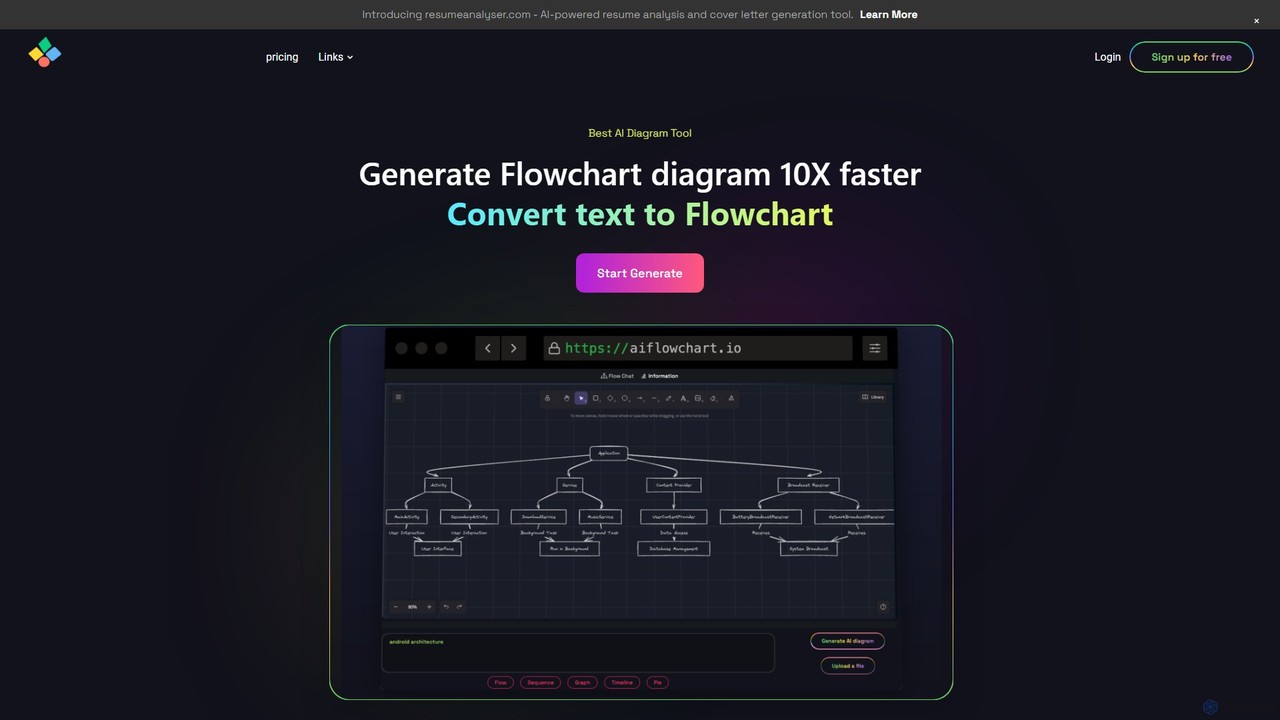
aiflowchart
An AI-powered diagramming tool that automatically generates flowcharts, sequence diagrams, pie charts, and more from text, PDFs, or blog content. It leverages models like GPT-4o to create unique, customizable diagrams with explanations, saving users significant time and effort.
Visualization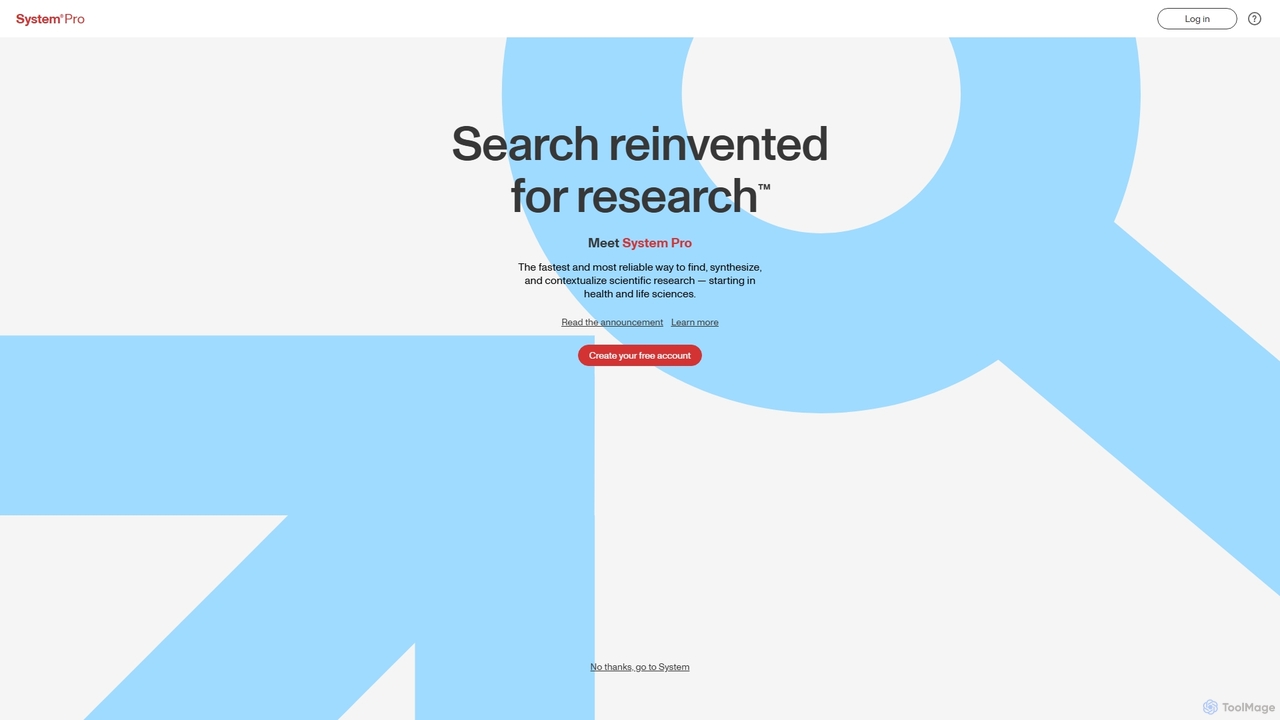
System Pro
System Pro is an AI-powered search engine designed to reinvent scientific research, initially focusing on health and life sciences. It offers the fastest, most reliable way to find, synthesize, and contextualize complex research papers, helping researchers and professionals accelerate their literature review process and uncover critical insights from a vast body of scientific knowledge.
Medical Information
Jyek
Jyek is an AI agent platform that understands objectives, creates execution plans, uses tools, and delivers verifiable results for complex, multi-step tasks.
Automation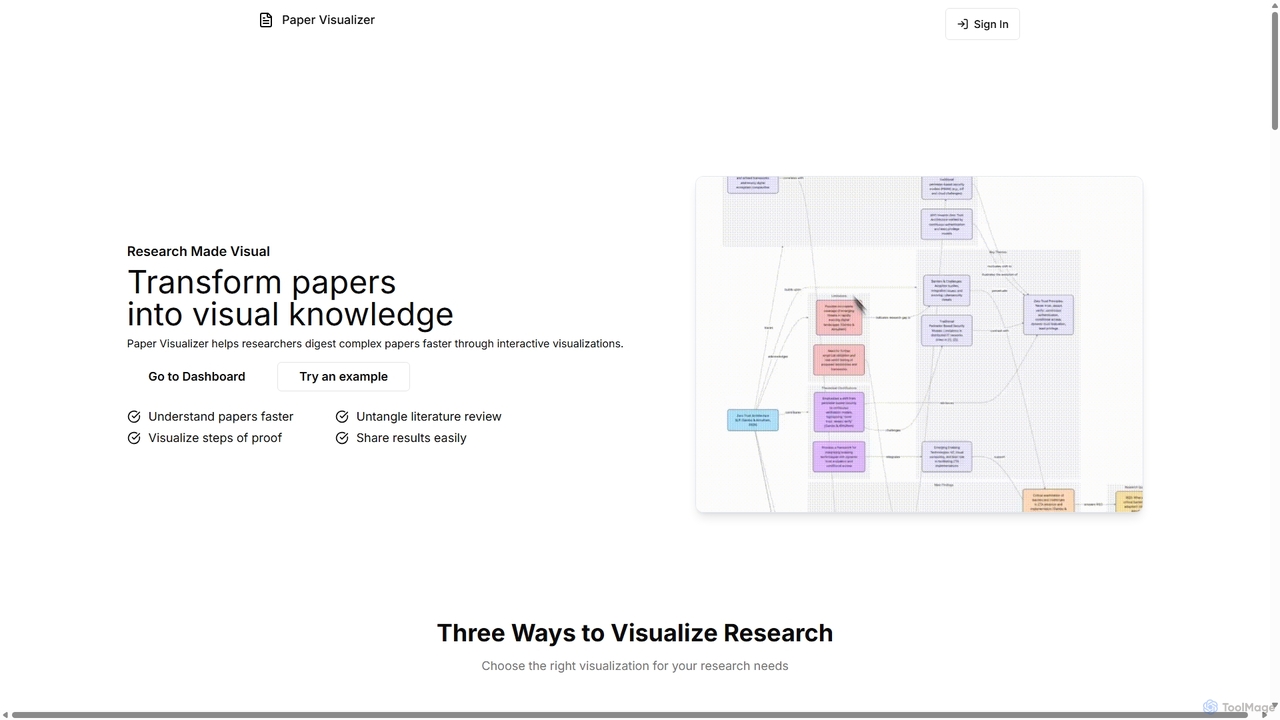
Paper Visualizer
Paper Visualizer is an AI-powered tool that transforms complex research papers into interactive visualizations and knowledge graphs. It helps researchers, students, and academics quickly digest dense information, understand technical details, and map literature connections, accelerating the research process.
Visualization
Onri
Onri is an AI-powered learning platform that acts as a "Google Map for knowledge." It generates structured, visual learning paths to help users understand and master complex topics efficiently. Covering a vast range of subjects from AI and product management to personal finance and mental health, Onri provides the shortest path to learn anything.
Learning
Semantic Scholar
A free, AI-powered research tool from the Allen Institute for AI that helps scholars discover and understand scientific literature. It uses AI to analyze over 200 million papers, providing features like semantic search, influential citation analysis, and paper summaries to accelerate scientific breakthroughs.
Apis
Consensus
Consensus is an AI-powered search engine designed for scientific research. It searches over 200 million peer-reviewed papers to provide evidence-based, synthesized answers to user questions, saving time for researchers, students, and professionals by extracting key findings directly from scientific literature.
Learning
Open Knowledge Maps Comments (0)
Sign in to comment.
Sign inNo comments yet.