ToolMage
Sign in

Best 10 Apis AI tools for Developer Tools

Popular Apis AI tools in Developer Tools include Semantic Scholar, Dodo Payments, Precip, Sendbird, MessageCentral, BSG AI CPaaS, Perigon, Slaice, Flux Image Generator, and Pathway, helping you work more efficiently.

Dodo Payments
Paid

Dodo Payments

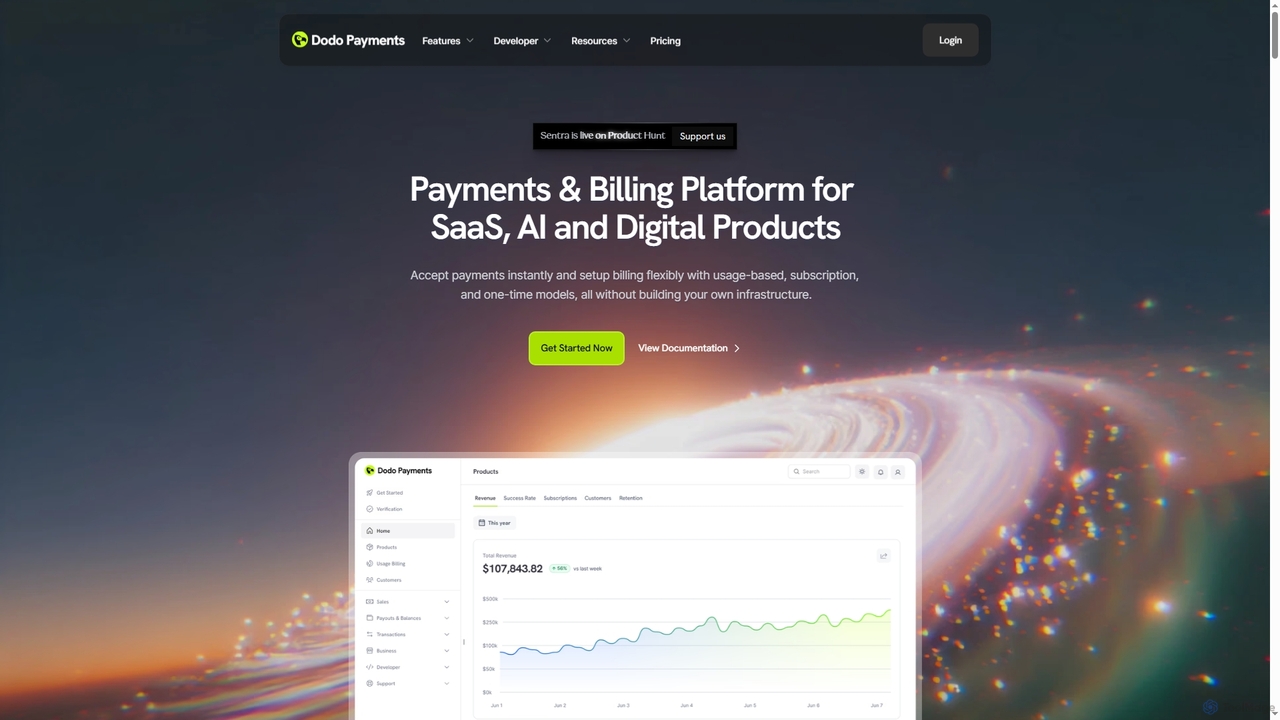
Dodo Payments is an all-in-one payment and billing platform designed for SaaS, AI, and digital products. It enables businesses to accept payments globally, set up flexible billing models (usage-based, subscription, one-time), and manage distribution without extensive infrastructure development. It simplifies global monetization, tax compliance, and offers robust developer tools for seamless integration.

Saas Management
Visits 599.2KFavorites 116Likes 141
Slaice
Freemium

Slaice

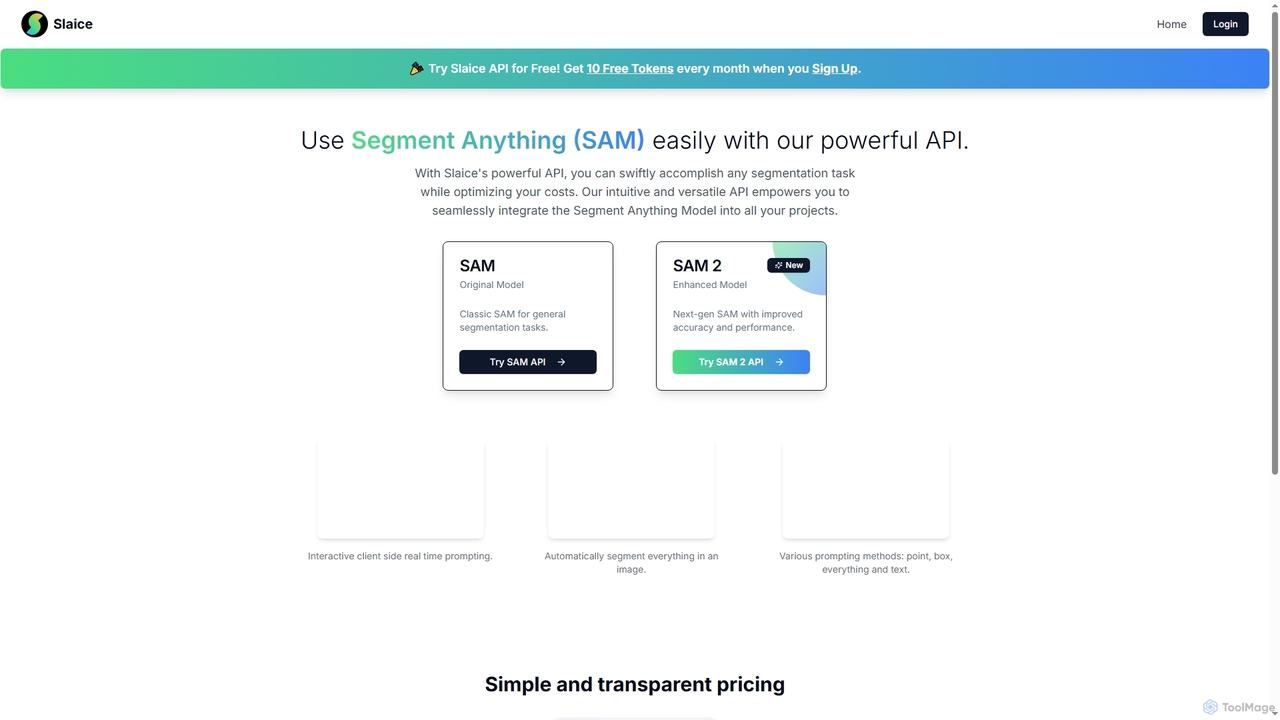
Slaice provides a powerful and intuitive API for seamless integration of the Segment Anything Model (SAM) into any project. It offers both the classic SAM and the enhanced SAM 2, enabling efficient and cost-optimized image segmentation tasks. Users can leverage various prompting methods like point, box, everything, and text for precise object isolation.

Object Detection
Visits 8.5KFavorites 168Likes 168
MessageCentral
Freemium

MessageCentral

MessageCentral is a comprehensive CPaaS (Communications Platform as a Service) solution offering powerful APIs for SMS, WhatsApp, and RCS messaging. It enables businesses to enhance customer engagement through OTP verification, bulk SMS marketing, and omnichannel communication, featuring high deliverability, real-time analytics, and global coverage.

Omnichannel Communication
Visits 78.9KFavorites 163Likes 177
BSG AI CPaaS
Paid

BSG AI CPaaS

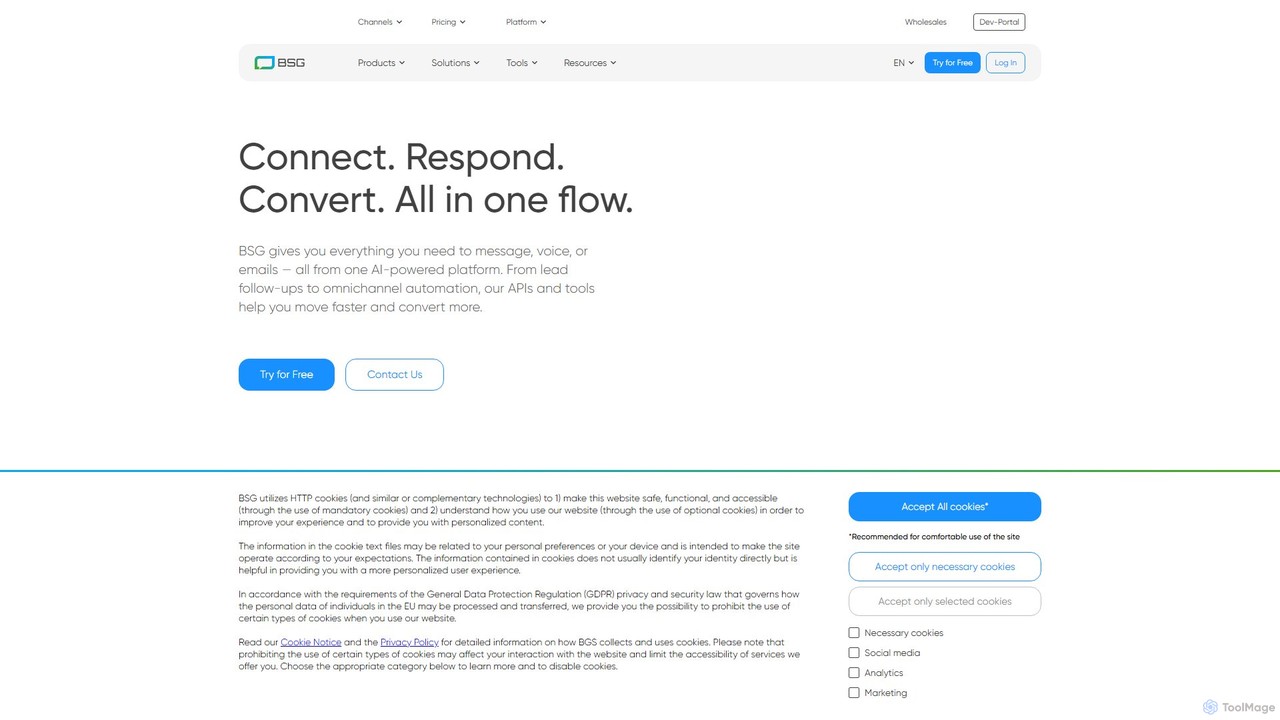
BSG is an AI-powered Communications Platform as a Service (CPaaS) providing global, multi-channel messaging solutions. It enables businesses to integrate SMS, AI Voice Bots, RCS, and Viber messaging into their applications via robust APIs for enhanced customer engagement, security, and marketing.

Contact Center
Visits 29.5KFavorites 117Likes 128
Precip
Paid

Precip

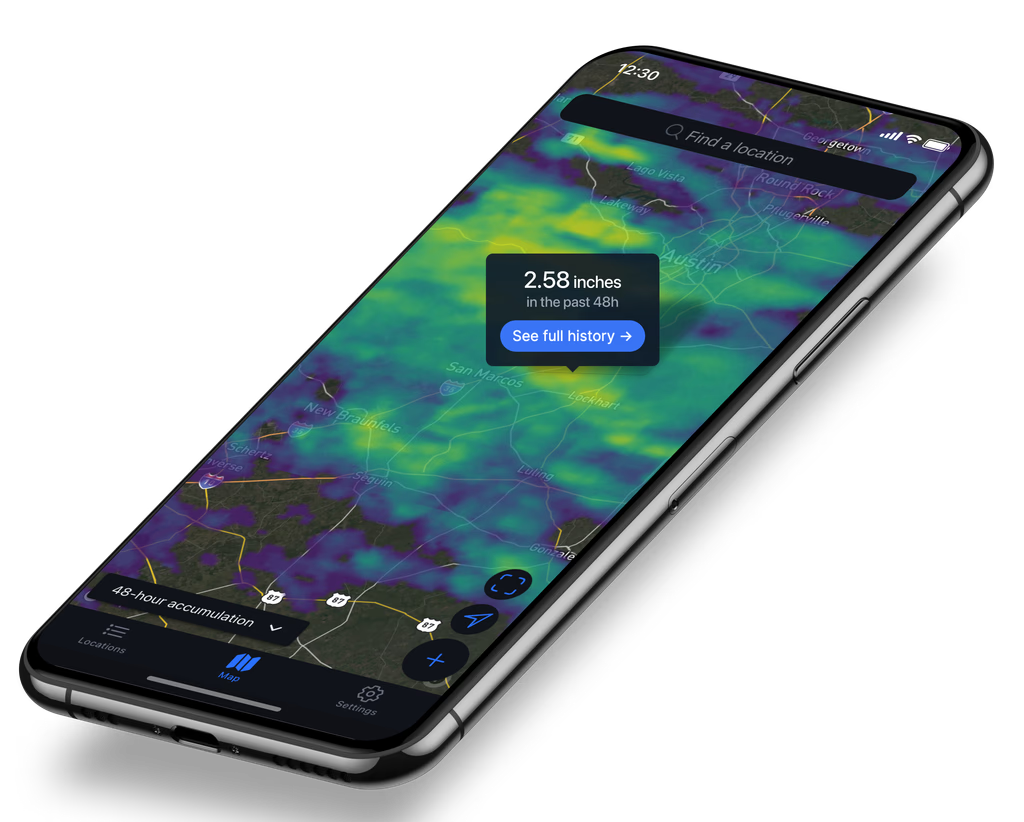
Precip provides hyper-local, highly accurate rainfall totals and historical weather data through a web dashboard and a powerful API. It's designed for industries like agriculture, construction, and logistics, offering 1km resolution data, real-time rainfall notifications, and multi-location monitoring. By tracking actual precipitation, Precip helps businesses make informed, data-driven decisions, optimize schedules, and manage weather-dependent operations more efficiently, surpassing the accuracy of standard forecasts.

Agriculture
Visits 313.6KFavorites 180Likes 166
Pathway
Paid

Pathway

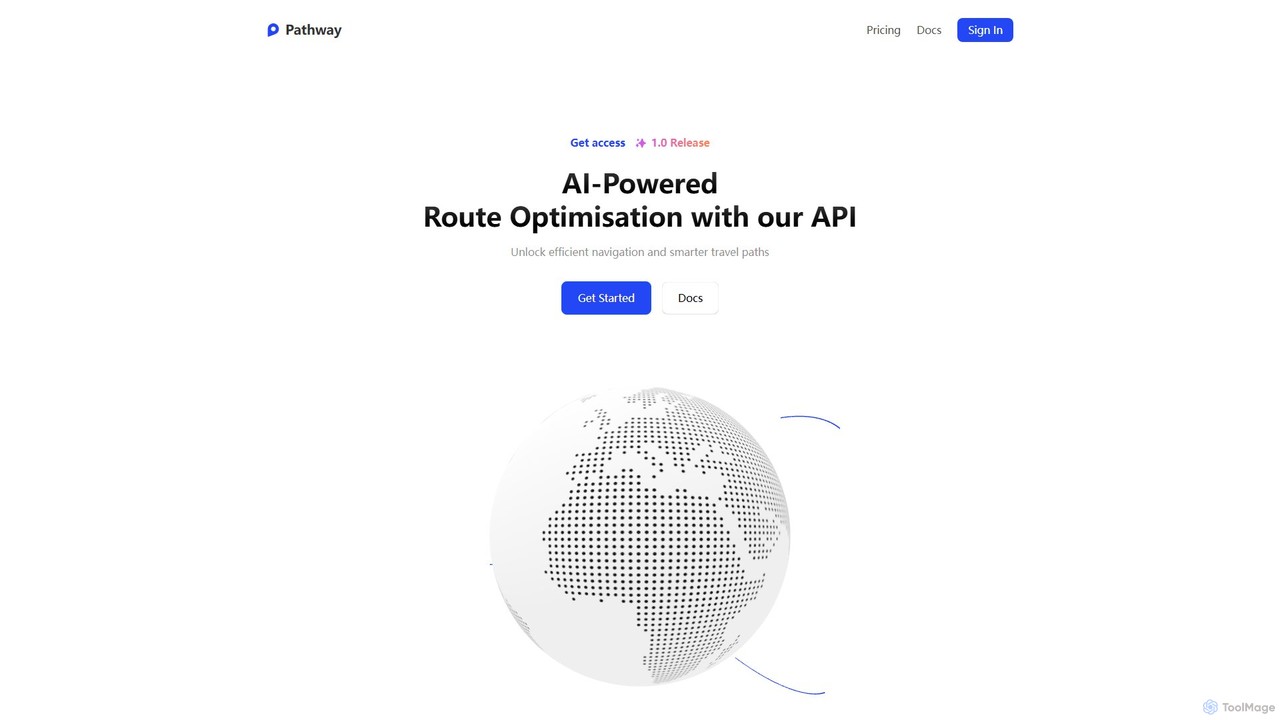
Pathway offers an AI-powered route optimization API designed for businesses to create the most efficient travel paths. It helps logistics, ride-sharing, and service industries save time and money by intelligently planning multi-stop routes, considering real-time traffic and other constraints.

Fleet Management
Visits 6.4KFavorites 136Likes 135
Sendbird
Paid

Sendbird

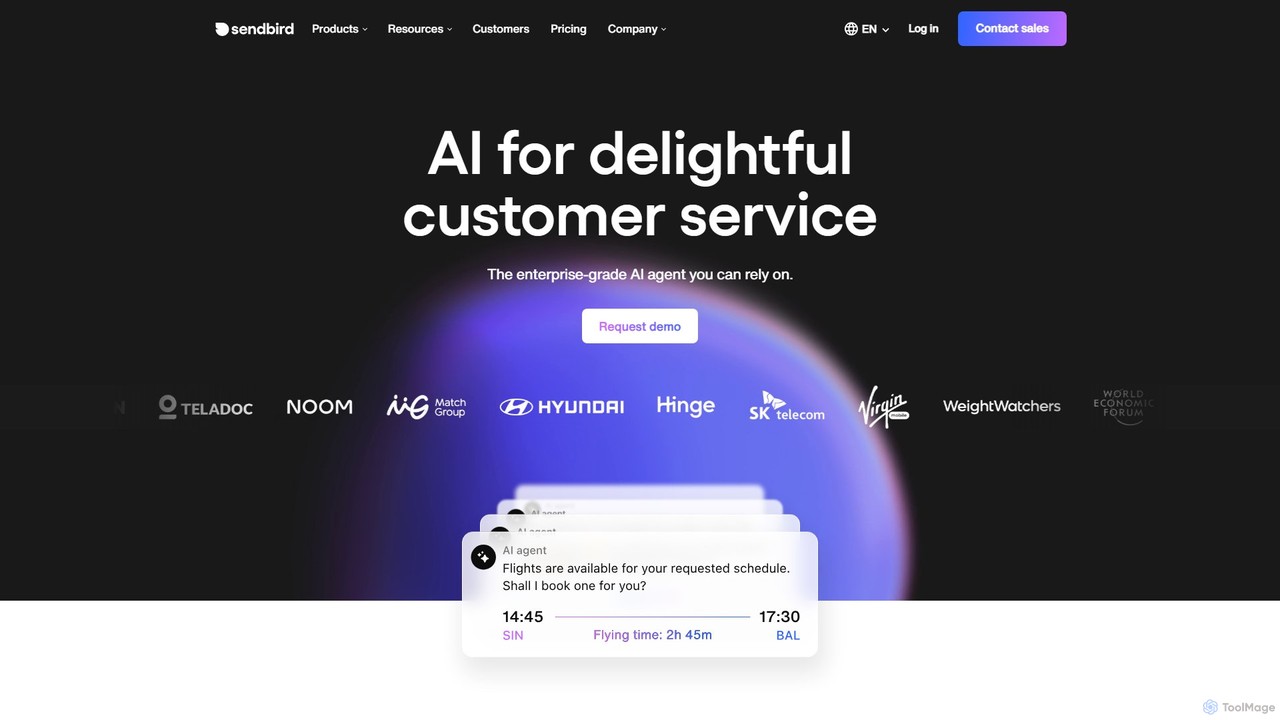
Sendbird is an enterprise-grade AI platform for building and deploying autonomous, omnichannel AI agents. It enables businesses to elevate customer experience by automating support and sales conversations, integrating seamlessly with existing systems, and ensuring enterprise-level security and scalability.

Chatbots
Visits 179.4KFavorites 120Likes 132
Semantic Scholar
Free

Semantic Scholar

A free, AI-powered research tool from the Allen Institute for AI that helps scholars discover and understand scientific literature. It uses AI to analyze over 200 million papers, providing features like semantic search, influential citation analysis, and paper summaries to accelerate scientific breakthroughs.

Apis
Visits 7.9MFavorites 136Likes 109
Flux Image Generator
Freemium

Flux Image Generator

Flux Image Generator is a cutting-edge AI tool that transforms text descriptions into high-quality images with remarkable speed and accuracy. It offers three distinct models—Schnell (fast & free), Dev (for developers), and Pro (for professionals)—to cater to various needs. Leveraging a hybrid architecture, it excels in prompt adherence, photorealistic quality, and rendering complex details like hands and text, making it a powerful alternative to other leading image generators.

Generative Art
Visits 6.5KFavorites 149Likes 147
Perigon
Freemium

Perigon

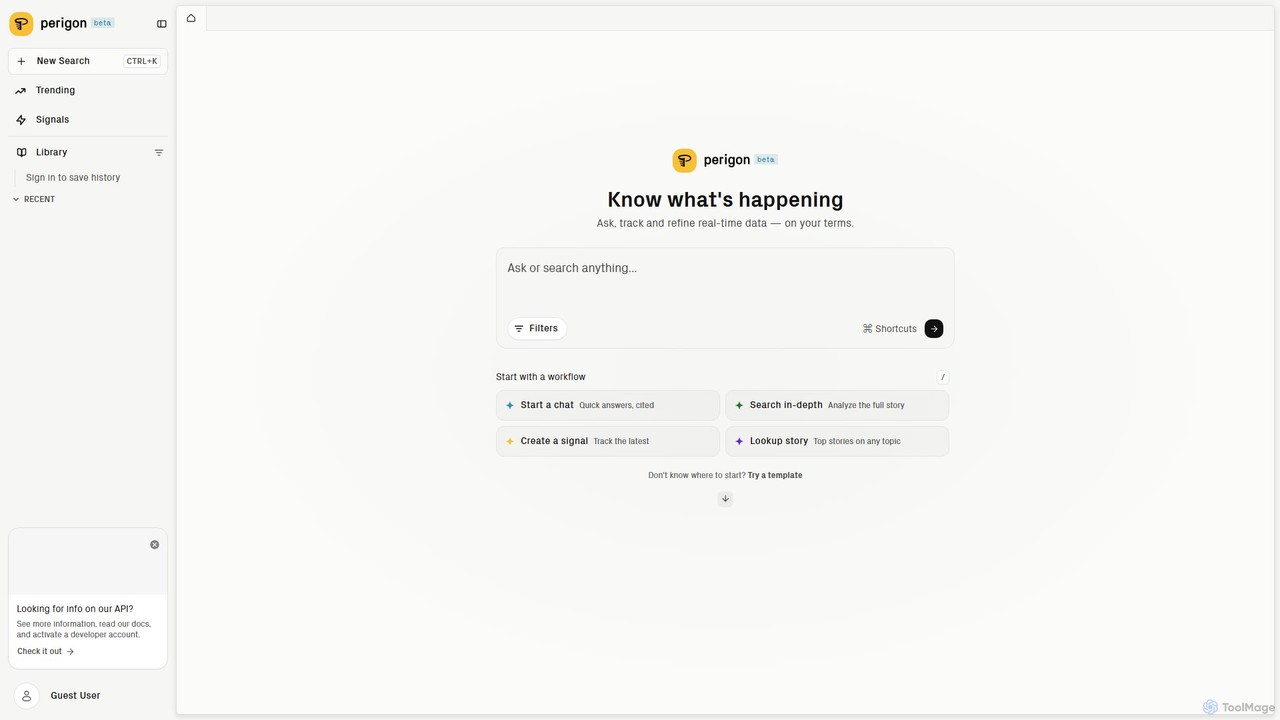
Perigon is an AI-powered contextual intelligence platform and news API. It analyzes global information in real-time, providing structured data, AI-generated summaries, and deep insights. It's designed for researchers, developers, and enterprises to track topics, understand market trends, and cut through information noise to get the complete story.

News & Research
Visits 17.1KFavorites 117Likes 141

About Apis

AI APIs are programmatic interfaces that allow developers to integrate pre-trained artificial intelligence models into their applications. These tools function as a bridge, providing access to complex capabilities like natural language processing or computer vision through simple web requests, typically using REST protocols. This enables developers to quickly add sophisticated AI features, such as text analysis, image tagging, or automated translation, to software and services with minimal machine learning expertise. As a key component within Developer Tools, these APIs abstract away the complexity of model training and infrastructure management, significantly accelerating development cycles.

Core Features

  • Direct Model Access: Provides programmatic endpoints to interact with state-of-the-art AI models for various tasks.
  • Scalable Infrastructure: Offers managed, auto-scaling cloud infrastructure that handles high volumes of requests reliably.
  • Comprehensive Documentation: Includes detailed guides, code samples, and Software Development Kits (SDKs) for easy integration.
  • Usage-Based Pricing: Features flexible pay-as-you-go pricing models based on API calls, tokens processed, or other metrics.
  • Specialized Endpoints: Offers distinct endpoints optimized for specific functions like text generation, embedding creation, or sentiment analysis.

Use Cases

AI APIs are widely used by software developers, data scientists, and enterprise IT teams. They are foundational for building intelligent chatbots for customer service, automating content moderation on social platforms, analyzing customer feedback from reviews, and powering personalized recommendation engines in e-commerce and media applications.

How to Choose

When selecting an AI API, first evaluate the underlying model's performance and suitability for your specific task. Analyze the pricing structure and rate limits to ensure it aligns with your budget and scaling needs. Assess the quality of the documentation and the availability of SDKs for your preferred programming language. Finally, consider the API's latency, reliability, and data privacy policies to ensure it meets your application's performance and compliance requirements.

Featured tool rankings

Apis use cases

1

Building an AI-Powered Customer Support Chatbot

A backend developer at a SaaS company is tasked with reducing the load on the human support team. By integrating a natural language processing (NLP) API, they can build a chatbot that understands user queries. The developer sends user messages to the API's chat endpoint and uses a related embedding API to search the company's knowledge base for relevant answers. The result is an intelligent, 24/7 chatbot that can resolve common issues instantly, leading to a 40% reduction in support ticket volume and improved customer satisfaction.

2

Automating Content Moderation for a Social Platform

A product manager for a user-generated content platform needs to ensure community safety. They integrate a content moderation API to automatically scan all new text and image submissions. When a user posts content, it is sent to the API, which returns a classification (e.g., 'safe', 'toxic', 'spam') and a confidence score. This system automatically flags or removes 95% of policy-violating content within seconds, allowing human moderators to focus on nuanced cases and appeals, thus creating a safer online environment more efficiently.

3

Enhancing E-commerce Search with Image Recognition

An e-commerce developer wants to implement a visual search feature. Using a computer vision API, they allow users to upload a photo of an item to find similar products. When an image is uploaded, it's sent to the API's visual search endpoint. The API analyzes the image, identifies key attributes like color and shape, and returns a list of visually similar product IDs from the store's catalog. This feature improves the shopping experience for visually-driven products like fashion and home decor, resulting in a 15% increase in conversion rates for those categories.

4

Generating Marketing Copy for Ad Campaigns

A digital marketer in a small team needs to create multiple variations of ad copy for A/B testing. Instead of manual brainstorming, they use a text generation API integrated into a simple script. They input key product features, the target audience, and a desired tone. The API then generates dozens of creative and compelling headlines and descriptions. This process reduces the time to launch a new ad campaign from hours to minutes and helps identify high-performing copy variants that increase click-through rates by over 20%.

5

Transcribing and Analyzing Audio from Sales Calls

A data analyst in a sales organization needs to extract insights from thousands of hours of recorded calls. They use a speech-to-text API to automatically transcribe the audio files into text with high accuracy. Next, they pass the transcriptions to a text analysis API to perform sentiment analysis and topic extraction. This automated workflow allows them to identify key customer pain points, successful sales tactics, and competitor mentions at scale, providing actionable insights that lead to improved sales training and a 10% uplift in deal closure rates.

6

Personalizing In-App Content Recommendations

A mobile app developer for a media streaming service wants to increase user engagement. They use an embedding API to convert descriptions of all articles and videos into numerical vectors. When a user interacts with a piece of content, the developer uses the API to find other content with the most similar vectors (using cosine similarity). This allows for the creation of a highly personalized 'For You' feed. As a result of these more relevant suggestions, user engagement, measured by average session duration, increases by 30%.

Apis FAQ

What are AI APIs?

AI APIs are application programming interfaces that provide developers with access to pre-trained AI models. Instead of building and hosting a complex model, a developer can send data (like text or an image) to an API endpoint and receive an AI-powered response (like a translation or object detection). They are a key type of Developer Tool that simplifies the integration of artificial intelligence into new or existing applications, making advanced AI accessible without requiring deep machine learning expertise.

How do I choose the right AI API for my project?

Choosing the right AI API requires evaluating several key factors. Consider the following:

  • Model Performance: Does the API's underlying model have the accuracy, speed, and capabilities required for your specific use case?
  • Pricing Structure: Analyze the cost per call, per token, or subscription fee. Ensure it aligns with your budget and expected usage volume.
  • Documentation & SDKs: Is the API well-documented with clear examples? Does it offer Software Development Kits (SDKs) for your programming language to simplify integration?
  • Rate Limits & Scalability: Understand the usage limits. Can the API handle your expected traffic, and can it scale as your application grows?
  • Data Privacy: Review the provider's data handling and privacy policies, especially if you are processing sensitive user information.
What's the difference between using an AI API and building a custom AI model?

The key difference lies in speed and customization. Using an AI API is fast, cost-effective, and requires no machine learning expertise. You leverage a pre-built, general-purpose model for standard tasks. Building a custom model is a resource-intensive process requiring large datasets, ML expertise, and significant computation time. However, it offers higher accuracy for highly specialized or niche tasks and gives you full control over the model's architecture and training data. For most developers and businesses, starting with an API is the most practical approach.

What are the most common types of AI APIs?

AI APIs cover a wide range of functions. Some of the most common categories include:

  • Natural Language Processing (NLP) APIs: For tasks like text generation, translation, sentiment analysis, summarization, and chatbots.
  • Computer Vision APIs: Used for image recognition, object detection, facial analysis, and Optical Character Recognition (OCR).
  • Speech APIs: These include both speech-to-text (transcription) and text-to-speech (synthesis) functionalities.
  • Embedding APIs: Convert text or images into numerical vectors, which are essential for semantic search, clustering, and recommendation systems.
Who are AI APIs designed for?

AI APIs are primarily designed for developers and technical teams who want to leverage artificial intelligence without the overhead of building models from scratch. Key users include:

  • Software Developers: Integrating AI features into web, mobile, or desktop applications.
  • Data Scientists: Rapidly prototyping and testing ideas using pre-trained models.
  • Startups: Building AI-powered products and MVPs quickly and with limited resources.
  • Enterprises: Enhancing existing business processes and workflows with intelligent automation.

Essentially, they are for anyone who can write code to make an HTTP request and wants to add powerful AI capabilities to their projects.