

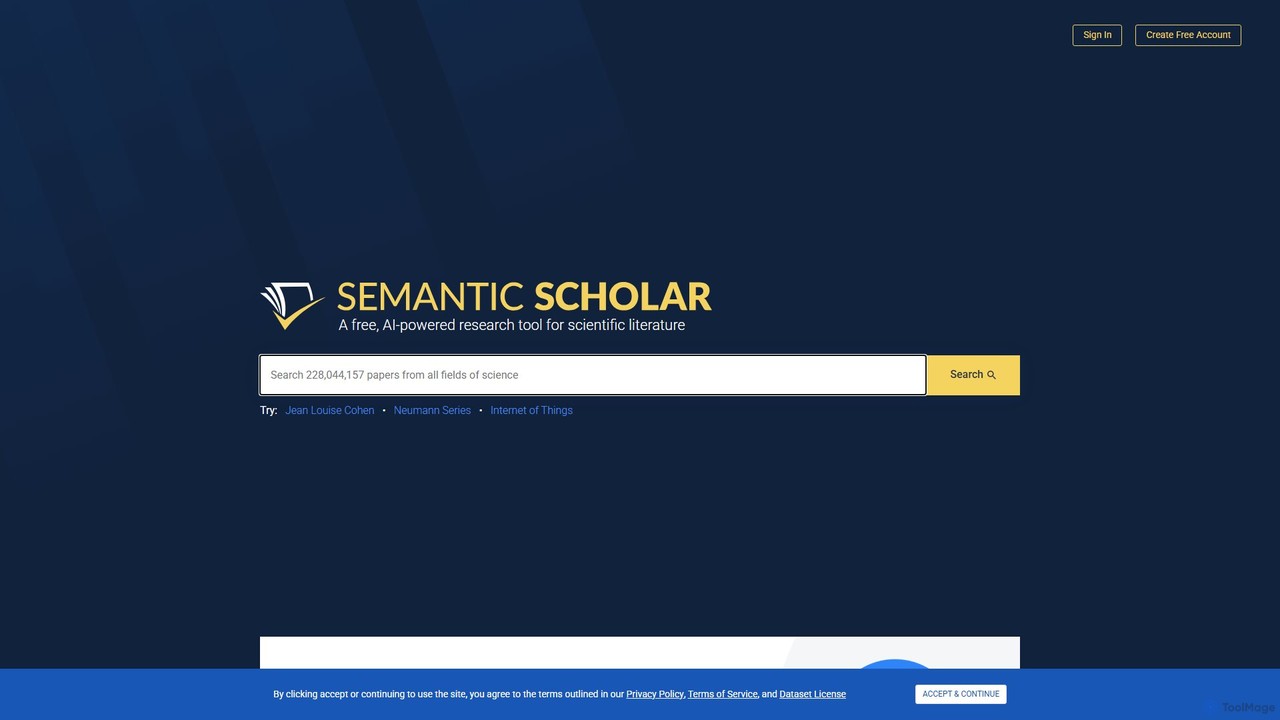
Semantic Scholar Overview
Semantic Scholar is a free, AI-powered academic search engine developed by the Allen Institute for AI (AI2), a non-profit research institute. Its core mission is to accelerate scientific progress by helping researchers navigate the overwhelming volume of scientific literature. By indexing over 228 million academic papers from all fields of science, sourced from publisher partnerships, data providers, and web crawls, Semantic Scholar provides a comprehensive and authoritative knowledge graph for the global research community.
Unlike traditional keyword-based search engines, Semantic Scholar employs state-of-the-art Natural Language Processing (NLP) and Machine Learning models to understand the content and context of scientific papers. It extracts key information, identifies meaningful connections between studies, and surfaces critical insights, allowing researchers to understand a paper's significance at a glance. This semantic approach helps users discover relevant research that might be missed with conventional search methods.
How to use Semantic Scholar
Using Semantic Scholar is an intuitive process designed to enhance research efficiency. Here’s a typical workflow:
- Search: Begin by entering keywords, author names, or paper titles into the search bar. For more targeted results, you can use filters to specify a field of study (e.g., Computer Science, Biomedicine), a date range, publication type (e.g., Journal Article, Conference), specific authors, or journals.
- Analyze Paper Pages: Each paper page provides a wealth of AI-generated information. You can quickly review a paper's abstract, figures, and tables. Many papers also include a "TLDR" (Too Long; Didn't Read) summary, offering a one-sentence, AI-generated overview.
- Explore Citations: Navigate the citation graph to understand a paper's influence. Semantic Scholar classifies citations by context, indicating whether a paper cites another for its methods, results, or background information. The "Highly Influential Citations" feature highlights the most important cited works, saving valuable time during literature reviews.
- Discover Related Content: The platform links papers to supplementary materials like code repositories on GitHub, presentations, and videos, providing a more complete research context.
- Create a Library and Alerts: Users can create a personal library to save papers and set up research feeds and alerts to stay updated on new publications from specific authors or in their fields of interest.
- Use the Semantic Reader: For select papers, the Semantic Reader (in beta) offers an augmented reading experience, making scientific text more accessible and contextual.
Core Features of Semantic Scholar
- AI-Powered Search: Goes beyond keywords to understand the semantic meaning of queries and papers, delivering highly relevant results.
- Advanced Citation Analysis: Identifies highly influential citations and classifies them by intent (background, methods, results), providing deeper insights into a paper's impact.
- Paper Summaries (TLDRs): AI-generated, single-sentence summaries to help researchers quickly assess a paper's relevance.
- Semantic Reader: An augmented reader that makes scientific papers more accessible with richly contextual information.
- Author and Topic Pages: Aggregates publications by author and provides overviews of specific research topics, helping to track trends and key contributors.
- Free and Open API: Offers a robust API and open datasets like the Semantic Scholar Academic Graph (S2AG) and Open Research Corpus (S2ORC) for developers and researchers to build their own applications.
- Comprehensive Coverage: Indexes over 228 million papers across all scientific disciplines, including computer science, biomedicine, business, history, and economics.
Use Cases for Semantic Scholar
Semantic Scholar is an invaluable tool for a wide range of users:
- Researchers and Academics: For conducting thorough literature reviews, discovering seminal and recent papers, identifying research gaps, and staying current in their field.
- Students: To find relevant sources for research projects and theses, quickly understand complex scientific concepts, and learn how to navigate academic literature.
- Data Scientists and Developers: To leverage the free API and open datasets for building novel applications in areas like scientometrics, trend analysis, and information retrieval.
- Librarians and Information Professionals: To assist patrons in finding authoritative scientific information and to teach effective research strategies.
Advantages of Semantic Scholar
As a non-profit initiative, Semantic Scholar's primary advantage is its commitment to open and equal access to scientific knowledge. Its AI-driven features provide a significant edge over traditional databases by saving researchers time and revealing hidden connections in the literature. The platform is completely free to use, without subscriptions or paywalls. Furthermore, its dedication to transparency and collaboration, through open-source code and datasets, strengthens the entire research ecosystem.
Pricing and Plans
Semantic Scholar is a completely free tool for all users. It is a non-profit project from the Allen Institute for AI (AI2), and its mission is to provide free, AI-driven search and discovery tools to the global research community. There are no subscription fees, premium tiers, or hidden costs.
Traffic
Latest traffic
Status
Monthly traffic trend
- 2025-9: 5.2M
- 2026-1: 6.9M
- 2026-2: 7.1M
- 2026-3: 8.7M
- 2026-4: 8.7M
- 2026-5: 7.9M
Geography
Top 5 countries / regions
- 🇺🇸United States36.4%
- 🇮🇩Indonesia30.5%
- 🇮🇳India13.3%
- 🇨🇳China11.2%
- 🇩🇪Germany8.6%
Traffic sources
| Source type | Percentage |
|---|---|
Direct | 80.4% |
Referral | 17.5% |
Email | 2.1% |
Top keywords
| Keyword | Cost per click |
|---|---|
| celeb jihad | $0.00 |
| citizen free press | $3.86 |
| scholar | $1.67 |
| semantic scholar | $0.49 |
| 細木数子 島倉千代子 | $0.00 |
Semantic Scholar Videos on YouTube
WiseUp Communications

Phitron AI ML

VISHWAJEET

EduMedicine

VISHWAJEET

Semantic Scholar Alternatives
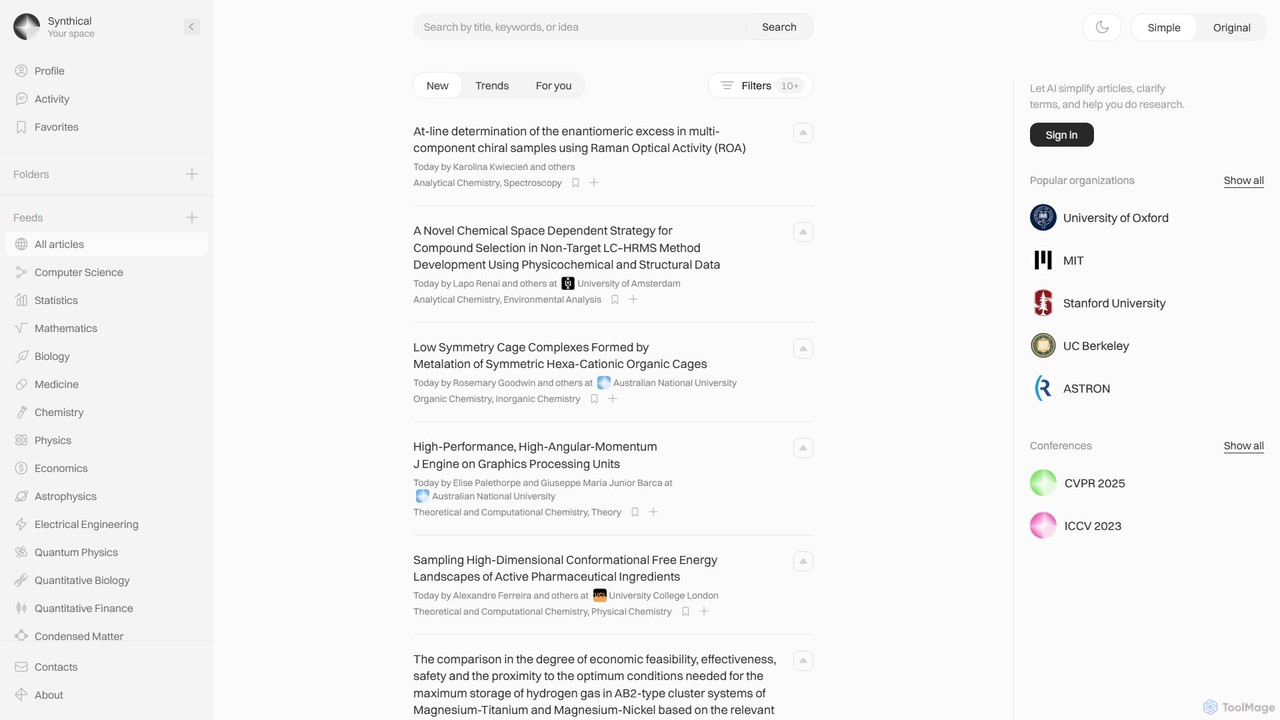
Synthical
Synthical is an AI-powered research environment designed for academics, students, and scientists. It aggregates scientific papers from diverse fields like Computer Science, Biology, and Physics, using AI to simplify complex articles, define terms, and accelerate the research process. Organize your work with personalized feeds, folders, and favorites.
Research
Rabbithole
Rabbithole is an AI-powered conversational research platform for deep exploration of complex topics. Instead of providing links, it engages you in a dialogue, offering structured answers and guiding you through related concepts. It's perfect for students, researchers, and curious minds who want to go beyond surface-level knowledge.
Research
Google Books
A powerful search engine that allows users to search the full text of millions of books and magazines. It's an essential tool for researchers, students, and readers to discover, explore, and cite written content from the world's largest digital library.
Content Discovery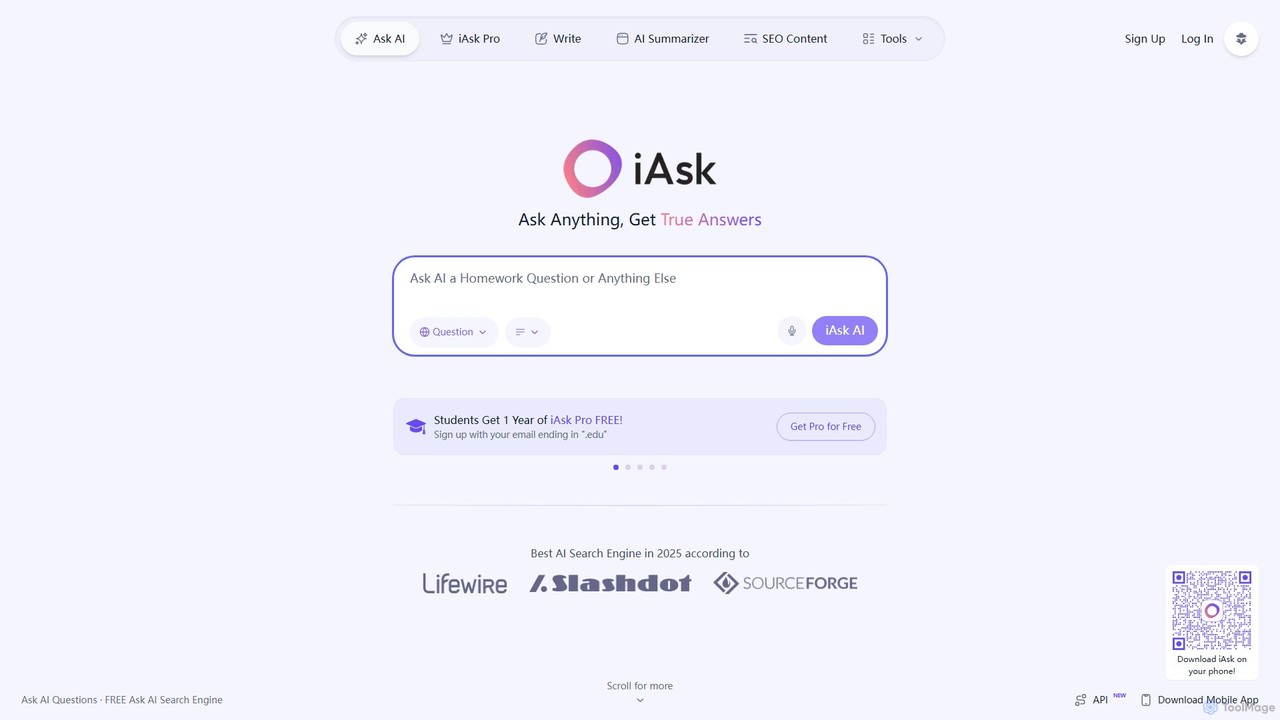
iAsk
iAsk is an advanced AI answer engine designed to provide instant, accurate, and factual answers to natural language questions. It serves as a powerful alternative to traditional search engines, offering features for research, learning, writing, and content creation. The platform includes both free and pro versions, with premium features like document analysis, an AI video tutor, and an image generator.
Research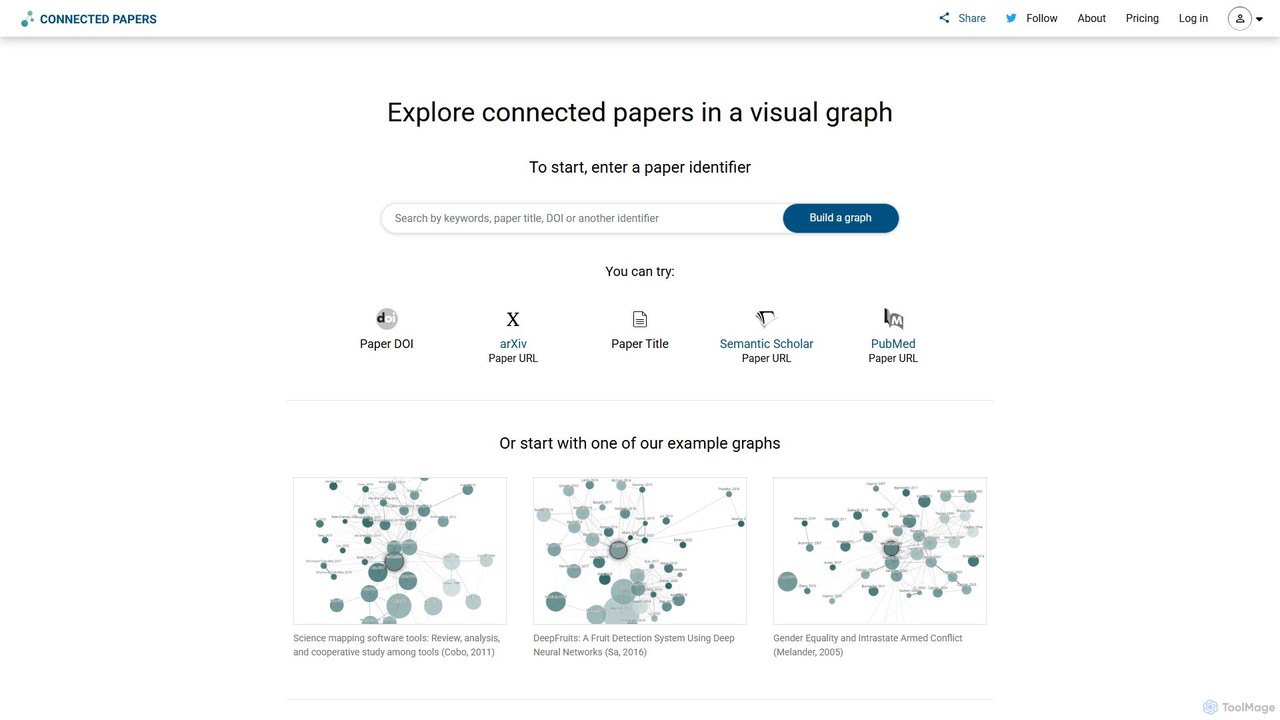
Connected Papers
Connected Papers is a unique visual tool designed for researchers, students, and scientists. It helps you find and explore academic papers relevant to your work by generating interactive graphs. Instead of traditional lists, you get a visual map of a research field, allowing you to quickly discover trends, important prior works, and derivative studies, significantly speeding up your literature review process.
AcademicSemantic Scholar Categories
Semantic Scholar Embed Widget
Copy this embed code to place the badge on your blog, article, or product site and send readers directly to this ToolMage detail page.

Related AI tools
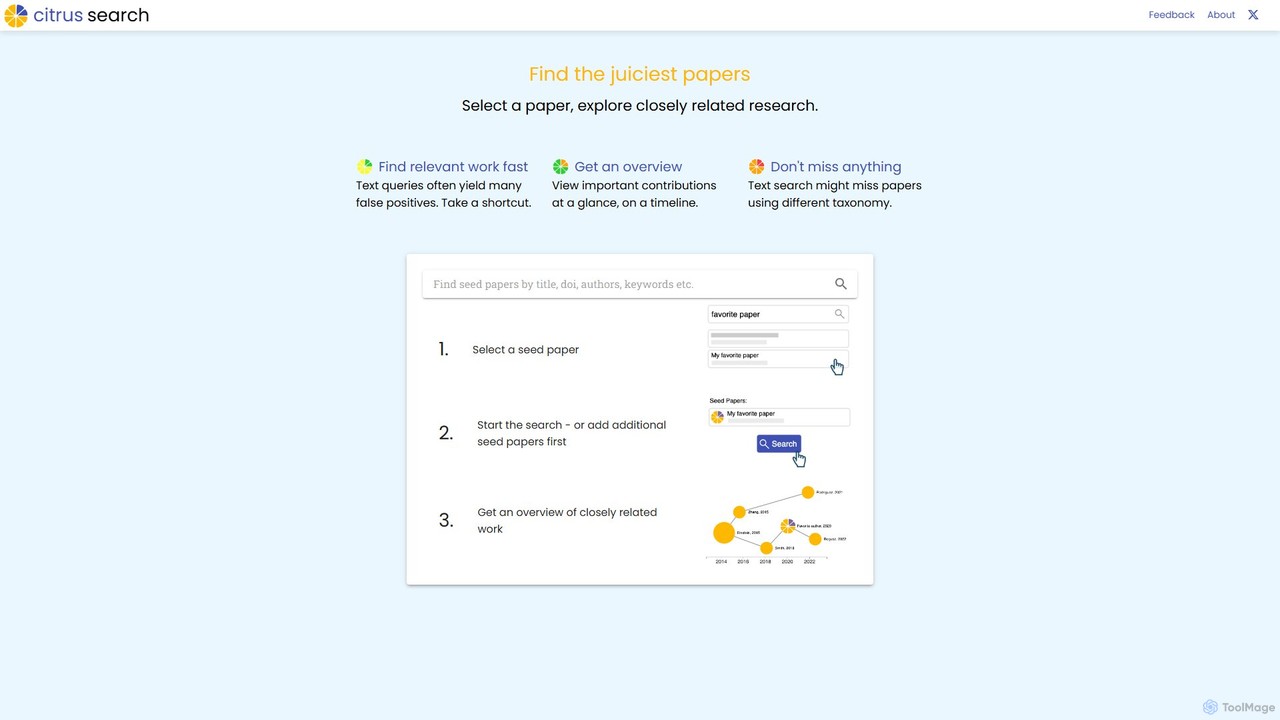
Citrus Search
Citrus Search is an AI-powered academic search engine that revolutionizes literature discovery. Instead of keywords, you provide a "seed paper," and it finds closely related publications using advanced similarity metrics like citation networks and semantic content analysis. It's designed to help researchers quickly find relevant work, get a comprehensive overview of a field, and uncover papers that traditional search methods might miss.
Research AssistantSynthical
Synthical is an AI-powered research environment designed for academics, students, and scientists. It aggregates scientific papers from diverse fields like Computer Science, Biology, and Physics, using AI to simplify complex articles, define terms, and accelerate the research process. Organize your work with personalized feeds, folders, and favorites.
ResearchConnected Papers
Connected Papers is a unique visual tool designed for researchers, students, and scientists. It helps you find and explore academic papers relevant to your work by generating interactive graphs. Instead of traditional lists, you get a visual map of a research field, allowing you to quickly discover trends, important prior works, and derivative studies, significantly speeding up your literature review process.
Academic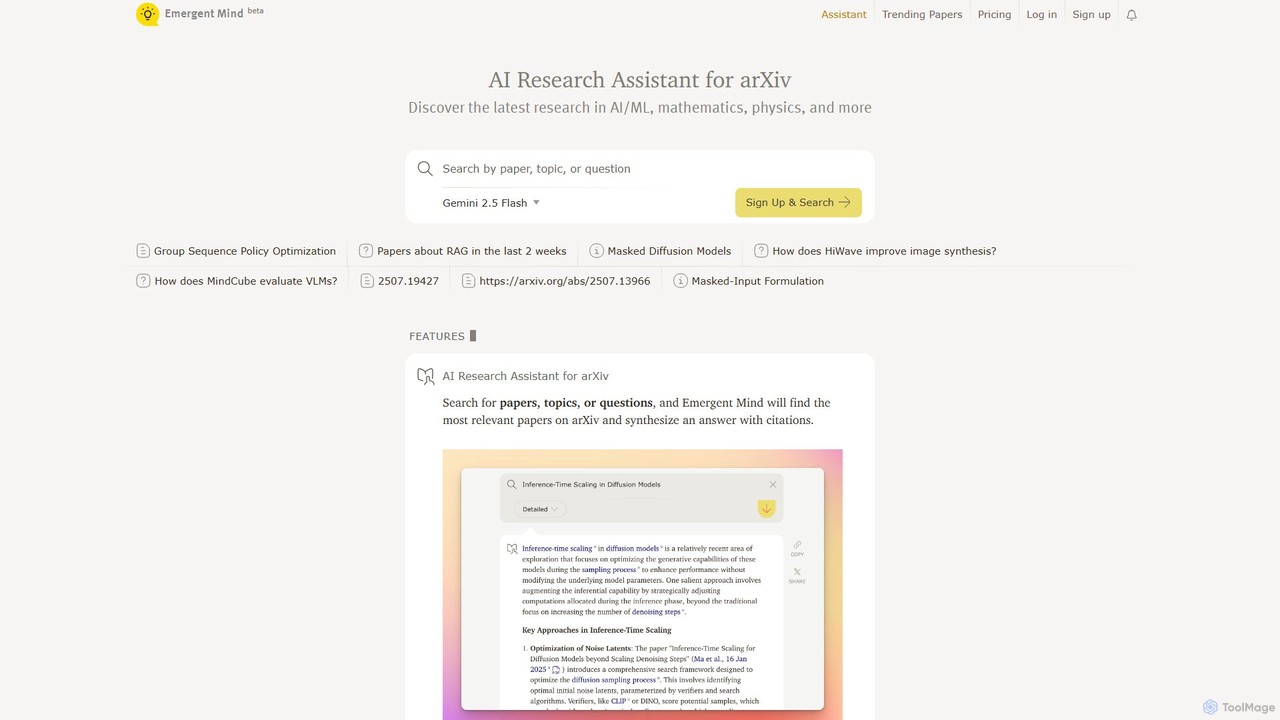
Emergent Mind
Emergent Mind is an AI research assistant for arXiv that helps users discover, understand, and discuss the latest scientific papers. It synthesizes answers from multiple papers, tracks trending research, and aggregates social media discussions, streamlining the research process for academics, students, and professionals.
Machine Learning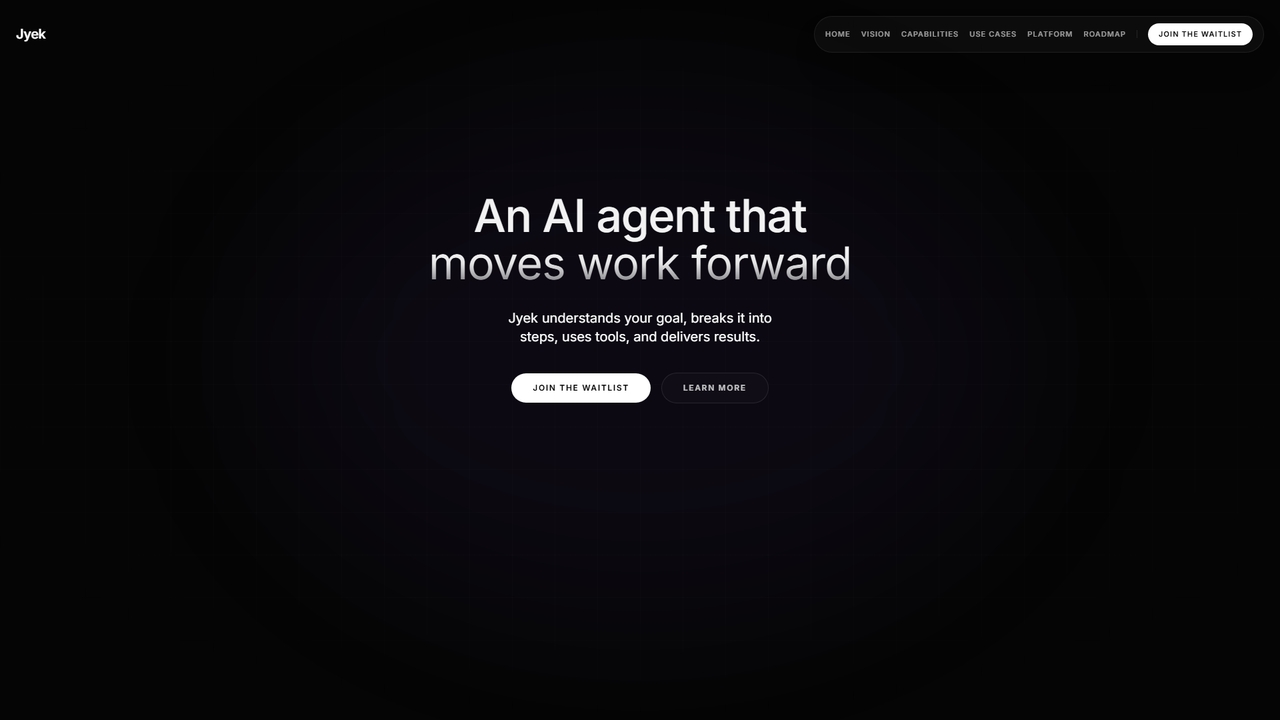
Jyek
Jyek is an AI agent platform that understands objectives, creates execution plans, uses tools, and delivers verifiable results for complex, multi-step tasks.
Automation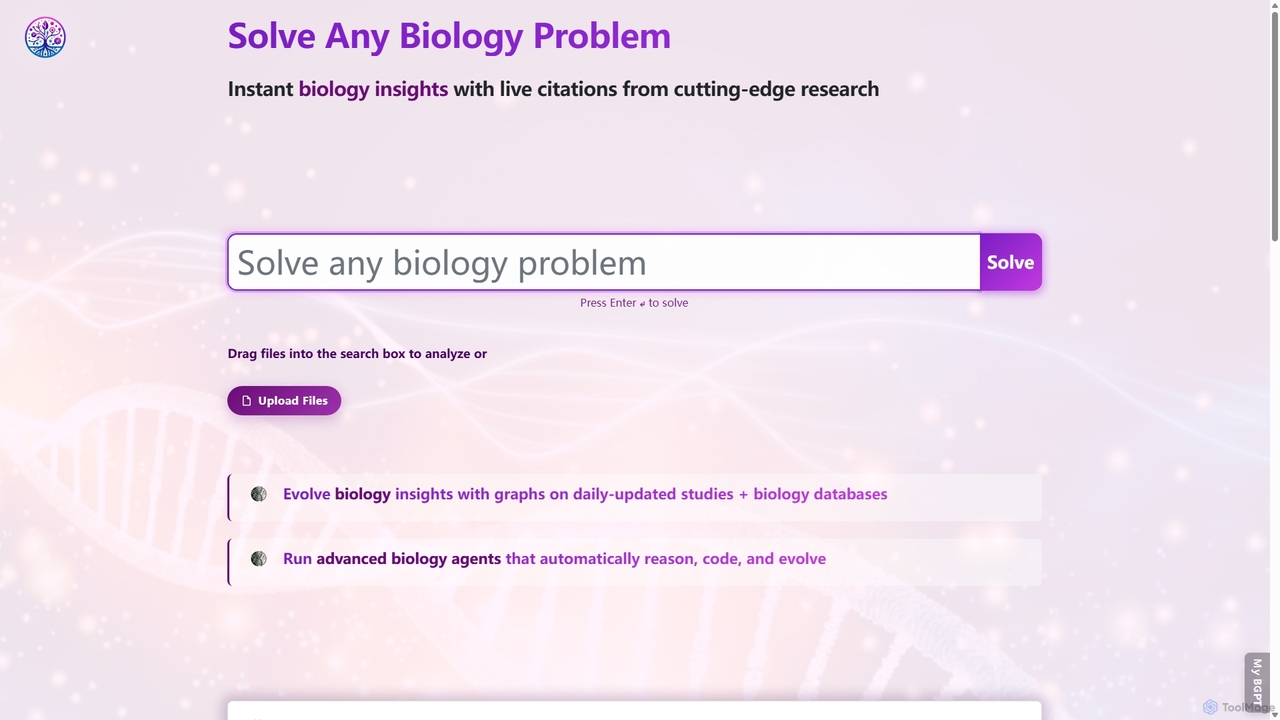
BioGPT
BioGPT is a specialized AI assistant for biologists, researchers, and students. It accelerates scientific discovery by solving complex biology problems, reviewing papers, analyzing data, visualizing results, designing experiments, and testing hypotheses across fields like genomics, neuroscience, and cancer biology.
Research
dataset.gold
A curated directory of high-quality, open-source datasets for AI and machine learning. Discover the gold standard of data for training your models in computer vision, NLP, and more.
Datasets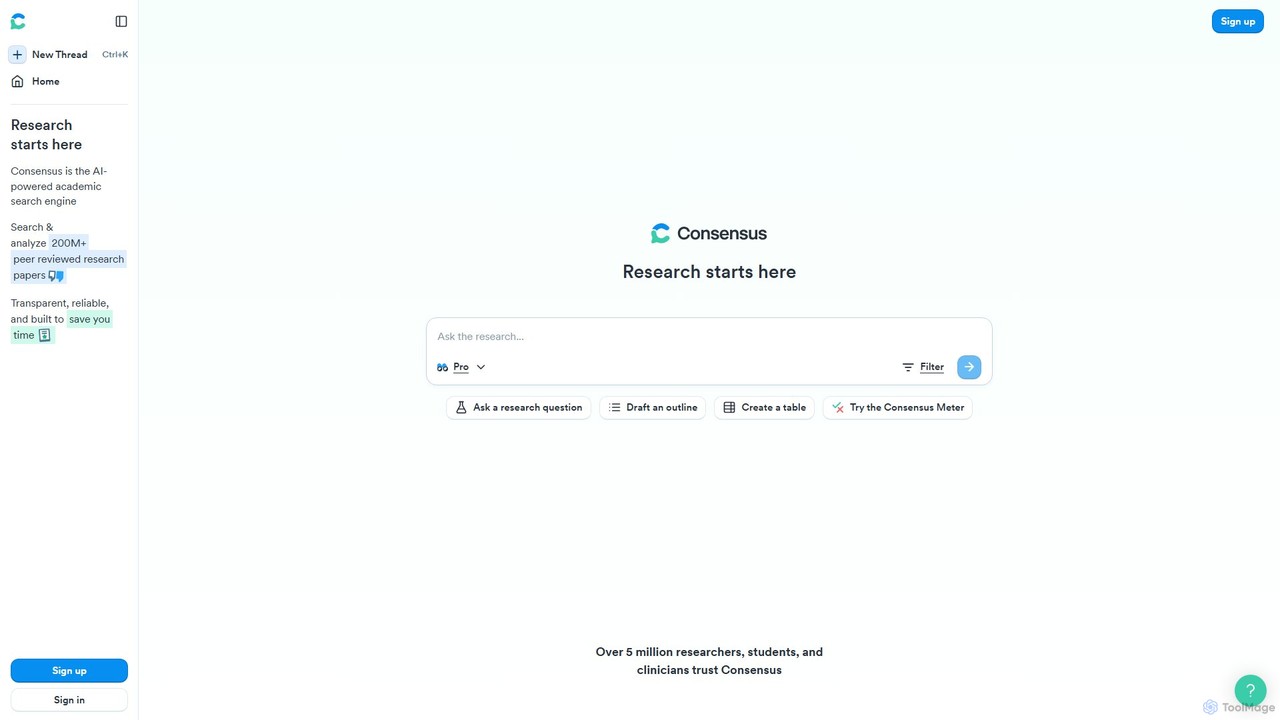
Consensus
Consensus is an AI-powered search engine designed for scientific research. It searches over 200 million peer-reviewed papers to provide evidence-based, synthesized answers to user questions, saving time for researchers, students, and professionals by extracting key findings directly from scientific literature.
Learning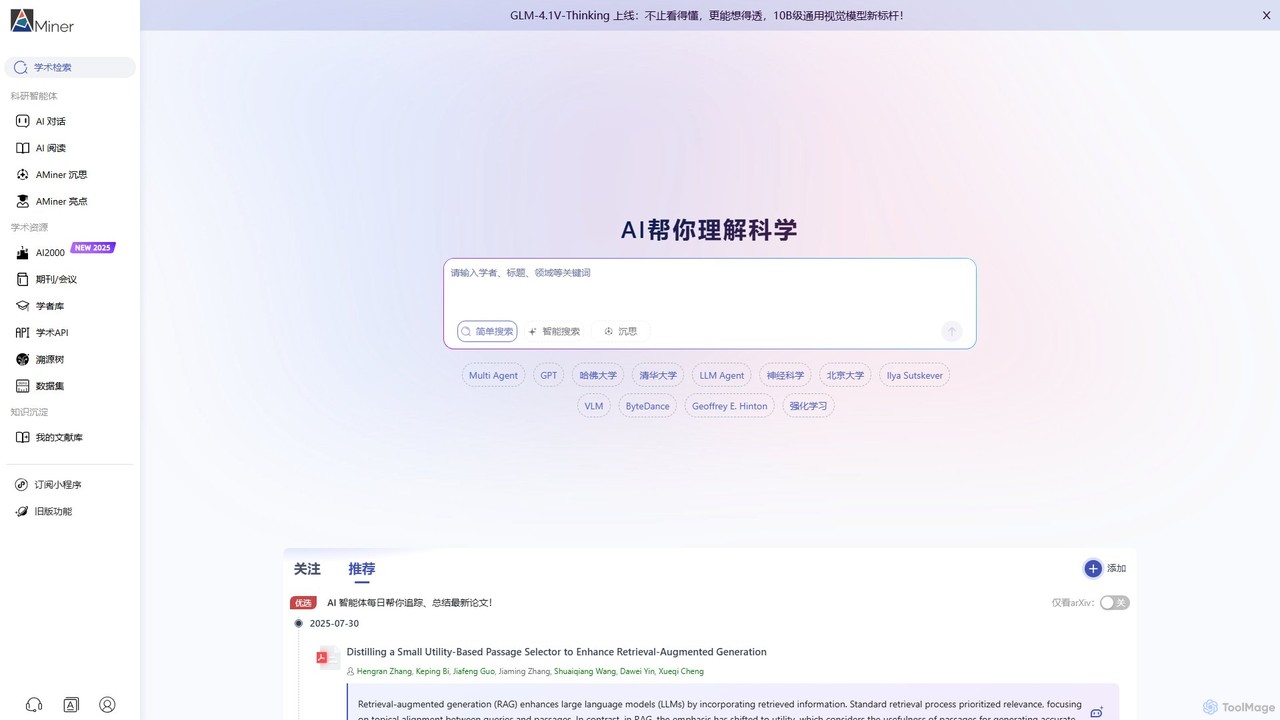
AMiner
AMiner is an AI-powered academic search and technology intelligence platform from Tsinghua University. It provides access to a massive database of over 330 million papers and 135 million scholars. Featuring AI-driven tools like semantic search, one-click summarization, scholar profiling, and trend analysis, AMiner helps researchers and institutions accelerate scientific discovery.
Analytics
txyz
txyz is an all-in-one AI-powered research platform designed to streamline the entire knowledge workflow for academics, researchers, and professionals. It integrates advanced semantic search, AI-assisted reading and analysis, and intelligent writing tools to accelerate knowledge discovery, comprehension, and creation. Trusted by over 500,000 users, txyz helps you find relevant papers, gain deep insights from documents, and manage your research library efficiently.
Academic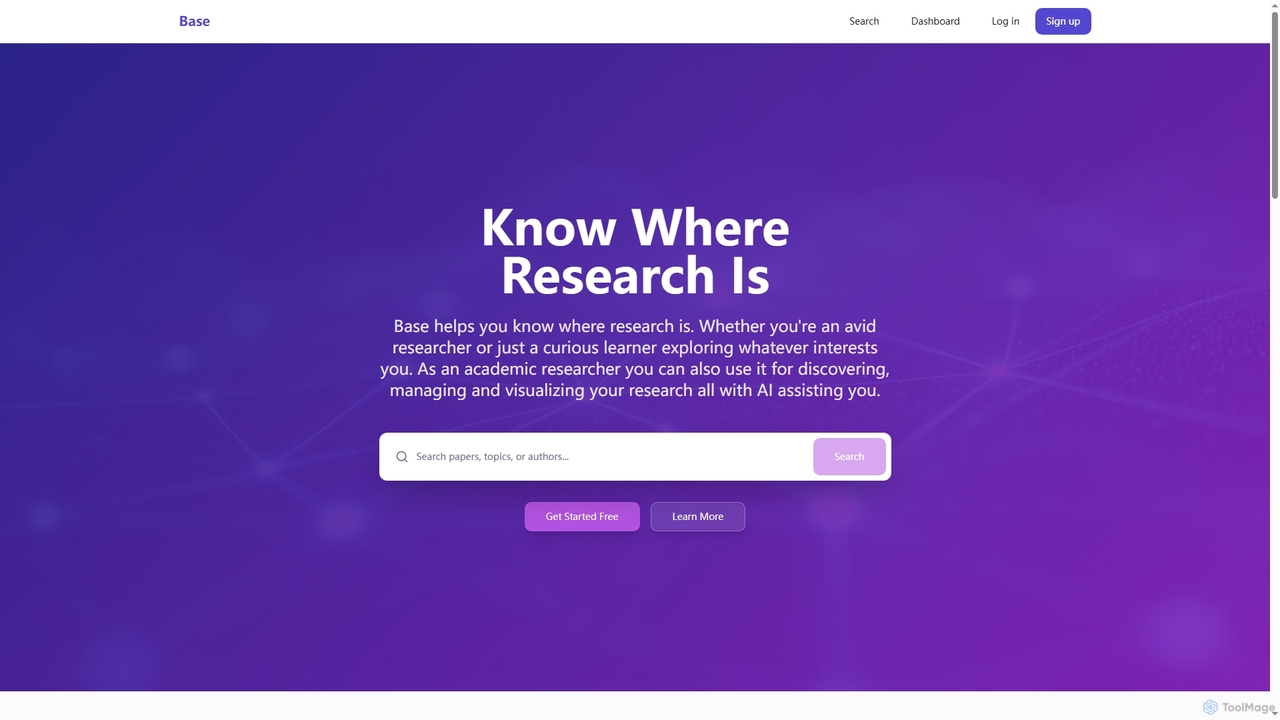
Base
Base is an AI-powered research platform for academics and learners. It enables searching over 240 million papers, visualizing research landscapes with interactive graphs, organizing findings, and using an AI chat to uncover deeper insights from credible sources.
Academic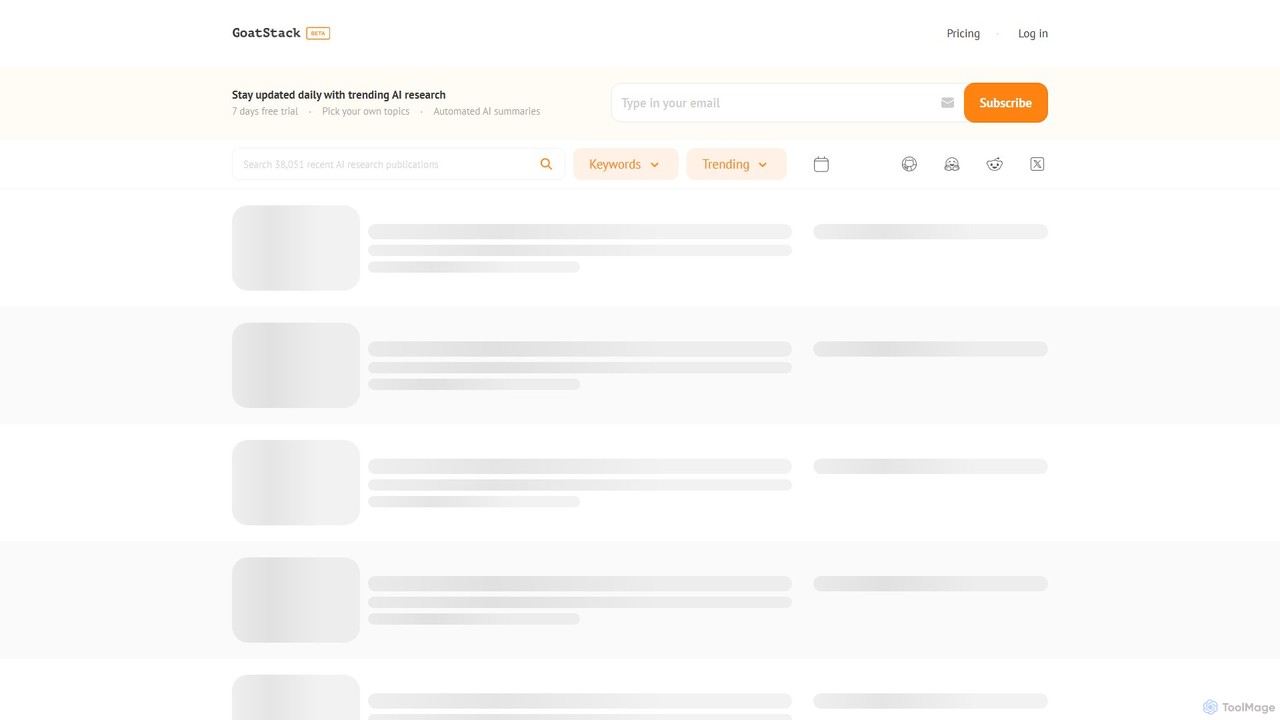
Goatstack
Goatstack is an AI-powered platform that helps researchers, engineers, and enthusiasts stay updated with trending AI research papers. It provides daily updates, personalized topics, and automated AI-generated summaries to accelerate literature discovery and knowledge acquisition in the fast-paced field of AI.
Academic Research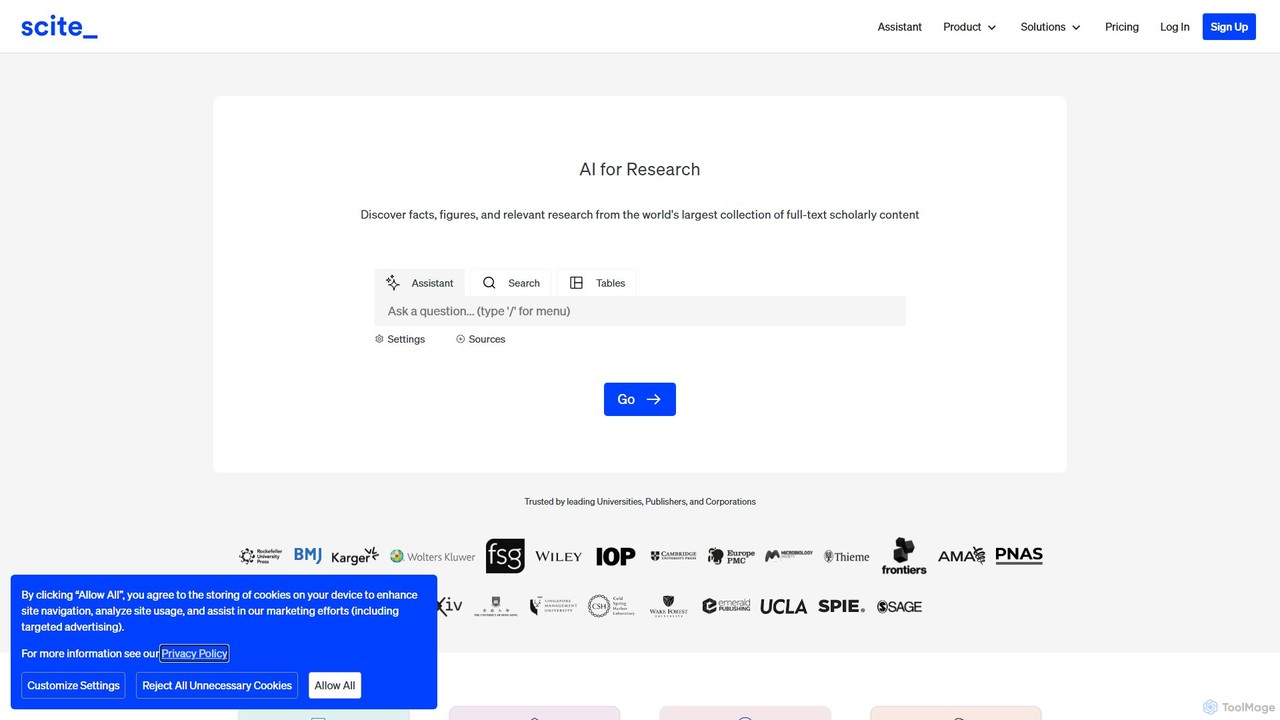
scite
scite is an AI-powered research platform that helps users discover and evaluate scientific literature. Its core feature, Smart Citations, shows how research papers have been cited by others, classifying citations as supporting, contrasting, or mentioning, thus providing deeper context beyond simple citation counts.
Academic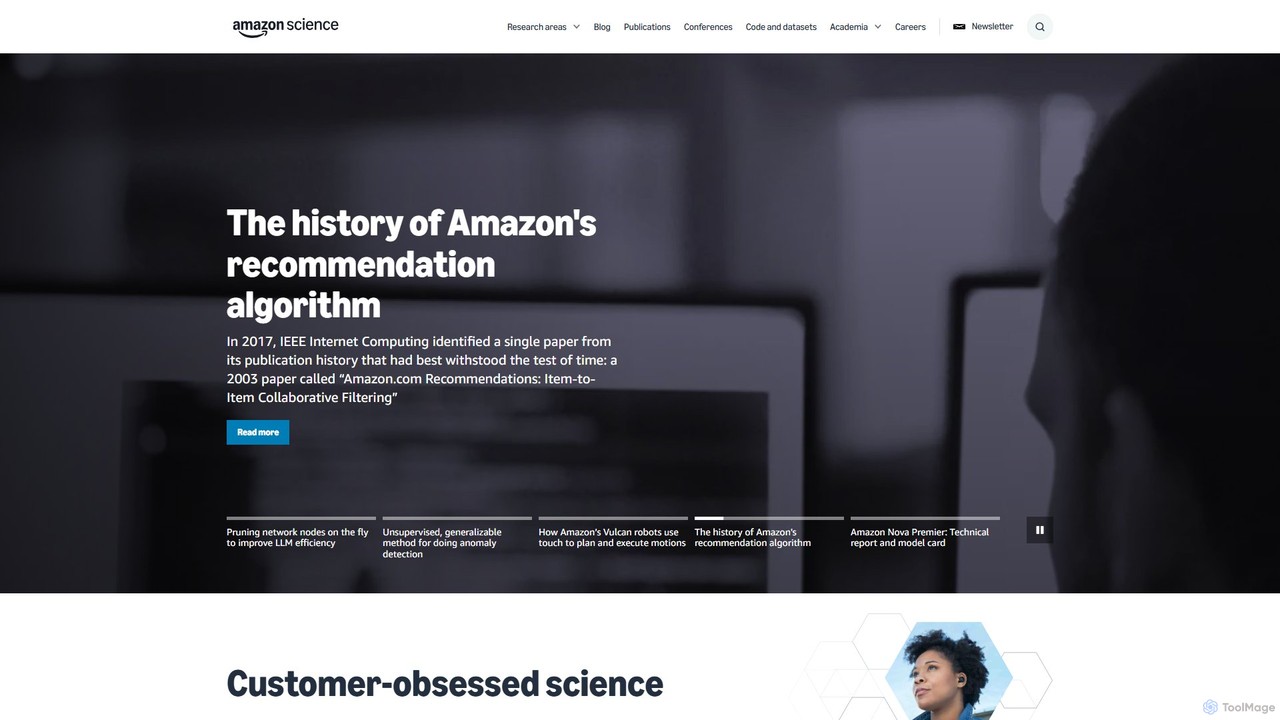
Amazon Science
Amazon Science is the official hub for Amazon's cutting-edge scientific research and innovation. It provides free access to a vast repository of research papers, articles, and news across diverse fields like AI, machine learning, robotics, and computer vision, connecting academia with industry.
Data Science
iFLYTEK Paper
iFLYTEK Paper is an AI-powered academic writing and research assistant designed to streamline the entire process of paper creation. It offers intelligent features for literature review, outline generation, full-text writing, proofreading, and citation management, empowering students and researchers to enhance their productivity and writing quality.
Research
Semantic Scholar Comments (0)
Sign in to comment.
Sign inNo comments yet.