

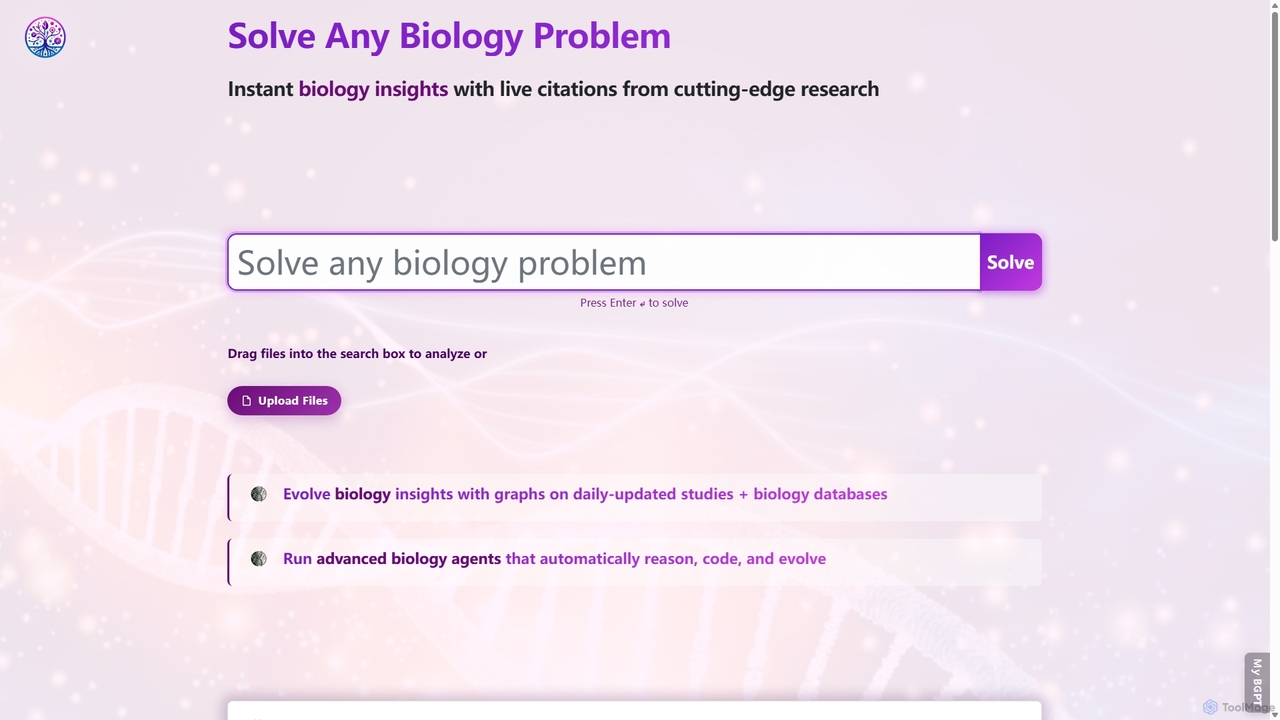
BioGPT Overview
BioGPT is a cutting-edge AI-powered platform designed specifically for the life sciences community. It serves as an intelligent assistant for biologists, researchers, medical professionals, and students, aiming to accelerate the pace of scientific discovery. By leveraging advanced artificial intelligence, BioGPT can comprehend and process complex biological questions, analyze vast datasets, and interpret dense scientific literature, effectively acting as a collaborative partner in research.
The platform covers a wide spectrum of biological disciplines, including Human Health, Neuroscience, Cancer Biology, Genomics, Cell Biology, Immunology, Bioinformatics, and Biochemistry. Whether you need to understand the intricacies of single-cell integration, review a paper on CRISPR-Cas genome editing, or analyze population data from a drone survey, BioGPT provides the tools to get accurate and insightful answers quickly.
How to use BioGPT
Using BioGPT is an intuitive process designed to integrate seamlessly into the research workflow:
- Sign Up and Log In: Create a free account on the BioGPT website to access the platform's features.
- Ask Your Question: In the main interface, type your biological question, paste text from a paper, or describe the data you want to analyze. The system is designed to understand natural language queries.
- Select a Task: Choose from a range of functions such as 'Paper Review', 'Analyze Data', 'Visualize Data', 'Design Experiments', or 'Test Hypothesis'.
- Provide Context (If Needed): For tasks like data analysis or paper reviews, you may be prompted to upload relevant files or provide links.
- Interact and Refine: Use the 'Ask a Follow-Up' feature to engage in a conversational dialogue with the AI. This allows you to clarify points, ask for more detail, or steer the analysis in a new direction.
- Receive and Export Results: The platform generates comprehensive answers, summaries, graphs, or experimental plans. You can opt to receive an email notification when a complex analysis is complete.
Core Features of BioGPT
- Advanced Paper Review: Automatically summarizes, critiques, and extracts key findings, methodologies, and conclusions from dense scientific papers and preprints.
- Data Analysis & Visualization: Processes and analyzes various biological datasets (e.g., genomic sequences, expression data) and generates clear, publication-ready graphs and visualizations.
- Experimental Design: Assists researchers in formulating testable hypotheses and designing robust, controlled experimental protocols to validate them.
- Hypothesis Testing: Evaluates the strength and validity of a scientific hypothesis by cross-referencing it with the latest published evidence and established biological principles.
- Conversational AI Interface: Allows for interactive follow-up questions, enabling a deeper and more nuanced exploration of complex topics.
- Broad Domain Knowledge: Trained on a massive corpus of biological literature, covering everything from molecular biology to ecosystem dynamics.
- Friday Biology Insights: A curated weekly newsletter that delivers custom summaries of the latest cutting-edge research directly to your inbox.
Use Cases for BioGPT
BioGPT is a versatile tool for various professionals in the life sciences:
- Academic Researchers: Can rapidly conduct literature reviews, analyze preliminary data, and get AI-driven suggestions for novel experimental approaches, significantly speeding up the research cycle.
- PhD and Graduate Students: A powerful study aid for understanding complex topics, summarizing required reading, and getting assistance in designing thesis or dissertation projects.
- Bioinformaticians: Can automate routine data interpretation tasks and quickly generate initial insights from large-scale genomic or proteomic datasets.
- Medical Professionals and Clinicians: Enables them to stay current with the latest evidence-based research in their specialty by quickly reviewing new clinical trial papers and meta-analyses.
- Biotechnology R&D Teams: Can be used for competitive analysis, vetting new drug targets, and accelerating the pre-clinical research phase.
Advantages of BioGPT
BioGPT offers a significant competitive edge:
- Efficiency: Drastically reduces the hours spent on manual literature searches and preliminary data analysis.
- Accuracy: As a specialized tool, it provides more contextually relevant and accurate information than general-purpose AI models.
- Innovation Catalyst: By connecting disparate pieces of information and suggesting new avenues of inquiry, it helps spark novel ideas and research directions.
- Accessibility: Democratizes access to high-level scientific analysis, making it easier for students and researchers in under-resourced institutions to contribute to the field.
- Comprehensive Workflow: Integrates multiple research tasks—from ideation and literature review to analysis and reporting—into a single, unified platform.
Pricing and Plans
BioGPT likely operates on a freemium model to cater to a wide range of users:
- Free Plan: Offers a limited number of queries per month, access to basic features like simple Q&A and short paper summaries. Ideal for students and individual users with light needs.
- Pro Plan: A monthly or annual subscription for individual researchers and professionals, providing higher query limits, access to advanced features like large dataset analysis, complex experiment design, and priority support.
- Team/Enterprise Plan: Custom pricing for research labs, academic institutions, and corporations. This plan typically includes unlimited usage, collaborative workspaces, API access for integration with other systems, and dedicated enterprise support.
BioGPT Alternatives

BioGPT
BioGPT is an AI-powered research assistant designed for the biology and life sciences community. It helps researchers, students, and professionals solve complex biological problems by analyzing scientific papers, designing experiments, interpreting data, generating hypotheses, and creating lab protocols, all based on cutting-edge research.
Learning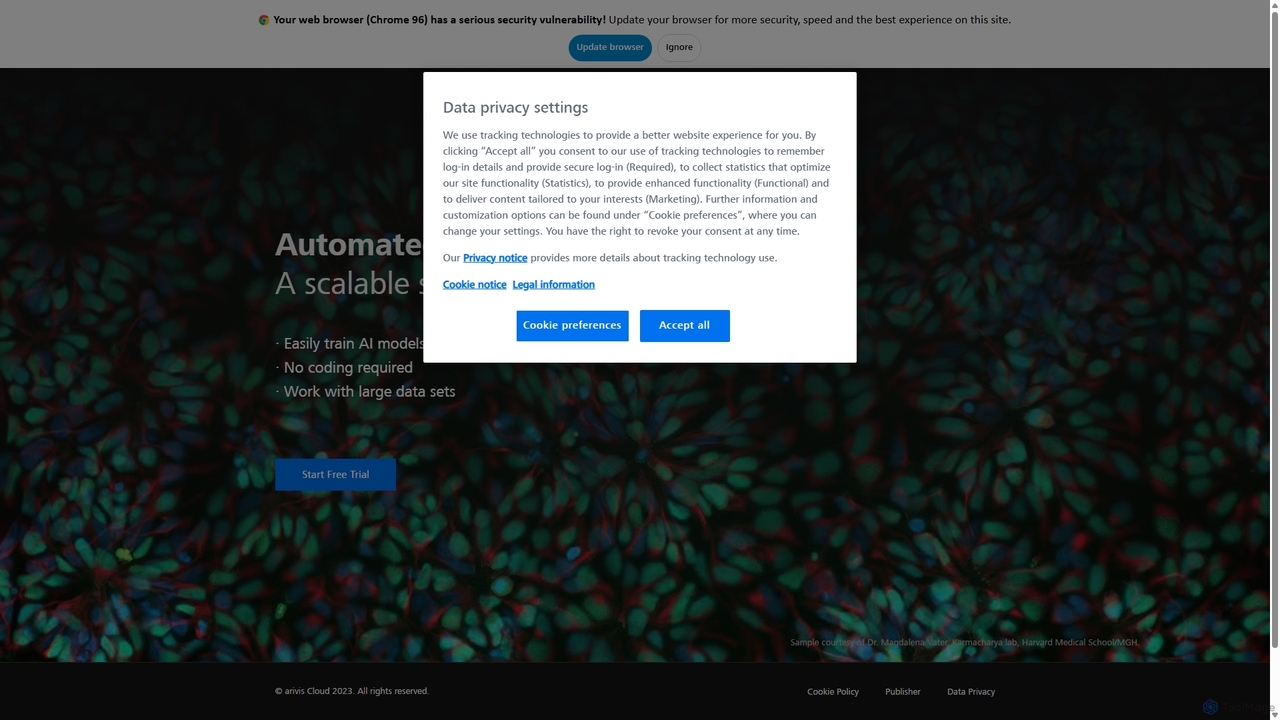
APEER
APEER (now part of arivis Cloud) is an AI-powered, cloud-based platform for automated scientific image analysis. It empowers researchers in biology and biotech to leverage deep learning for complex tasks like image segmentation and object detection without coding. It streamlines workflows, increases throughput, and ensures reproducible results for microscopy and cell analysis.
Image Processing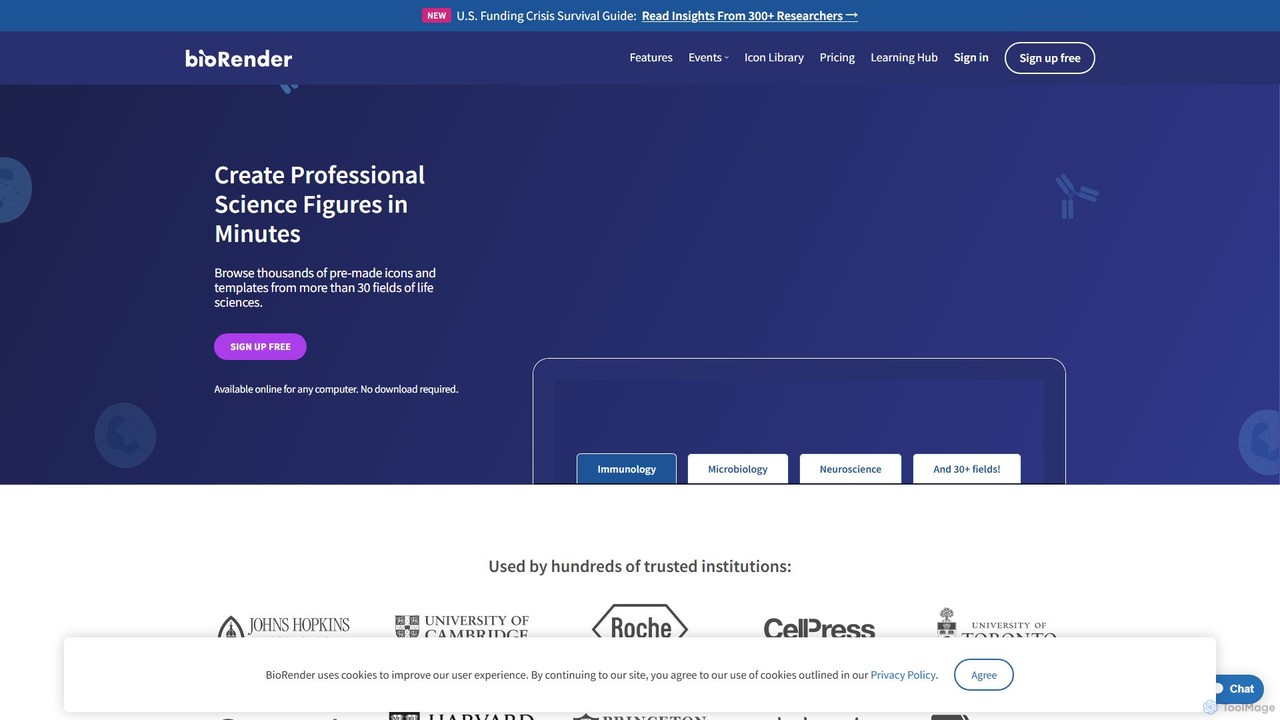
BioRender
BioRender is a web-based software that empowers scientists to create professional scientific figures, diagrams, and illustrations with ease. Featuring a vast library of over 50,000 scientifically accurate icons and templates, it streamlines the process of visualizing complex biological concepts for publications, presentations, and grants. It's designed by scientists, for scientists, to replace generic tools like PowerPoint for scientific communication.
Illustration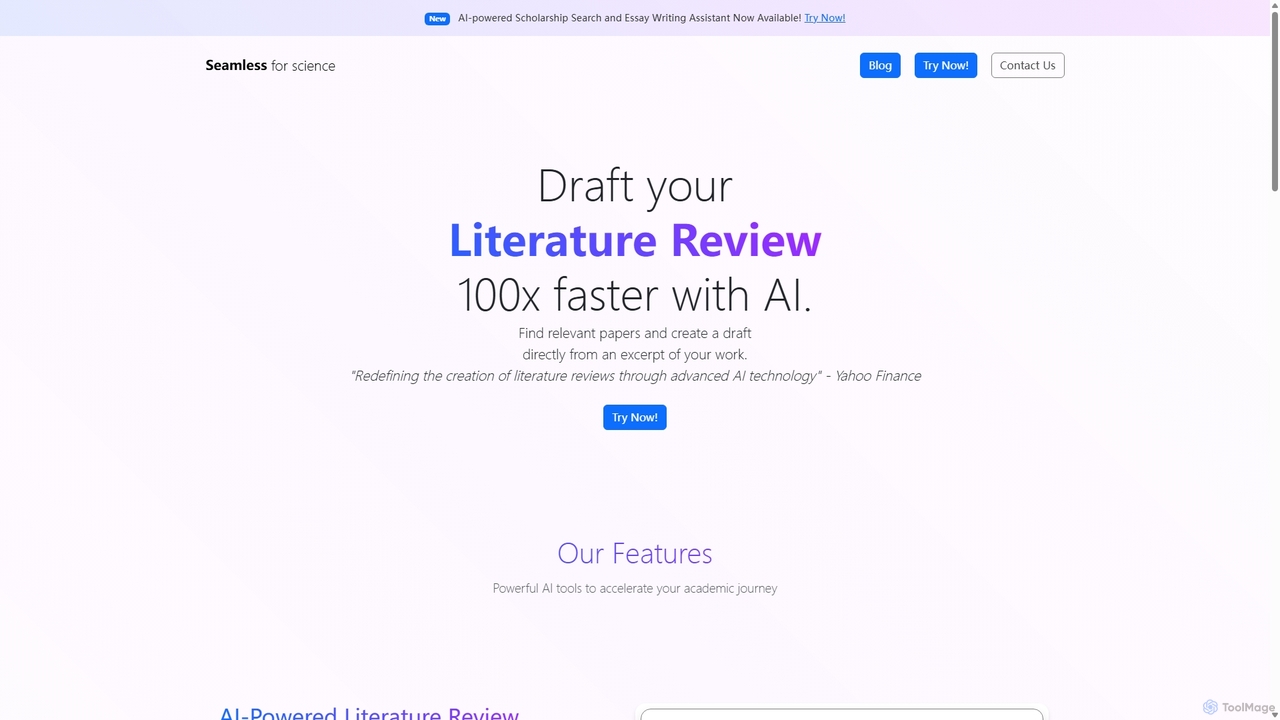
Seamless
Seamless is an AI-powered platform designed to accelerate academic research. It generates comprehensive literature reviews with citations in minutes, helps students find and apply for scholarships, and offers an AI assistant for crafting compelling essays. It's built for students, researchers, and academics.
Research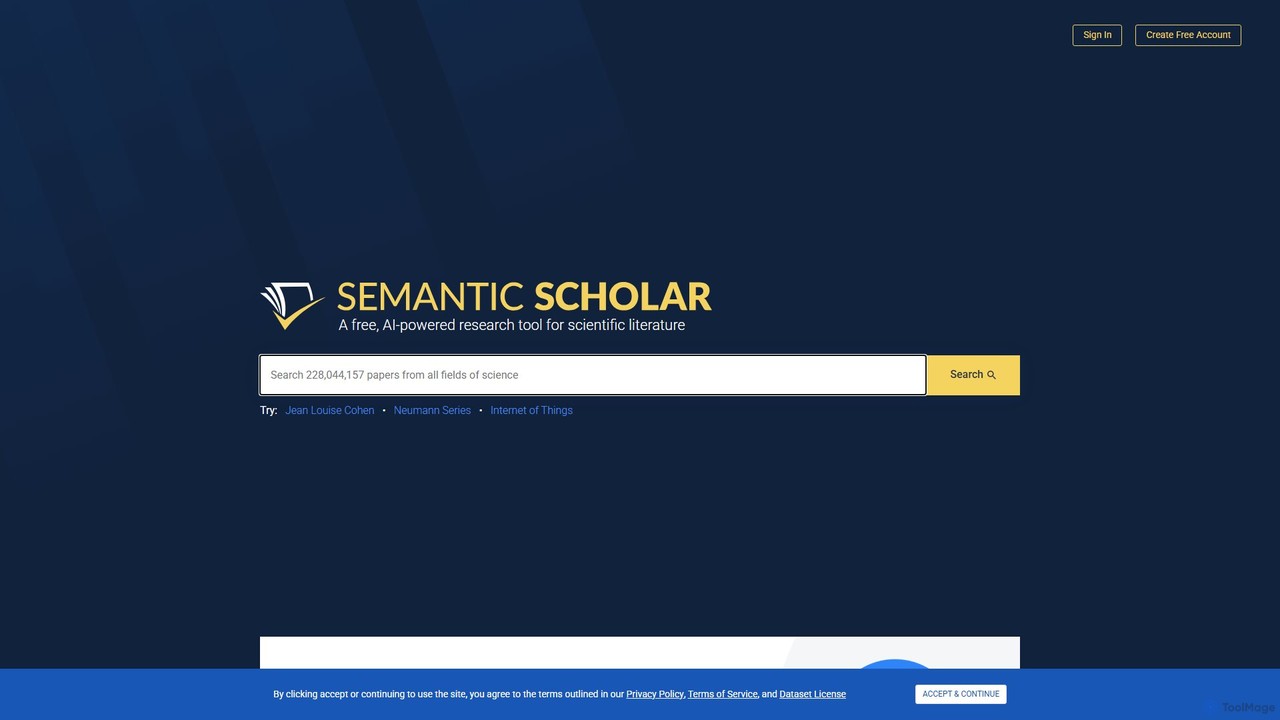
Semantic Scholar
A free, AI-powered research tool from the Allen Institute for AI that helps scholars discover and understand scientific literature. It uses AI to analyze over 200 million papers, providing features like semantic search, influential citation analysis, and paper summaries to accelerate scientific breakthroughs.
ApisBioGPT Categories
BioGPT Jobs
BioGPT Embed Widget
Copy this embed code to place the badge on your blog, article, or product site and send readers directly to this ToolMage detail page.

Related AI tools
BioGPT
BioGPT is an AI-powered research assistant designed for the biology and life sciences community. It helps researchers, students, and professionals solve complex biological problems by analyzing scientific papers, designing experiments, interpreting data, generating hypotheses, and creating lab protocols, all based on cutting-edge research.
Learning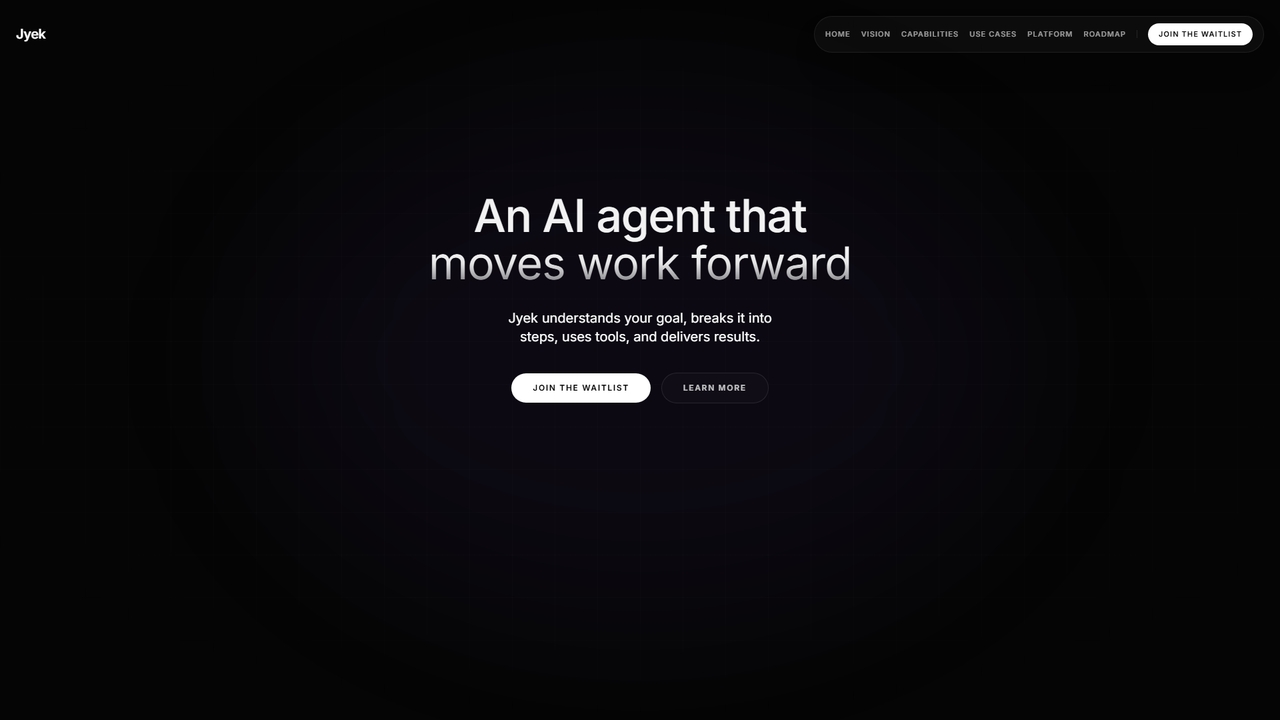
Jyek
Jyek is an AI agent platform that understands objectives, creates execution plans, uses tools, and delivers verifiable results for complex, multi-step tasks.
AutomationAPEER
APEER (now part of arivis Cloud) is an AI-powered, cloud-based platform for automated scientific image analysis. It empowers researchers in biology and biotech to leverage deep learning for complex tasks like image segmentation and object detection without coding. It streamlines workflows, increases throughput, and ensures reproducible results for microscopy and cell analysis.
Image ProcessingSeamless
Seamless is an AI-powered platform designed to accelerate academic research. It generates comprehensive literature reviews with citations in minutes, helps students find and apply for scholarships, and offers an AI assistant for crafting compelling essays. It's built for students, researchers, and academics.
Research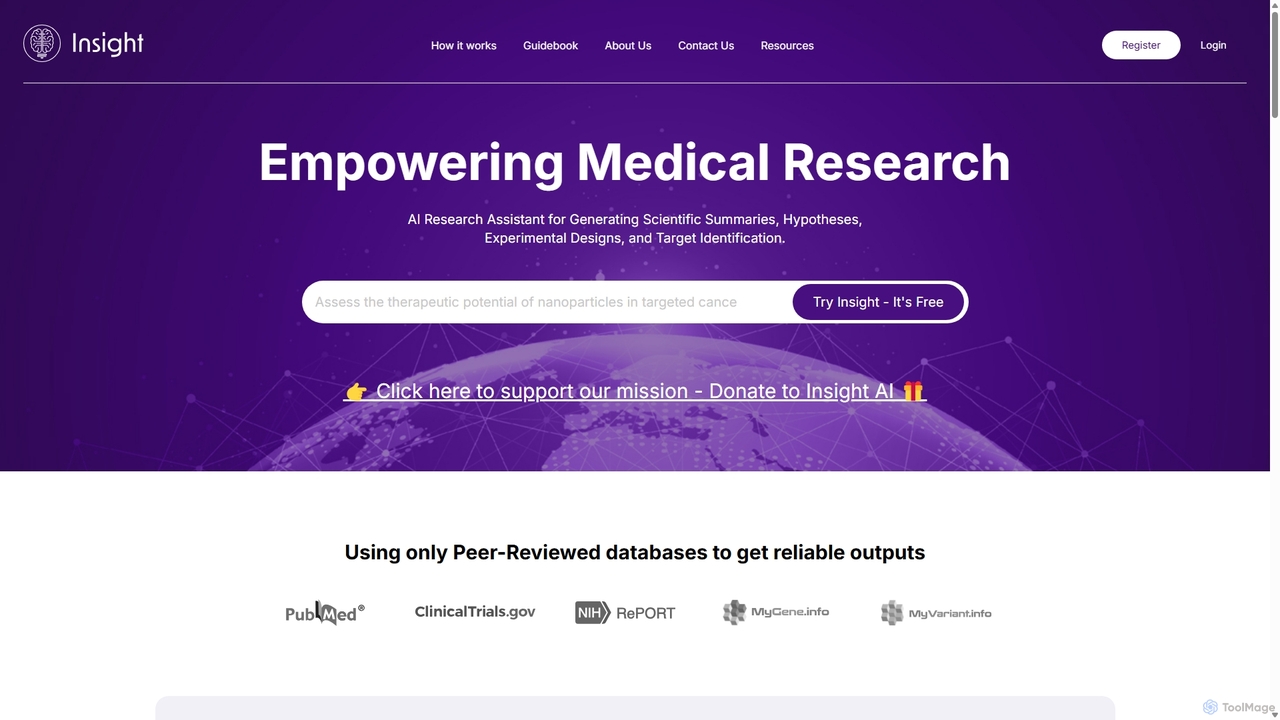
InsightAI
InsightAI is an AI-powered research assistant designed for the medical and life sciences fields. It streamlines the research process by generating scientific summaries, formulating hypotheses, creating experimental designs, and identifying potential drug targets. By integrating with peer-reviewed databases like PubMed, NIH Clinical Trials, and MyGene, InsightAI provides reliable, data-driven insights, saving researchers significant time on literature reviews and data analysis, thereby accelerating scientific discovery.
Academic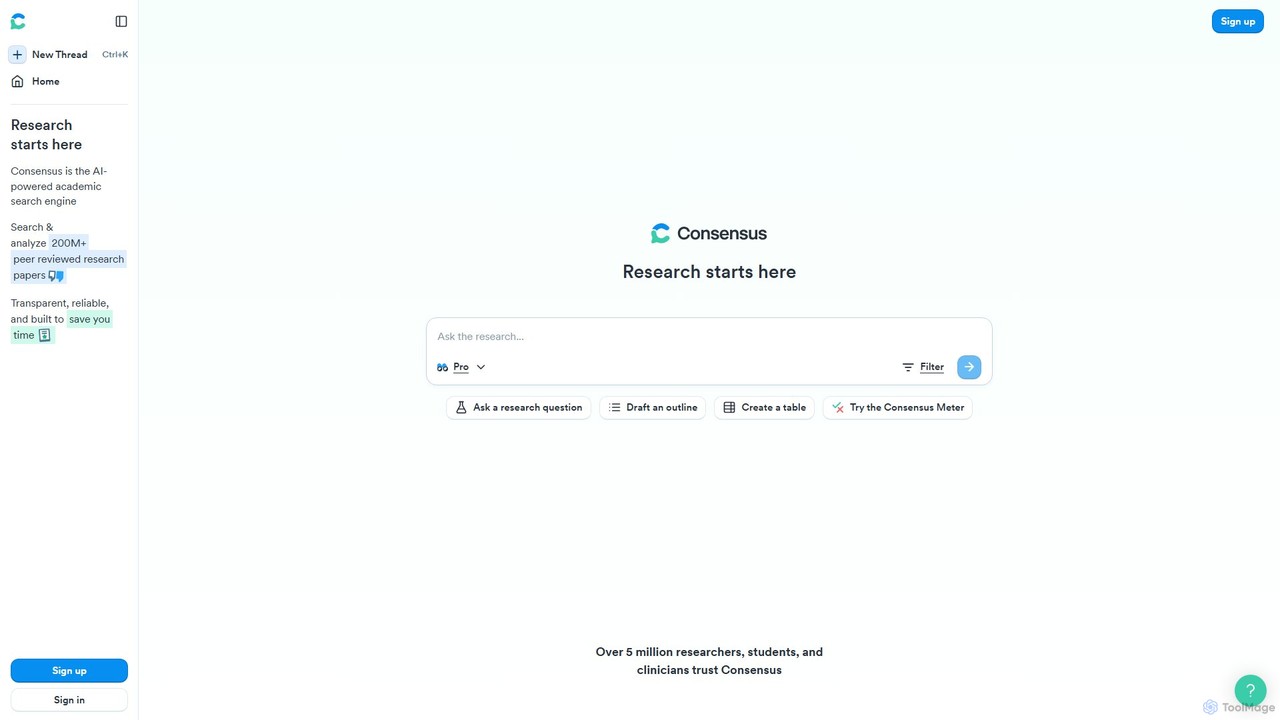
Consensus
Consensus is an AI-powered search engine designed for scientific research. It searches over 200 million peer-reviewed papers to provide evidence-based, synthesized answers to user questions, saving time for researchers, students, and professionals by extracting key findings directly from scientific literature.
Learning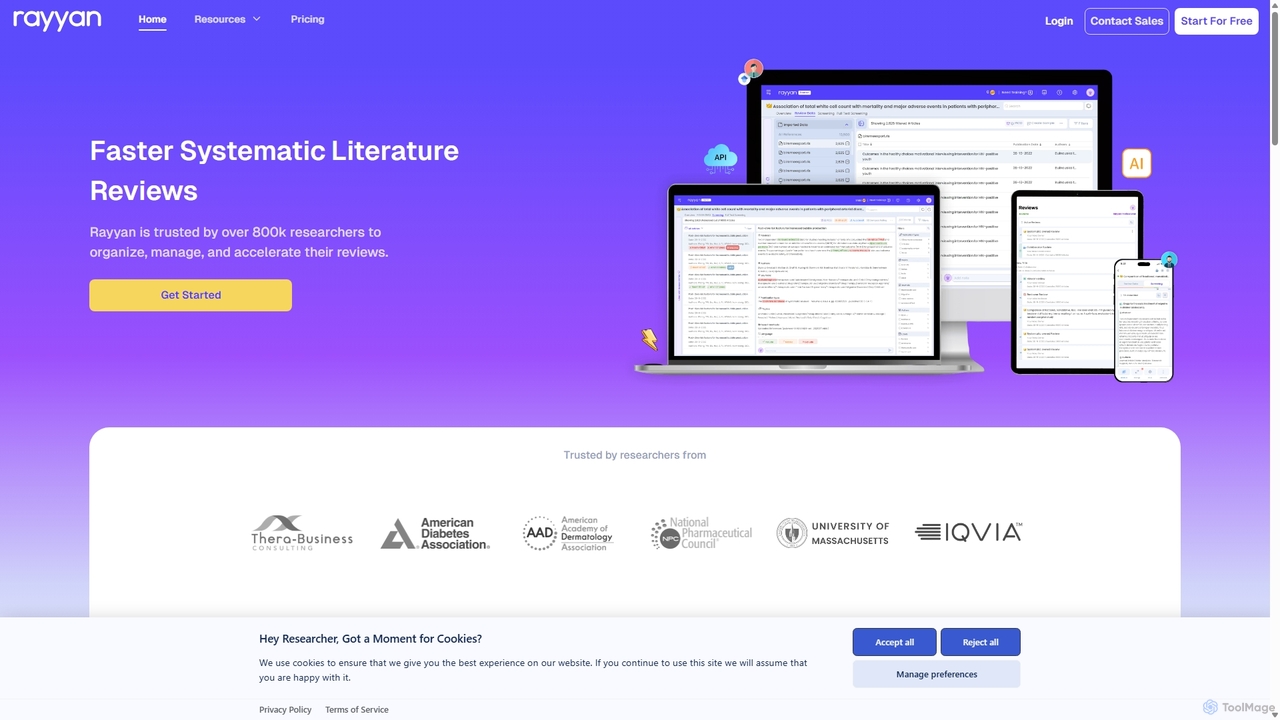
Rayyan
Rayyan is an AI-powered platform designed for researchers to accelerate systematic and literature reviews. It streamlines the process with features like automated screening, duplicate detection, and real-time collaboration, saving researchers up to 90% of their screening time. Trusted by over 800,000 users, it supports the entire review lifecycle from data import to final reporting.
Academic
Nahseo
Nahseo is an AI research environment that deploys autonomous agents to accelerate scientific discovery. It helps researchers overcome human bandwidth limitations by automating literature analysis, hypothesis generation, and experiment design, fostering data-driven decision-making across various scientific domains.
Autonomous AgentsSemantic Scholar
A free, AI-powered research tool from the Allen Institute for AI that helps scholars discover and understand scientific literature. It uses AI to analyze over 200 million papers, providing features like semantic search, influential citation analysis, and paper summaries to accelerate scientific breakthroughs.
Apis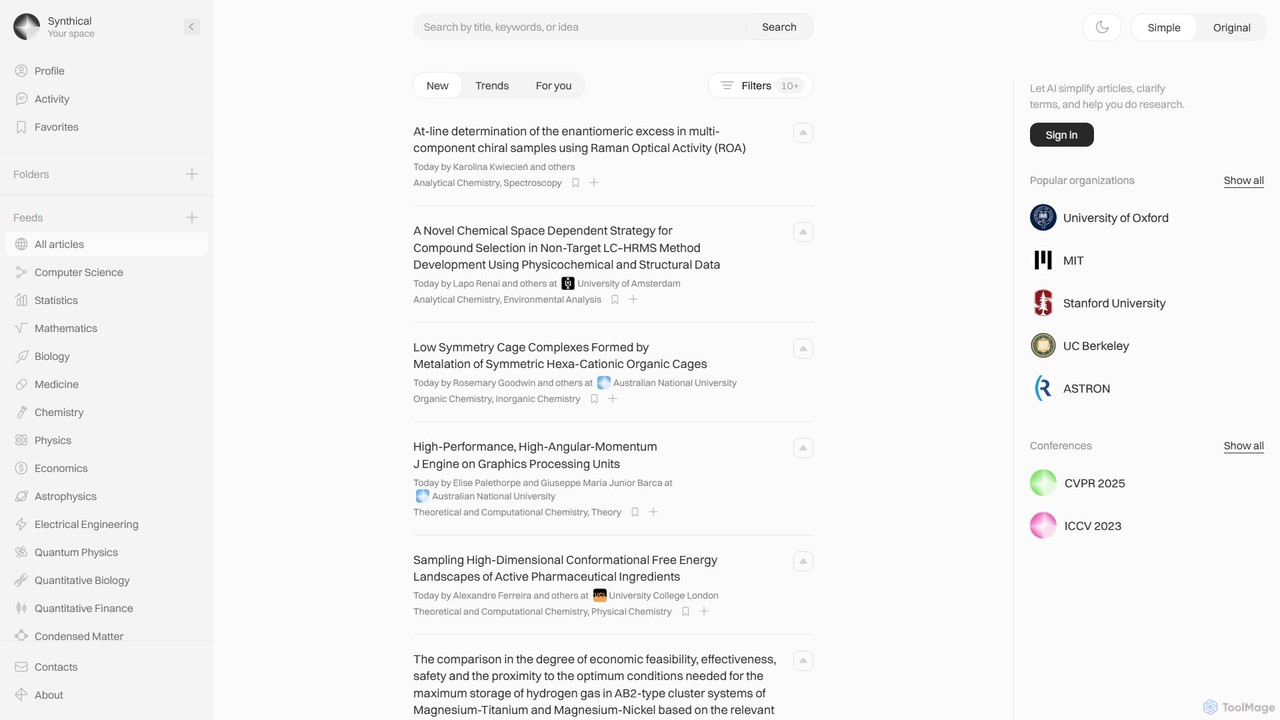
Synthical
Synthical is an AI-powered research environment designed for academics, students, and scientists. It aggregates scientific papers from diverse fields like Computer Science, Biology, and Physics, using AI to simplify complex articles, define terms, and accelerate the research process. Organize your work with personalized feeds, folders, and favorites.
Research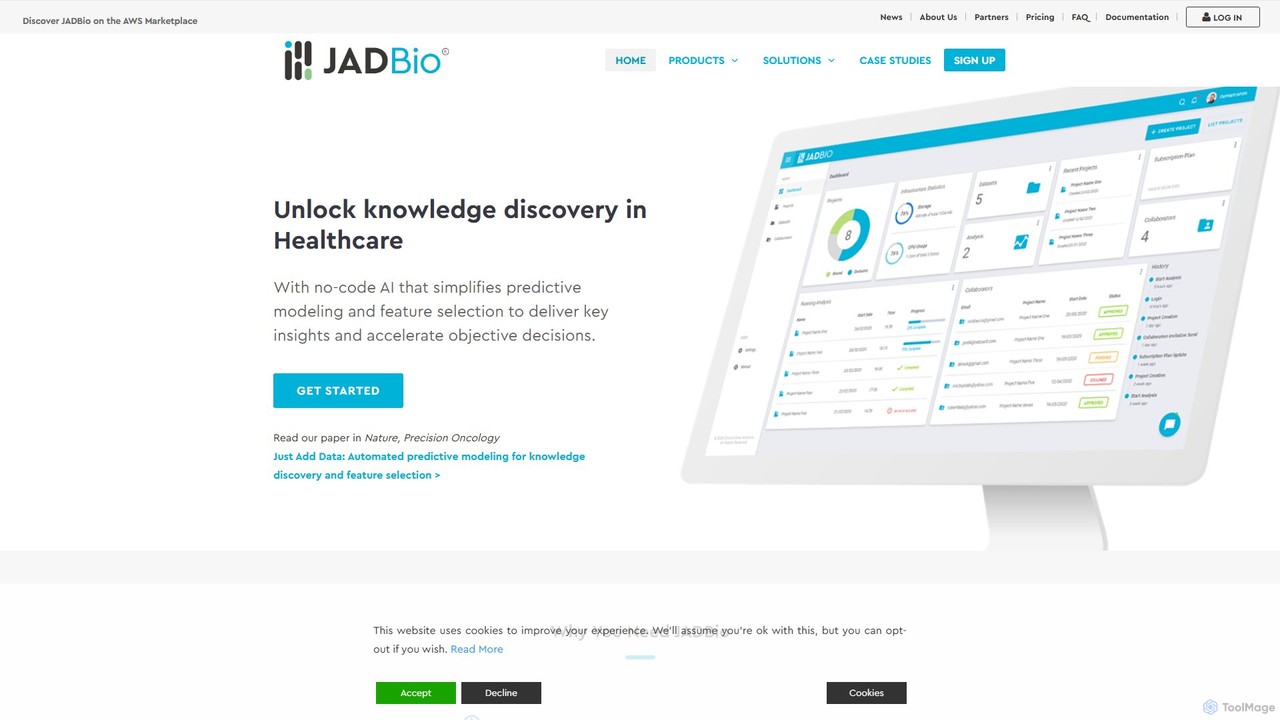
JADBio
JADBio is a no-code Automated Machine Learning (AutoML) platform designed for life sciences and biotechnology. It specializes in analyzing complex, high-dimensional biological data (omics) to accelerate biomarker discovery, identify predictive biosignatures, and build accurate predictive models for precision medicine and translational research.
Machine Learning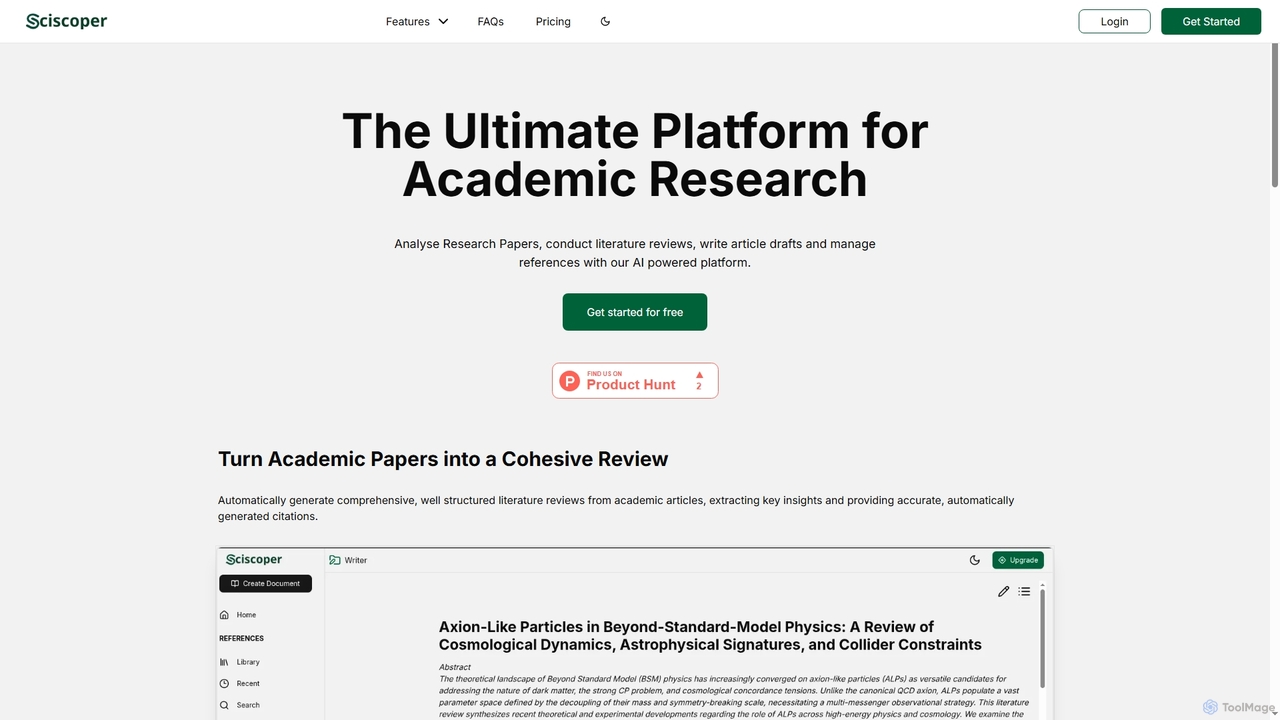
Sciscoper
Sciscoper is an AI-powered platform designed to streamline academic research. It helps students and researchers analyze papers, conduct literature reviews, draft articles, and manage references efficiently. With features like PDF chat, semantic search, and an AI writer, it accelerates the entire research workflow.
Pdf Tools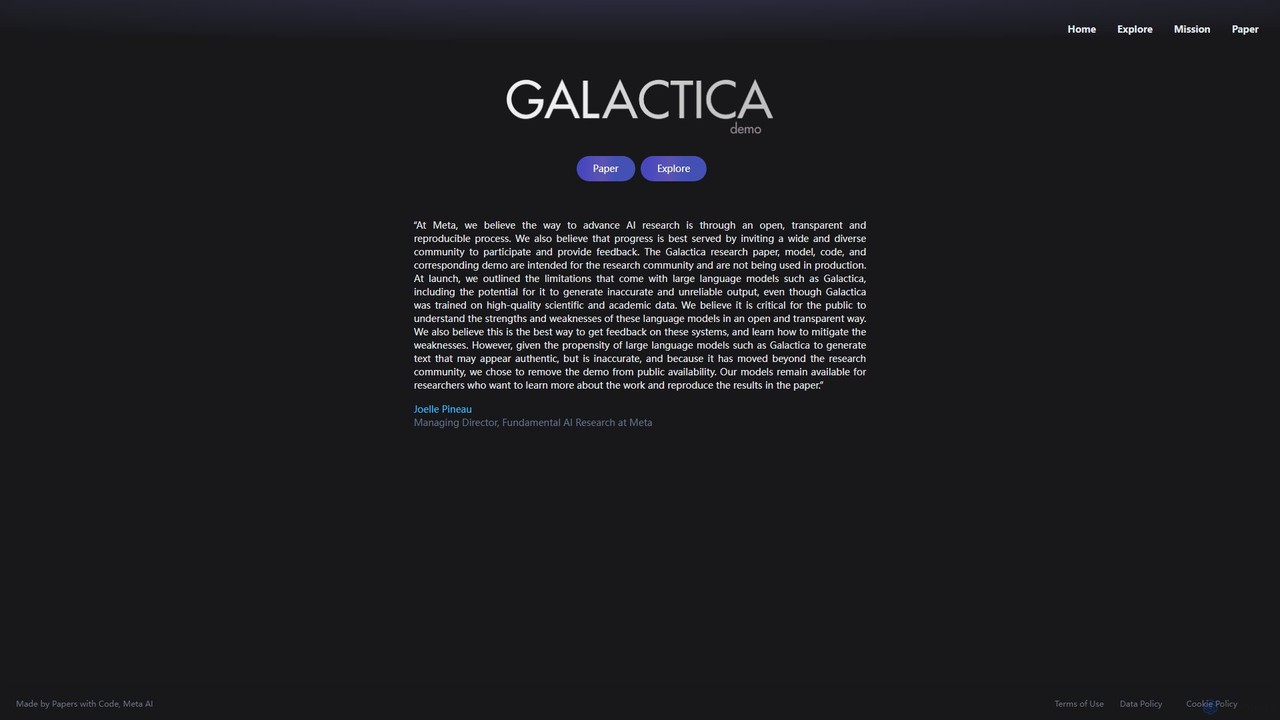
Galactica
Galactica is a large language model from Meta AI, specifically trained on over 48 million scientific papers, textbooks, and reference materials. It's designed to assist researchers by organizing scientific knowledge, suggesting citations, answering complex questions, writing scientific code, and explaining mathematical formulas. Although its public demo is discontinued, the open-source model remains available for the research community to advance scientific discovery.
Code Assistant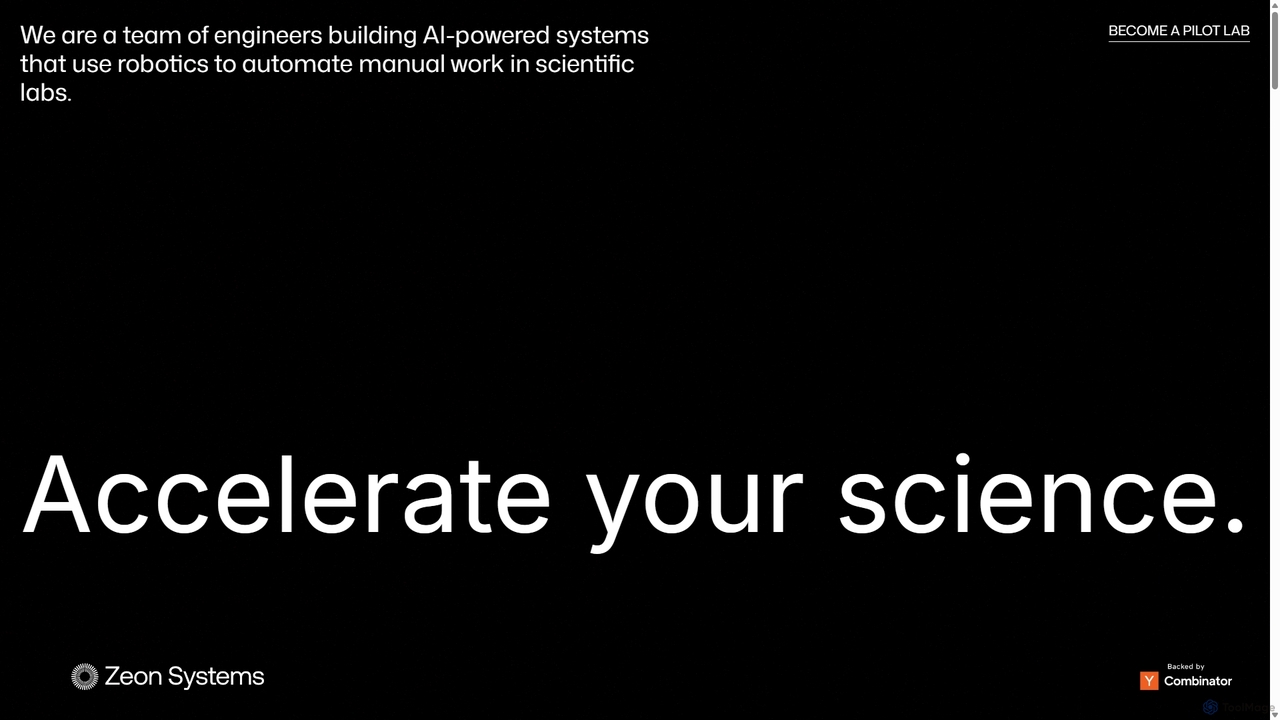
Zeon Systems
Zeon Systems is an AI-powered, full-stack lab automation platform designed for accessibility. It combines intelligent software with off-the-shelf robotic arms to automate complex experiments in biology, chemistry, and materials science. Users can describe protocols in plain English, and the system translates them into precise robotic actions, eliminating the need for coding or specialized training.
No Code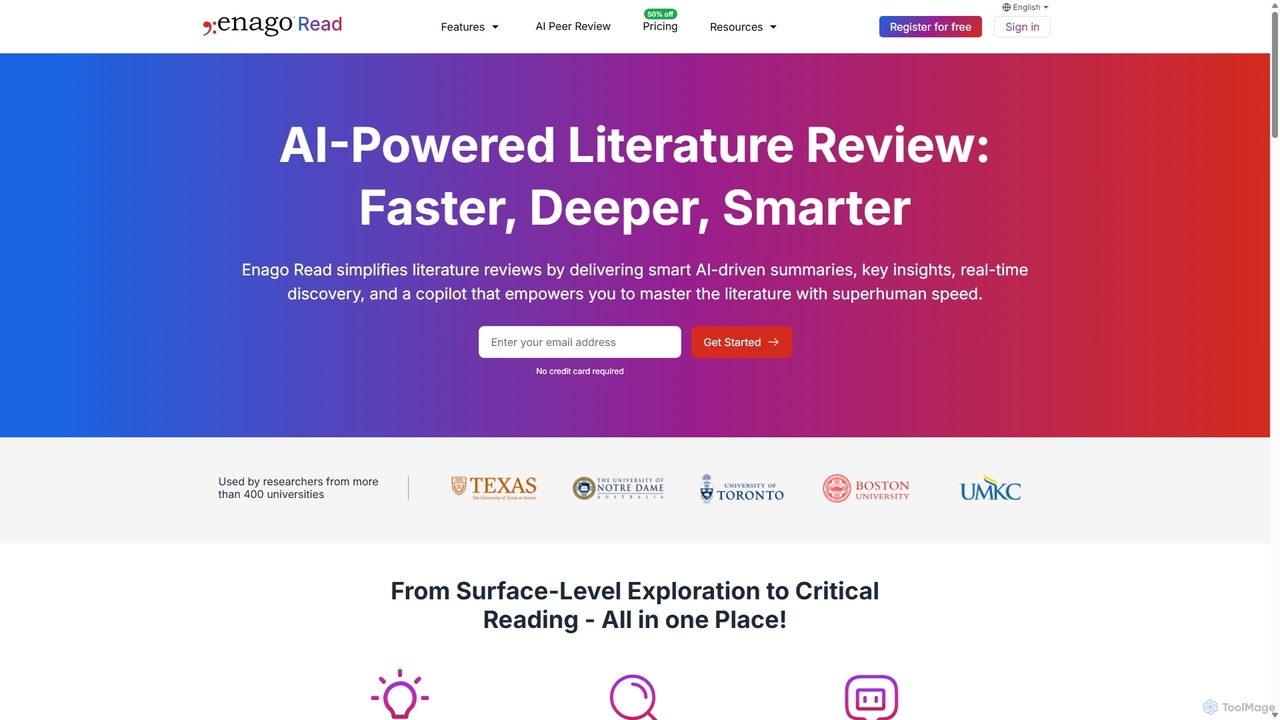
Enago Read
Enago Read is an AI-powered research assistant designed to accelerate literature reviews. It helps researchers and students discover, read, and analyze academic papers with features like AI-generated summaries, key insights, and an interactive AI Copilot to chat with documents. It streamlines the entire research workflow from exploration to critical analysis.
Research
BioGPT Comments (0)
Sign in to comment.
Sign inNo comments yet.