
Galactica Overview
Galactica is a pioneering large language model (LLM) developed by Meta's Fundamental AI Research (FAIR) team, with a dedicated mission to organize and accelerate scientific progress. Unlike general-purpose LLMs, Galactica has been meticulously trained on a vast and high-quality scientific corpus of more than 48 million items, including academic papers, textbooks, reference materials, lecture notes, chemical compounds, proteins, and other sources of scientific knowledge. This specialized training allows it to understand and process the complex language, notation, and structure of science.
The core vision behind Galactica is to address the problem of information overload in the scientific community. As the volume of research explodes, it becomes increasingly difficult for researchers to stay updated, find relevant information, and distinguish significant findings. Galactica aims to act as an intelligent interface to this sea of knowledge, helping researchers navigate, summarize, and synthesize information more effectively.
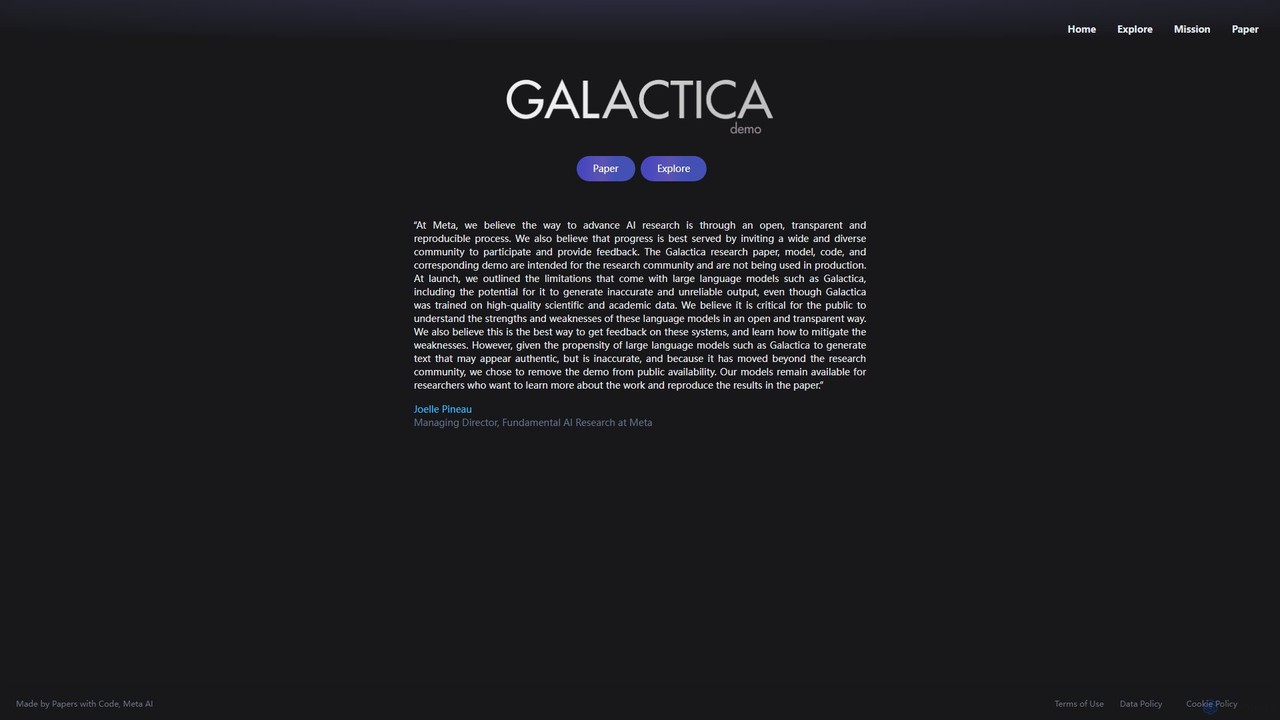
While the initial public web demo was taken down to prevent the spread of potential inaccuracies—a known limitation of all current LLMs—the Galactica model itself remains open-source and accessible to the research community. This commitment to openness allows for transparency, reproducibility, and collaborative improvement of the model's capabilities and safety.
How to use Galactica
Galactica is primarily intended for researchers and developers with programming experience. While the public-facing demo is no longer available, the model can be accessed and utilized through its open-source Python library, `galai`. Researchers can install the library and load different model sizes to suit their computational resources and needs.
Here is a basic example of how to get started:
- Installation: Install the library using pip:
pip install galai - Loading the Model: Import the library and load a pre-trained model. Different sizes are available, such as 'base', 'large', or 'huge'.
import galai as galmodel = gal.load_model("huge") - Generating Text: Use the model to generate scientific text, complete with citations. The model recognizes special tokens like `[START_REF]` and `[END_REF]` to handle references.
output = model.generate("The Transformer architecture [START_REF]")
The expected output would be something like:The Transformer architecture [START_REF] Attention is All you Need, Vaswani[END_REF] has been widely used in natural language processing.
It is crucial to be aware of the model's limitations, such as the potential for hallucination (generating plausible but incorrect information). All outputs, especially factual claims or advice, should be independently verified.
Core Features of Galactica
- Scientific Citation Generation: Trained on over 360 million in-context citations, Galactica can suggest relevant references for a given statement and help discover related papers.
- Mathematical and Chemical Formula Understanding: The model can parse, explain, and generate complex mathematical notations (like LaTeX) and chemical formulas (like SMILES). It can, for example, translate a complex formula like the Riemann zeta function into plain English.
- Scientific Question Answering: Users can ask complex scientific questions, and Galactica will attempt to provide answers based on its training data.
- Scientific Code Generation: It can write scientific code in languages like Python, assist in debugging, and even translate code snippets between different programming languages (e.g., Python to C++).
- Literature Review and Summarization: Galactica can help draft literature reviews, write abstracts, and summarize complex scientific documents.
- Open-Source Models: The models are available for researchers to use, study, and build upon, fostering an open and collaborative research environment.
Use Cases for Galactica
Galactica is a powerful tool for various stakeholders in the scientific ecosystem:
- Researchers: Can use it to accelerate literature reviews, brainstorm new research ideas, find supporting or conflicting papers, and draft manuscripts.
- Students: A valuable learning aid for understanding complex scientific concepts, getting step-by-step explanations of mathematical proofs, or learning to code for scientific applications.
- Scientific Writers and Editors: Can assist in drafting articles, ensuring the correct use of terminology, and finding appropriate citations to support claims.
- Educators: Can use it to generate teaching materials, create example problems, and explain difficult topics in a more accessible way.
Advantages of Galactica
The primary advantage of Galactica is its deep specialization in the scientific domain. This focus provides several key benefits:
- High-Quality, Specialized Corpus: Training on NatureBook, a curated scientific dataset, gives it a superior understanding of scientific nuance compared to generalist models.
- Built-in Citation Capability: Its ability to link generated text to real-world references is a critical feature for academic integrity and a significant step beyond many other LLMs.
- Multimodal Scientific Knowledge: It seamlessly integrates knowledge across text, math, code, and chemical structures, reflecting the true nature of modern science.
- Transparency and Openness: By being open-source, it invites scrutiny and collaboration from the global research community, which is essential for building trustworthy AI.
Pricing and Plans
Galactica is an open-source research project from Meta AI. As such, the models are available for free for research purposes. There are no commercial plans or subscription fees. Researchers can download and use the models in their own computational environments, subject to the terms of the model's license. The cost associated with using Galactica would be related to the computational resources (e.g., GPUs) required to run the models.
Galactica Alternatives
DeepSeek V3
DeepSeek V3 is a state-of-the-art, open-source large language model developed by DeepSeek AI. It excels in complex reasoning, coding, and multilingual tasks, featuring a massive 671B parameter Mixture-of-Experts architecture and a 128K context window. It offers high performance and efficiency, rivaling top proprietary models while being commercially usable under the MIT license.
Code Assistant
DeepSeek
DeepSeek is a suite of advanced large language models developed by DeepSeek AI. It offers a powerful, free-to-use AI chat interface and mobile app, alongside a robust API for developers. It excels in complex reasoning, coding, and mathematical problem-solving, providing a high-performance and cost-effective solution for both general users and professionals.
Personal Assistant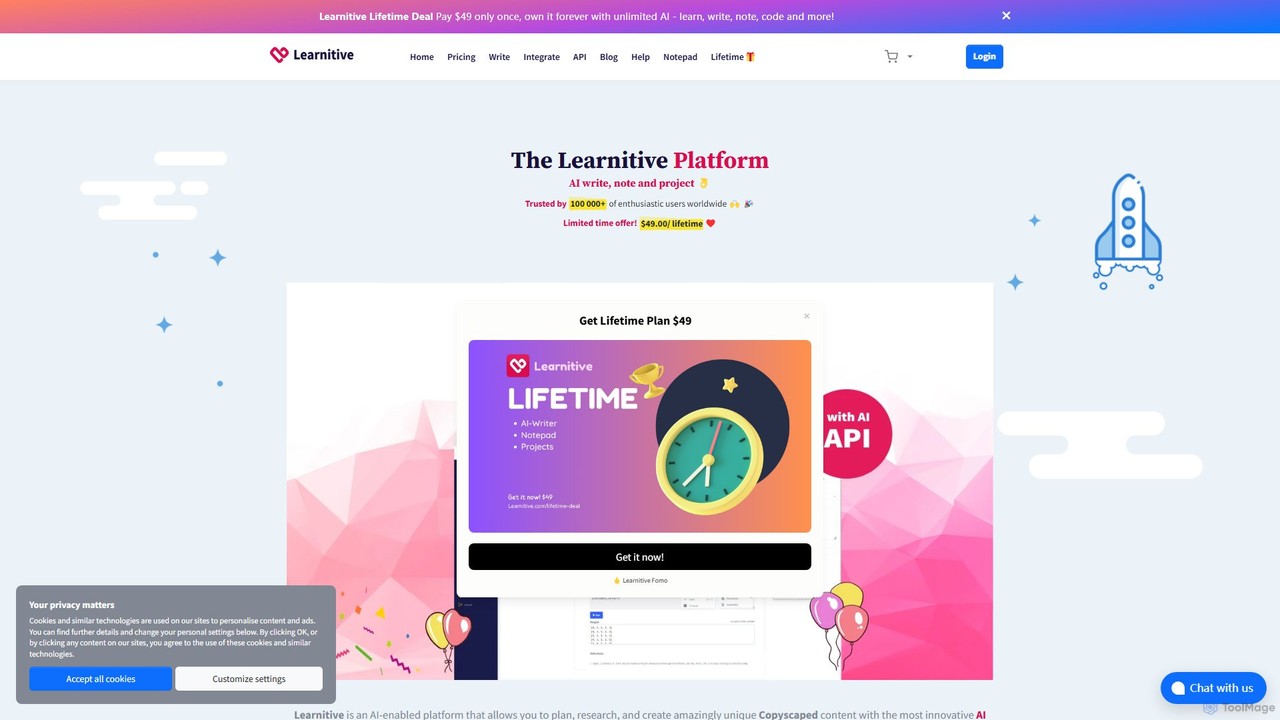
Learnitive
Learnitive is an all-in-one AI-powered platform for students, researchers, and writers. It combines an advanced AI writer for creating unique, Copyscape-checked content with research tools, a code generator, and automatic citations. The platform also includes integrated productivity tools like a Kanban project manager, an AI-enhanced notepad, and an e-book creator. With browser extensions and API access, Learnitive streamlines the entire workflow from research and planning to final creation, boosting productivity and enhancing learning.
Code Assistant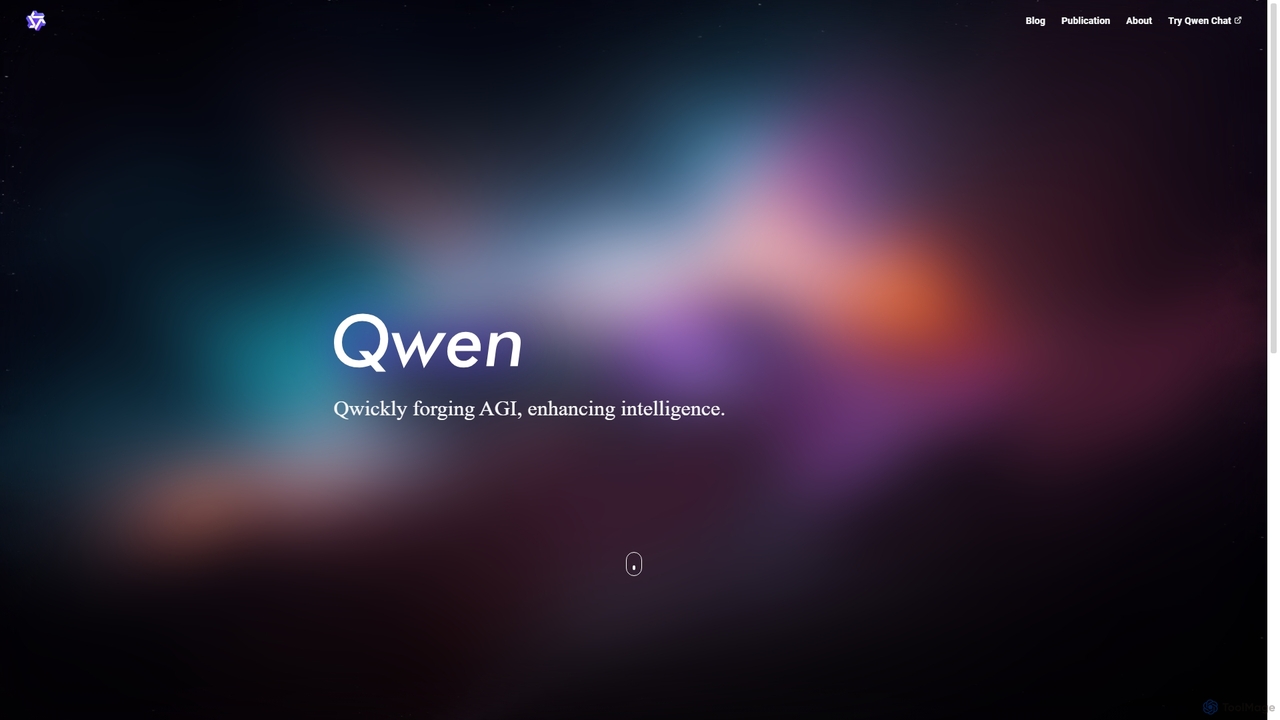
Qwen
Qwen is a powerful family of open-source large language and multi-modal models from Alibaba Cloud. It excels at a wide range of tasks including conversational AI, state-of-the-art code generation, advanced image creation with precise text rendering, and high-quality multilingual translation, empowering developers and creators worldwide.
Code Assistant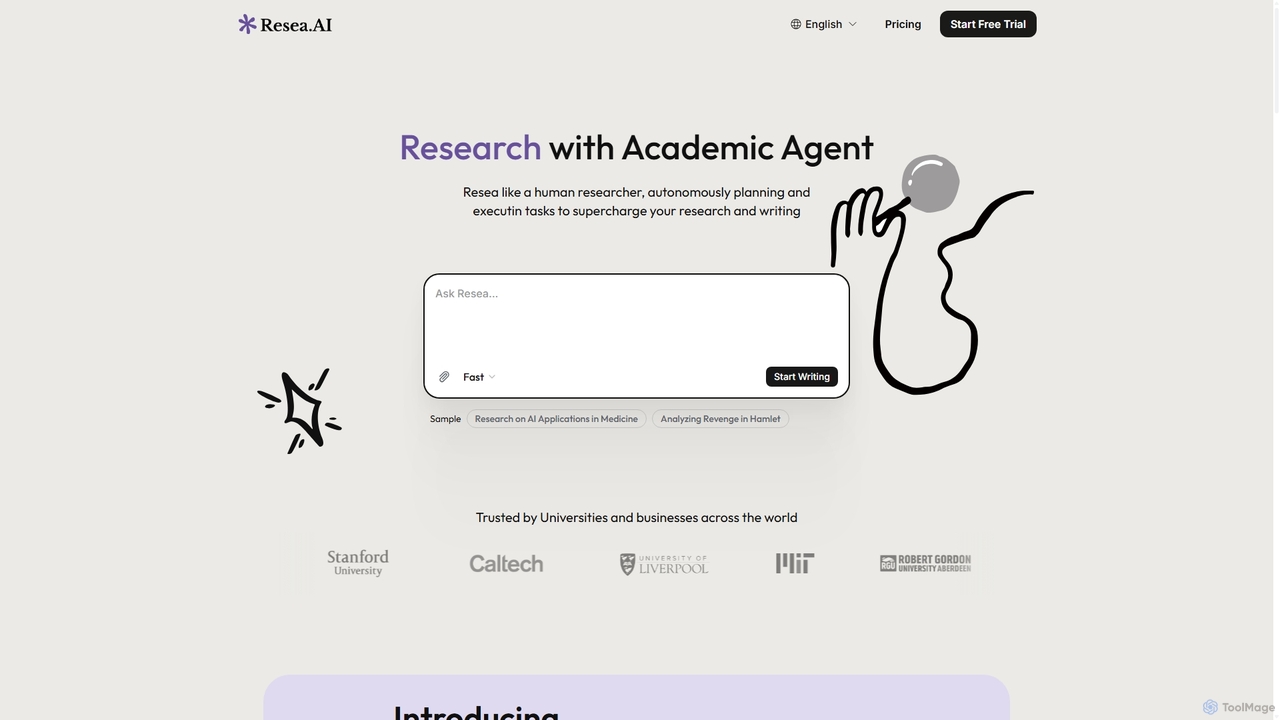
Resea AI
Resea AI is the world's first autonomous academic agent, designed to supercharge research and writing. It independently plans and executes tasks, from conducting in-depth research across databases like Google Scholar and PubMed to writing long-form reports of up to 50,000 words with accurate citations in formats like APA and IEEE. It's an all-in-one partner for students, academics, and researchers.
ResearchGalactica Categories
Galactica Embed Widget
Copy this embed code to place the badge on your blog, article, or product site and send readers directly to this ToolMage detail page.

Related AI tools
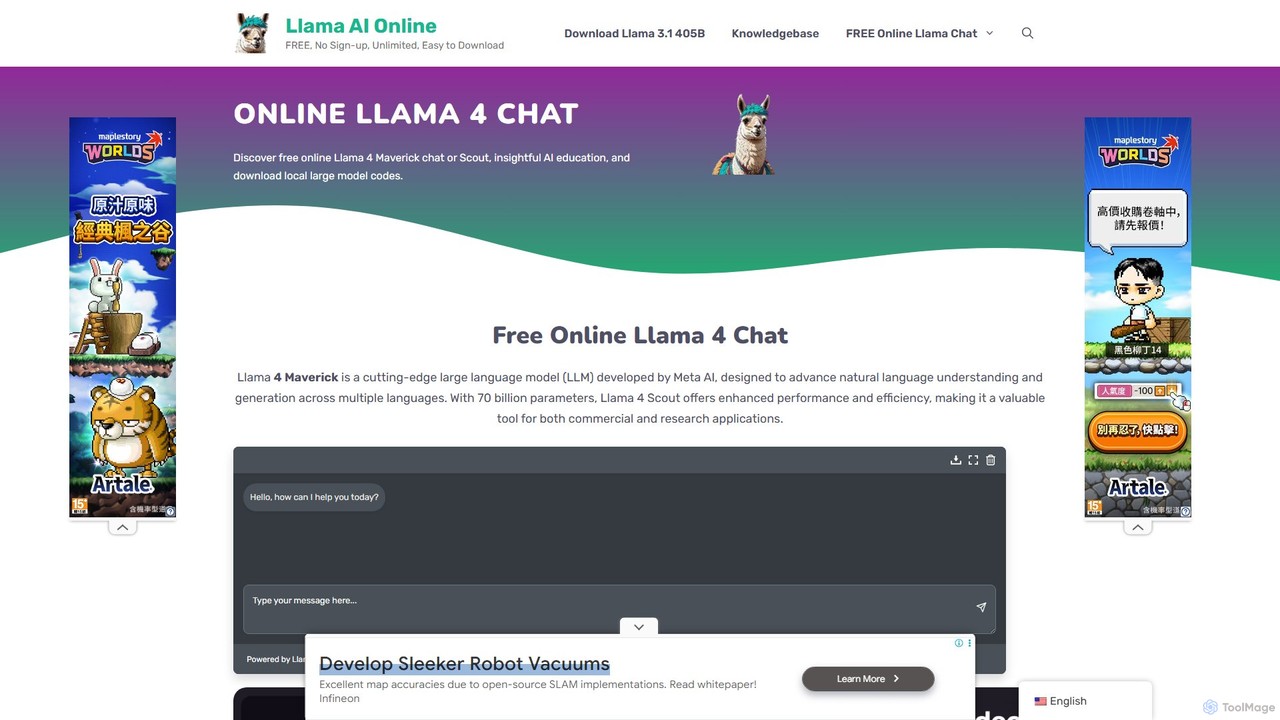
Llama AI Online
Llama AI Online offers free, web-based access to Meta AI's powerful Llama series of large language models. Users can engage in conversational chat, generate text, write code, and explore advanced AI capabilities without needing powerful hardware. The platform also serves as a knowledge base, providing guides, comparisons, and educational content for both beginners and developers interested in leveraging Llama models for various applications.
Code Assistant
BioGPT
BioGPT is an AI-powered research assistant designed for the biology and life sciences community. It helps researchers, students, and professionals solve complex biological problems by analyzing scientific papers, designing experiments, interpreting data, generating hypotheses, and creating lab protocols, all based on cutting-edge research.
Learning
MirrorThink
MirrorThink is an AI-powered research assistant designed for scientists and academics. It leverages GPT-4, Wolfram, and PubMed to accelerate scientific discovery by handling literature research, complex mathematical calculations, and scientific market analysis, providing fast and accurate answers.
AcademicQwen
Qwen is a powerful family of open-source large language and multi-modal models from Alibaba Cloud. It excels at a wide range of tasks including conversational AI, state-of-the-art code generation, advanced image creation with precise text rendering, and high-quality multilingual translation, empowering developers and creators worldwide.
Code AssistantResea AI
Resea AI is the world's first autonomous academic agent, designed to supercharge research and writing. It independently plans and executes tasks, from conducting in-depth research across databases like Google Scholar and PubMed to writing long-form reports of up to 50,000 words with accurate citations in formats like APA and IEEE. It's an all-in-one partner for students, academics, and researchers.
Research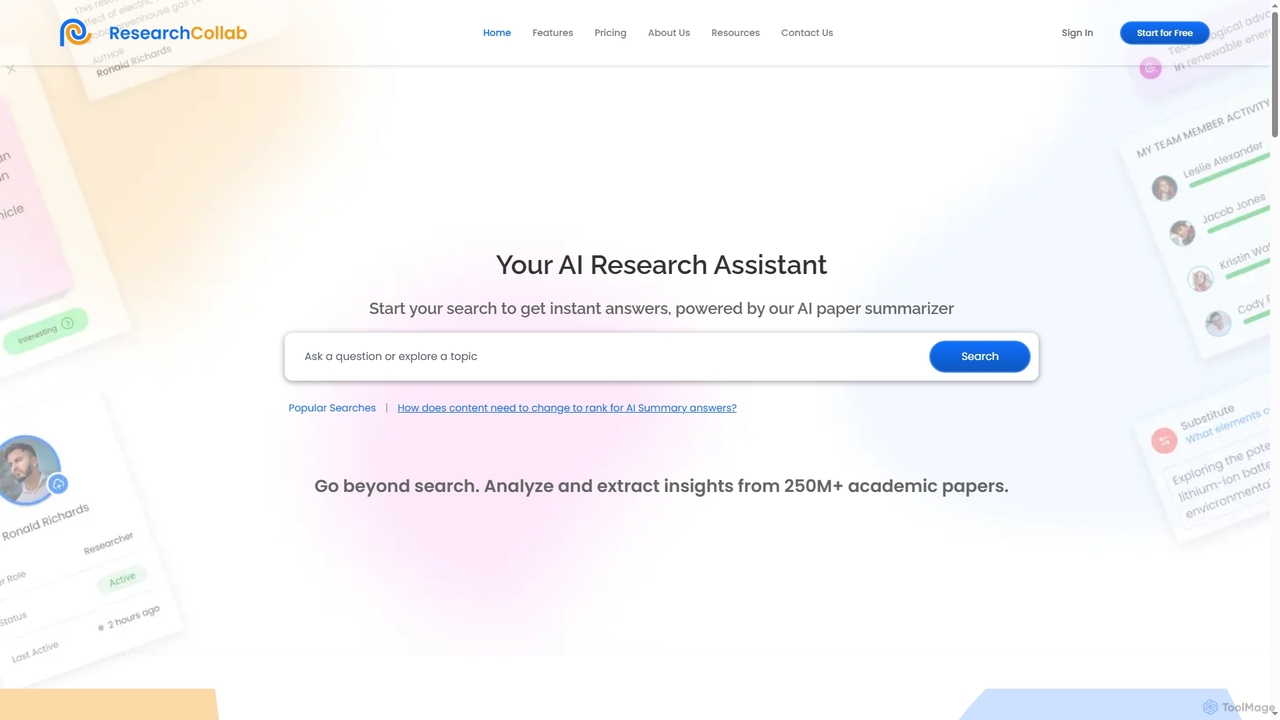
ResearchCollab
ResearchCollab is an AI-powered research assistant and collaboration platform designed to streamline academic work. It enables users to search, analyze, and summarize over 250 million academic papers, generate ideas, manage citations, and collaborate with teams efficiently.
Research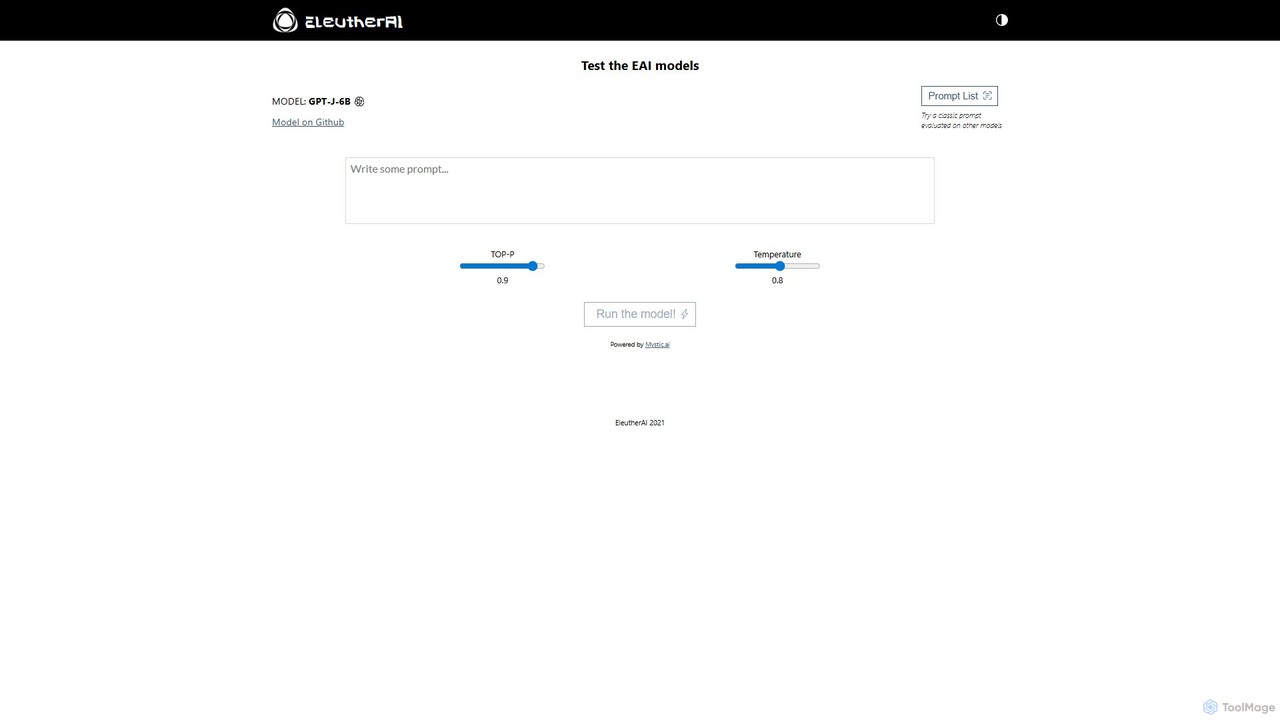
6b
6b is a free web-based interface by EleutherAI for testing the GPT-J-6B large language model. Users can input prompts, adjust parameters like temperature and top-p, and instantly generate text. It's an accessible tool for developers, researchers, and writers to experiment with a powerful 6-billion parameter open-source AI without any setup, exploring its capabilities in creative writing, coding, and content generation.
Ai Models
ResearchBuddy
ResearchBuddy is an AI-powered platform designed to automate and streamline the literature review process for researchers, students, and academics. It helps users quickly discover relevant papers, extract key insights, synthesize information, and generate comprehensive literature review drafts, saving countless hours of manual work.
Literature Review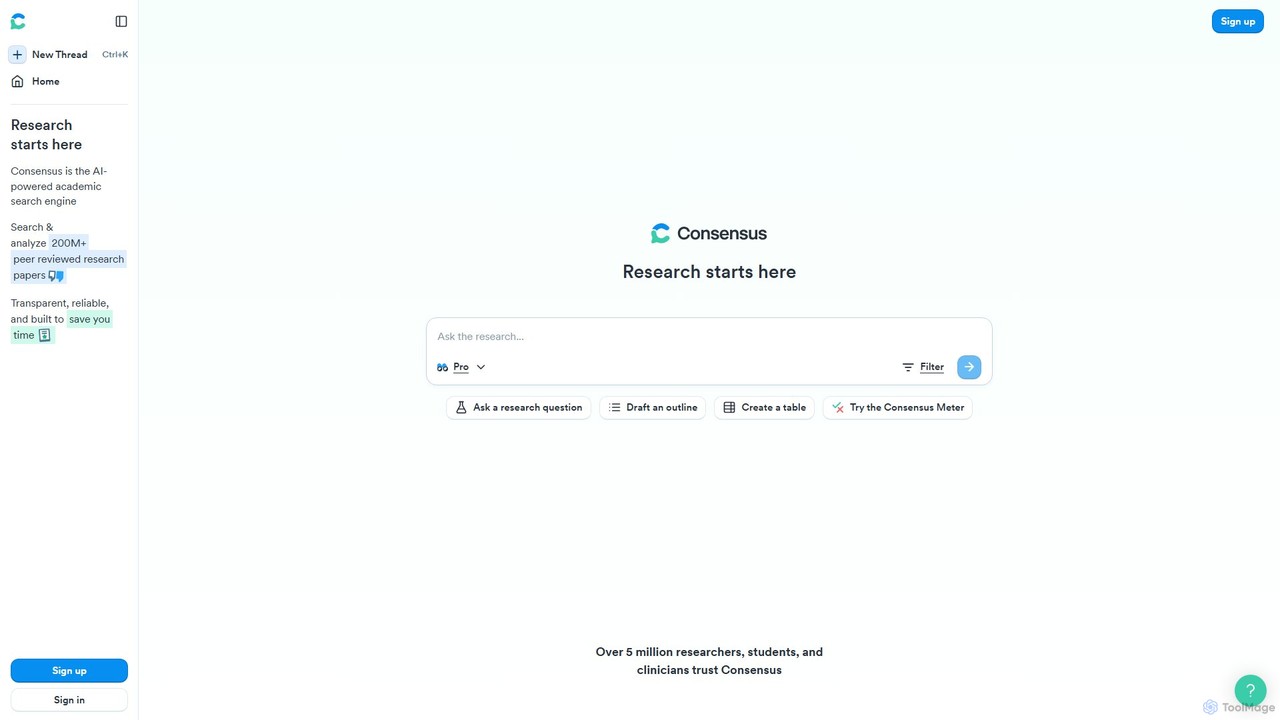
Consensus
Consensus is an AI-powered search engine designed for scientific research. It searches over 200 million peer-reviewed papers to provide evidence-based, synthesized answers to user questions, saving time for researchers, students, and professionals by extracting key findings directly from scientific literature.
Learning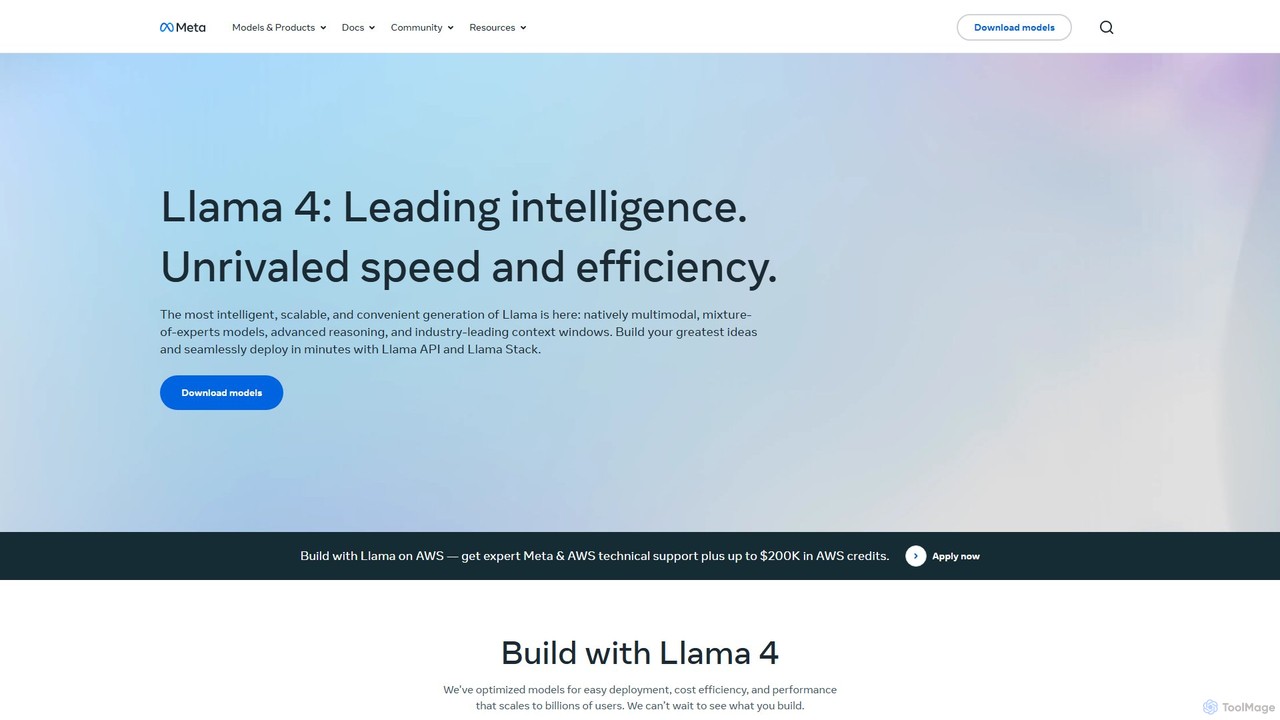
Llama
Llama is a family of open-source large language models (LLMs) from Meta. The latest generation, Llama 4, features industry-leading performance with native multimodality, a mixture-of-experts architecture for efficiency, and vast context windows. It's designed for developers and businesses to build and deploy advanced, scalable, and responsible AI applications through downloadable models and a streamlined API.
Chatbot Builder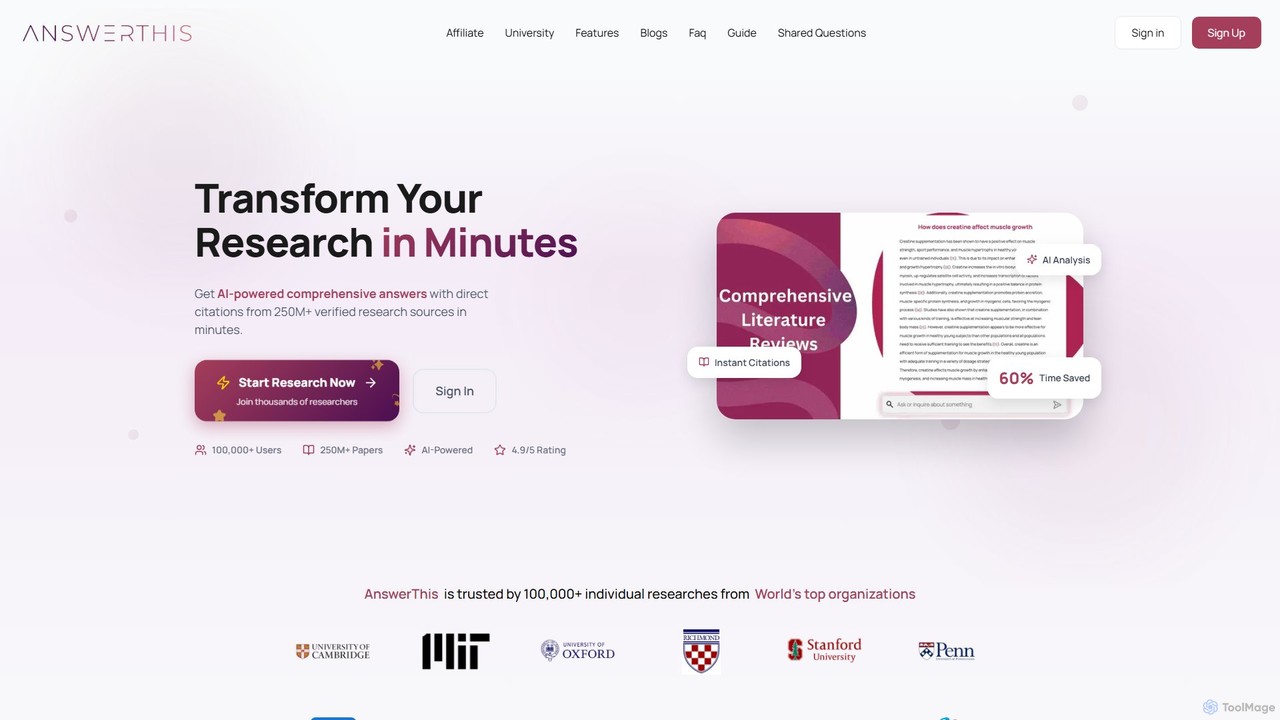
AnswerThis
AnswerThis is an AI-powered research assistant designed to accelerate academic and professional research. It searches a vast database of over 250 million verified research papers to provide comprehensive, synthesized answers with direct, line-by-line citations. The platform offers a suite of tools for literature reviews, data analysis, and academic writing, saving users up to 60% of their research time while maintaining academic integrity.
Academic
Open Interpreter
An open-source tool that lets Large Language Models (LLMs) run code (Python, Shell, etc.) locally on your computer. It provides a natural language interface to your machine, enabling complex tasks like data analysis, file management, and automation with full access to your system's capabilities.
Data Analysis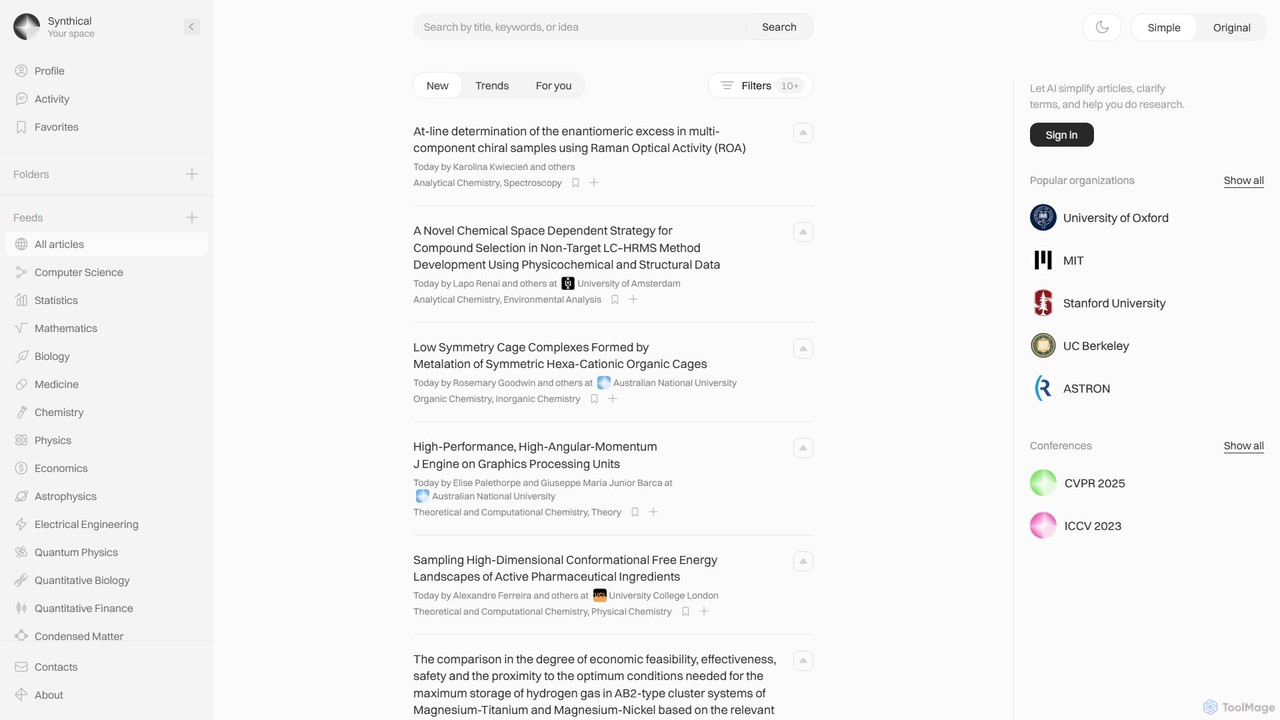
Synthical
Synthical is an AI-powered research environment designed for academics, students, and scientists. It aggregates scientific papers from diverse fields like Computer Science, Biology, and Physics, using AI to simplify complex articles, define terms, and accelerate the research process. Organize your work with personalized feeds, folders, and favorites.
Research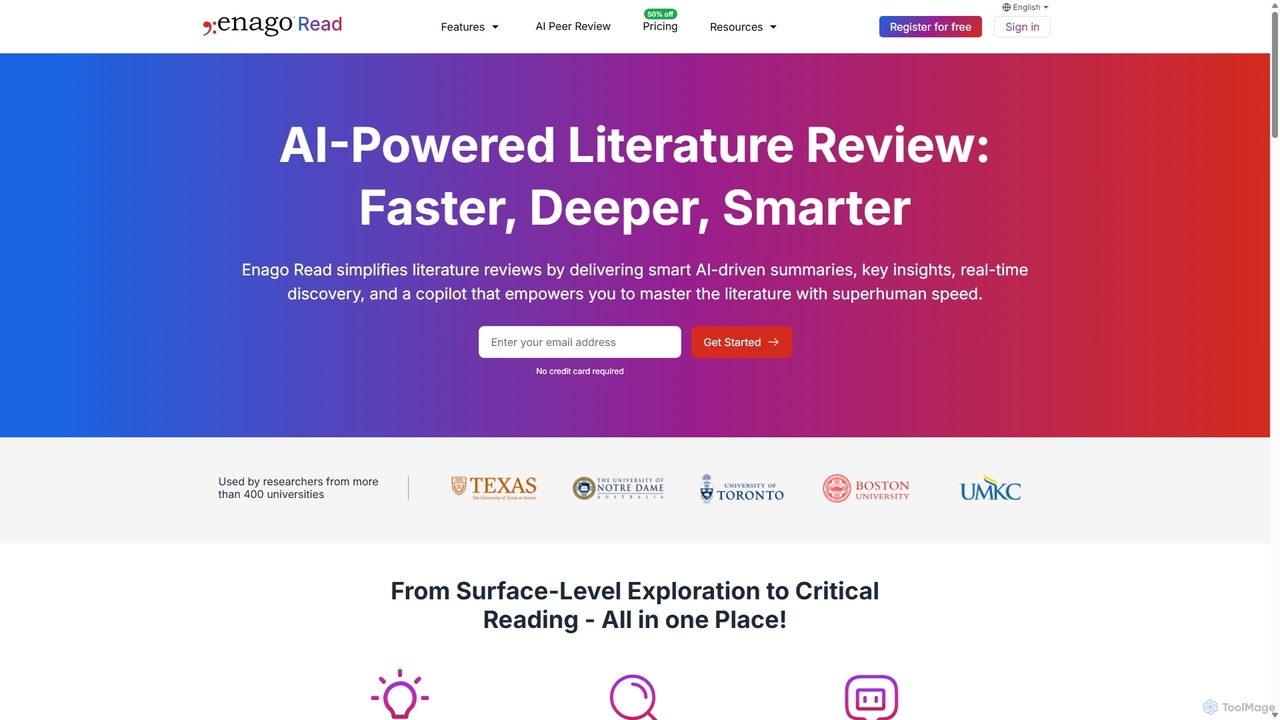
Enago Read
Enago Read is an AI-powered research assistant designed to accelerate literature reviews. It helps researchers and students discover, read, and analyze academic papers with features like AI-generated summaries, key insights, and an interactive AI Copilot to chat with documents. It streamlines the entire research workflow from exploration to critical analysis.
Research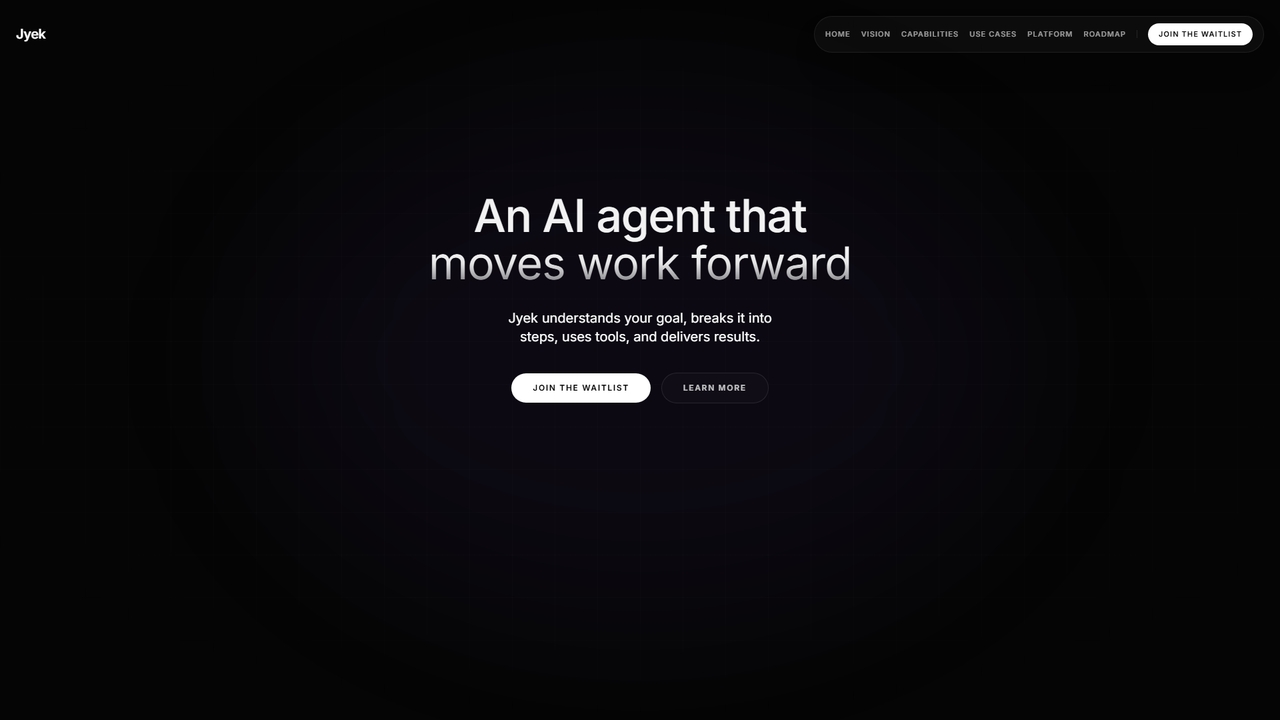
Jyek
Jyek is an AI agent platform that understands objectives, creates execution plans, uses tools, and delivers verifiable results for complex, multi-step tasks.
Automation
Galactica Comments (0)
Sign in to comment.
Sign inNo comments yet.