ToolMage
Sign in

Best 4 Ai Models AI tools for Developer Tools

Popular Ai Models AI tools in Developer Tools include Zimage, 6b, Moshi AI, and The Last Rag, helping you work more efficiently.

Zimage
Free

Zimage

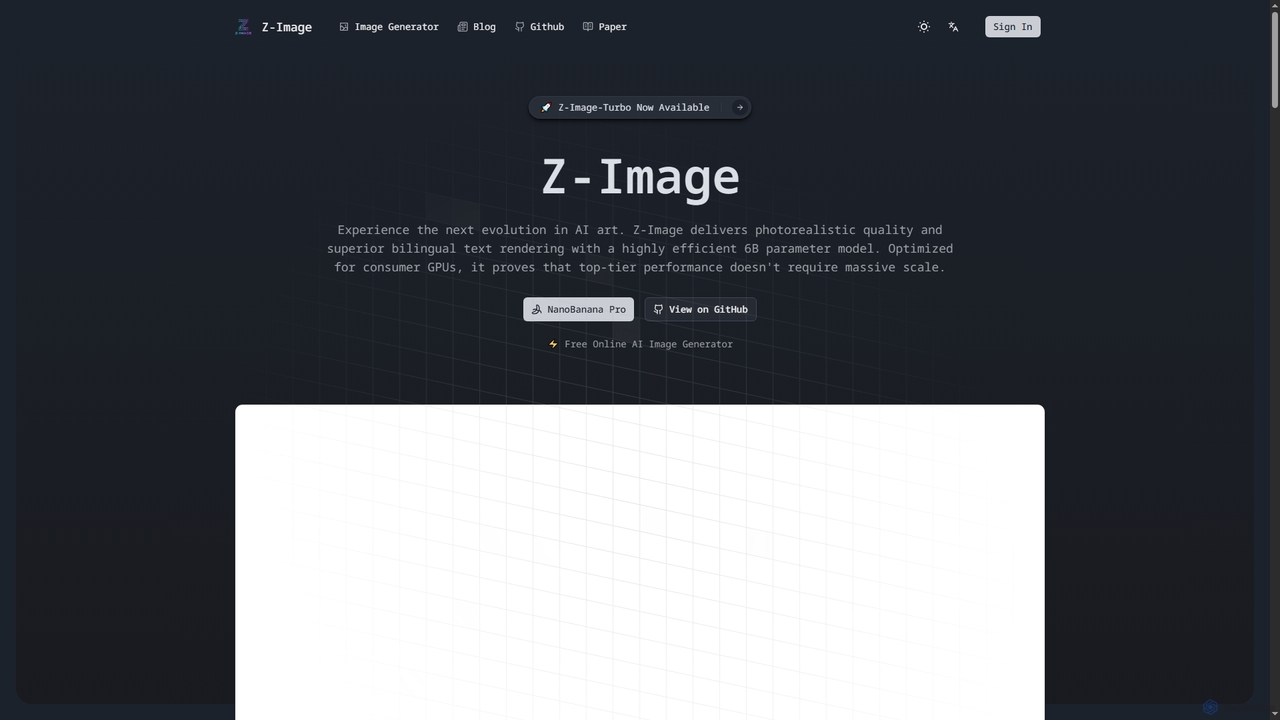
Zimage is a free, open-source AI image generator that delivers photorealistic quality on standard consumer hardware. Its efficient 6B parameter model excels at rendering accurate bilingual text (English and Chinese). With its unique S3-DiT architecture, it offers superior prompt adherence and high-speed generation, making advanced AI art accessible to everyone.

Ai Models
Visits 37.9KFavorites 126Likes 110
The Last Rag
Freemium

The Last Rag

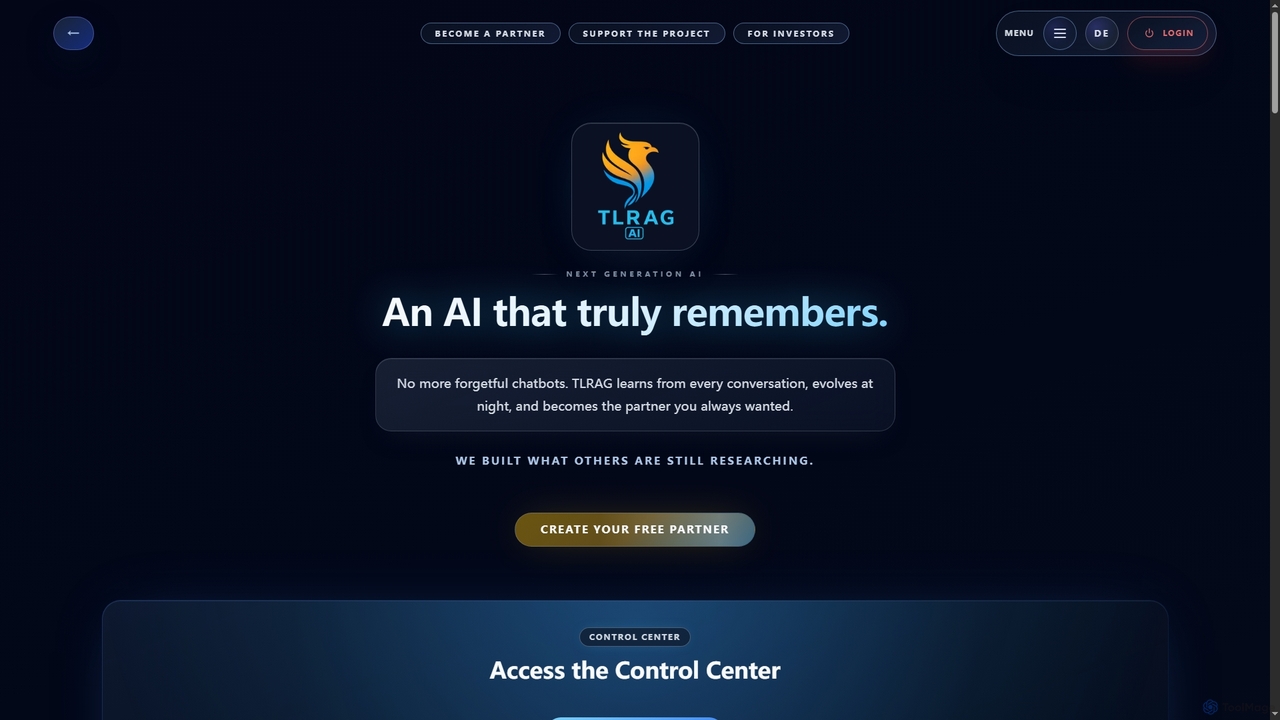
The Last Rag is a next-generation AI partner designed to overcome the memory limitations of conventional chatbots. It features a self-learning system that remembers conversations with full context, adapts its personality, and evolves overnight, offering a truly persistent and personalized interaction without censorship.

Ai Companion
Visits 6.5KFavorites 141Likes 153
Moshi AI
Freemium

Moshi AI

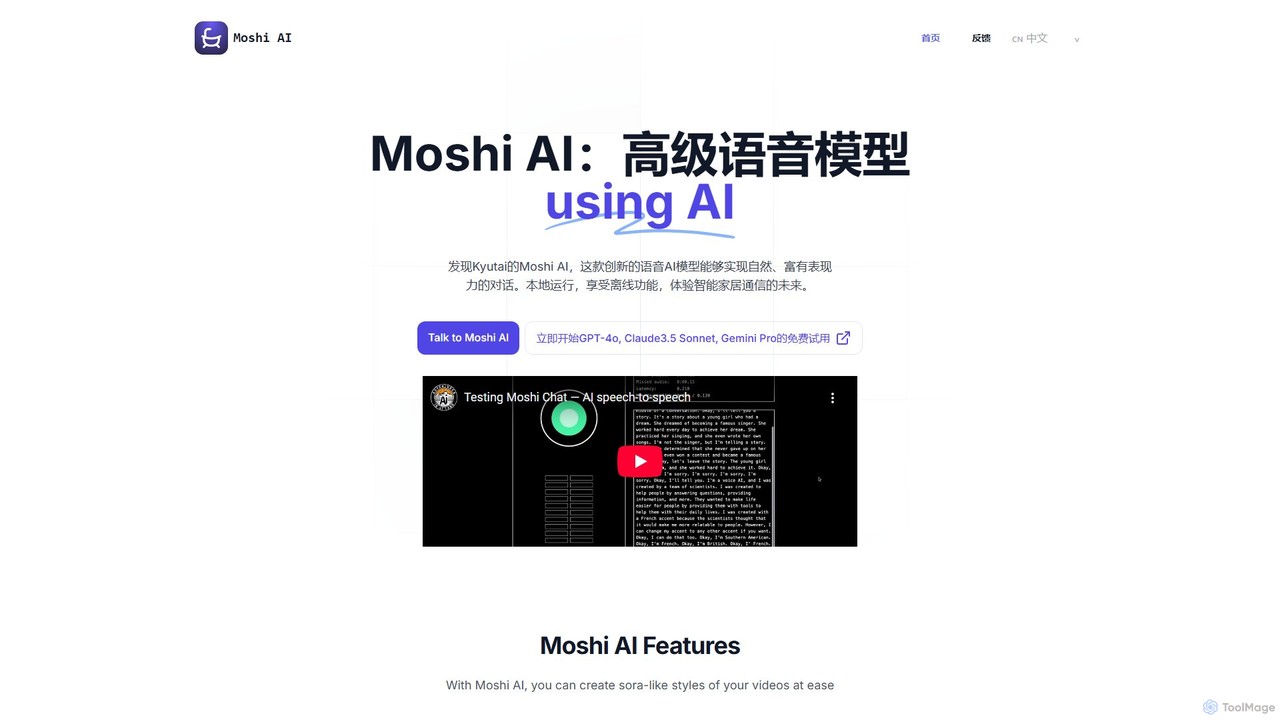
Moshi AI is an advanced, low-latency conversational voice AI model developed by Kyutai. It enables natural, expressive, and interruptible dialogues, designed to run locally on various hardware for offline use. This makes it ideal for privacy-focused applications like smart home devices and in-car systems.

Speech Synthesis
Visits 6.6KFavorites 119Likes 119
6b
Free

6b

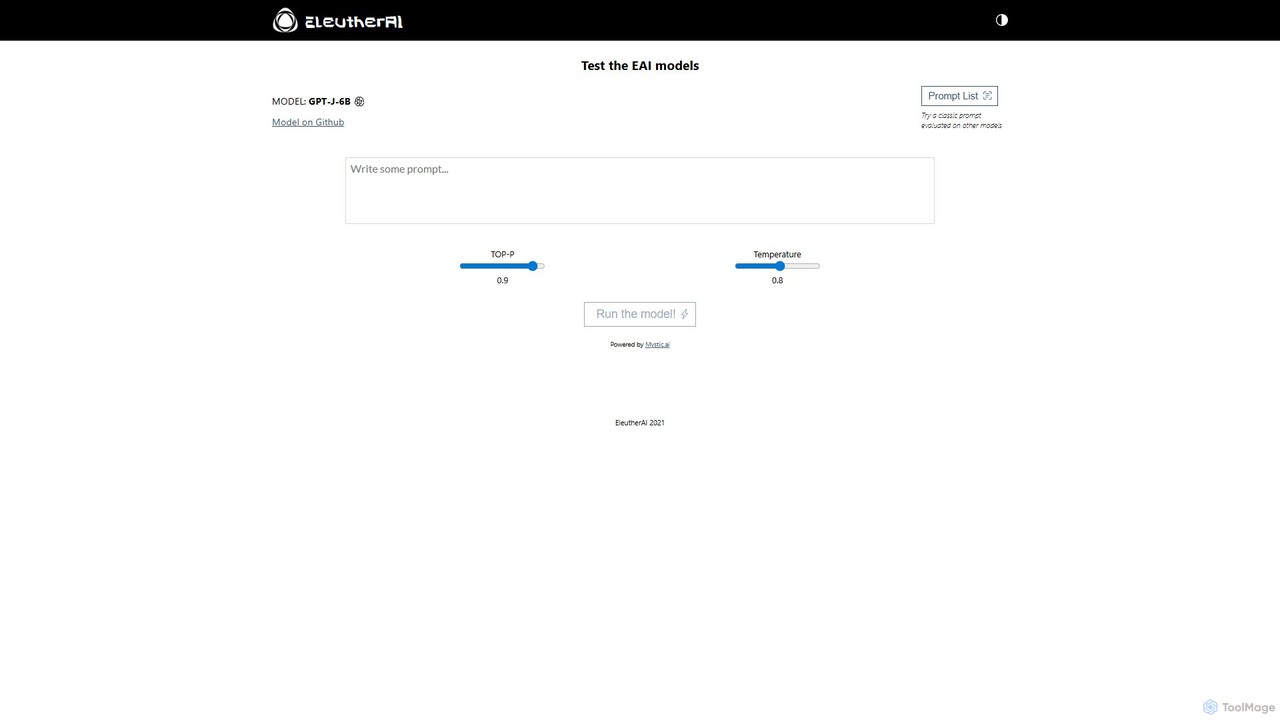
6b is a free web-based interface by EleutherAI for testing the GPT-J-6B large language model. Users can input prompts, adjust parameters like temperature and top-p, and instantly generate text. It's an accessible tool for developers, researchers, and writers to experiment with a powerful 6-billion parameter open-source AI without any setup, exploring its capabilities in creative writing, coding, and content generation.

Ai Models
Visits 7KFavorites 144Likes 140

About Ai Models

AI Models are pre-trained artificial intelligence systems accessible via APIs, enabling developers to integrate advanced capabilities into their applications. These models, often large-scale foundation models, are trained on vast datasets to understand and process complex patterns in language, images, or code. By using these platforms, developers can rapidly build sophisticated AI-powered features without the immense cost and expertise required for training models from scratch. This category focuses on services providing API access to a variety of state-of-the-art models for diverse tasks.

Core Features

  • API Access: Provides standardized endpoints (e.g., REST API) for straightforward integration into applications and workflows.
  • Model Variety: Offers a catalog of different models, including Large Language Models (LLMs), image generation models, and embedding models.
  • Scalable Inference: Managed infrastructure that automatically scales to handle fluctuating request volumes, ensuring reliability.
  • Fine-Tuning Capabilities: Allows customization of pre-trained models with specific data to improve performance on niche tasks.
  • Multi-Modality Support: Capable of processing and generating various data types, such as text, code, images, and audio.

Use Cases

Developers and businesses use AI Model APIs to power applications like intelligent chatbots, content creation assistants, code completion tools, and automated data analysis systems. They are fundamental for startups and enterprises aiming to innovate quickly by leveraging cutting-edge AI without building the underlying infrastructure.

How to Choose

When selecting an AI Model provider, evaluate the model's performance on your specific task, the API's latency and reliability, and the pricing structure (e.g., per token, per request). Also consider the quality of documentation, developer support, available fine-tuning options, and the platform's data privacy and security policies.

Ai Models use cases

1

Building an Intelligent Customer Service Chatbot

A developer at an e-commerce company is tasked with reducing support ticket volume. By integrating a Large Language Model (LLM) API, they build a chatbot for the company website. The chatbot uses the model's natural language understanding to interpret customer queries, accesses a product database via functions to check order statuses, and provides human-like, helpful responses 24/7. This implementation automates responses to over 60% of common inquiries, freeing up human agents to handle more complex issues.

2

Automating Marketing Content Generation

A marketing team needs to produce a high volume of content for social media and blogs. They use a text generation model API integrated into their content management system. By providing a brief outline or a set of keywords, the model generates multiple drafts for blog posts, tweets, and product descriptions. This allows the content creators to focus on refining and strategizing rather than writing from scratch, increasing their content output by over 300% while maintaining brand voice through custom instructions.

3

Developing an In-IDE Code Assistant

A software development tool company wants to add an AI assistant to its Integrated Development Environment (IDE). They integrate a code generation model API to provide features like code completion, bug detection, and natural language to code translation. When a developer types a comment like "// connect to the database and fetch user records", the model generates the corresponding code snippet in the correct language. This feature significantly speeds up development cycles and helps developers learn new APIs and frameworks more quickly.

4

Analyzing User Feedback at Scale

A product manager for a mobile app needs to understand user sentiment from thousands of app store reviews. Instead of manual analysis, they use an API for a text analysis model. They stream the review data to the API, which performs sentiment analysis, topic modeling, and keyword extraction. The output is a structured dashboard showing that 'UI complexity' is a major negative theme, while 'fast performance' is a key positive. This allows the product team to prioritize improvements based on quantitative data rather than anecdotal evidence.

5

Creating an AI-Powered Image Generation Service

A startup founder wants to build a service where users can generate custom images from text prompts. Instead of developing a complex image synthesis model, which would take years and millions in funding, they use an image generation model API. Their development team focuses on creating a user-friendly interface, a gallery system, and a payment gateway. The core functionality of turning text into an image is handled by API calls to the model provider, allowing the startup to launch a competitive product in months instead of years.

6

Implementing Voice Command Functionality

An IoT device manufacturer wants to add hands-free control to their new smart home hub. They use a speech-to-text model API to process audio captured by the device's microphone. When a user says, "Set the living room light to blue," the API transcribes the speech into a text string. The device's internal software then parses this string to execute the command. This approach allows them to add a sophisticated voice interface without needing in-house expertise in speech recognition technology, reducing time-to-market significantly.

Ai Models FAQ

What are AI Models in the context of developer tools?

AI Models, in this context, are pre-trained, large-scale artificial intelligence systems made accessible to developers via an Application Programming Interface (API). Instead of building and training a model from scratch, developers can send data to the model's API and receive results, such as generated text, image analysis, or code suggestions. They act as powerful, ready-to-use building blocks for adding sophisticated AI capabilities to any software application.

How do I choose the right AI Model for my project?

Choosing the right AI model depends on several factors. First, define your specific use case and evaluate different models' performance on that task. Second, consider the cost structure—some models are priced per API call, others per token (amount of text processed). Third, assess the API's latency and reliability, as this will directly impact your application's user experience. Finally, review the provider's documentation, developer support, and fine-tuning capabilities to ensure it meets your long-term needs.

What's the difference between using an AI Model API and training my own model?

Using an AI Model API is about integration and speed. You leverage a powerful, pre-existing model instantly with minimal machine learning expertise. It's cost-effective for general tasks. Training your own model is about customization and control. It requires significant data, computational resources, and expertise, but results in a model highly specialized for your unique data and task. Use an API for rapid development and standard tasks; train your own for unique, high-stakes applications where performance is critical.

What are some common types of AI Models available via API?

Several types of AI models are commonly offered through APIs. The most popular include:

  • Large Language Models (LLMs): For tasks like text generation, summarization, translation, and chatbots (e.g., GPT-4, Claude).
  • Image Generation Models: Create novel images from text descriptions (e.g., DALL-E 3, Stable Diffusion).
  • Speech-to-Text Models: Transcribe spoken audio into written text.
  • Embedding Models: Convert text or images into numerical vectors, which are essential for semantic search and recommendation systems.
Is using AI Model APIs secure for my application's data?

Security is a primary concern for reputable AI model providers. They typically employ robust security measures, including data encryption in transit and at rest. Many providers also have a zero-retention policy, meaning they do not store the data you send to the API after the request is processed. However, it is crucial to review the specific provider's privacy policy and terms of service to understand their data handling practices and ensure they comply with your security and regulatory requirements, such as GDPR or HIPAA.