

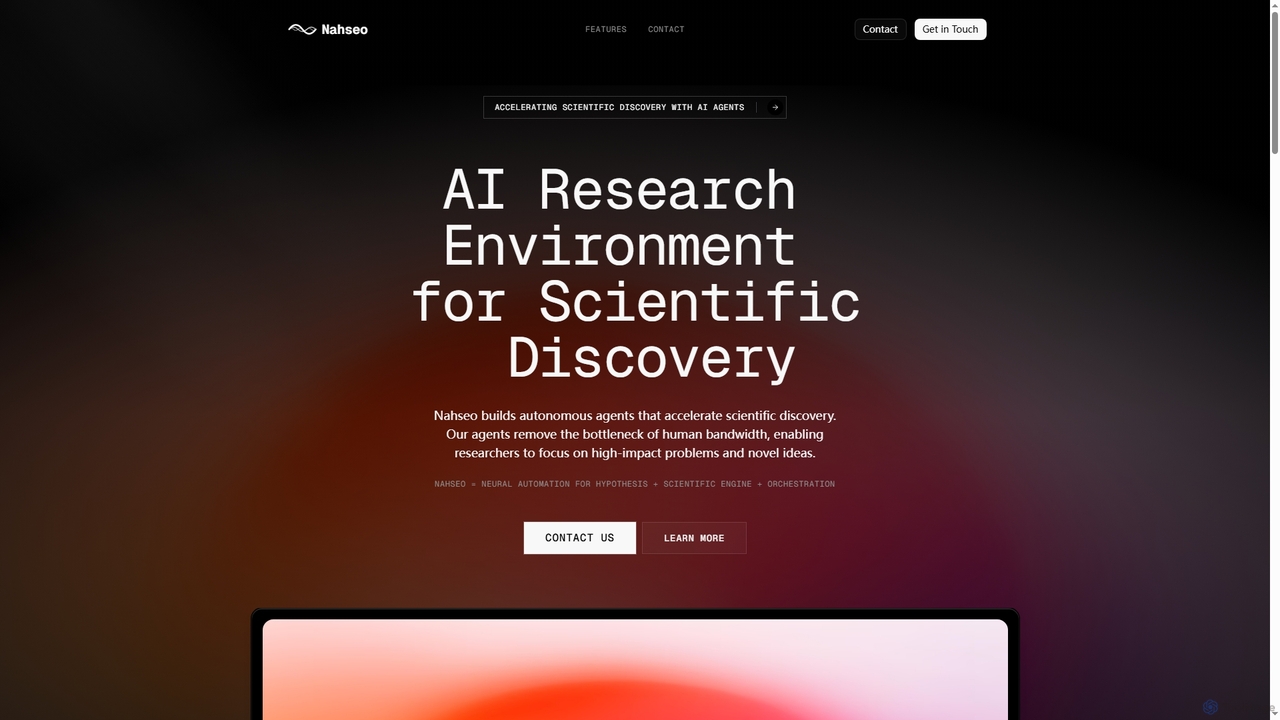
Nahseo Overview
Nahseo is an advanced AI research environment designed to significantly accelerate scientific discovery through the deployment of autonomous AI agents. It addresses critical bottlenecks in traditional research, such as the overwhelming volume of scientific literature, the slow pace of manual experiment design, and fragmented knowledge transfer across labs. By transcending the capabilities of simple chat interfaces, Nahseo empowers scientists and research institutions to focus on high-impact problems and novel ideas, driving efficiency, reliability, and reproducibility in research.
How to use Nahseo
Nahseo operates as a comprehensive AI research environment where scientists collaborate with autonomous agents. Researchers can leverage the platform by feeding it scientific literature, datasets, and lab notes, which are then integrated into a semantic knowledge graph. The autonomous agents can then be directed to read papers, generate hypotheses, design experiments, and analyze lab datasets. The system supports iterative research loops, allowing agents to track experiments, analyze results, and provide actionable recommendations, effectively creating an AI-assisted research workflow.
Core Features of Nahseo
- Integrated Knowledgebase: Stores all literature, datasets, and lab notes in a semantic knowledge graph, making it accessible to agents across projects.
- Autonomous Research Agents: Capable of reading papers, generating scientifically creative yet feasible hypotheses, and automatically designing experiments.
- Collaborative AI Teammates: Works alongside researchers to track experiments, iterate on results, and maintain knowledge continuity.
- Data-Driven Decision Making: Analyzes lab datasets to detect patterns, gaps, and anomalies, providing actionable experiment recommendations.
- Scalable & Extensible Architecture: Features a modular design supporting multiple research domains (robotics, biology, chemistry, materials) with a cloud + local hybrid compute infrastructure.
Use Cases for Nahseo
Nahseo is ideal for scientific labs, academic institutions, and R&D departments looking to accelerate their discovery processes. Specific use cases include:
- Robotics Research: Accelerating model development, experiment design, and dataset analysis, as demonstrated by Bellu.ai.
- Biology & Chemistry: Automating the generation of hypotheses for drug discovery, material science, or biochemical processes and designing corresponding experiments.
- Materials Science: Analyzing complex datasets to identify new material properties, predict performance, and optimize experimental parameters.
- Literature Review & Synthesis: Rapidly synthesizing vast amounts of scientific publications to identify trends, gaps, and novel research directions.
- Knowledge Management: Building context-aware, portable knowledgebases that ensure continuity and transferability of research insights across projects and teams.
Advantages of Nahseo
Nahseo offers several key advantages that significantly enhance scientific research:
- Accelerated Discovery: Removes human bandwidth limitations, allowing researchers to achieve breakthroughs faster.
- Enhanced Productivity: Automates time-consuming tasks like literature review and experiment design, freeing up scientists for higher-level thinking.
- Improved Reproducibility: The systematic approach of AI agents ensures experiments are designed and tracked reliably.
- Data-Driven Insights: Leverages AI to analyze complex datasets, uncovering patterns and anomalies that human analysis might miss.
- Cross-Domain Applicability: Its modular architecture supports diverse scientific fields, making it a versatile tool for various research challenges.
- Context-Aware Knowledge: Builds and maintains comprehensive knowledgebases that evolve with research, ensuring continuity and informed decision-making.
Nahseo FAQ
Nahseo Alternatives
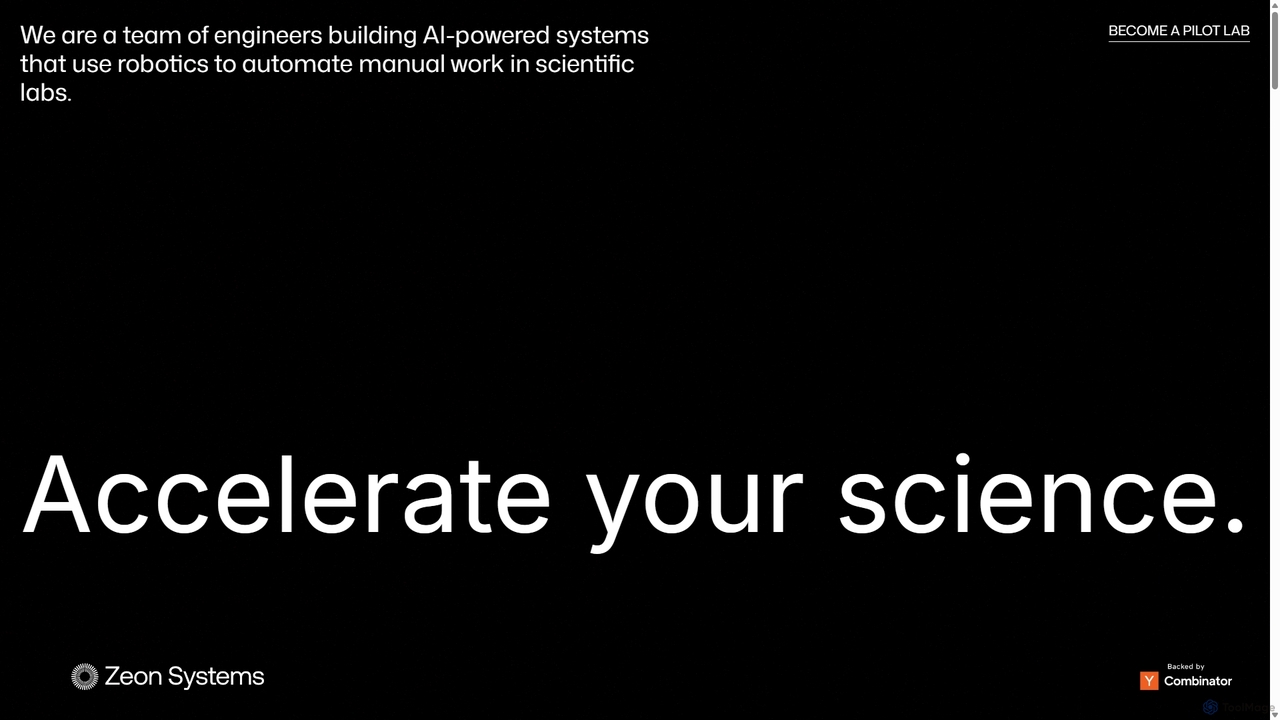
Zeon Systems
Zeon Systems is an AI-powered, full-stack lab automation platform designed for accessibility. It combines intelligent software with off-the-shelf robotic arms to automate complex experiments in biology, chemistry, and materials science. Users can describe protocols in plain English, and the system translates them into precise robotic actions, eliminating the need for coding or specialized training.
No Code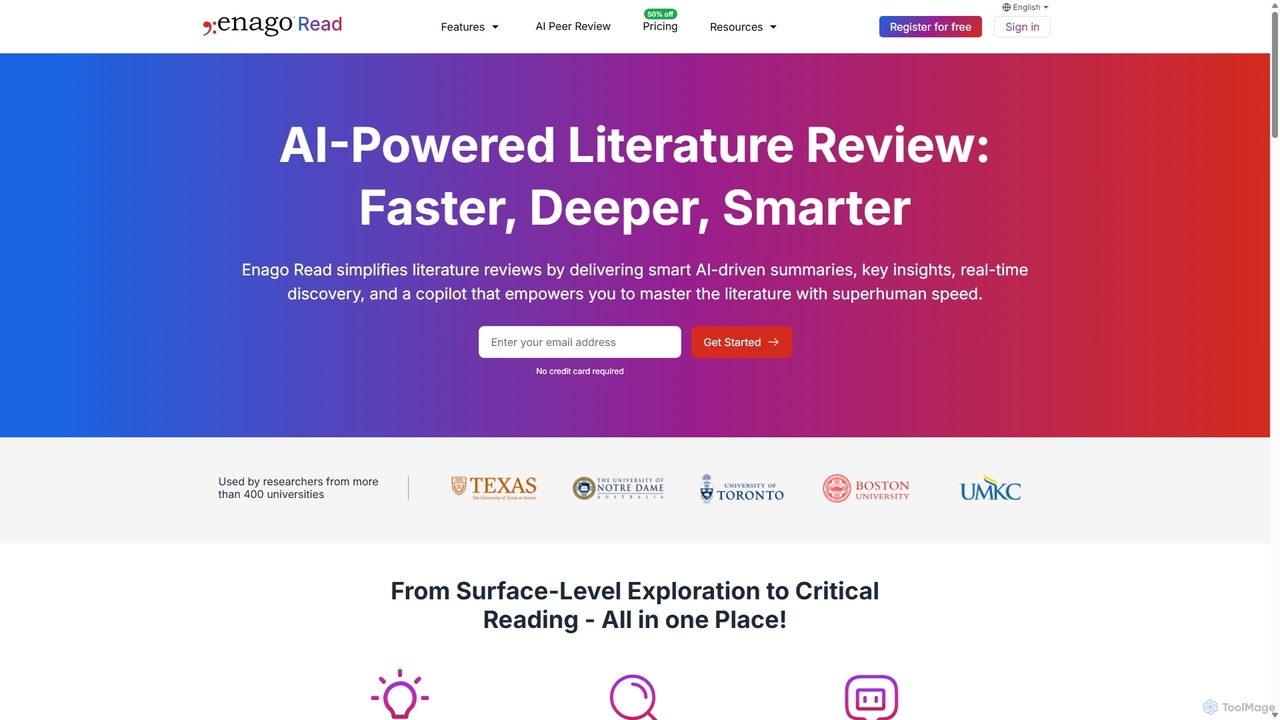
Enago Read
Enago Read is an AI-powered research assistant designed to accelerate literature reviews. It helps researchers and students discover, read, and analyze academic papers with features like AI-generated summaries, key insights, and an interactive AI Copilot to chat with documents. It streamlines the entire research workflow from exploration to critical analysis.
Research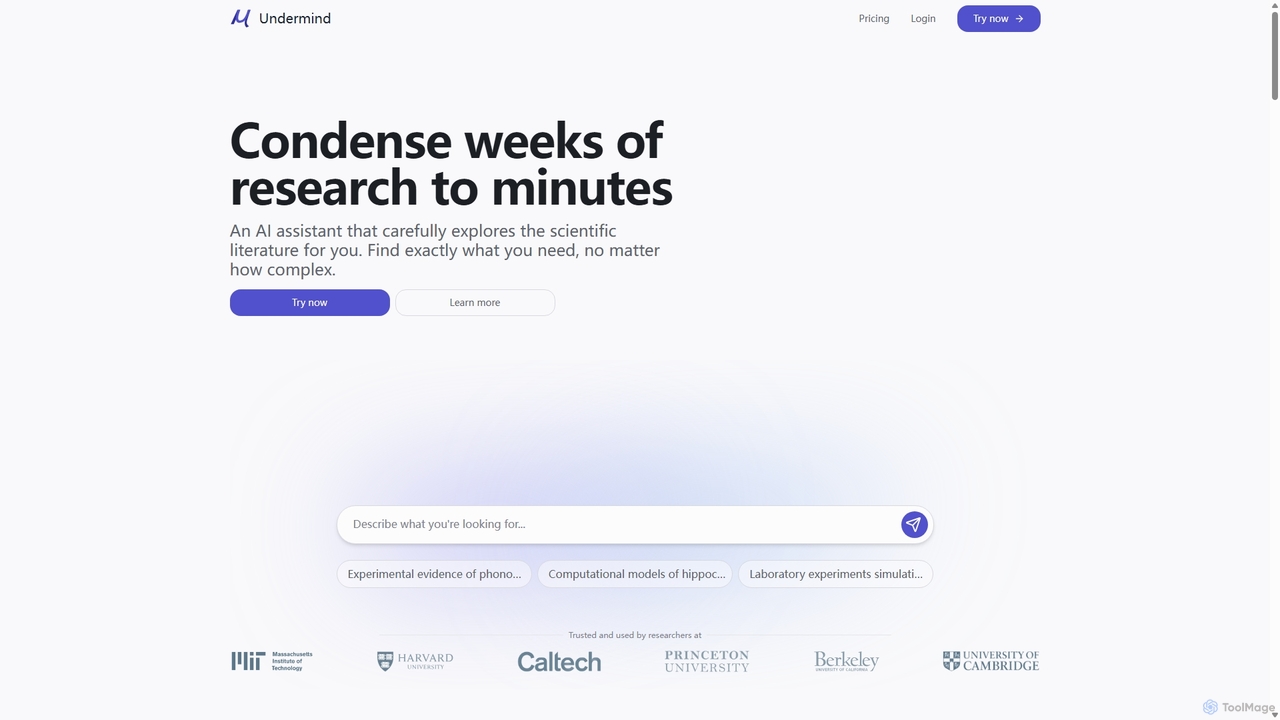
Undermind
An AI-powered research assistant designed for scientists and academics. It automates literature reviews by exploring thousands of scientific papers, traversing citation graphs, and synthesizing information. Undermind condenses weeks of research into minutes, helping users assess novelty, identify gaps, and uncover cross-disciplinary insights with verifiable, citation-backed responses.
Academic
Iris.ai
Iris.ai is an enterprise-grade AI platform for developing and operating Agentic RAG (Retrieval-Augmented Generation) workflows. It enables businesses to connect, orchestrate, evaluate, and deploy scalable AI knowledge solutions, transforming complex data into actionable insights for R&D, innovation, and strategic decision-making.
Data Analysis
Ohm
Ohm is a specialized AI agent designed for battery R&D and engineering teams. It provides instant, trusted answers to complex technical questions by synthesizing information from internal data, scientific literature, and patents. Ohm helps accelerate innovation, improve decision-making, and uncover insights missed by traditional tools.
Electrical EngineeringNahseo Categories
Nahseo Jobs
Nahseo Embed Widget
Copy this embed code to place the badge on your blog, article, or product site and send readers directly to this ToolMage detail page.

Related AI tools
Zeon Systems
Zeon Systems is an AI-powered, full-stack lab automation platform designed for accessibility. It combines intelligent software with off-the-shelf robotic arms to automate complex experiments in biology, chemistry, and materials science. Users can describe protocols in plain English, and the system translates them into precise robotic actions, eliminating the need for coding or specialized training.
No CodeEnago Read
Enago Read is an AI-powered research assistant designed to accelerate literature reviews. It helps researchers and students discover, read, and analyze academic papers with features like AI-generated summaries, key insights, and an interactive AI Copilot to chat with documents. It streamlines the entire research workflow from exploration to critical analysis.
ResearchOhm
Ohm is a specialized AI agent designed for battery R&D and engineering teams. It provides instant, trusted answers to complex technical questions by synthesizing information from internal data, scientific literature, and patents. Ohm helps accelerate innovation, improve decision-making, and uncover insights missed by traditional tools.
Electrical Engineering
Jyek
Jyek is an AI agent platform that understands objectives, creates execution plans, uses tools, and delivers verifiable results for complex, multi-step tasks.
AutomationIris.ai
Iris.ai is an enterprise-grade AI platform for developing and operating Agentic RAG (Retrieval-Augmented Generation) workflows. It enables businesses to connect, orchestrate, evaluate, and deploy scalable AI knowledge solutions, transforming complex data into actionable insights for R&D, innovation, and strategic decision-making.
Data Analysis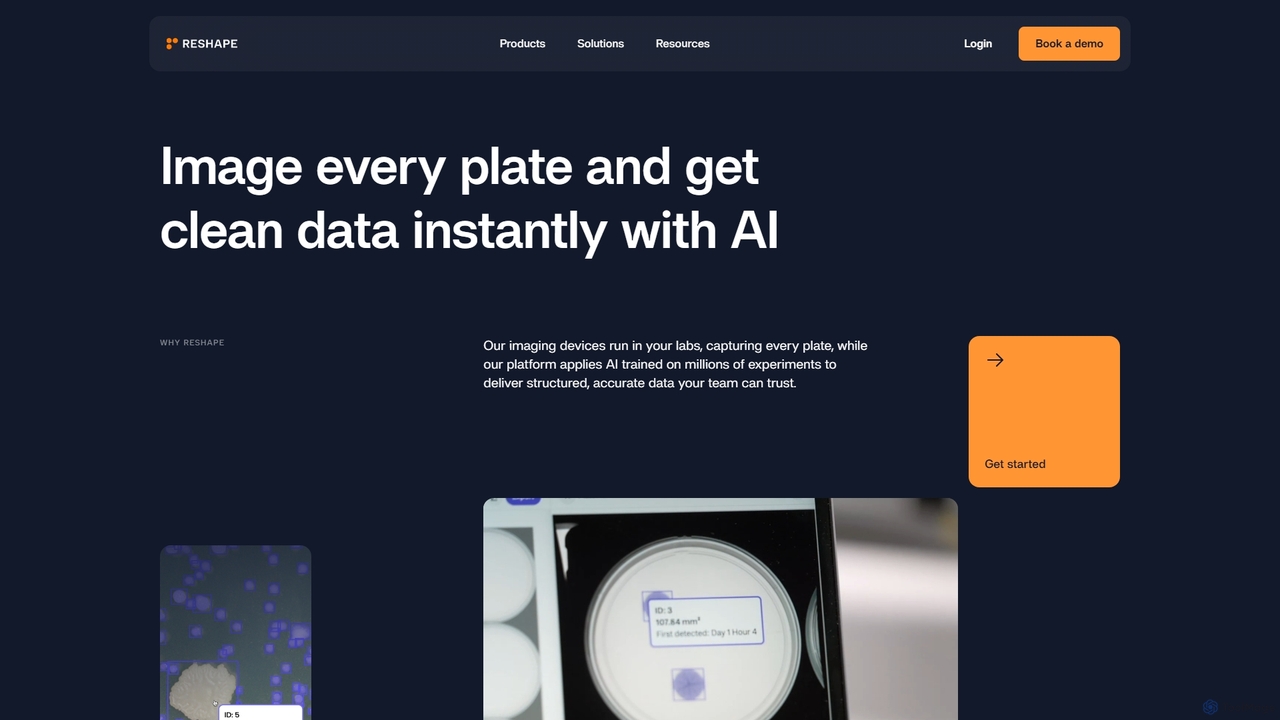
Reshape Biotech
Reshape Biotech provides an AI-powered lab automation platform that combines automated imaging hardware with a cloud-based analysis system. It's designed for R&D and QC labs in biotechnology, agriculture, and food science to automate plate imaging, analyze experiments with AI, and generate structured, reproducible data, significantly accelerating research and development cycles.
Laboratory Automation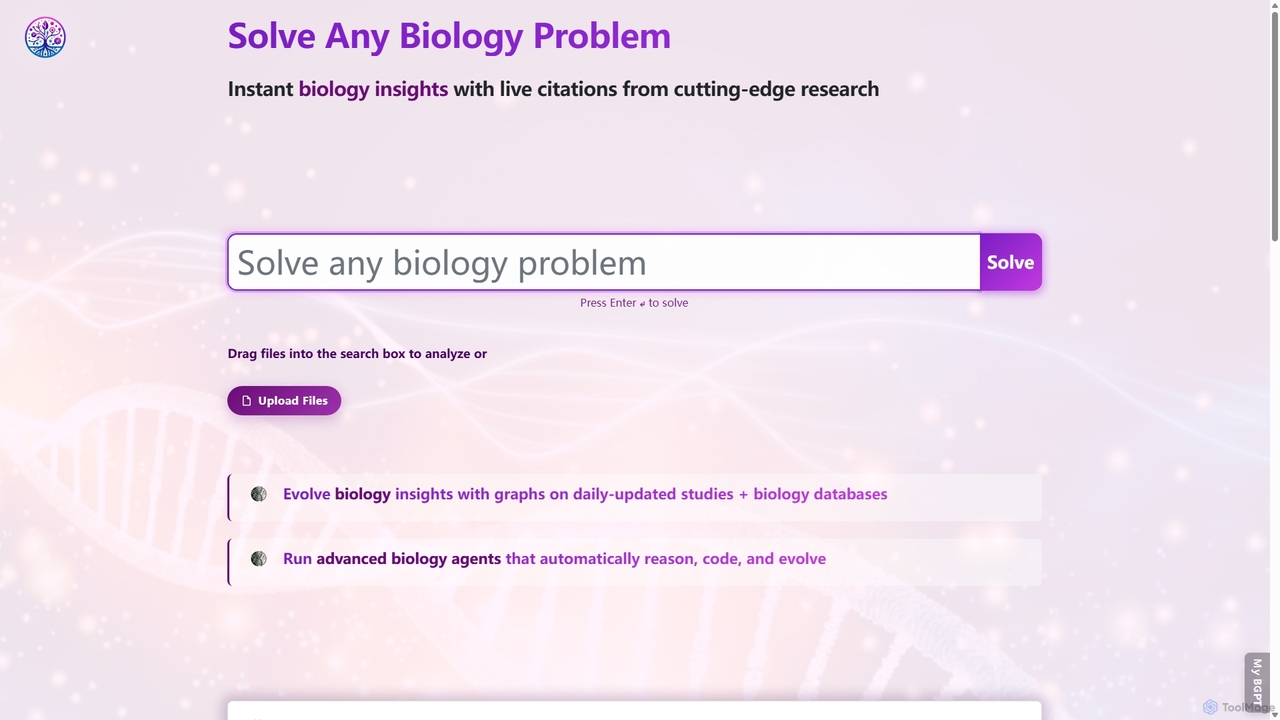
BioGPT
BioGPT is a specialized AI assistant for biologists, researchers, and students. It accelerates scientific discovery by solving complex biology problems, reviewing papers, analyzing data, visualizing results, designing experiments, and testing hypotheses across fields like genomics, neuroscience, and cancer biology.
Research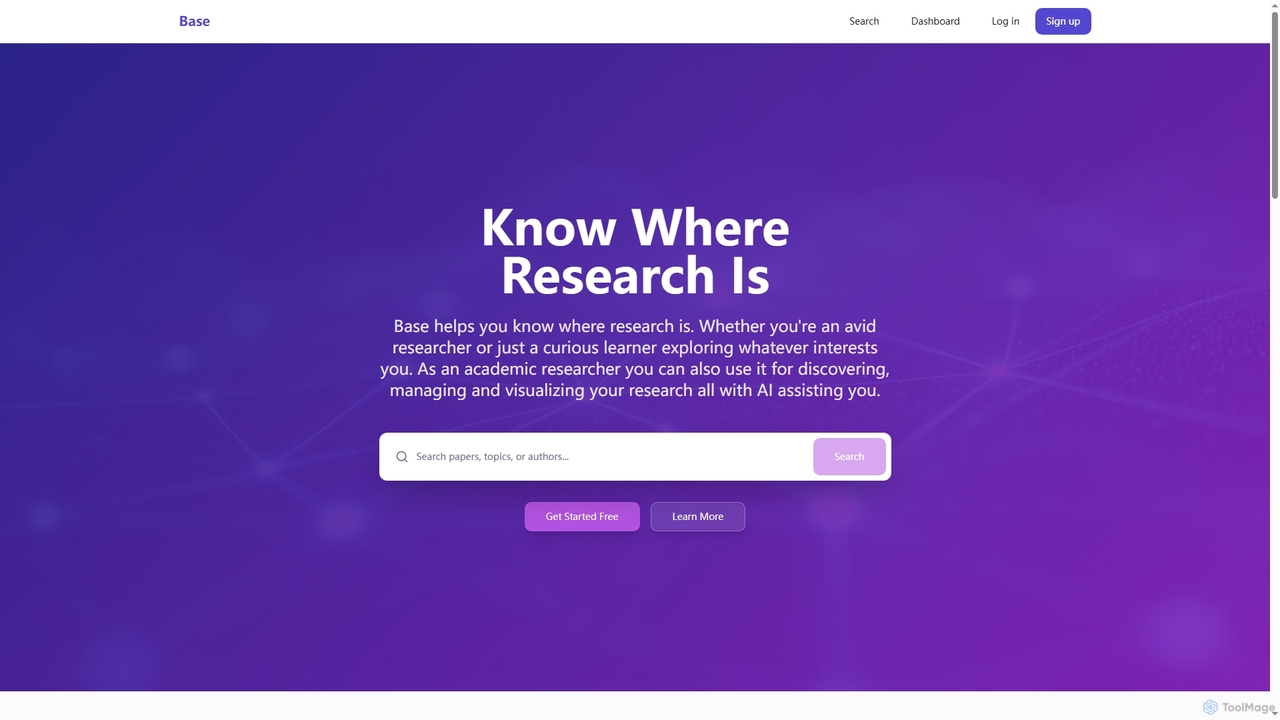
Base
Base is an AI-powered research platform for academics and learners. It enables searching over 240 million papers, visualizing research landscapes with interactive graphs, organizing findings, and using an AI chat to uncover deeper insights from credible sources.
AcademicUndermind
An AI-powered research assistant designed for scientists and academics. It automates literature reviews by exploring thousands of scientific papers, traversing citation graphs, and synthesizing information. Undermind condenses weeks of research into minutes, helping users assess novelty, identify gaps, and uncover cross-disciplinary insights with verifiable, citation-backed responses.
Academic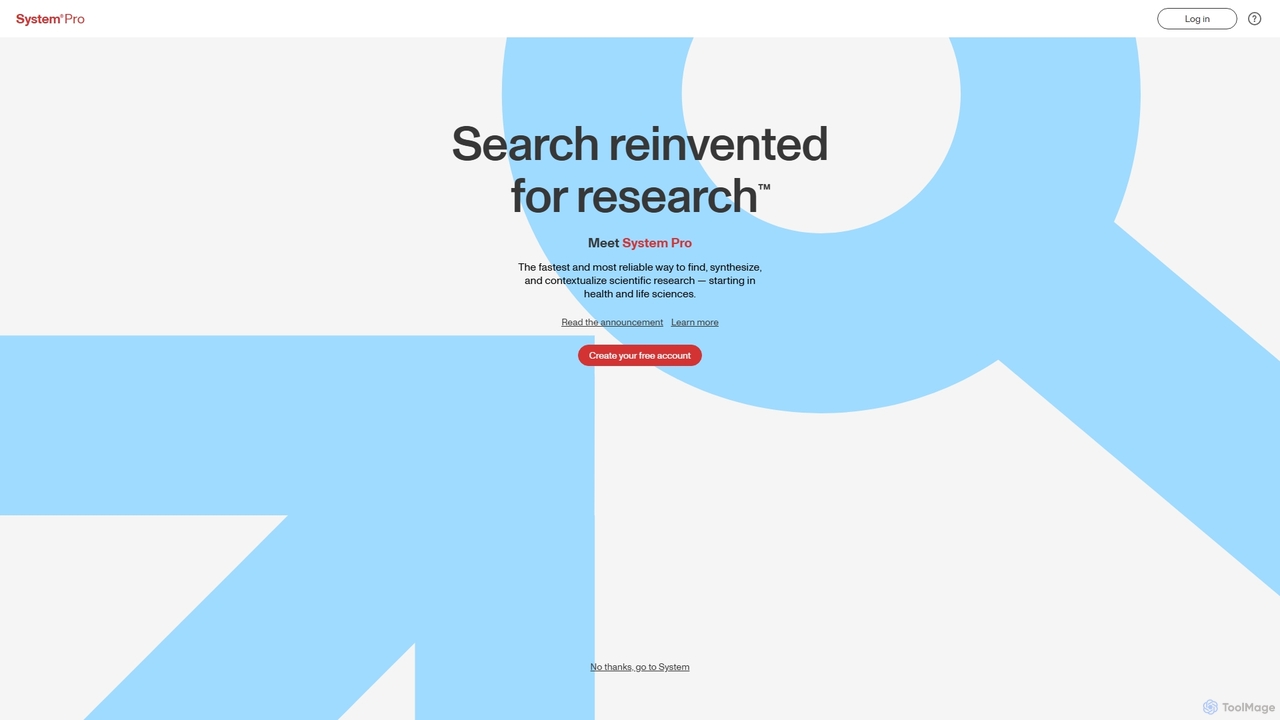
System Pro
System Pro is an AI-powered search engine designed to reinvent scientific research, initially focusing on health and life sciences. It offers the fastest, most reliable way to find, synthesize, and contextualize complex research papers, helping researchers and professionals accelerate their literature review process and uncover critical insights from a vast body of scientific knowledge.
Medical Information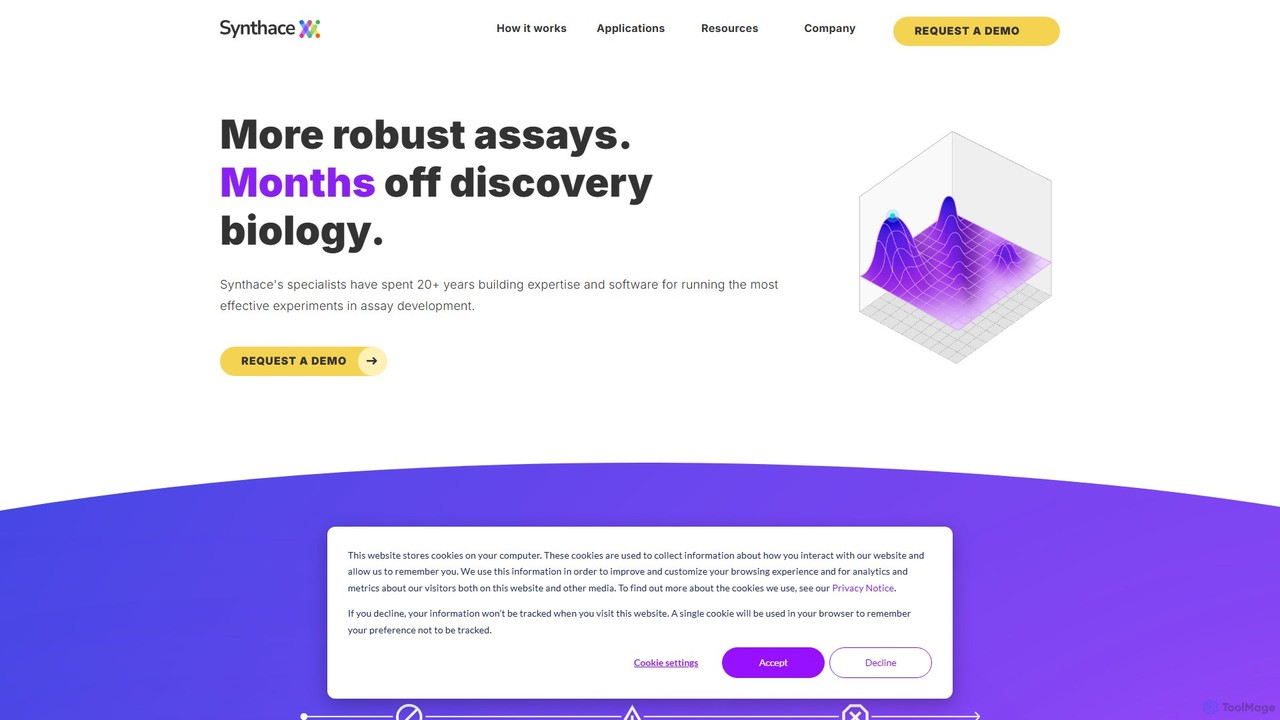
Synthace
Synthace is a life sciences R&D cloud platform combining software and expert consultation to accelerate drug discovery. It helps biology teams design, automate, and analyze complex experiments, such as assay development, using multifactorial methods and lab automation. This approach significantly reduces timelines, increases experimental throughput, and delivers more robust, reliable data for critical decision-making in biopharmaceutical research.
Automation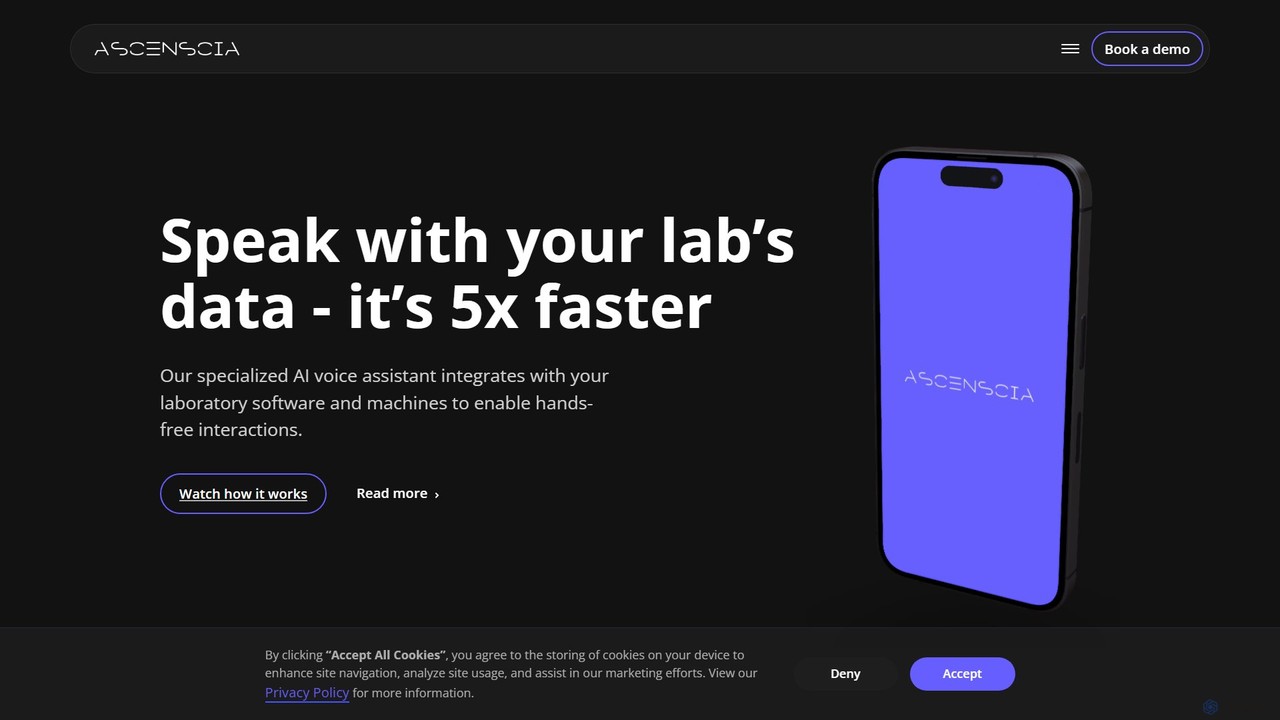
ascenscia
Ascenscia is a specialized AI voice assistant designed for scientific laboratories. It enables hands-free interaction with lab data, automates data capture, and integrates with existing ELN and LIMS systems. This tool helps optimize workflows, reduce errors, and accelerate R&D cycles with 97% accuracy in understanding complex scientific terminology.
Data Entry
floatz
floatz is an AI-powered platform for the biotech and pharmaceutical industries, specializing in target validation and prioritization. It provides a "Foundational Evidence Audit" to de-risk R&D pipelines, using computational due diligence to assess the biological relevance and commercial viability of therapeutic targets, helping companies secure funding and make confident investment decisions.
Biotechnology
XMOX
XMOX is a leading managed AI agents platform that provides enterprise-grade infrastructure and services for deploying, scaling, and managing intelligent agents. It eliminates operational complexity, allowing businesses to harness the power of multi-modal AI agents—including language, code, and voice—with advanced RAG integration, zero-touch operations, and intelligent auto-scaling.
Platform As A Service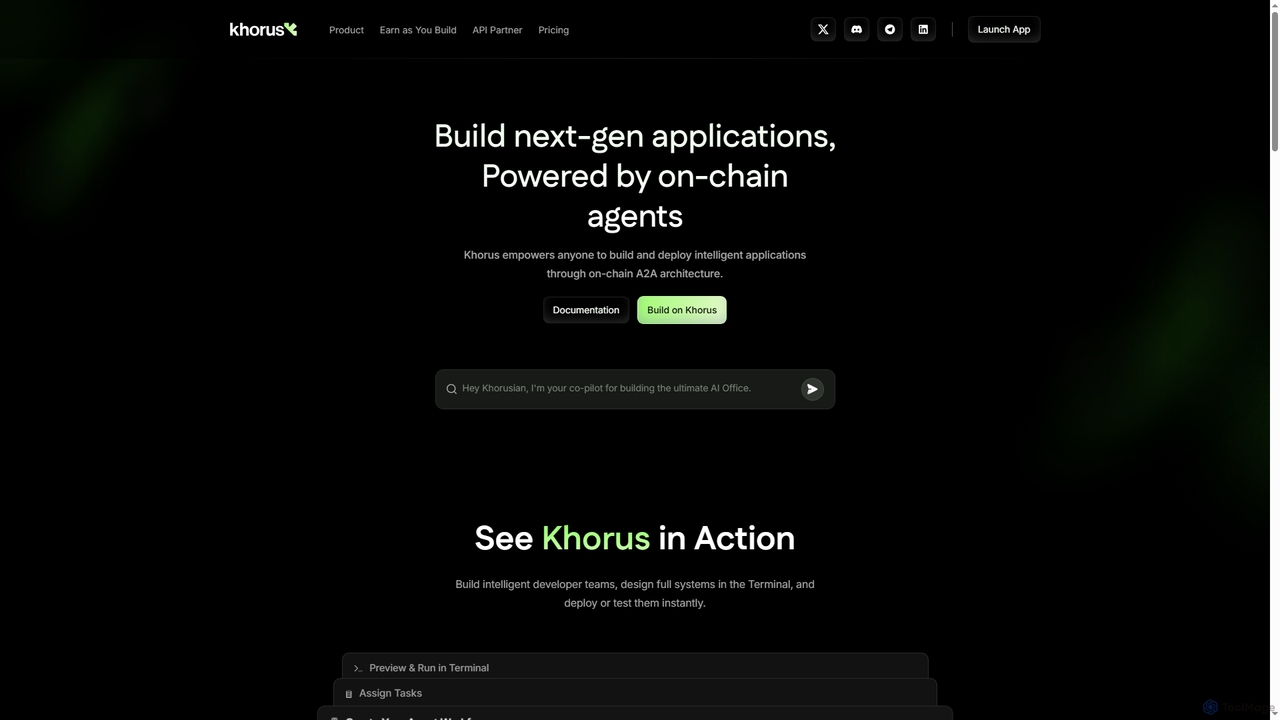
Khorus
Khorus is a universal communication layer for intelligent systems, empowering developers to build and deploy next-gen AI applications through an on-chain Agent-to-Agent (A2A) architecture. It facilitates real-time collaboration, task delegation, and autonomous execution among AI agents and robotics, fostering a decentralized agent economy and marketplace for scalable modules and workflows.
Agent Orchestration
Nahseo Comments (0)
Sign in to comment.
Sign inNo comments yet.