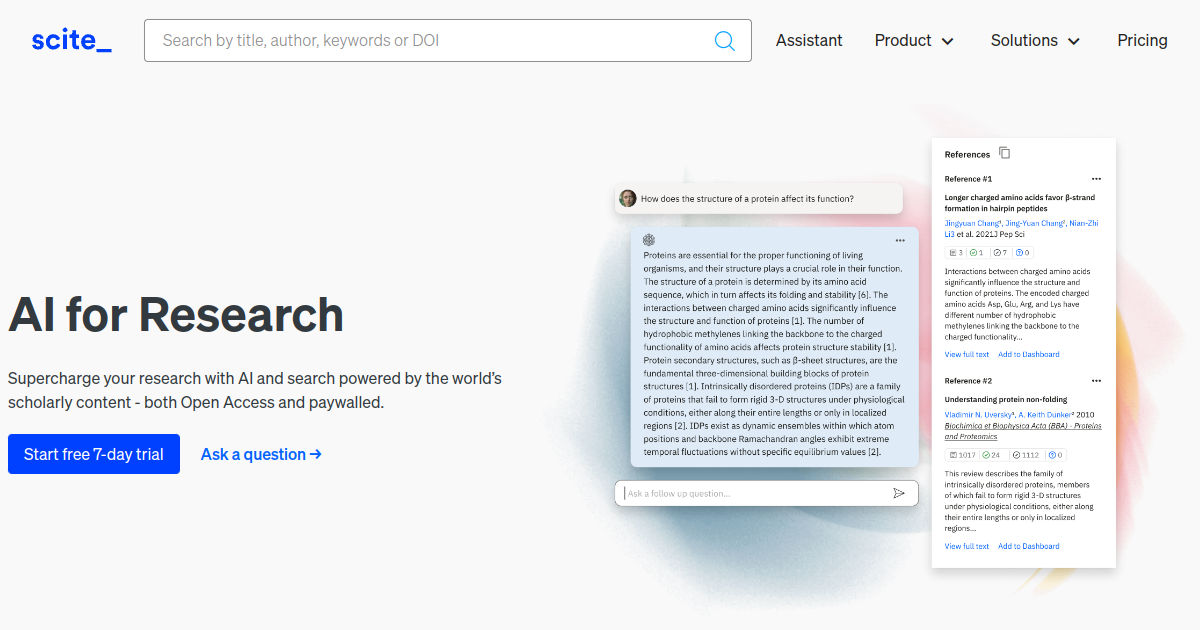
scite is an AI-powered research platform that helps users discover and evaluate scientific literature. Its core feature, Smart Citations, shows how research papers have been cited by others, classifying citations as supporting, contrasting, or mentioning, thus providing deeper context beyond simple citation counts.
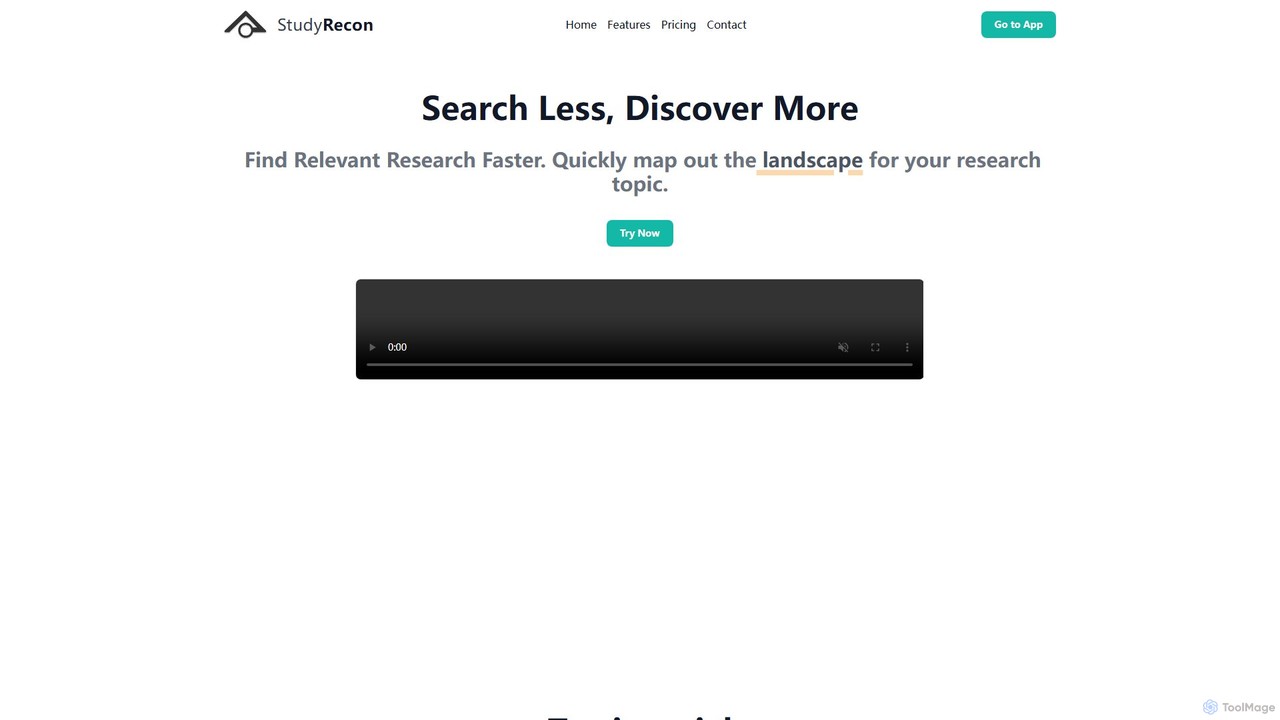
StudyRecon is an AI-powered literature review tool designed to help researchers and academics accelerate their work. It streamlines the process of finding, analyzing, and summarizing relevant scientific papers. By providing a visual landscape of research topics, suggesting relevant queries, and offering concise summaries, it enables users to conduct comprehensive literature reviews in a fraction of the time.
Product overview
scite Product overview
scite is an AI-powered research platform that helps users discover and evaluate scientific literature. Its core feature, Smart Citations, shows how research papers have been cited by others, classifying citations as supporting, contrasting, or mentioning, thus providing deeper context beyond simple citation counts.
StudyRecon Product overview
StudyRecon is an AI-powered literature review tool designed to help researchers and academics accelerate their work. It streamlines the process of finding, analyzing, and summarizing relevant scientific papers. By providing a visual landscape of research topics, suggesting relevant queries, and offering concise summaries, it enables users to conduct comprehensive literature reviews in a fraction of the time.
Detailed feature comparison
| Feature | scite | StudyRecon |
|---|---|---|
| Primary category | Academic | Higher Education |
| Added | 2025-08-13 | 2025-08-14 |
| Pricing | Freemium | Freemium |
| Official website | scite.ai | groundedai.company |
| Product type | Website | Website |
| Performance data | ||
| User rating | Not verified | Not verified |
| Comments | 0 | 0 |
| Monthly visits | 1M | 2.3K |
| Monthly growth | -3.4% | -8.4% |
| Favorites | 145 | 122 |
| Details | View details | View details |
scite vs StudyRecon monthly traffic
Compare scite and StudyRecon by monthly reach, traffic trend, visit depth, top regions, and acquisition sources.
How to interpret the traffic data
In the scite vs StudyRecon monthly traffic comparison, scite currently shows 1M visits and StudyRecon shows 2.3K; scite has about 437.9 times the visible traffic of StudyRecon, an absolute difference of about 1M visits. This reflects visible reach, not feature quality or paid users.
Both tools provide verified traffic details, so monthly trends, visit depth, regions, and acquisition sources can be compared on the same basis.
StudyRecon is registered at the groundedai.company/studyrecon subpage. Because the current data does not state whether other host pages are excluded, treat this as domain-level context rather than independent traffic for one product or project.
scite monthly traffic:
Latest traffic
Monthly traffic trend
- 2025/9: 928.8K Monthly visits
- 2026/1: 885.4K Monthly visits
- 2026/2: 840.8K Monthly visits
- 2026/3: 967K Monthly visits
- 2026/4: 1.1M Monthly visits
- 2026/5: 1M Monthly visits
Top regions
Top 5 countries/regions
| Country/region | Percentage | Traffic |
|---|---|---|
| 🇮🇩Indonesia | 44.06% | 448.3K |
| 🇺🇸United States | 21.86% | 222.4K |
| 🇮🇳India | 13.24% | 134.7K |
| 🇲🇾Malaysia | 11.66% | 118.6K |
| 🇵🇭Philippines | 9.18% | 93.4K |
Traffic sources
| Source type | Percentage | Traffic |
|---|---|---|
| Direct | 82.33% | 837.8K |
| Referral | 14.99% | 152.5K |
| 2.68% | 27.3K |
Search keywords
StudyRecon monthly traffic:
Latest traffic
Monthly traffic trend
- 2026/1: 1.9K Monthly visits
- 2026/2: 3K Monthly visits
- 2026/3: 2.6K Monthly visits
- 2026/4: 2.5K Monthly visits
- 2026/5: 2.3K Monthly visits
Top regions
Top 5 countries/regions
| Country/region | Percentage | Traffic |
|---|---|---|
| 🇺🇸United States | 64.51% | 1.5K |
| 🇬🇧United Kingdom | 35.49% | 825 |
Search keywords
Usage comparison
Compare the core capabilities of scite and StudyRecon
scite Core features
StudyRecon Core features
Use cases
scite Use cases
StudyRecon Use cases
scite vs StudyRecon:In-depth comparison and selection guidance
First decide whether the products solve the same kind of need
This in-depth scite vs StudyRecon comparison uses only the product records, taxonomy, audience, traffic, and community signals available on this page. scite is primarily listed under “Academic”, while StudyRecon is primarily listed under “Higher Education”, so the first decision is whether your actual task matches their recorded scope.
The structured fields currently show these decision-relevant differences: Primary category (scite: Academic; StudyRecon: Higher Education); Monthly visits (scite: 1M; StudyRecon: 2.3K); Monthly growth (scite: -3.4%; StudyRecon: -8.4%); Favorites (scite: 145; StudyRecon: 122); Website (scite: scite.ai; StudyRecon: groundedai.company). These facts are more useful for selection than brand visibility alone.
What market visibility and monthly traffic mean
In the scite vs StudyRecon monthly traffic comparison, scite currently shows 1M visits and StudyRecon shows 2.3K; scite has about 437.9 times the visible traffic of StudyRecon, an absolute difference of about 1M visits. This reflects visible reach, not feature quality or paid users.
Both tools provide verified traffic details, so monthly trends, visit depth, regions, and acquisition sources can be compared on the same basis.
StudyRecon is registered at the groundedai.company/studyrecon subpage. Because the current data does not state whether other host pages are excluded, treat this as domain-level context rather than independent traffic for one product or project.
If public market visibility is an important first-pass criterion, investigate scite first. The final choice should still follow taxonomy, use case, and a real trial because higher traffic does not prove broader capabilities or better workflow fit.
Product positioning, use cases, and roles
scite and StudyRecon currently overlap in shared categories: Literature Review; shared tags: literature review, research assistant, and scientific research. This can place both on the same shortlist, but it does not prove equal implementation, depth, or cost.
scite's unique categories/tags are Academic, Search, Citation, academic writing, AI chatbot, citation analysis, data analysis, and fact-checking; StudyRecon's are Higher Education, Academic Research, academic research, data visualization, knowledge discovery, paper summarizer, PhD, and thesis writing. These unique fields are the strongest differentiators: validate the product whose recorded scope matches the task instead of following traffic alone.
What ratings, comments, and favorites can tell you
scite has no verified rating, 0 comments, 145 favorites, and 129 likes;StudyRecon has no verified rating, 0 comments, 122 favorites, and 125 likes。
Neither product has enough rating or comment samples for a credible reputation ranking.
Selection guidance by actual need
When to evaluate scite first
Put scite on the priority trial list when the task aligns with “Academic” and especially Academic, Search, Citation, academic writing, AI chatbot, and citation analysis. This follows recorded positioning and does not imply unlisted capabilities are absent.
scite also currently records: pricing is freemium, product type is website, 1M verified monthly visits, no verified user rating. Verify any hard requirement around price, platform, or reach before trial, and do not let sparse review data substitute for testing.
When to evaluate StudyRecon first
Put StudyRecon on the priority trial list when the task aligns with “Higher Education” and especially Higher Education, Academic Research, academic research, data visualization, knowledge discovery, and paper summarizer. This follows recorded positioning and does not imply unlisted capabilities are absent.
StudyRecon also currently records: pricing is freemium, product type is website, 2.3K monthly visits shown for the registered host (subpage scope unknown), no verified user rating. Verify any hard requirement around price, platform, or reach before trial, and do not let sparse review data substitute for testing.
How to validate the recommendation before deciding
The available data describes positioning, public visibility, and community signals, but it cannot prove output quality, speed, integration effort, privacy, or long-term cost in your workflow. Before deciding, run the same representative tasks in scite and StudyRecon, then record completion time, accuracy, manual corrections, and the real paid threshold. A like-for-like trial turns this comparison into a defensible adoption decision.
Comparison FAQ
How should I choose between scite and StudyRecon?
Where does this comparison data come from?
What do unknown fields mean?
Related AI tools

AnswerThis
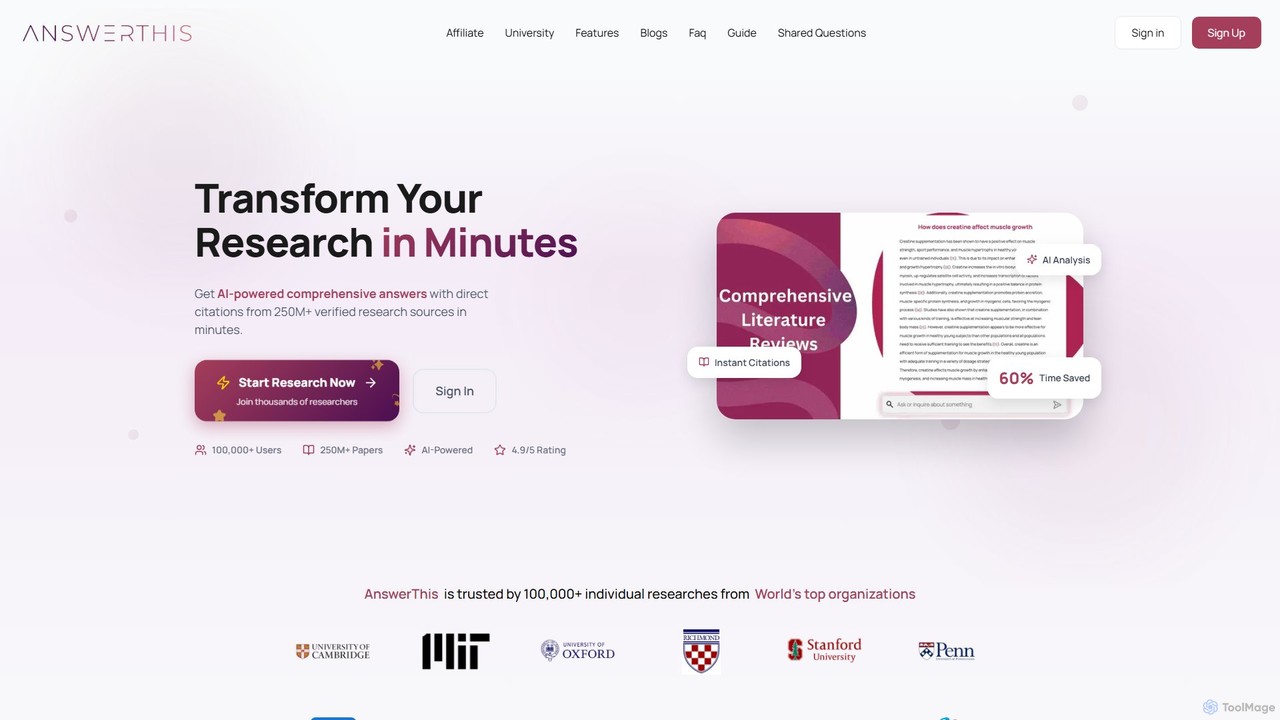
AnswerThis is an AI-powered research assistant designed to accelerate academic and professional research. It searches a vast database of over 250 million verified research papers to provide comprehensive, synthesized answers with direct, line-by-line citations. The platform offers a suite of tools for literature reviews, data analysis, and academic writing, saving users up to 60% of their research time while maintaining academic integrity.
Academic
ResearchBuddy
ResearchBuddy is an AI-powered platform designed to automate and streamline the literature review process for researchers, students, and academics. It helps users quickly discover relevant papers, extract key insights, synthesize information, and generate comprehensive literature review drafts, saving countless hours of manual work.
Literature Review
thepaperlens
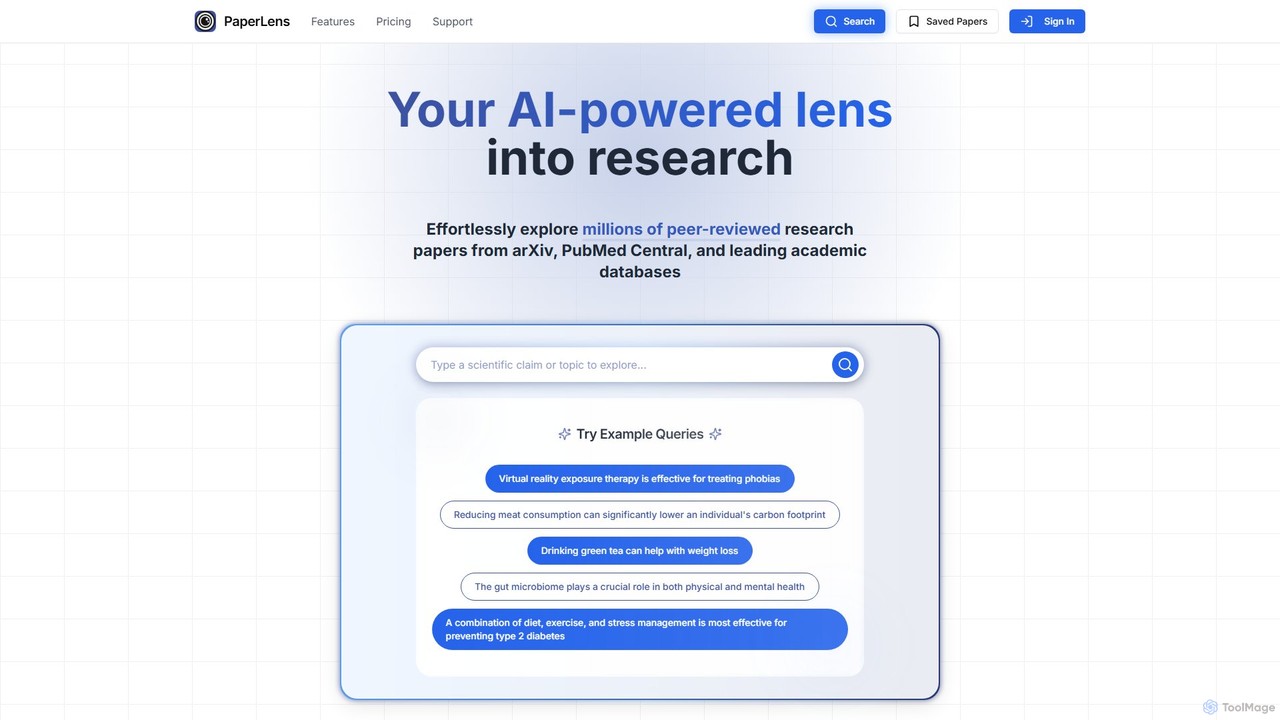
ThePaperLens is an AI-powered research platform that simplifies literature reviews. Using advanced RAG technology, it provides precise semantic search across millions of papers from databases like arXiv and PubMed Central. Features include an interactive AI research assistant chatbot for summaries and insights, smart filtering, and paper-saving capabilities. It's designed for students, academics, and professionals to accelerate their research process and uncover key information efficiently.
Academic
Paper Pilot
Paper Pilot is an AI-powered research productivity platform designed for researchers, students, and academics. It streamlines the research process by offering AI-driven search across millions of papers, instant summarization, multi-document chat, and intuitive organization tools like Research Boards. Engage with up to 50 papers simultaneously to accelerate literature reviews and enhance comprehension.
Academic
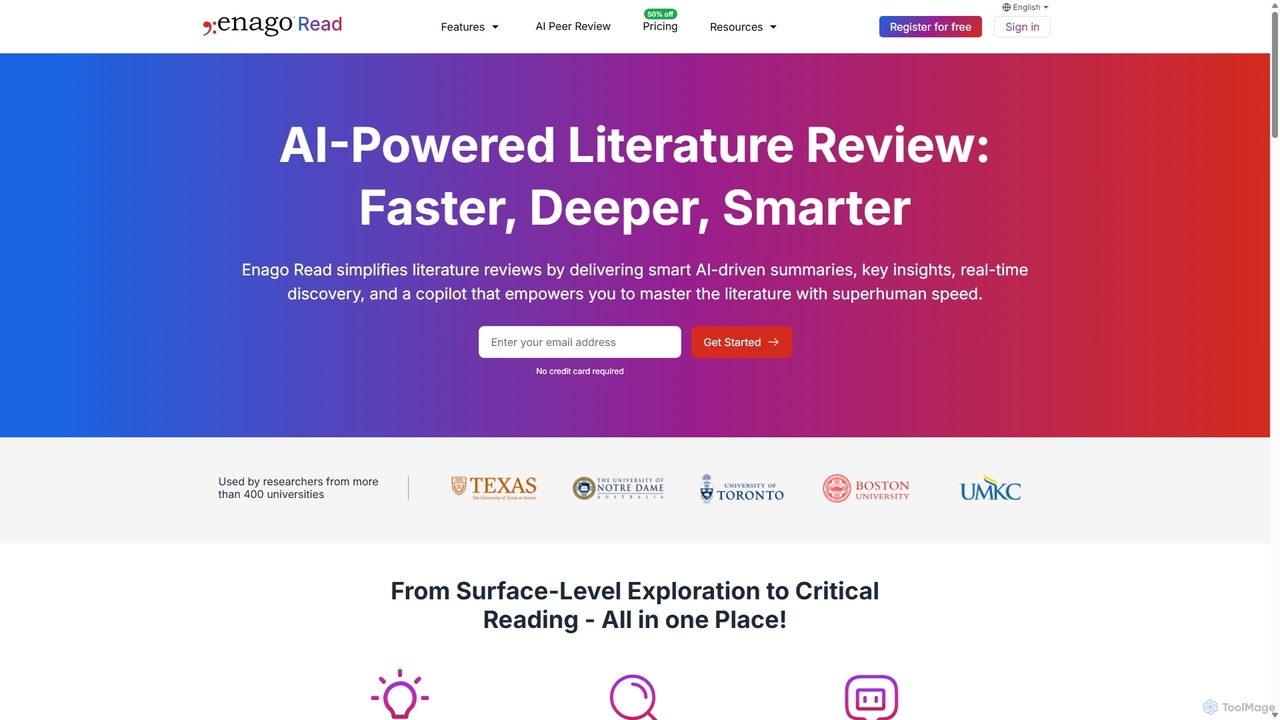
Enago Read
Enago Read is an AI-powered research assistant designed to accelerate literature reviews. It helps researchers and students discover, read, and analyze academic papers with features like AI-generated summaries, key insights, and an interactive AI Copilot to chat with documents. It streamlines the entire research workflow from exploration to critical analysis.
Research
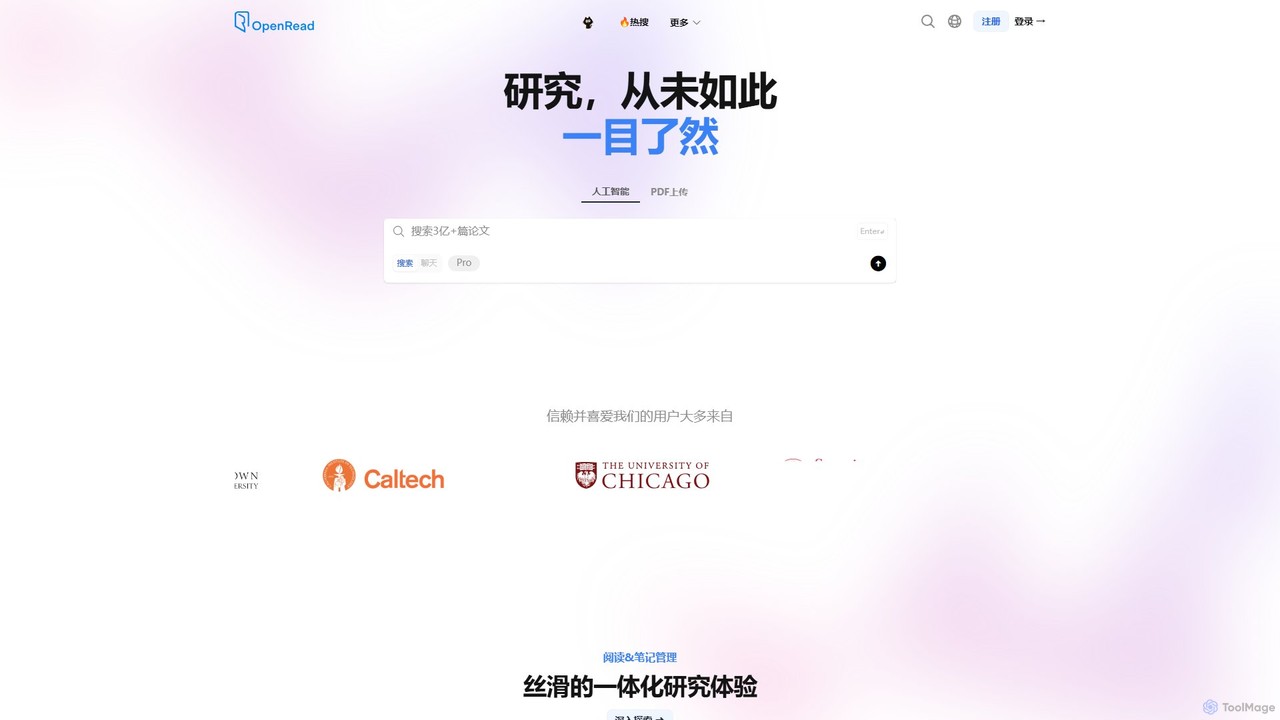
OpenRead
OpenRead is an AI-powered research platform designed to streamline the entire research workflow. It integrates paper discovery, reading, note-taking, and analysis into a single, seamless experience. Users can interact with documents via AI chat, compare multiple papers, generate summaries, and visualize research connections, significantly boosting research efficiency and depth.
Academic Tools
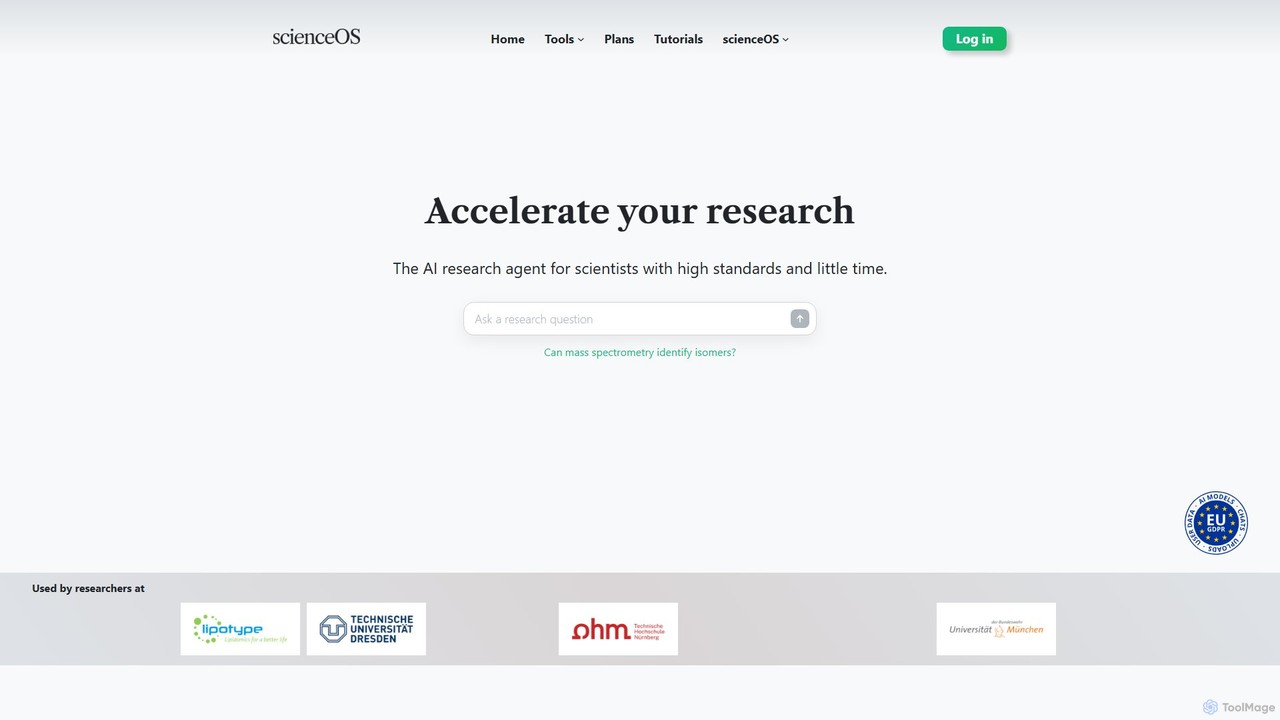
scienceOS
scienceOS is an AI-powered research agent designed for scientists and researchers. It accelerates scientific discovery by allowing users to chat with a database of over 225 million papers, analyze multiple PDF documents simultaneously, and manage references with an integrated AI library. The platform helps generate overviews, create diagrams, discover related papers, and perform citation analysis, streamlining the entire research workflow.
Academic Research
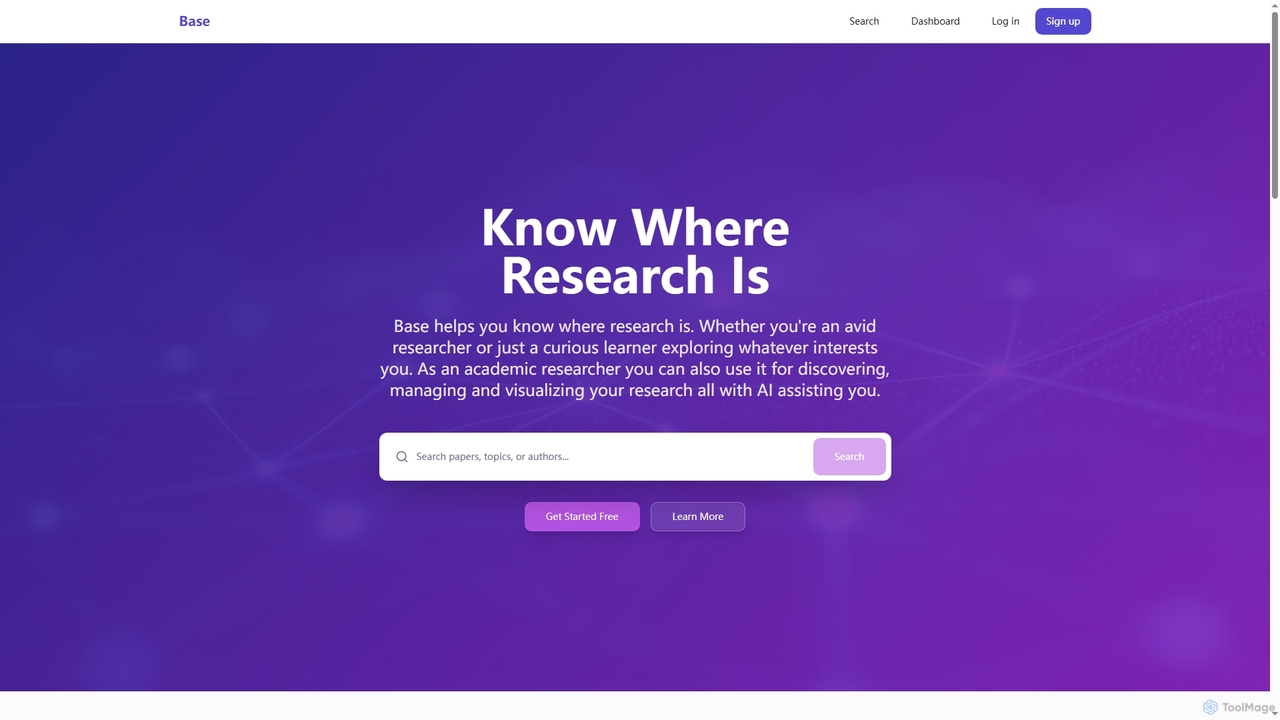
Base
Base is an AI-powered research platform for academics and learners. It enables searching over 240 million papers, visualizing research landscapes with interactive graphs, organizing findings, and using an AI chat to uncover deeper insights from credible sources.
Academic
MirrorThink
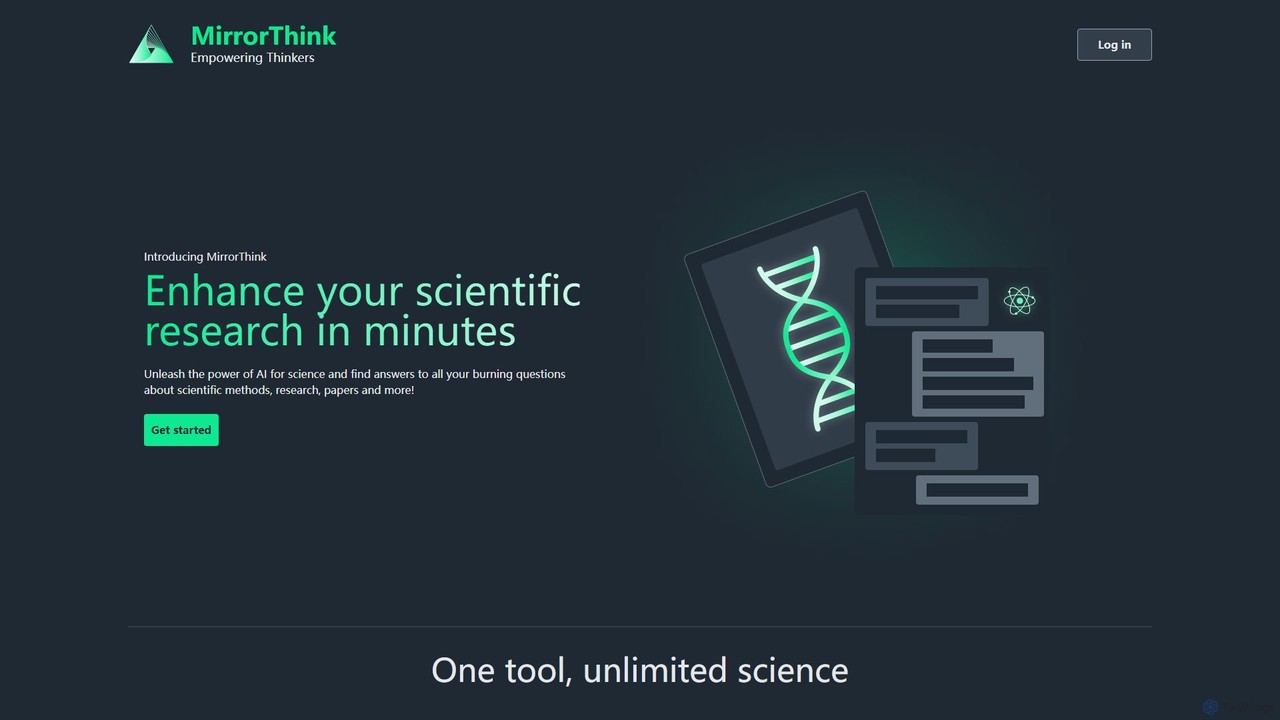
MirrorThink is an AI-powered research assistant designed for scientists and academics. It leverages GPT-4, Wolfram, and PubMed to accelerate scientific discovery by handling literature research, complex mathematical calculations, and scientific market analysis, providing fast and accurate answers.
Academic
Elicit
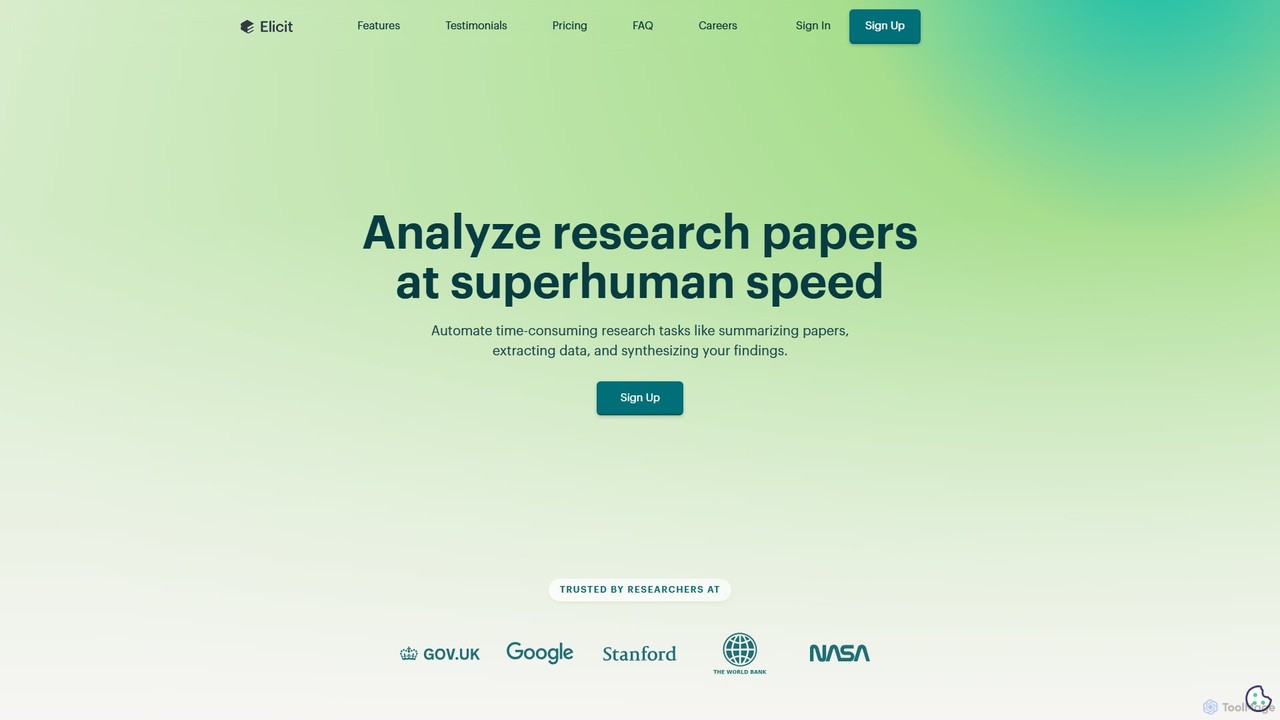
Elicit is an AI research assistant designed to automate and accelerate the literature review process. It helps researchers find relevant papers, summarize key findings, extract data, and synthesize information from a vast database of over 125 million academic articles. Elicit streamlines time-consuming tasks, enabling users to analyze more evidence with greater accuracy and speed.
Academia
ResearchPal
ResearchPal is an all-in-one AI research assistant designed to streamline the academic workflow. It automates literature reviews, generates essays with authentic citations, analyzes research papers, manages references with Zotero/Mendeley integration, and offers a powerful academic search engine to accelerate research and writing for students and professionals.
Research
Isaac
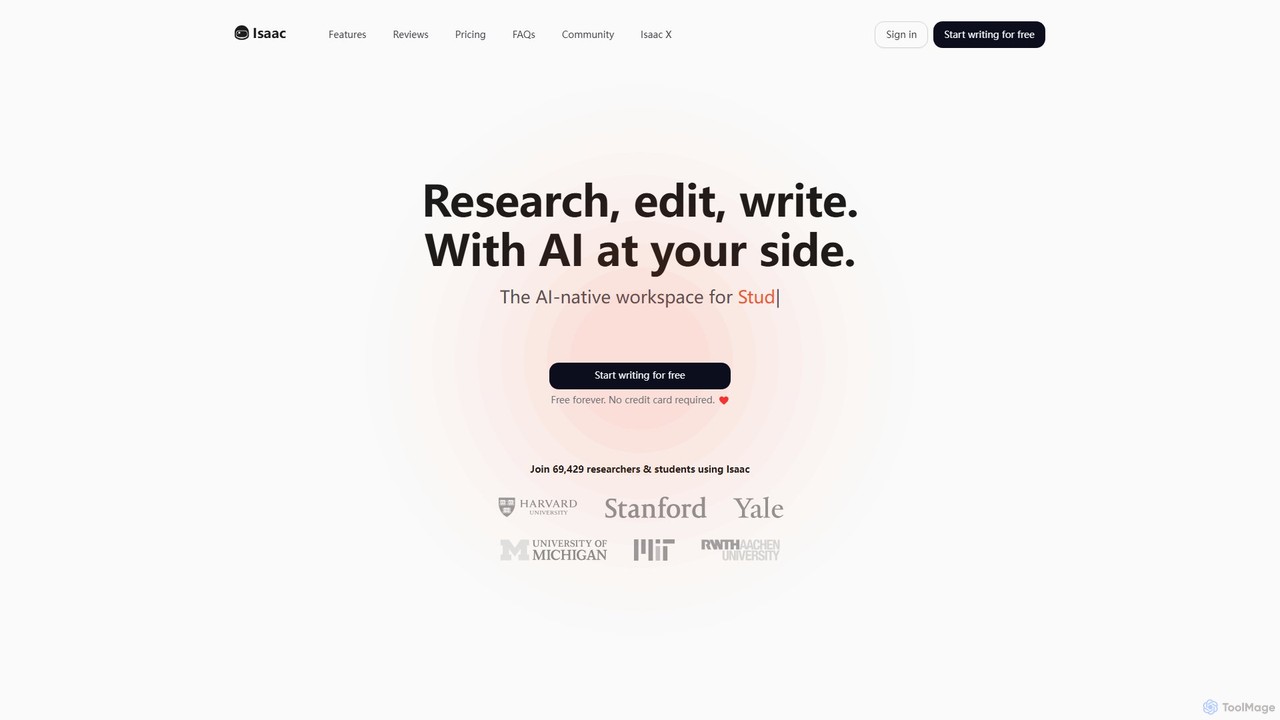
Isaac is an AI-native workspace designed for scientists, researchers, and students. It integrates the entire academic writing workflow, from literature search and reference management to AI-assisted writing and document analysis. Think of it as a specialized ChatGPT for academia, helping you research, edit, and write more efficiently while maintaining high academic standards. Start for free to revolutionize your research process.
Literature Review
Seamless
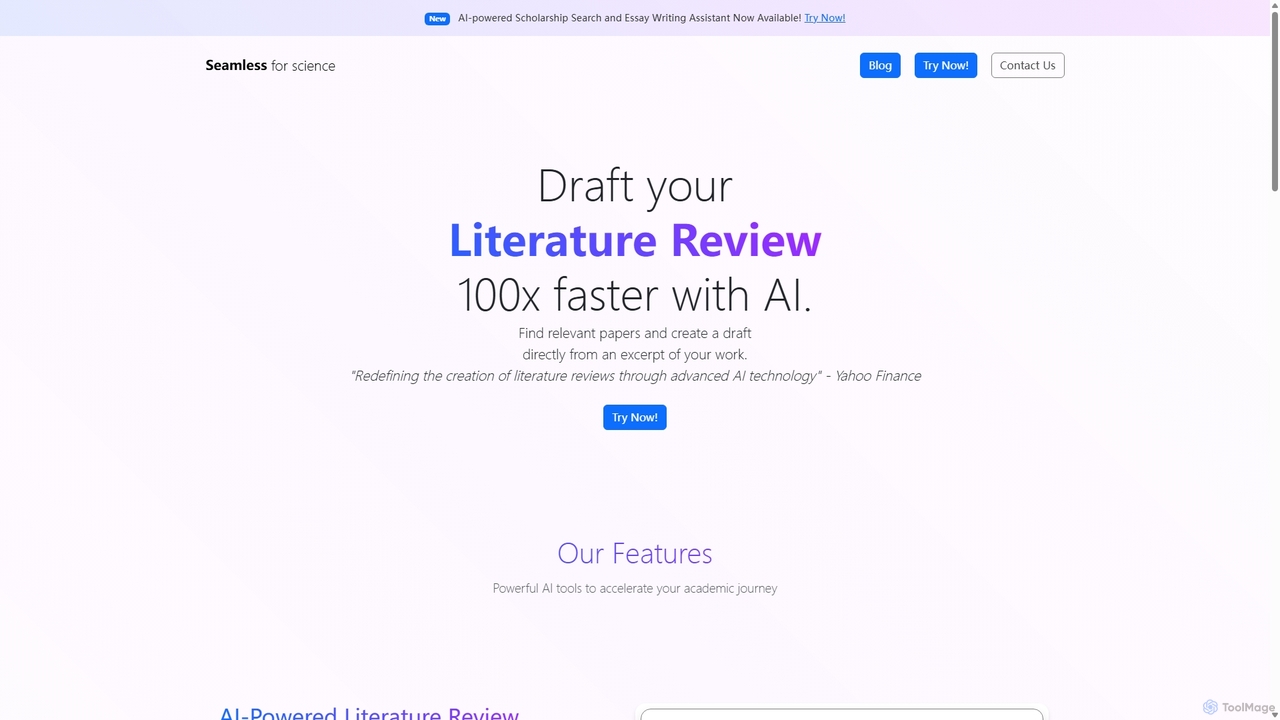
Seamless is an AI-powered platform designed to accelerate academic research. It generates comprehensive literature reviews with citations in minutes, helps students find and apply for scholarships, and offers an AI assistant for crafting compelling essays. It's built for students, researchers, and academics.
Research
Scholarroll
Scholarroll is an AI-powered research assistant designed to streamline the academic workflow. It helps researchers, students, and academics discover relevant papers, generate literature summaries, extract key insights, and manage their references efficiently, accelerating the literature review process.
Research
Connected Papers
Connected Papers is a unique visual tool designed for researchers, students, and scientists. It helps you find and explore academic papers relevant to your work by generating interactive graphs. Instead of traditional lists, you get a visual map of a research field, allowing you to quickly discover trends, important prior works, and derivative studies, significantly speeding up your literature review process.
Academic