uniglobalcareers
An AI-powered career platform dedicated to the international higher education sector. It offers a smart job board, an …
An AI-powered career platform dedicated to the international higher education sector. It offers a smart job board, an AI CV assistant, career development courses, and an expert AI co-pilot to help professionals find opportunities and advance their careers.
StudyRecon
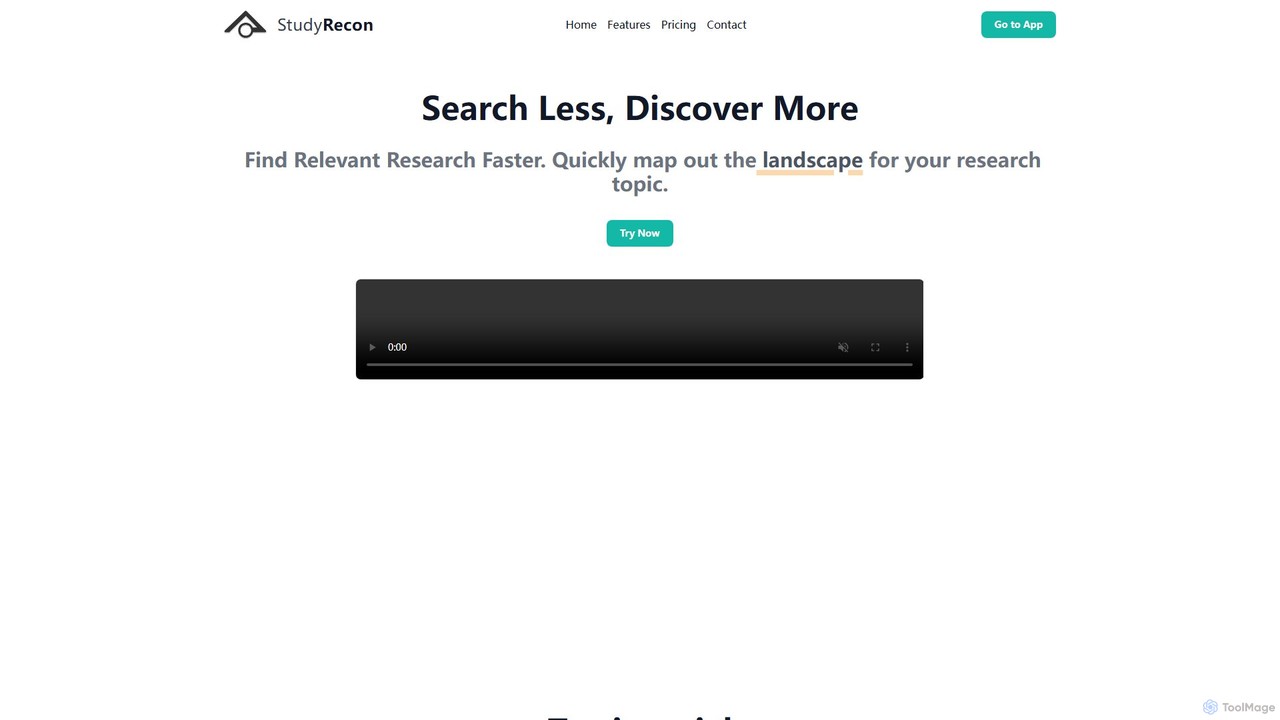
StudyRecon is an AI-powered literature review tool designed to help researchers and academics accelerate their work. It streamlines …
StudyRecon is an AI-powered literature review tool designed to help researchers and academics accelerate their work. It streamlines the process of finding, analyzing, and summarizing relevant scientific papers. By providing a visual landscape of research topics, suggesting relevant queries, and offering concise summaries, it enables users to conduct comprehensive literature reviews in a fraction of the time.
About Higher Education
AI Higher Education tools are a specialized category of software designed to support teaching, research, and administrative operations within universities and colleges. These platforms leverage machine learning and data analytics to deliver personalized learning paths, automate academic research tasks, and streamline institutional management. They address the unique complexities of higher education, from advanced subject tutoring to large-scale data analysis for student retention. This focus on specialized academic and administrative needs distinguishes them from general educational tools.
Core Features
- Personalized Learning Paths: Analyzes student performance data to recommend custom course materials, assignments, and study plans.
- AI Research Assistant: Automates literature reviews, summarizes academic papers, and helps analyze complex datasets for scholarly articles.
- Intelligent Tutoring Systems: Provides 24/7, interactive support and step-by-step guidance for complex subjects like calculus or chemistry.
- Automated Assessment & Feedback: Grades assignments, quizzes, and essays based on predefined rubrics, offering instant, consistent feedback.
- Administrative Process Automation: Streamlines tasks such as admissions screening, course scheduling, and student retention analysis.
Use Cases
These tools are primarily used by university faculty, academic researchers, institutional administrators, and students. For instance, a professor might use an AI platform to design an adaptive course for a large lecture, while a PhD candidate could use a research assistant to accelerate their literature review. Administrators also use them to analyze enrollment trends and identify at-risk students for early intervention.
How to Choose
When selecting an AI Higher Education tool, consider its integration capabilities with your existing Learning Management System (LMS) like Canvas or Moodle. Evaluate the tool's subject-matter specificity and its alignment with your pedagogical goals. Crucially, verify its compliance with data privacy regulations such as FERPA or GDPR. Finally, assess its scalability to ensure it can support a single department or the entire institution effectively.
Higher EducationUse Cases
Automating Systematic Literature Reviews for Research
A PhD candidate or academic researcher often needs to review hundreds, sometimes thousands, of scholarly articles for a dissertation or study. This process is time-consuming and prone to human error. By using an AI research assistant, they can automate the initial screening of papers based on keywords and abstracts. The tool can then extract key information, identify recurring themes, and even generate a preliminary synthesis of the existing literature. This significantly reduces manual labor, allowing the researcher to focus on higher-level analysis and identifying novel research gaps, ultimately accelerating the path to publication.
Creating Adaptive Learning Modules for University Courses
An instructional designer or professor in a university wants to cater to a diverse student body in a large introductory course. Using an AI platform, they can create adaptive learning modules. The system presents concepts and then assesses student understanding with short quizzes. Based on a student's performance, the AI automatically provides either remedial materials for those struggling or advanced content for those who have mastered the topic. This creates a personalized learning journey for each student, improving engagement and ensuring that no one is left behind or held back by a one-size-fits-all curriculum.
Enhancing Student Support with 24/7 AI Tutors
A university student studying a complex STEM subject often gets stuck on a problem late at night, long after teaching assistants' office hours have ended. Instead of waiting for the next day, the student can access an AI-powered tutor. They can input their specific question or problem, and the AI provides step-by-step guidance, explains underlying concepts, and offers similar practice problems. This provides immediate, on-demand academic support, helping to reduce student frustration, reinforce learning, and improve overall comprehension and course performance.
Streamlining the University Admissions Screening Process
An admissions office at a competitive university receives tens of thousands of applications each cycle. Manually reviewing each one for basic qualifications is a massive undertaking. By implementing an AI tool, the office can automate the initial screening. The AI can quickly parse applications to verify completion, check for minimum GPA and test score requirements, and even perform an initial analysis of essays for relevance and originality. This allows human admissions officers to focus their valuable time on the holistic review of qualified candidates, leading to a more efficient and equitable admissions process.
AI-Assisted Grading and Feedback for Large Classes
A professor teaching an introductory course with over 300 students struggles to provide timely, meaningful feedback on weekly essays. Using an AI-powered grading tool, the professor can establish a detailed rubric. The AI then assesses each submission against this rubric, providing instant feedback on grammar, structure, and adherence to the prompt. This doesn't replace the professor but assists them by handling the initial, more repetitive aspects of grading. The professor can then focus their time on providing higher-level, conceptual feedback, ensuring students receive consistent and prompt guidance to improve their writing.
Analyzing Institutional Data for Student Retention
A university's administration is concerned about student dropout rates. To be proactive, they use an AI analytics platform that integrates with their Learning Management System (LMS) and student information systems. The AI analyzes various data points, such as class attendance, assignment submission rates, and library usage, to identify patterns that correlate with students being at risk of dropping out. This allows academic advisors to intervene early with personalized support, connecting at-risk students with resources like tutoring or counseling, ultimately improving retention rates and student success.