ToolMage
Sign in

Best 6 Learning Assistant for Ai Assistant

Popular Learning Assistant in Ai Assistant include VoiceBrief, eKnow, NoteSpark, Roadmint, RecallAI, and EZMind AI, helping you work more efficiently.

RecallAI
Freemium

RecallAI

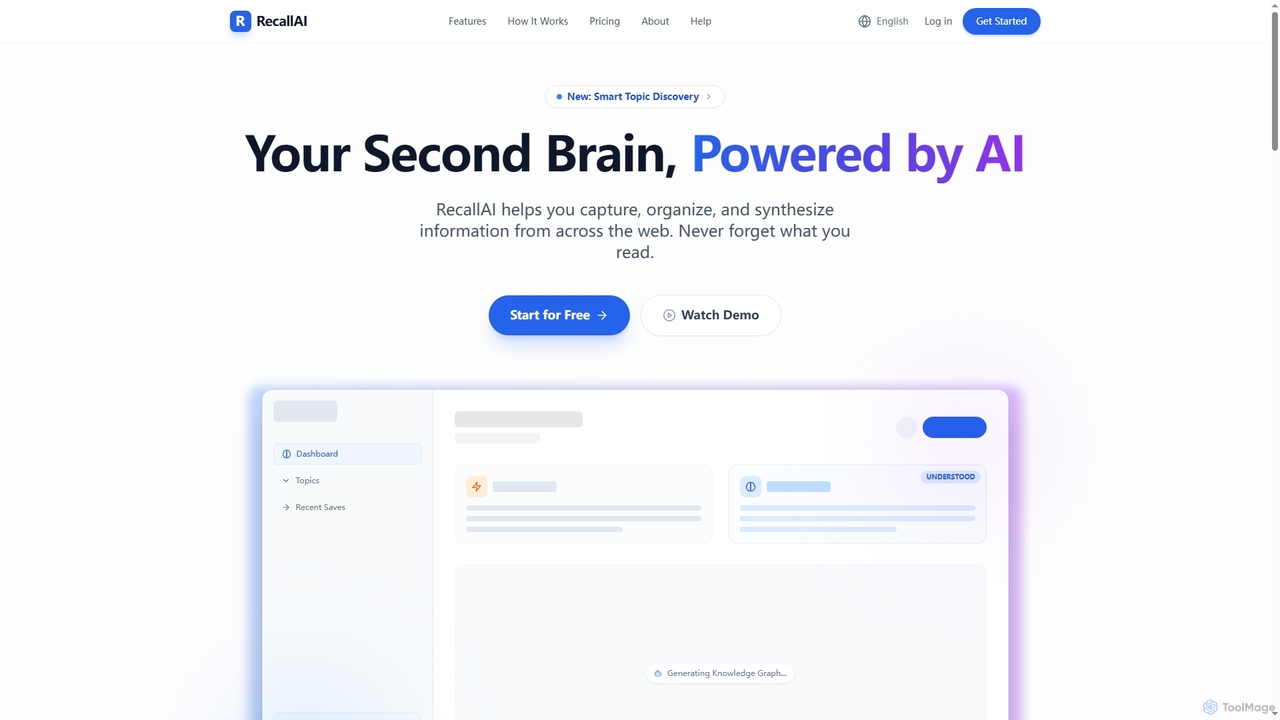
RecallAI is an AI-powered 'second brain' designed to help users capture, organize, and synthesize information from across the web. It automatically summarizes articles, videos, and podcasts, categorizes content into relevant topics, and allows for instant knowledge retrieval through natural language queries and a visual knowledge graph.

Learning Assistant
Visits 4.3KFavorites 19Likes 14
VoiceBrief
Freemium

VoiceBrief

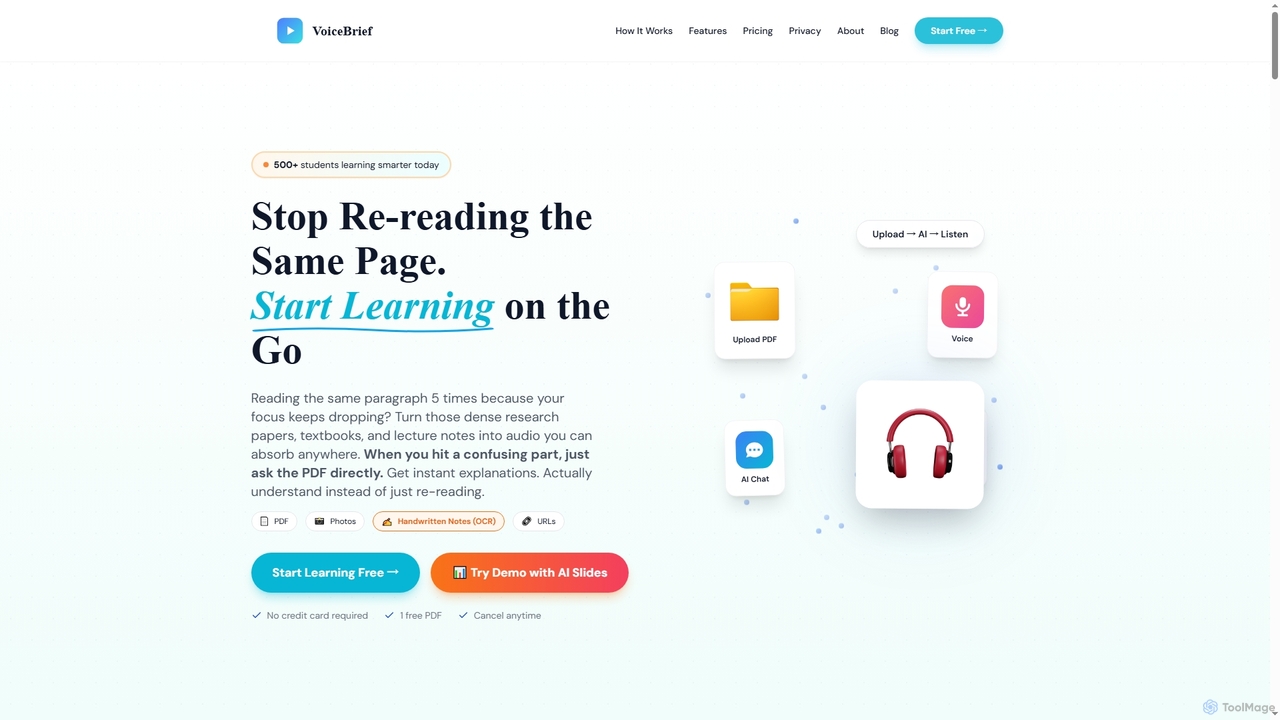
VoiceBrief is an AI-powered study tool that transforms dense academic materials like PDFs, textbooks, notes, and web articles into interactive audio lectures. Designed for students and professionals, it offers personalized AI tutoring, flashcards, and quizzes to enhance learning, improve retention, and save study time by enabling on-the-go learning.

Learning Assistant
Visits 17.8KFavorites 63Likes 61
eKnow
Paid

eKnow

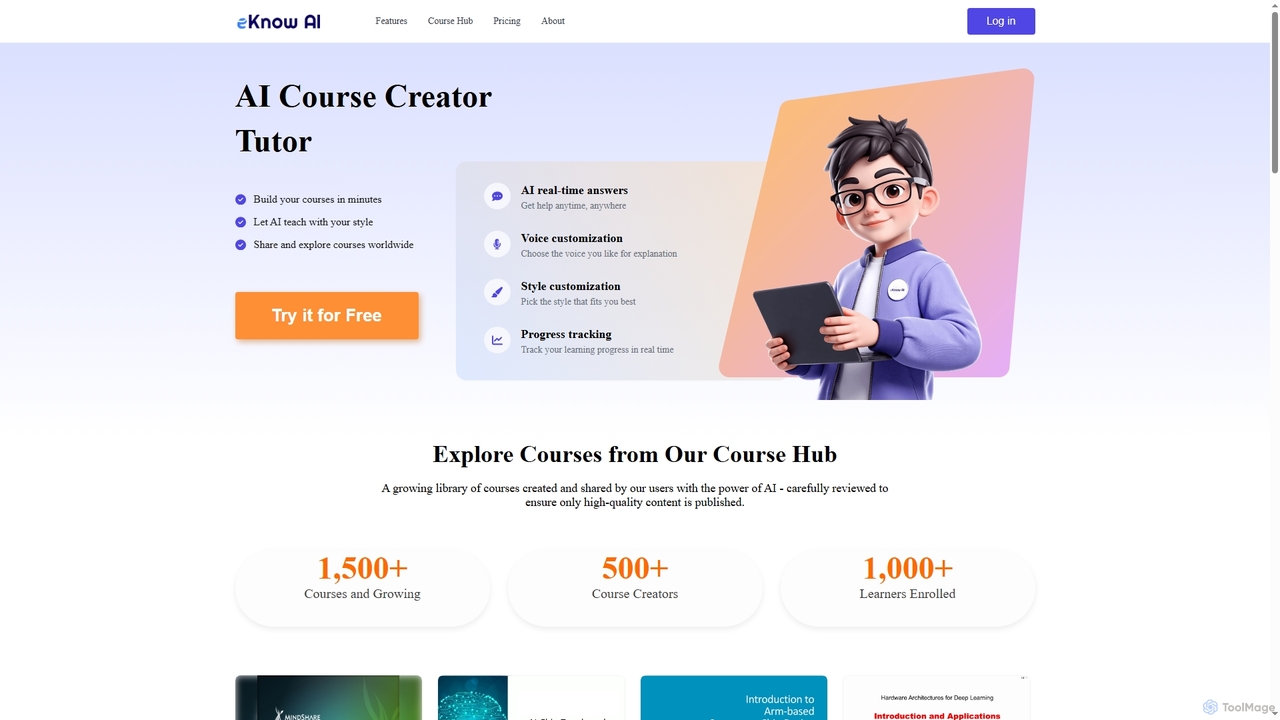
eKnow is an AI-powered platform that transforms lecture notes, PDFs, and presentations into interactive, personalized online courses within minutes. It offers an AI tutor for real-time answers, customizable learning styles, and a global Course Hub for sharing and exploring educational content.

Learning Assistant
Visits 9.9KFavorites 103Likes 95
NoteSpark

NoteSpark

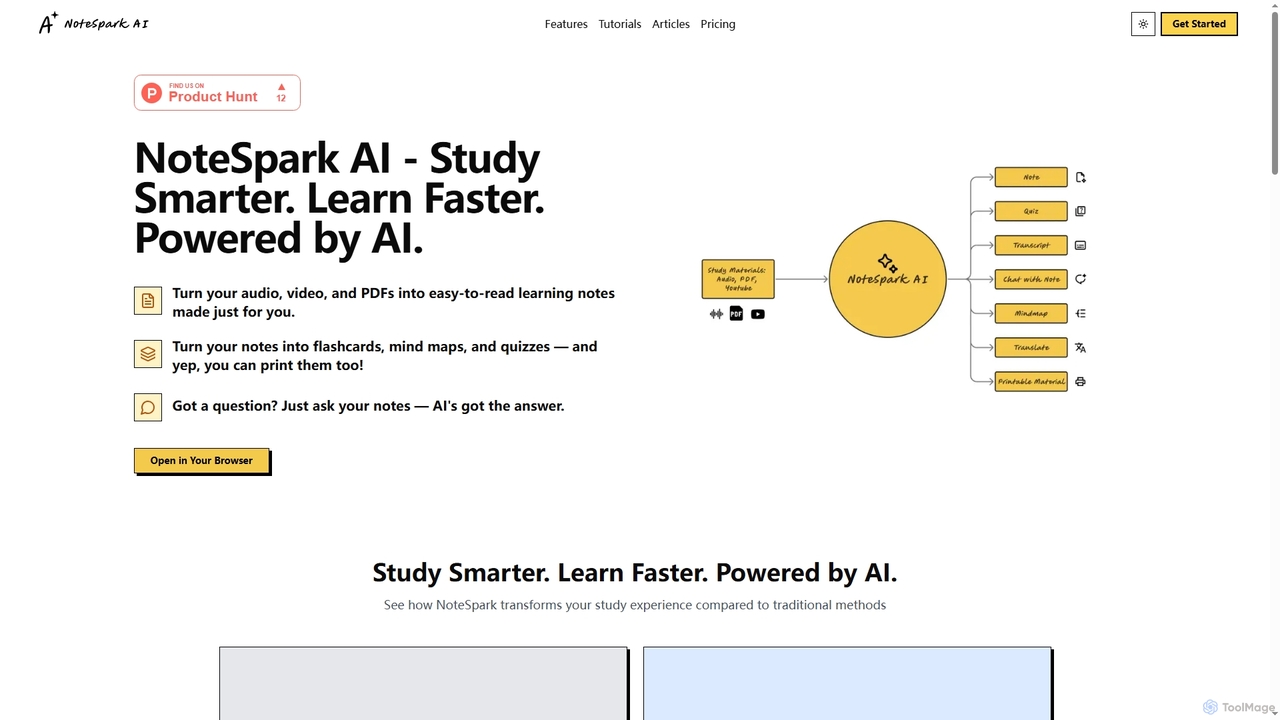
NoteSpark is an AI-powered study companion designed to transform various learning materials into comprehensive study notes and interactive learning tools. It processes recorded lectures, audio files, PDFs, YouTube videos, and Google Drive documents, generating personalized notes, flashcards, quizzes, and mind maps to enhance understanding and retention through active recall methods.

Learning Assistant
Visits 6.7KFavorites 120Likes 123
Roadmint
Free

Roadmint

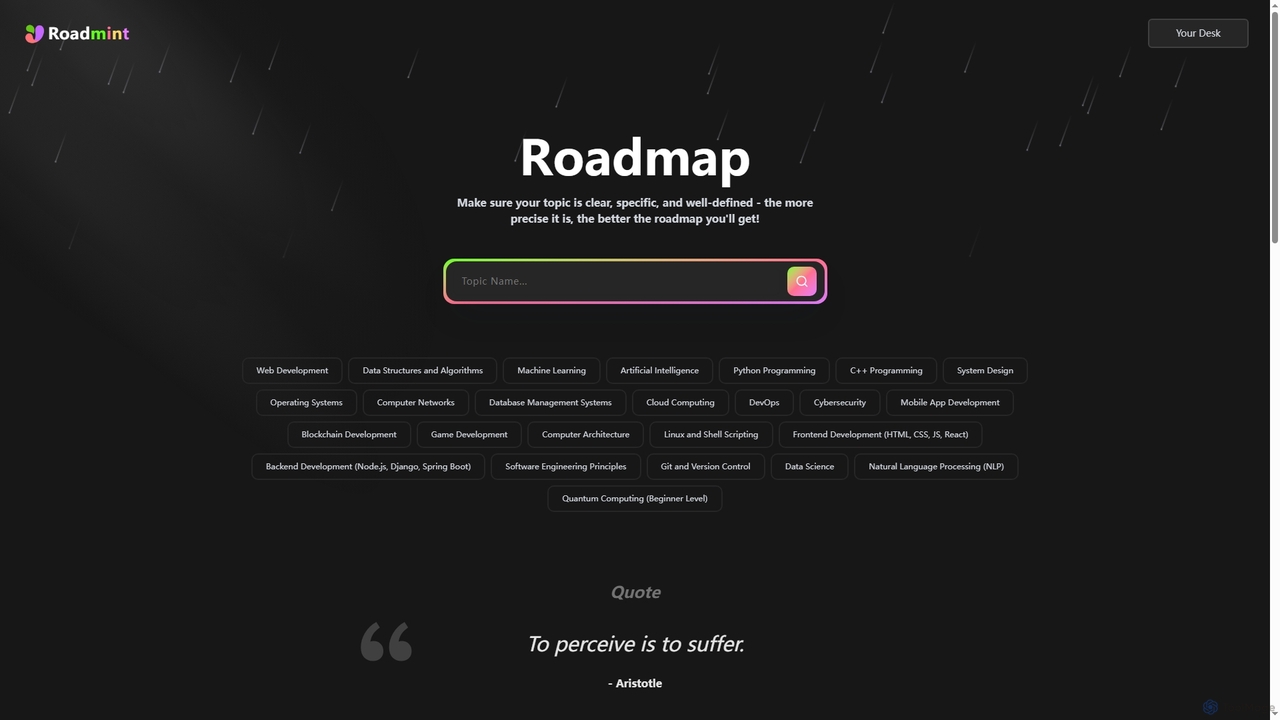
Roadmint is a free, AI-powered online tool that generates personalized learning roadmaps for any specified topic. It breaks down complex subjects into clear, daily steps, enabling users to track their progress without needing to sign up or pay. Ideal for self-learners and developers.

Learning Assistant
Visits 4.3KFavorites 92Likes 90
EZMind AI
Freemium

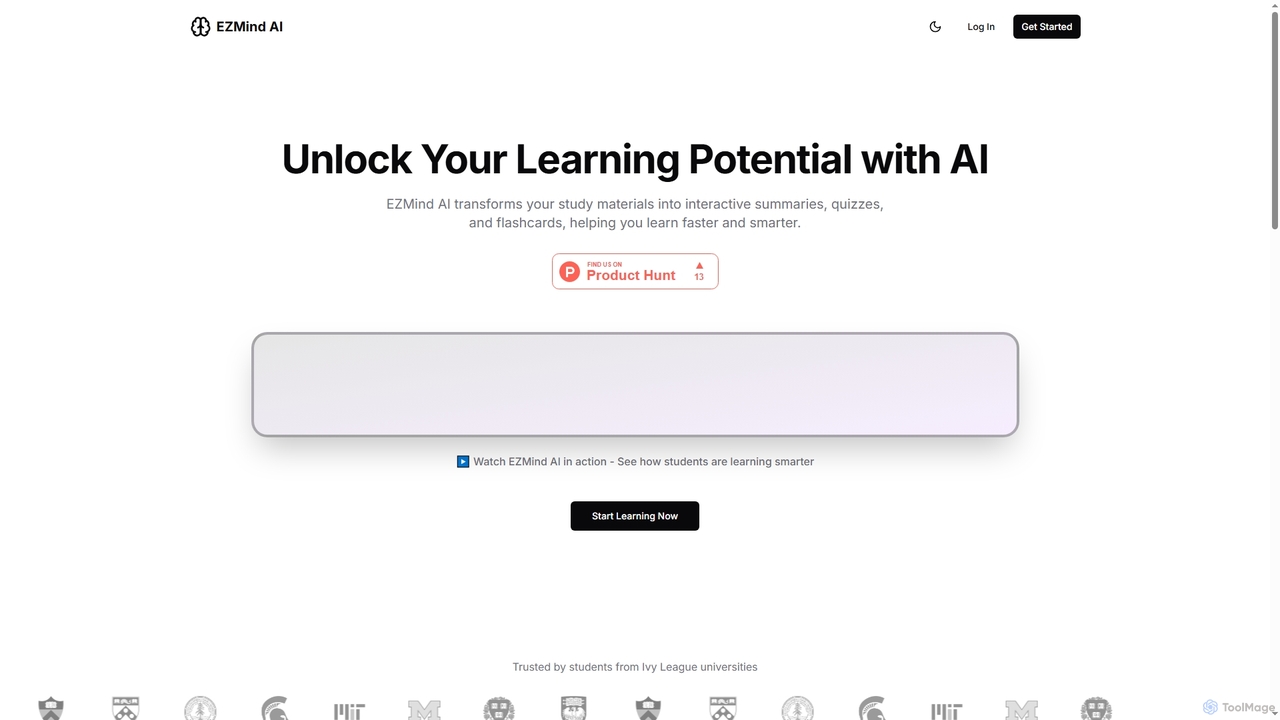
EZMind AI

EZMind AI is an innovative AI-powered learning platform designed to transform study materials into interactive summaries, quizzes, and flashcards. It helps students learn faster and smarter by providing personalized tools like an AI tutor, content uploads from various sources, and progress tracking. Ideal for enhancing comprehension and exam preparation.

Learning Assistant
Visits 4.3KFavorites 117Likes 110

About Learning Assistant

AI Learning Assistants are specialized tools designed to facilitate and personalize the educational process. They leverage natural language processing and machine learning to act as interactive tutors, breaking down complex topics, answering questions, and generating study materials. These assistants help users grasp new concepts faster, prepare for exams more effectively, and create structured learning paths for skill development. Unlike general AI assistants, they are specifically optimized for pedagogical interaction, often providing step-by-step guidance rather than just direct answers.

Core Features

  • Personalized Tutoring: Offers tailored explanations and answers follow-up questions to match a user's learning pace.
  • Content Simplification: Summarizes dense articles, research papers, or textbooks into digestible key points.
  • Quiz & Test Generation: Creates practice questions, quizzes, and flashcards from provided learning materials.
  • Interactive Problem Solving: Guides users through problems with hints and step-by-step instructions.
  • Language Practice: Simulates conversations and provides grammar corrections for language learners.

Use Cases

AI Learning Assistants are widely used by students across all levels for homework help and exam preparation. Professionals use them for upskilling and corporate training, quickly learning new software or business frameworks. Language learners and self-directed individuals also rely on these tools for conversational practice and creating structured study plans.

How to Choose

When selecting an AI Learning Assistant, consider the subjects or skills it specializes in. Evaluate its interaction quality—does it provide guidance or just answers? Check for features like content uploading (PDFs, URLs), quiz generation capabilities, and integration with other learning platforms. Finally, assess the pricing model based on your usage frequency and required features.

Featured tool rankings

Learning Assistant use cases

1

Mastering Complex Academic Subjects

A university student studying quantum physics uses an AI Learning Assistant to prepare for their final exams. They upload lecture notes and research papers into the tool. The assistant summarizes complex theories into simple analogies, answers specific questions like "Explain Schrödinger's cat experiment in simple terms," and generates a series of practice quizzes on key concepts. This allows the student to identify knowledge gaps and reinforce their understanding, turning hours of passive reading into an active, interactive study session.

2

Accelerating Professional Skill Development

A marketing manager needs to quickly learn the principles of SEO for a new campaign. Instead of watching hours of videos, they use an AI Learning Assistant. They ask the assistant to create a structured 3-day learning plan, from keyword research to technical SEO. The tool explains jargon, provides real-world examples, and quizzes them at the end of each module. This targeted approach helps the manager acquire practical skills efficiently, enabling them to apply the knowledge to their campaign immediately.

3

Interactive Language Learning Practice

An individual learning Spanish uses an AI Learning Assistant as a 24/7 conversation partner. They can initiate text or voice conversations on various topics, from ordering food at a restaurant to discussing current events. The AI provides instant feedback on grammar, pronunciation, and vocabulary choice in a non-judgmental way. It can also generate vocabulary lists and role-playing scenarios, significantly increasing the user's confidence and fluency faster than traditional methods alone.

4

Simplifying Technical Documentation for Developers

A junior software developer is tasked with using a new, complex API with dense documentation. They feed the documentation URL to an AI Learning Assistant. The tool extracts the most critical functions, explains complex parameters in plain language, and provides basic code examples for common use cases. The developer can then ask follow-up questions like "How do I handle authentication?" This process drastically reduces the learning curve and time spent deciphering technical jargon.

5

Creating Educational Content for Tutors

A private tutor preparing materials for a history lesson on the Roman Empire provides the AI Learning Assistant with a chapter from a textbook. The assistant helps by generating a concise summary, a timeline of key events, and a set of discussion questions to engage the student. It also creates a 10-question multiple-choice quiz to assess comprehension after the lesson. This automates the tedious parts of lesson planning, allowing the tutor to focus more on teaching and student interaction.

6

Personalized Learning Path for Self-Taught Musicians

Someone wanting to learn music theory on their own uses an AI Learning Assistant to build a personalized curriculum. They state their goal: "I want to learn to compose simple melodies." The assistant outlines a step-by-step path, starting with basic scales and chords, moving to harmony, and finally to composition techniques. It suggests exercises, analyzes short pieces of music the user writes, and provides feedback, acting as a virtual mentor for their self-directed learning journey.

Learning Assistant FAQ

What is an AI Learning Assistant?

An AI Learning Assistant is a specialized AI tool designed to support and personalize the learning process. Unlike general-purpose chatbots, it focuses on educational tasks such as explaining complex concepts, summarizing study materials, generating quizzes, and providing step-by-step problem-solving guidance. Its primary goal is to act as an interactive, on-demand tutor to help users understand and retain information more effectively.

How do I choose the right AI Learning Assistant?

To choose the right AI Learning Assistant, consider these factors:

  • Subject Specialization: Check if the tool is optimized for your area of study, whether it's STEM, humanities, or a specific programming language.
  • Interaction Style: Determine if you need a tool that gives direct answers or one that guides you to the solution with hints.
  • Core Features: Ensure it has the functions you need, such as summarizing PDFs, creating flashcards, or offering conversational practice.
  • Ease of Use: The interface should be intuitive and allow you to easily input your materials and get help without a steep learning curve.
What's the difference between an AI Learning Assistant and a general AI chatbot?

The main difference lies in their purpose and design. A general AI chatbot (like those in the broader AI Assistant category) is built for a wide range of tasks, from writing emails to general knowledge queries. An AI Learning Assistant is specifically engineered for education. It employs pedagogical techniques, structures information for better retention, provides guided problem-solving, and focuses on helping a user learn a topic deeply rather than just providing a surface-level answer.

What are the key features of an effective AI Learning Assistant?

An effective AI Learning Assistant typically includes several key features. Personalized Q&A allows it to adapt explanations to a user's level of understanding. Content processing is crucial, enabling it to summarize documents, videos, or web pages. Assessment generation, such as creating quizzes and flashcards, helps reinforce learning. Finally, interactive guidance for solving problems, especially in technical subjects, is a hallmark of a high-quality learning tool.

Who can benefit from using an AI Learning Assistant?

A wide range of individuals can benefit from AI Learning Assistants. Students use them for homework assistance, exam revision, and understanding difficult subjects. Professionals leverage them for continuous learning, acquiring new job-related skills, and corporate training. Self-learners and hobbyists use them to create structured learning paths for topics like coding, language, or music theory. Essentially, anyone looking to learn something new or deepen their knowledge can find value in these tools.