ToolMage
Sign in

Best 1 Prompt Optimization AI tools for Ai Assistant

Popular Prompt Optimization AI tools in Ai Assistant include PrompTessor, helping you work more efficiently.

PrompTessor
Freemium

PrompTessor

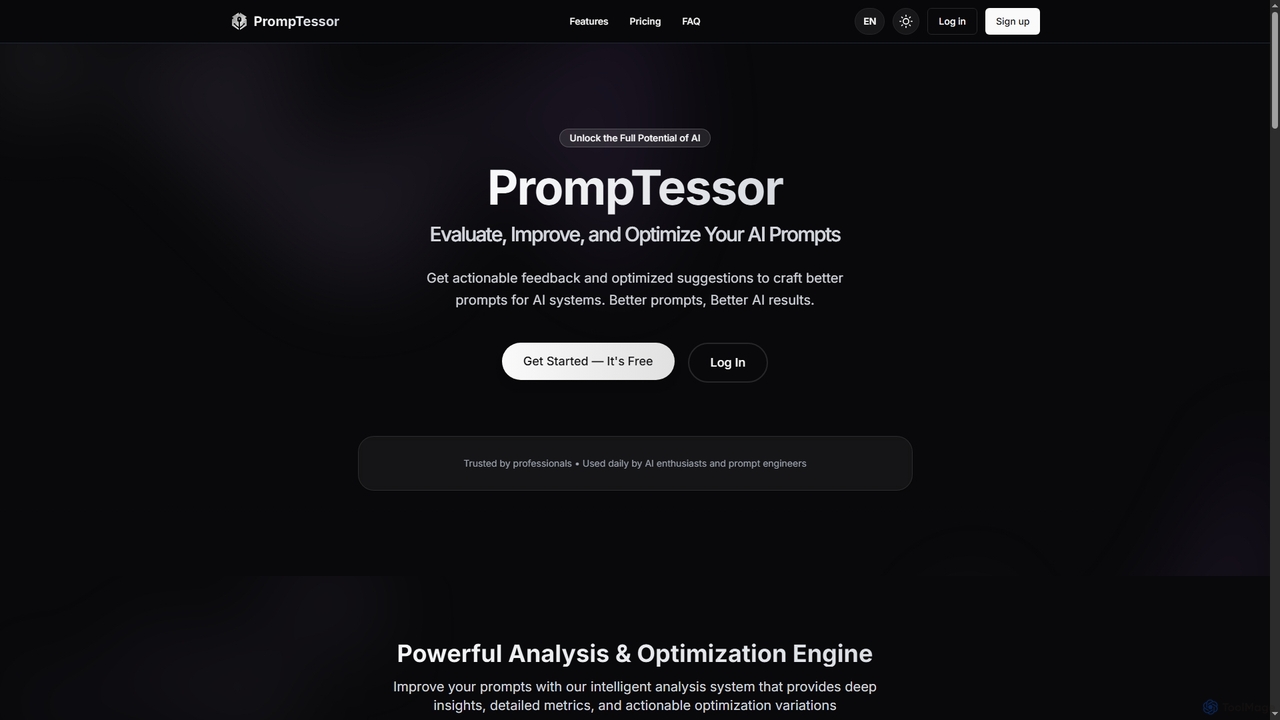
PrompTessor is an AI-powered tool designed for comprehensive analysis and optimization of AI prompts. It provides actionable feedback, detailed metrics, and optimized variations to help users craft more effective prompts, leading to superior AI results across various systems.

Prompt Optimization
Visits 9.2KFavorites 141Likes 139

About Prompt Optimization

Prompt Optimization tools are AI-powered platforms designed to refine, test, and manage the inputs (prompts) given to large language models (LLMs) and other generative AI systems. These tools systematically enhance prompt quality, ensuring AI models produce more accurate, relevant, and creative outputs. By streamlining the prompt engineering process, they significantly reduce trial-and-error, improve efficiency, and unlock the full potential of AI assistants across various applications.

Core Features

  • Prompt Templating & Management: Create, store, and organize reusable prompt templates for consistent and efficient AI interactions.
  • Prompt Testing & Evaluation: Systematically test prompt variations against predefined criteria or datasets to identify the most effective inputs.
  • AI-Assisted Prompt Generation: Leverage AI to suggest, refine, or expand prompts, helping users discover optimal phrasing and structures.
  • Version Control & Collaboration: Track changes to prompts, revert to previous versions, and facilitate team collaboration on prompt development.
  • Output Analysis & Feedback: Analyze AI responses to identify patterns, evaluate performance, and inform further prompt refinements.

Use Cases

Professionals across various fields utilize prompt optimization to enhance their AI workflows. Content creators can develop highly effective templates for generating articles or marketing copy, ensuring brand consistency and quality. Developers use these tools to fine-tune prompts for code generation, improving accuracy and reducing debugging time. Researchers can optimize prompts for data extraction and summarization, yielding more precise and relevant insights from large datasets.

How to Choose

When selecting a Prompt Optimization tool, consider its compatibility with your existing AI models and platforms, as seamless integration is crucial. Evaluate the range of features offered, such as advanced testing capabilities, version control, and AI-assisted prompt generation, to match your specific needs. Assess the user interface for ease of use and the availability of collaboration features if working in a team. Finally, consider the pricing model and the level of analytics or performance insights provided to ensure it aligns with your budget and optimization goals.

Featured tool rankings

Prompt Optimization use cases

1

Enhancing Marketing Campaign Copy

Marketing teams utilize prompt optimization tools to systematically refine prompts for AI ad copy generators, ensuring brand voice consistency, A/B testing variations, and higher conversion rates across different platforms. This reduces manual iteration and speeds up campaign launches.

2

Improving AI Code Generation Accuracy

Software developers leverage these platforms to test and optimize prompts for AI coding assistants. By refining inputs, they can generate more accurate, efficient, and secure code snippets, reducing debugging time and improving overall development velocity.

3

Streamlining Content Creation Workflows

Content writers and editors employ prompt optimization to create and manage effective templates for various content types, such as blog posts, social media updates, or email newsletters. This ensures consistent quality, tone, and adherence to style guides, saving significant time.

4

Optimizing AI Art & Design Prompts

Digital artists and designers use prompt optimization tools to experiment with complex prompt structures and parameters for AI image generators. This allows them to achieve specific artistic styles, compositions, and details more efficiently, transforming abstract ideas into visual realities.

5

Personalizing Customer Service Interactions

Businesses integrate prompt optimization to fine-tune prompts for AI chatbots and virtual assistants. This ensures that automated responses are more accurate, empathetic, and personalized, leading to improved customer satisfaction and reduced support agent workload.

6

Accelerating Research & Data Summarization

Researchers and analysts apply prompt optimization techniques to craft precise prompts for AI tools that summarize documents, extract key information, or identify trends from large datasets. This yields more relevant and concise results, significantly speeding up the research process.

Prompt Optimization FAQ

What are Prompt Optimization tools?

Prompt Optimization tools are specialized software designed to help users create, refine, test, and manage the textual inputs (prompts) they provide to AI models like large language models (LLMs) or image generators. Their primary goal is to systematically improve the quality, relevance, and consistency of the AI's outputs, moving beyond simple trial-and-error to a more structured approach.

How do I choose the right Prompt Optimization tool?

When selecting a tool, consider its compatibility with the AI models you use (e.g., OpenAI, Anthropic, custom models) and its integration capabilities with your existing workflows. Look for features like prompt templating, version control, A/B testing, and performance analytics. Ease of use, collaboration features for teams, and the level of support for different prompt types (text, image, code) are also crucial factors.

How does Prompt Optimization differ from basic prompt engineering?

Prompt engineering is the skill of crafting effective prompts. Prompt Optimization tools, however, provide a systematic framework and features to enhance and scale that skill. They offer functionalities like automated testing, versioning, and AI-assisted refinement, transforming the art of prompt engineering into a more scientific and efficient process, especially for complex or repetitive tasks.

What are the main benefits of using Prompt Optimization tools?

The key benefits include significantly improved AI output quality and consistency, reduced time spent on manual prompt iteration, and enhanced efficiency in AI-driven workflows. These tools also enable better collaboration among teams, provide insights into prompt performance, and help users unlock more creative and precise results from their AI assistants, ultimately saving time and resources.

What features should I look for in a Prompt Optimization tool?

Essential features include robust prompt templating and management for organization and reuse, comprehensive testing and evaluation capabilities to compare prompt performance, and version control for tracking changes. AI-assisted prompt generation or refinement, collaboration tools for team-based prompt development, and analytics dashboards to monitor output quality are also highly valuable.