Profilio
Profilio is an AI-powered platform designed for developers to instantly create, manage, and share a comprehensive online portfolio. …
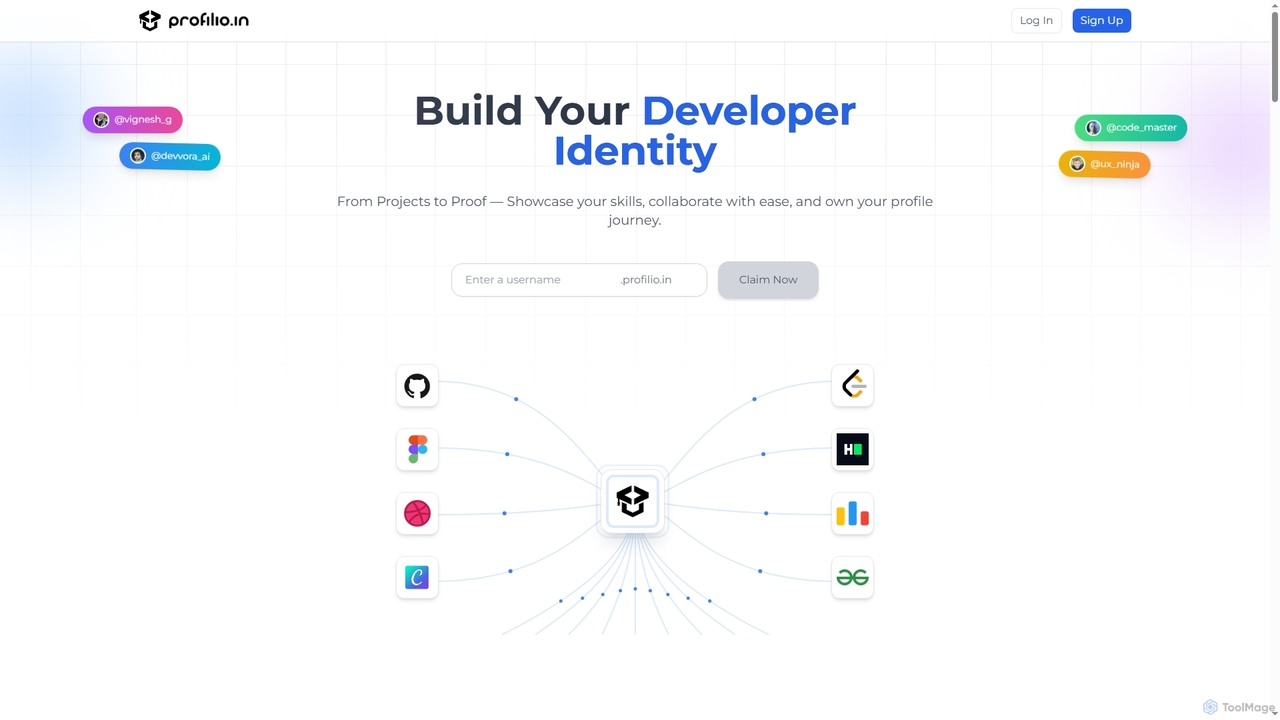
Profilio is an AI-powered platform designed for developers to instantly create, manage, and share a comprehensive online portfolio. It unifies coding profiles, projects, and achievements from various platforms like GitHub, Dev.to, and LeetCode into one centralized dashboard. With features like real-time synchronization, smart analytics, and AI-verified skills, Profilio helps developers build a strong digital identity and showcase their expertise effectively to potential employers and collaborators.
About Skill Verification
Skill Verification tools are a specialized category of AI assistants designed to objectively assess, measure, and validate an individual's practical abilities. These platforms utilize AI to create dynamic, real-world simulations, coding challenges, and interactive problem-solving scenarios. They go beyond traditional quizzes by analyzing not just the final answer, but the process, efficiency, and quality of the work itself. This provides organizations with reliable, data-driven insights into a candidate's or employee's true competency level, streamlining hiring and development processes.
Core Features
- Realistic Skill Simulations: Creates interactive environments (e.g., coding IDEs, software interfaces) to test practical, on-the-job skills.
- AI-Powered Scoring and Analysis: Automatically grades complex tasks, analyzes code quality, and provides detailed performance reports with actionable feedback.
- Automated Proctoring: Employs AI to monitor test sessions for cheating, ensuring the integrity and validity of assessment results.
- Customizable Assessment Libraries: Offers pre-built tests for various roles and skills, with the ability to create custom challenges tailored to specific job requirements.
- Competency Mapping: Aligns assessment results with specific skill frameworks to identify strengths, weaknesses, and skill gaps accurately.
Applicable Scenarios
These tools are primarily used in tech recruitment, corporate training, and professional certification. For instance, a tech company uses them to screen software engineering candidates with complex coding tests, while a large enterprise uses them to validate the effectiveness of its employee upskilling programs. Educational institutions also leverage them for secure, large-scale remote examinations.
Selection Criteria
When choosing a Skill Verification tool, consider the breadth and depth of the skill library—does it cover your required technologies and soft skills? Evaluate the quality of the candidate experience and the sophistication of the anti-cheating technology. Also, assess its integration capabilities with your existing Applicant Tracking System (ATS) or Learning Management System (LMS) and the detail provided in its analytics and reporting.

Skill VerificationUse Cases
Screening Software Engineer Candidates
A technical recruiter for a fast-growing tech company needs to efficiently screen hundreds of applications for a senior developer role. Using a Skill Verification tool, the recruiter sends a standardized, AI-generated coding challenge to all qualified candidates. The platform provides a real-time IDE, testing the candidate's ability to solve complex algorithmic problems and write clean, efficient code in a specific language like Python or Go. The AI automatically scores submissions based on correctness, performance, and code style, providing a ranked leaderboard. This allows the hiring team to focus their interview time exclusively on the top 5% of performers, saving dozens of engineering hours.
Certifying Employee Skills After Training
A Learning and Development (L&D) manager at a large corporation has just completed a company-wide upskilling program on data analytics using SQL. To measure the program's effectiveness and certify employees, the L&D manager uses a Skill Verification tool to create a final assessment. The test includes practical scenarios where employees must write complex SQL queries to extract specific insights from a sample database. The AI evaluates the accuracy and efficiency of their queries. Employees who pass the assessment receive an internal certification, and the L&D team gets detailed analytics on skill gaps, helping them refine future training modules.
Assessing Soft Skills in Customer Support Roles
A hiring manager for a customer support team wants to evaluate a candidate's problem-solving and communication skills, which are difficult to gauge from a resume. They use a Skill Verification tool that offers interactive simulations. The candidate is placed in a chat-based scenario with an AI-powered 'frustrated customer'. The tool analyzes the candidate's responses for tone, empathy, clarity, and problem-solving effectiveness. The final report provides a score on key soft skills and a transcript of the interaction, giving the manager a much richer understanding of the candidate's capabilities than a standard interview could provide.
Conducting Secure Remote University Exams
A university needs to administer final exams for a computer science course to over 500 students remotely. To ensure academic integrity, the administration uses a Skill Verification platform with AI proctoring. During the exam, the tool uses the student's webcam to monitor for suspicious behavior, such as looking away from the screen frequently or another person entering the room. It also locks down the browser to prevent access to other websites. Any flagged incidents are recorded for review by a human proctor. This allows the university to conduct large-scale, secure remote assessments with confidence.
Validating Data Scientist Practical Skills
A company is hiring a data scientist and needs to assess their ability to work with real-world, messy data. The hiring manager creates a custom assessment on a Skill Verification platform. Candidates are given a large dataset and a business problem to solve within a sandboxed Jupyter Notebook environment. The platform tracks their entire workflow, from data cleaning and feature engineering to model building and visualization. The AI-assisted evaluation reviews not only the final model's accuracy but also the candidate's methodology, coding practices, and ability to communicate findings, providing a holistic view of their practical skills.
Automating Pre-employment Screening for IT Roles
An HR department at a large financial institution is overwhelmed by the volume of applicants for various IT roles, from helpdesk support to network administrators. They integrate a Skill Verification tool with their Applicant Tracking System (ATS). As applications come in, the system automatically sends role-specific assessments. For a helpdesk role, it might be a troubleshooting simulation. For a network admin, it could be a virtual lab to configure a firewall. The results are automatically fed back into the ATS, allowing recruiters to instantly see which candidates meet the minimum technical bar, automating the top of the hiring funnel.