
Freemium
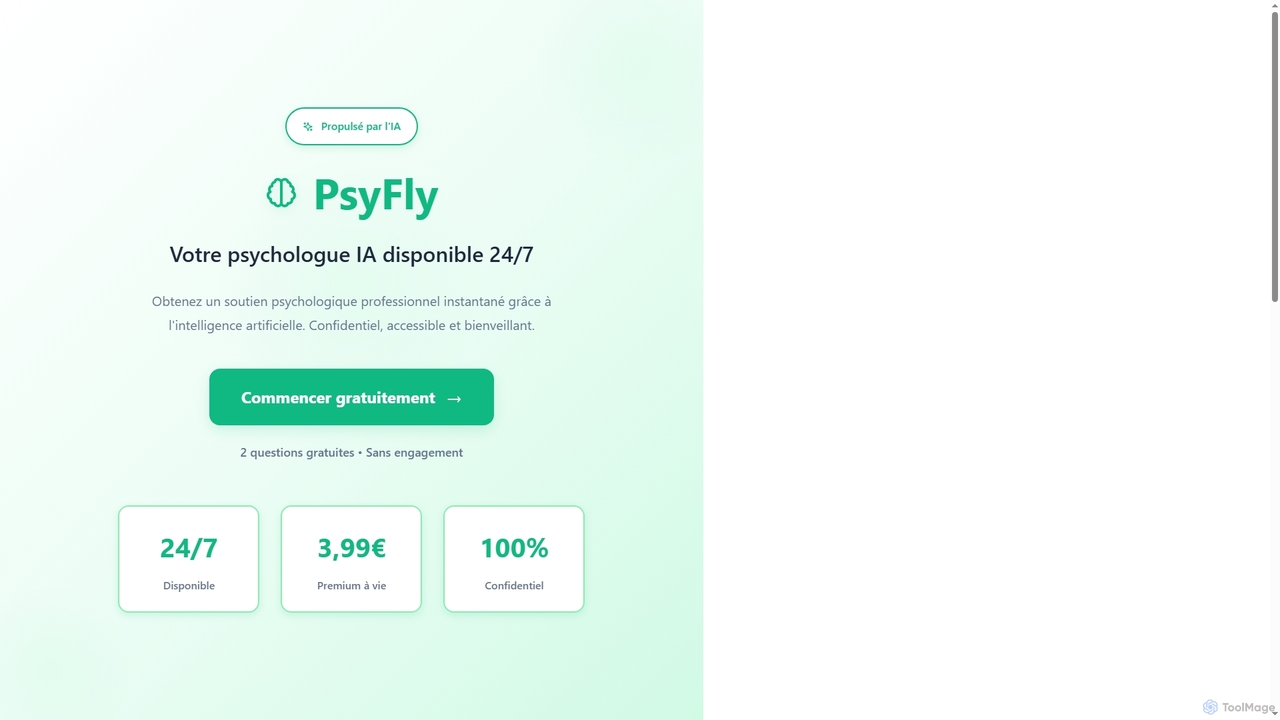
Popular Therapy AI tools in Ai Assistant include PsyFly, helping you work more efficiently.
AI Therapy tools are specialized AI assistants designed to provide accessible, personalized mental health support and emotional well-being guidance. Leveraging advanced natural language processing (NLP) and machine learning, these tools engage users in therapeutic conversations, offer coping strategies, and facilitate self-reflection. They serve as a convenient, confidential resource for managing stress, anxiety, and improving overall mental resilience, often complementing traditional human-led therapy.
Individuals seeking daily emotional support, those learning new coping skills for mild anxiety or stress, and users looking to supplement their traditional therapy sessions can benefit. These tools are particularly useful for managing everyday mental well-being challenges and fostering self-awareness in a private, on-demand manner.
When selecting an AI Therapy tool, consider its underlying therapeutic approach (e.g., CBT, mindfulness), data privacy and security protocols, the level of personalization and adaptability it offers, and its credibility (e.g., expert endorsements, research backing). Evaluate user interface and ease of integration with your daily routine for sustained engagement.
Individuals experiencing everyday stress or mild anxiety can use AI Therapy tools for immediate relief and proactive management. Users engage in short, guided breathing exercises or receive personalized tips for stress reduction, helping them to quickly de-escalate stressful moments and build resilience against daily pressures. This provides an accessible, on-demand resource for maintaining emotional balance.
For users looking to acquire and practice new coping mechanisms, AI Therapy tools offer structured guidance. The AI can lead through cognitive restructuring exercises, help identify negative thought patterns, and suggest alternative perspectives, similar to techniques used in Cognitive Behavioral Therapy (CBT). This empowers users to develop healthier responses to challenging situations over time.
Anyone interested in understanding their emotional fluctuations can utilize these tools for mood tracking. Users log their daily moods, activities, and thoughts, and the AI analyzes this data to identify patterns, potential triggers, and correlations between events and emotional states. This fosters greater self-awareness and enables proactive management of emotional well-being.
Individuals experiencing feelings of loneliness or social isolation can find non-judgmental conversational support. AI Therapy tools offer empathetic listening, encourage self-expression in a safe space, and can provide resources or suggestions for fostering real-world connections. This helps mitigate feelings of isolation and promotes a sense of being heard and understood.
Clients already engaged in human-led therapy can use AI tools to enhance their therapeutic journey. The AI can prompt journaling, help reflect on feelings between sessions, track progress on specific goals, and assist in structuring thoughts or questions for upcoming appointments. This deepens self-reflection and makes traditional therapy sessions more productive.
Users seeking to improve focus, reduce mental clutter, or simply relax can access a variety of guided practices. AI Therapy tools provide audio-guided meditations, progressive muscle relaxation scripts, or calming soundscapes. These features help users cultivate mindfulness, reduce physical tension, improve sleep quality, and enhance overall mental clarity.
AI Therapy tools are artificial intelligence applications designed to support mental health and emotional well-being. They leverage natural language processing and machine learning to offer personalized conversational support, mood tracking, coping strategies, and guided exercises. These tools aim to make mental health resources more accessible, confidential, and available 24/7, often serving as a complementary resource to human therapy.
When selecting an AI Therapy tool, consider its core therapeutic approach (e.g., CBT, mindfulness, DBT), ensuring it aligns with your needs. Prioritize tools with robust data privacy and security measures. Evaluate the level of personalization, the quality of conversational AI, and whether it offers features like mood tracking or guided exercises. Look for tools backed by mental health professionals or research for credibility.
AI Therapy tools are generally not replacements for human therapists, especially for severe mental health conditions. They are most effective as complementary resources or for managing mild to moderate stress, anxiety, and for learning coping skills. They offer accessibility, anonymity, and consistent support, but lack the nuanced empathy, clinical judgment, and crisis intervention capabilities of a trained human professional.
Reputable AI Therapy tools employ stringent data privacy and security measures. This typically includes end-to-end encryption for conversations, anonymization of user data, and compliance with relevant health data protection regulations like HIPAA (in the US) or GDPR (in Europe). Users should always review the privacy policy of any tool to understand how their personal and health information is collected, stored, and used.
AI Therapy tools are specifically designed and trained for mental health support, focusing on therapeutic frameworks, empathetic responses, and privacy protocols. They aim to foster emotional well-being. General AI Assistants (like Siri or Alexa), while conversational, are broader in scope, task-oriented (e.g., setting alarms, answering factual questions), and lack the specialized psychological training, ethical guidelines, and data sensitivity required for therapeutic interactions.