ToolMage
Sign in

Best 1 Travel Assistant for Ai Assistant

Popular Travel Assistant in Ai Assistant include Tripiage, helping you work more efficiently.

Tripiage
Paid

Tripiage

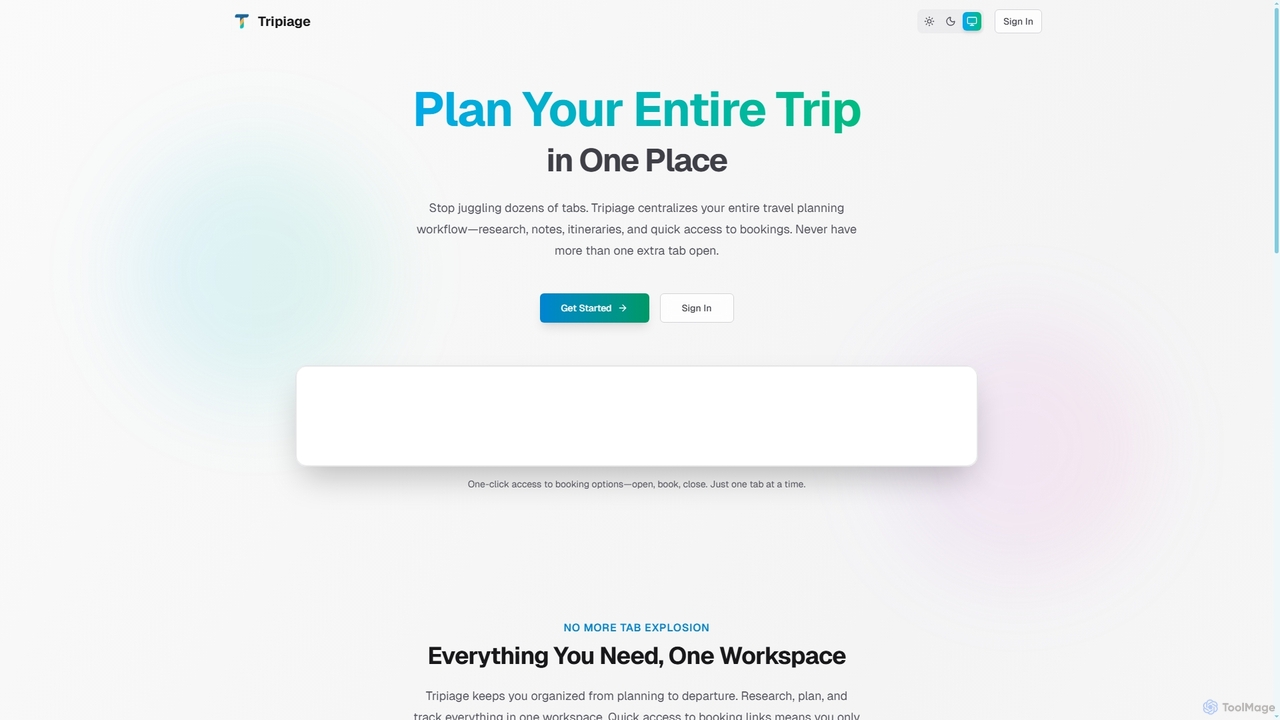
Tripiage is an AI-powered travel planning tool designed to centralize your entire trip workflow. It helps users research destinations, organize notes, create day-by-day itineraries, and access booking options from a single workspace, eliminating the need to juggle multiple tabs. With personalized recommendations and activity tracking, Tripiage streamlines the journey from planning to departure.

Travel Assistant
Visits 5.6KFavorites 151Likes 145

About Travel Assistant

Travel Assistant tools are AI-powered platforms designed to streamline and enhance every aspect of a user's travel journey. Leveraging natural language processing and machine learning, these tools offer personalized recommendations, automate planning tasks, and provide real-time support. They empower travelers to discover destinations, optimize itineraries, manage bookings, and navigate unfamiliar environments with greater ease and efficiency.

Core Features

  • Personalized Itinerary Generation: Creates customized travel plans based on user preferences, budget, and interests.
  • Real-time Travel Updates: Provides instant notifications for flight changes, gate information, weather alerts, and local events.
  • Smart Booking & Comparison: Searches and compares flights, accommodations, and activities across multiple platforms to find optimal deals.
  • Expense Tracking & Budgeting: Helps travelers monitor spending, categorize expenses, and adhere to a predefined travel budget.
  • Multilingual Communication Support: Offers instant translation for conversations, signs, and menus in foreign countries.

Use Cases

Travel Assistant tools are invaluable for individual tourists, business travelers, and travel agencies seeking to optimize their planning and on-trip experience. They are used for discovering unique local experiences, managing complex multi-city itineraries, or simply finding the best route to a landmark in a foreign city.

How to Choose

When selecting a Travel Assistant, consider its integration capabilities with existing travel platforms, the breadth of its recommendation engine, and its real-time data accuracy. Evaluate the level of personalization offered, the scope of its booking and management features, and its offline functionality for international travel. User interface intuitiveness and customer support are also crucial for a seamless experience.

Travel Assistant use cases

1

Automating Multi-City Business Trip Planning

A corporate travel manager needs to organize a complex business trip for an executive involving multiple cities, flights, hotels, and meetings. The AI Travel Assistant can automatically generate an optimized itinerary, book preferred accommodations and flights based on company policies, integrate with the executive's calendar, and provide real-time updates on travel logistics, saving hours of manual coordination and reducing potential errors.

2

Automating Multi-City Trip Planning

A frequent business traveler needs to visit three cities in different countries within a week. An AI Travel Assistant can automatically generate an optimized itinerary, including flight bookings, hotel reservations, and ground transportation, considering meeting schedules and preferred travel times, saving hours of manual planning.

3

Creating Personalized Family Vacation Itineraries

A family planning a vacation with diverse interests (e.g., kids wanting theme parks, parents wanting cultural sites) can use an AI Travel Assistant. By inputting preferences, ages, and budget, the tool generates a balanced itinerary, suggests family-friendly activities, recommends restaurants catering to various dietary needs, and even finds suitable accommodations, ensuring a memorable trip for everyone without the stress of manual research.

4

Personalized Local Experience Discovery

A tourist arriving in a new city wants to explore authentic local cuisine and hidden gems beyond typical tourist traps. The Travel Assistant, understanding their dietary preferences and interests, can recommend unique restaurants, local markets, and cultural events, complete with navigation and booking options.

5

Discovering Off-the-Beaten-Path Destinations for Solo Travelers

A solo traveler seeking unique, less-touristy experiences can leverage an AI Travel Assistant. By specifying preferences for adventure, culture, or relaxation, and indicating a budget, the AI can analyze vast amounts of data to suggest hidden gems, local events, and authentic dining experiences that might not appear in standard travel guides. This empowers travelers to explore new places with confidence and discover truly personalized adventures.

6

Real-time Flight and Gate Change Alerts

A traveler with a connecting flight faces a tight layover. The AI Travel Assistant continuously monitors flight statuses, provides immediate alerts for gate changes or delays, and suggests alternative routes or rebooking options if a connection is at risk, ensuring they reach their destination smoothly.

7

Managing Real-time Flight Changes and Disruptions

A traveler en route to their destination experiences an unexpected flight delay or cancellation. An AI Travel Assistant can immediately detect the disruption, automatically search for alternative flights, suggest rebooking options, and even find nearby hotel accommodations if an overnight stay is required. This proactive management minimizes stress and ensures the traveler reaches their destination with minimal inconvenience, often faster than manual rebooking processes.

8

Efficient Expense Tracking for Business Trips

A sales professional on a month-long business trip needs to meticulously track all expenses for reimbursement. The Travel Assistant can automatically log receipts via photo capture, categorize spending, and generate detailed expense reports, simplifying the post-trip administrative burden.

9

Optimizing Travel Budgets with Smart Expense Tracking

A budget-conscious traveler wants to meticulously track their spending across various categories like accommodation, food, transport, and activities during a trip. An AI Travel Assistant can automatically log expenses, categorize them, provide real-time budget alerts, and generate detailed spending reports. This helps the traveler stay within their financial limits, identify areas for savings, and gain a clear overview of their travel expenditures, making financial management effortless.

10

Overcoming Language Barriers Abroad

An adventurer exploring rural areas of a foreign country encounters locals who don't speak their language. The Travel Assistant's real-time voice and text translation feature allows for seamless communication, helping them ask for directions, order food, or engage in cultural exchanges.

11

Enhancing Local Exploration with AI-Powered Guides

A tourist visiting a new city wants to explore local culture, find authentic eateries, and navigate public transport efficiently. An AI Travel Assistant can act as a personalized local guide, offering real-time recommendations for nearby attractions, translating menus or signs, providing public transit directions, and even suggesting local customs or etiquette. This enriches the travel experience by making unfamiliar environments more accessible and enjoyable, fostering deeper cultural immersion.

12

Optimizing Road Trip Routes and Stops

A family planning a cross-country road trip wants to find the most scenic route with kid-friendly attractions and suitable overnight stops. The AI Travel Assistant can analyze preferences, suggest optimal routes, identify points of interest, and book accommodations along the way, making the journey enjoyable for everyone.

Travel Assistant FAQ

What are AI Travel Assistants?

AI Travel Assistants are intelligent software tools that use artificial intelligence to help users plan, manage, and enhance their travel experiences. They typically feature personalized itinerary generation, real-time updates on flights and weather, smart recommendations for activities and dining, and expense tracking. These tools aim to automate tedious tasks and provide valuable insights, making travel more convenient and enjoyable for various types of travelers.

What are AI Travel Assistants?

AI Travel Assistants are intelligent software tools that use artificial intelligence to help users plan, book, and manage their trips. They leverage machine learning to understand user preferences, provide personalized recommendations for destinations, accommodations, and activities, and offer real-time assistance during travel. These tools aim to simplify the complexities of travel planning and enhance the overall travel experience.

How do AI Travel Assistants personalize recommendations?

AI Travel Assistants personalize recommendations by analyzing a user's past travel history, stated preferences (e.g., budget, travel style, interests), search queries, and even real-time location data. They use machine learning algorithms to identify patterns and suggest relevant flights, hotels, restaurants, and activities that align with individual tastes, creating a highly customized travel plan.

How do AI Travel Assistants differ from general AI Assistants?

While general AI Assistants (like Siri or Google Assistant) offer broad utility, AI Travel Assistants are highly specialized. They focus exclusively on travel-related data, integrations, and user needs. This means they have deeper domain knowledge for booking platforms, flight data, local attractions, and travel policies. Their algorithms are optimized for itinerary generation, real-time travel alerts, and personalized recommendations specific to travel, offering a more tailored and effective solution for travelers.

What is the difference between a general AI Assistant and an AI Travel Assistant?

While both are AI-powered, a general AI Assistant (like Siri or Google Assistant) offers broad support across many domains, from setting alarms to answering general knowledge questions. An AI Travel Assistant, however, is specifically designed and optimized for travel-related tasks. It possesses deep knowledge of travel logistics, booking systems, destination information, and real-time travel data, making it far more specialized and effective for trip planning and management.

What key features should I look for in an AI Travel Assistant?

When choosing an AI Travel Assistant, prioritize features that align with your travel style. Essential features include robust personalized itinerary generation, real-time updates for flights and weather, and comprehensive expense tracking. Look for smart recommendation engines for activities and dining, seamless integration with booking platforms, and multi-language support. Offline access and responsive customer support are also crucial for a smooth travel experience, especially in remote areas.

Can AI Travel Assistants help with last-minute changes or emergencies?

Yes, many AI Travel Assistants are equipped to handle last-minute changes and provide support during emergencies. They can monitor flight delays, suggest alternative routes, help rebook accommodations, and provide access to emergency contacts or local services. Some even offer direct communication channels to human support agents for complex issues, acting as a reliable companion throughout the journey.

Can AI Travel Assistants help with last-minute travel changes?

Absolutely. AI Travel Assistants are particularly adept at handling last-minute travel changes and disruptions. They can monitor flight statuses, gate changes, and weather conditions in real time. If a delay or cancellation occurs, the AI can quickly search for alternative routes, suggest rebooking options, and even help find new accommodations if an unexpected overnight stay is necessary. This proactive capability significantly reduces stress and inconvenience for travelers facing unforeseen circumstances.

Are AI Travel Assistants suitable for all types of travelers?

Yes, AI Travel Assistants are designed to be versatile and beneficial for a wide range of travelers. Solo adventurers can find unique destinations, business travelers can streamline complex itineraries, and families can plan vacations that cater to diverse interests. While some tools might offer more advanced features for frequent flyers or corporate users, most provide core functionalities that enhance the travel experience for casual tourists, budget travelers, and luxury seekers alike, adapting to individual needs and preferences.

What are the key benefits of using an AI Travel Assistant?

The key benefits of using an AI Travel Assistant include significant time savings in planning, access to personalized and optimized itineraries, and potential cost reductions through smart booking comparisons. They enhance the travel experience by providing real-time updates, overcoming language barriers, and offering seamless expense tracking, ultimately leading to a more organized, stress-free, and enjoyable trip.