ToolMage
Sign in

Best 3 Tutor AI tools for Ai Assistant

Popular Tutor AI tools in Ai Assistant include satsphere, G3MS, and bentolingo, helping you work more efficiently.

G3MS
Freemium

G3MS

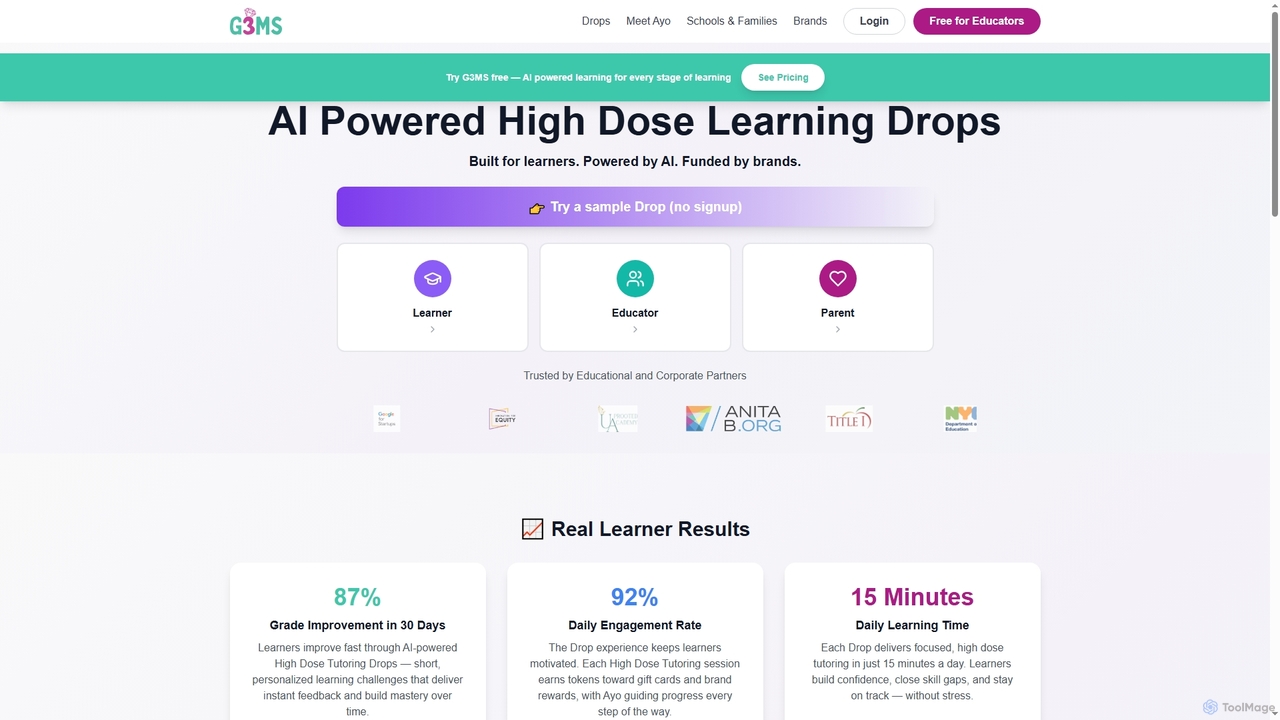
G3MS is an AI-powered learning platform designed for K-12 and college students, offering personalized "High Dose Learning Drops" for subjects like Math, ELA, and Science. Featuring Ayo, a personal AI tutor, it provides instant feedback, adaptive paths, and a unique rewards system to boost engagement and academic performance in just 15 minutes daily.

Tutor
Visits 4.2KFavorites 25Likes 23
bentolingo
Freemium

bentolingo

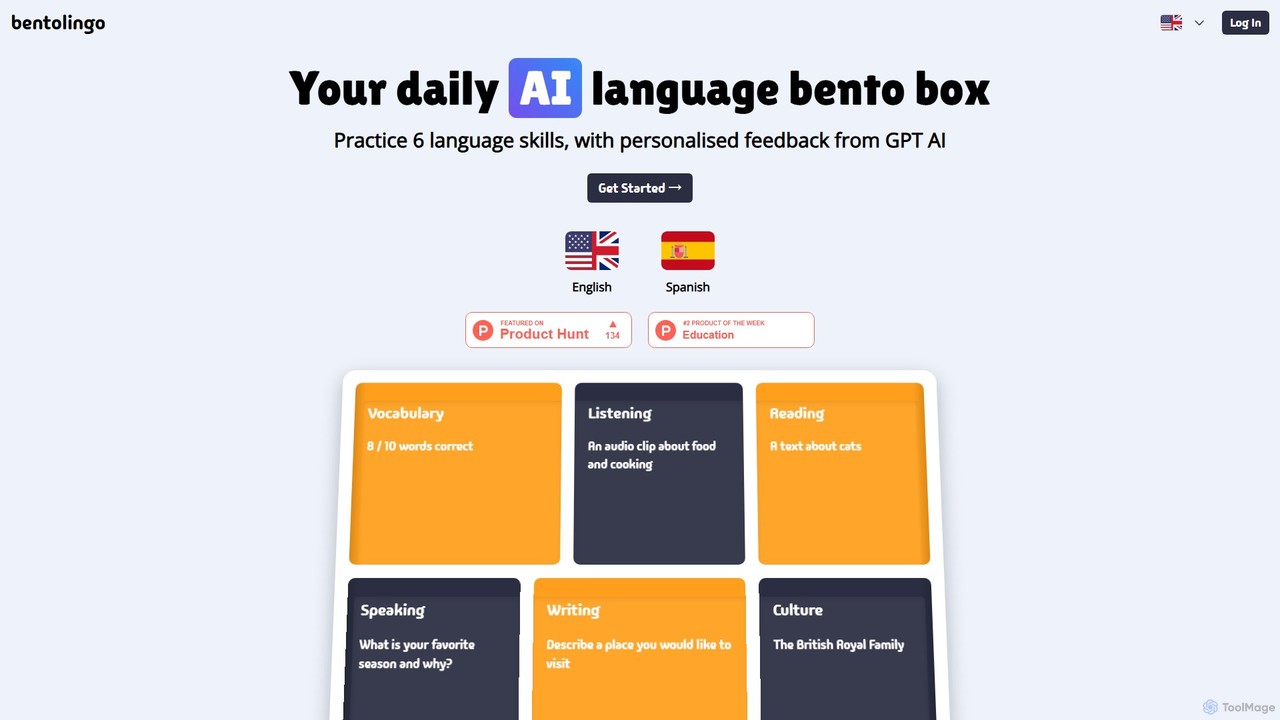
bentolingo is your daily AI language learning partner, offering a structured 'bento box' of exercises in vocabulary, listening, reading, speaking, writing, and culture. Powered by GPT AI, it provides personalized feedback to help you practice all six language skills consistently and effectively, eliminating decision fatigue in your learning journey.

Tutor
Visits 4.2KFavorites 143Likes 155
satsphere
Freemium

satsphere

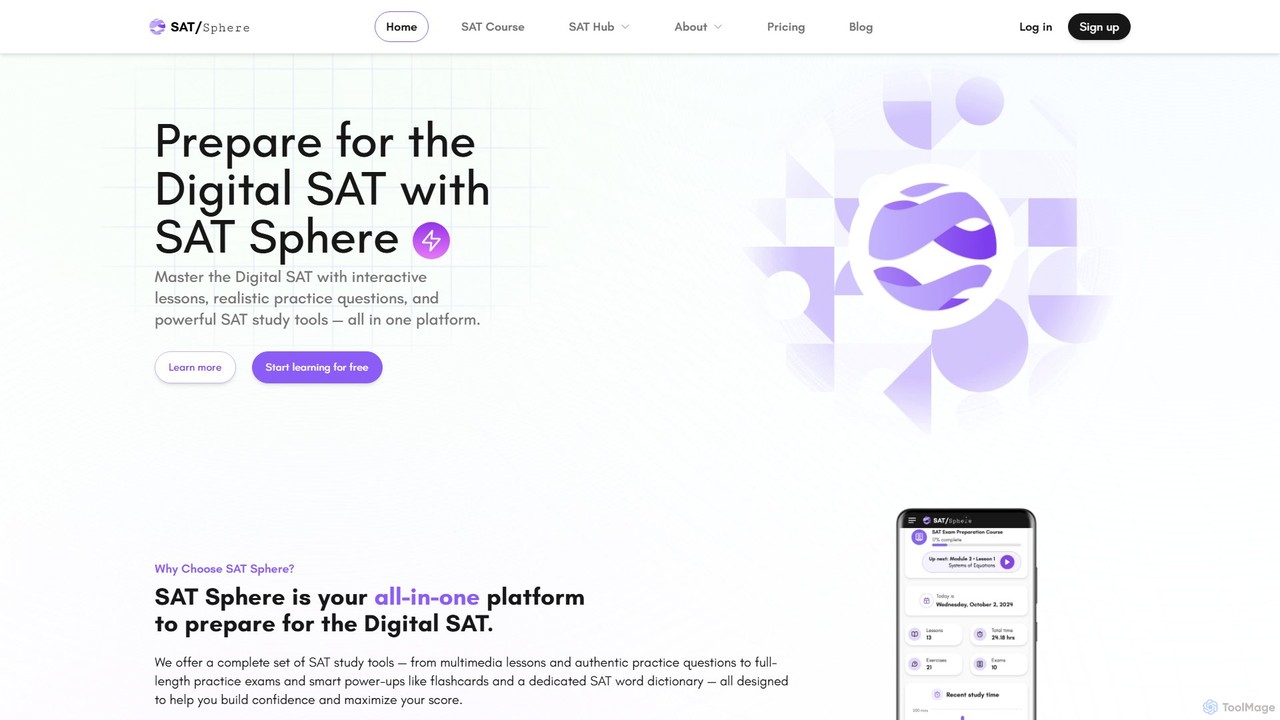
satsphere is an all-in-one, AI-powered learning platform designed to help students master the Digital SAT. It offers interactive lessons, thousands of practice questions, realistic full-length exams, and personalized study plans. With tools like an AI tutor, flashcards, and a dedicated word dictionary, satsphere provides a comprehensive and accessible solution for achieving top SAT scores and succeeding in college admissions.

Tutor
Visits 8.5KFavorites 128Likes 129

About Tutor

AI Tutors are specialized AI assistants designed to provide personalized, one-on-one learning experiences. Unlike general-purpose assistants, they employ pedagogical strategies, such as the Socratic method and adaptive learning, to guide users through complex subjects. Their primary value lies in making education accessible 24/7, tailoring content to individual learning paces, and providing instant, interactive feedback. This focused approach helps learners build deep understanding rather than just finding quick answers.

Core Features

  • Personalized Learning Paths: Adapts the curriculum and difficulty based on the user's performance and knowledge gaps.
  • Interactive Explanations: Breaks down complex topics into understandable steps and answers follow-up questions.
  • Socratic Questioning: Asks guiding questions to stimulate critical thinking and help learners discover solutions independently.
  • Real-time Feedback & Assessment: Offers instant corrections on exercises, quizzes, and practice problems to reinforce learning.
  • Multi-subject Expertise: Covers a wide range of disciplines, from STEM and coding to languages and humanities.

Applicable Scenarios

AI Tutors are widely used by students of all levels for homework help and exam preparation. Professionals leverage them for upskilling in areas like programming or data science. Lifelong learners also use these tools to explore new hobbies or subjects at their own pace, receiving structured guidance that search engines cannot provide.

Selection Criteria

When choosing an AI Tutor, consider its subject matter coverage to ensure it aligns with your needs. Evaluate its teaching methodology—some are better for direct instruction, while others excel at inquiry-based learning. Assess the quality of its feedback and the depth of its interactive capabilities. Finally, consider its integration with other learning platforms and its pricing model.

Featured tool rankings

Tutor use cases

1

Mastering Complex Programming Concepts

A computer science student is struggling with the concept of recursion. They use an AI Tutor to get a personalized explanation. The tutor breaks down the concept with analogies, provides simple code examples, and then generates a series of practice problems with increasing difficulty. When the student makes a mistake, the AI provides hints using the Socratic method, asking questions like 'What is the base case here?' instead of just giving the answer. This interactive process helps solidify their understanding far more effectively than reading a textbook.

2

Personalized SAT Math Preparation

A high school student is preparing for the SAT and consistently scores lower in the geometry section. Using an AI Tutor, they take a diagnostic test that pinpoints their specific weaknesses, such as circle theorems and solid geometry. The tutor then creates a custom study plan focusing only on these topics. It provides interactive lessons, practice quizzes, and detailed explanations for every incorrect answer. This targeted approach saves the student time and helps them efficiently improve their score in the area where they need it most.

3

Interactive Language Conversation Practice

An adult learner wants to improve their conversational French for an upcoming trip. They use an AI Tutor that specializes in languages. The tool acts as a conversation partner, engaging the user in realistic dialogues, such as ordering food at a restaurant or asking for directions. The AI provides real-time corrections on pronunciation and grammar, suggests more natural phrasing, and can adjust the conversation's difficulty on the fly. This provides a safe, judgment-free environment for practice that is available anytime, unlike scheduling with a human tutor.

4

Corporate Upskilling in Data Analytics

A marketing professional needs to learn SQL to analyze campaign data more effectively. Their company provides access to an AI Tutor for professional development. The tutor guides them through a structured SQL curriculum, from basic queries to advanced joins. It uses the company's anonymized sample datasets for practice, making the learning immediately relevant. The AI tracks their progress and provides a certificate of completion, allowing their manager to see a tangible return on the training investment.

5

Clarifying Complex Scientific Theories

A university student studying physics finds the concepts of quantum mechanics abstract and difficult to grasp. They use an AI Tutor to ask specific questions that their textbook doesn't cover well. The tutor can generate analogies, such as comparing quantum superposition to a spinning coin, and create simple visualizations to explain wave-particle duality. This ability to reframe complex information in multiple ways helps the student build the intuition needed to succeed in the course, supplementing the professor's lectures.

6

Guided Homework and Essay Structuring

A middle school student is assigned an essay on the causes of the American Revolution but doesn't know where to start. They use an AI Tutor for guidance. Instead of writing the essay for them, the tutor asks questions to help them brainstorm key themes. It then helps them create an outline, suggesting they structure it with an introduction, three body paragraphs for different causes, and a conclusion. It can also help them find credible sources and check their facts, teaching them research skills in the process.

Tutor FAQ

What is an AI Tutor?

An AI Tutor is a specialized type of AI assistant designed specifically for educational purposes. Unlike a general AI that provides direct answers, an AI Tutor uses teaching methodologies to guide a learner to understanding. Key features include creating personalized learning paths, offering interactive, step-by-step explanations, and using techniques like Socratic questioning to foster critical thinking. They act as a 24/7 personal guide for studying, homework help, and skill development.

How is an AI Tutor different from a general AI assistant like ChatGPT?

The primary difference lies in their purpose and methodology. A general AI assistant is a versatile tool designed for a wide range of tasks, including providing quick answers and generating text. An AI Tutor, a specialized subset of AI assistants, is purpose-built for education. It focuses on teaching concepts rather than just stating facts. It uses pedagogical strategies, tracks user progress, adapts to learning styles, and often follows a structured curriculum. An AI Tutor's goal is to build understanding, while a general assistant's goal is to provide information efficiently.

How do I choose the right AI Tutor for my needs?

Choosing the right AI Tutor depends on your specific learning goals. Consider the following factors:

  • Subject Coverage: Ensure the tutor specializes in the subject you want to learn, whether it's math, coding, a language, or a specific science.
  • Teaching Style: Look for a tutor whose methodology matches your learning preference. Do you prefer direct instruction, Socratic dialogue, or project-based learning?
  • Interactivity and Feedback: A good tutor should offer more than just text. Look for features like interactive quizzes, coding sandboxes, and detailed, constructive feedback on your work.
  • Adaptability: The best AI Tutors can assess your current knowledge level and create a personalized curriculum that adapts as you progress.
Can AI Tutors replace human teachers?

AI Tutors are not intended to replace human teachers but to supplement and enhance the learning process. They excel at providing scalable, 24/7 personalized instruction and practice, which can be difficult for a single teacher to offer to a large class. However, human teachers provide essential elements that AI currently cannot, such as emotional intelligence, mentorship, real-world context, and fostering a collaborative classroom environment. The most effective educational model often involves a blend of both: human teachers for guidance and inspiration, and AI Tutors for personalized practice and support.

What subjects are AI Tutors most effective for?

AI Tutors are effective across a wide range of subjects, but they particularly excel in structured disciplines where concepts build upon one another. This includes:

  • STEM Subjects: Mathematics, physics, chemistry, and computer science benefit greatly from step-by-step problem-solving and instant feedback.
  • Programming: Interactive coding environments allow learners to practice and get immediate corrections on their code.
  • Language Learning: AI can provide endless conversation practice, pronunciation feedback, and grammar correction.
  • Standardized Test Prep: Tutors can analyze performance to identify weak areas and generate targeted practice questions for exams like the SAT, GRE, or MCAT.

While they are also useful for humanities, their strength lies in subjects with clear rules and logical progressions.