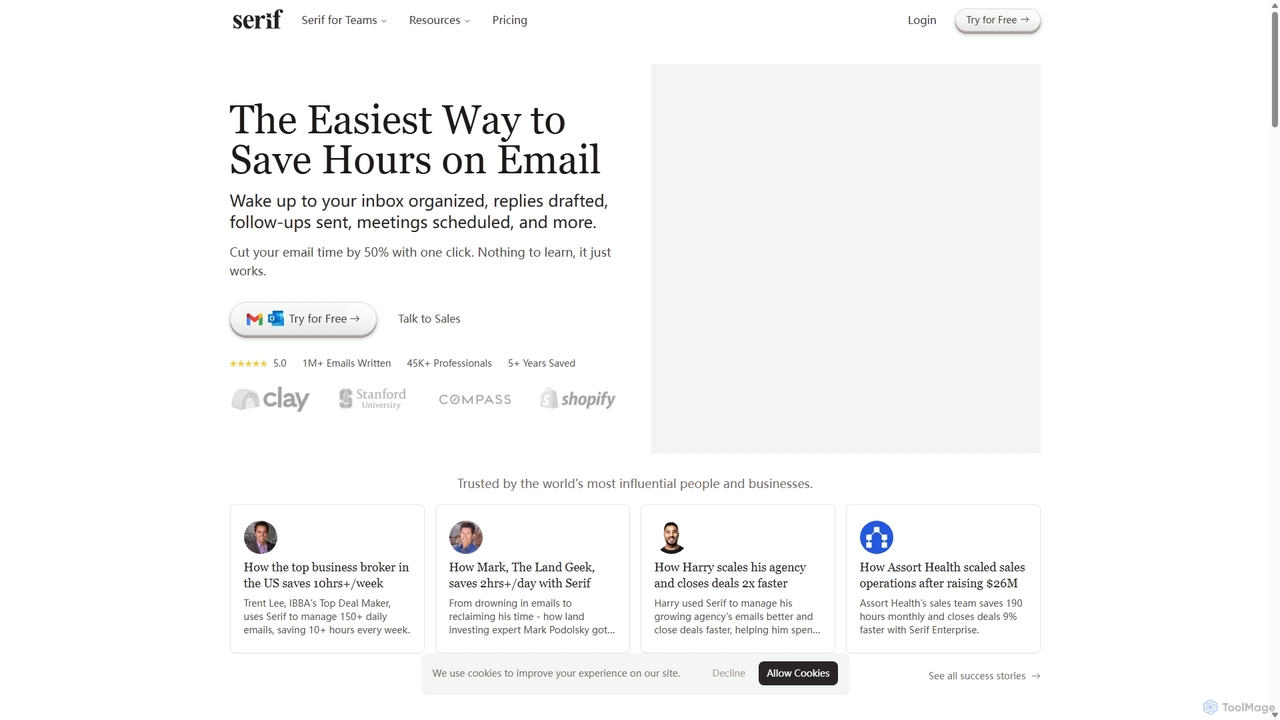
Virtual Assistants are AI-powered tools designed to automate routine tasks, manage information, and provide intelligent support across various personal and professional domains. Leveraging natural language processing (NLP) and machine learning, these assistants can understand commands, execute actions, and learn from interactions to enhance productivity and streamline workflows. They serve as digital companions, freeing up human time for more complex and creative endeavors.
Core Features
- Task Automation: Automatically handles repetitive administrative duties like data entry, report generation, and email sorting.
- Scheduling & Calendar Management: Manages appointments, sets reminders, and coordinates meetings efficiently across multiple participants.
- Information Retrieval: Quickly searches, summarizes, and presents relevant data from various sources based on user queries.
- Communication Management: Drafts emails, responds to common inquiries, and filters notifications to prioritize important messages.
- Personalized Learning: Adapts to user preferences and habits over time, offering more tailored suggestions and proactive assistance.
Applicable Scenarios
Virtual Assistants are invaluable for busy professionals, small business owners, and large enterprises seeking to optimize operational efficiency. They excel in providing administrative support, enhancing customer service through automated responses, and assisting with research and data analysis. From managing daily schedules to automating complex business processes, these tools empower users to focus on strategic initiatives.
How to Choose
When selecting a Virtual Assistant, consider its integration capabilities with your existing software ecosystem (e.g., CRM, email, calendar). Evaluate the breadth of its task automation features, its natural language understanding accuracy, and the level of customization offered for workflows. Security protocols for data handling and the pricing model, including scalability for team use, are also crucial factors.