
Ai Assistant Best in category 1 results Virtual Interviewer AI Tool

Popular AI tools in the Virtual Interviewer field of Ai Assistant include InterviewFlowAI, etc., helping you quickly improve efficiency.

InterviewFlowAI

InterviewFlowAI

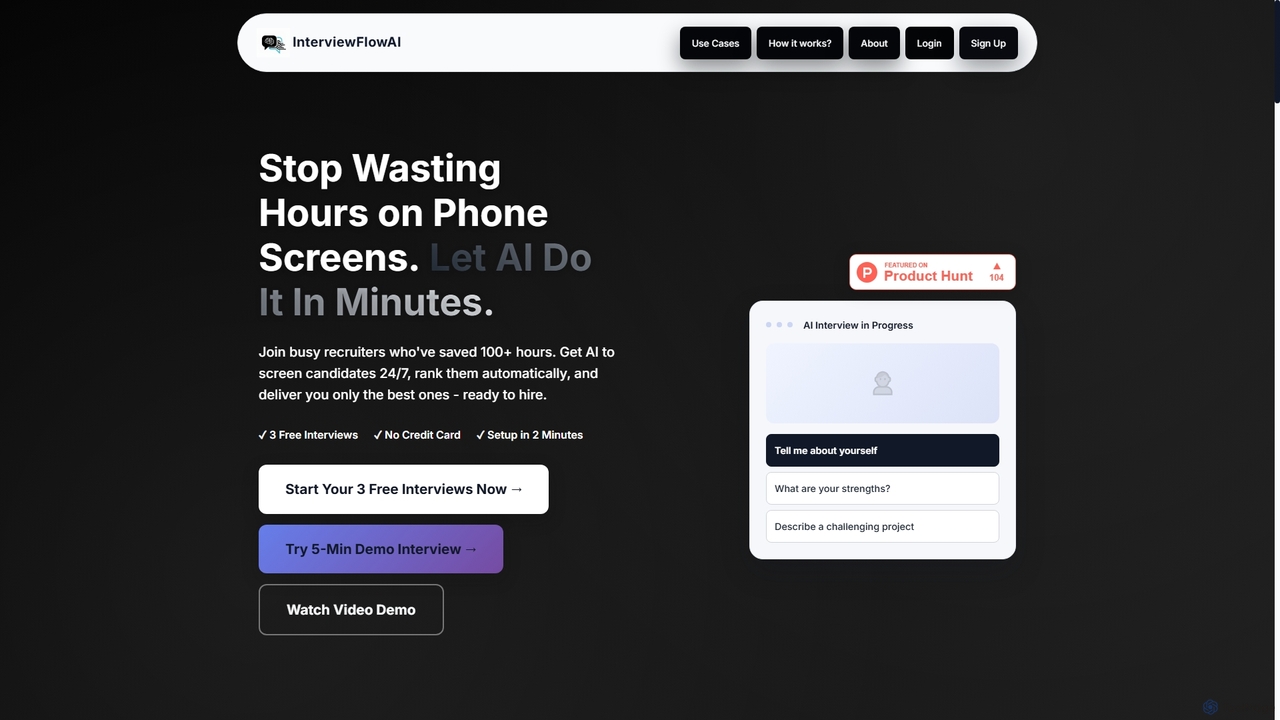
InterviewFlowAI is an AI-powered recruitment platform designed to automate candidate screening, saving recruiters significant time and effort. It …

5.8K

About Virtual Interviewer

Virtual Interviewers are AI-powered tools designed to simulate job interviews, offering candidates a realistic practice environment. These platforms leverage natural language processing, speech recognition, and sometimes computer vision to analyze responses, tone, and non-verbal cues. They provide invaluable feedback, helping individuals refine their communication skills and build confidence for real-world interviews. This technology also assists companies in standardizing initial screening processes and identifying top talent more efficiently.

Core Features

  • Realistic Interview Simulation: Conducts mock interviews with AI-driven questions tailored to specific roles or industries.
  • Speech and Language Analysis: Evaluates clarity, coherence, vocabulary, and grammar in spoken responses.
  • Non-Verbal Cue Assessment: Analyzes facial expressions, eye contact, and body language (if video-enabled) for confidence and engagement.
  • Personalized Feedback Reports: Provides detailed insights on strengths, areas for improvement, and suggested answers.
  • Question Bank Customization: Allows users or recruiters to select from diverse question types or upload their own.

Use Cases

Job seekers can practice for various roles, receive instant feedback, and improve their interview performance before critical real-world interviews. University career centers utilize these tools to prepare students for entry-level positions, enhancing their employability. Recruiters can also use them for initial candidate screening, ensuring a consistent and objective first assessment.

How to Choose

When selecting a Virtual Interviewer, consider the depth of feedback provided, including linguistic and non-verbal analysis. Evaluate the customization options for question banks and interview scenarios to match specific job requirements. Assess the user interface for ease of use and the availability of detailed performance analytics. Finally, check for integration capabilities with existing HR systems or learning platforms.

Virtual InterviewerUse Cases

1

Job Interview Practice for Graduates

Recent graduates often lack interview experience. A virtual interviewer allows them to practice common interview questions, receive immediate feedback on their answers, body language, and tone, and iterate on their responses. This helps them build confidence and refine their communication skills before facing real recruiters, significantly improving their chances of securing entry-level positions.

2

Pre-screening Candidates for High-Volume Roles

For companies hiring for roles with a large applicant pool, virtual interviewers can automate the initial screening phase. Recruiters set up standardized interview scenarios, and candidates complete them at their convenience. The AI analyzes responses and provides objective scores, allowing recruiters to quickly identify the most promising candidates to move forward, saving significant time and ensuring fairness.

3

Enhancing Communication Skills for Professionals

Professionals looking to advance their careers or transition into new roles can use virtual interviewers to hone their presentation and communication skills. By practicing responses to leadership or strategic questions, they receive constructive criticism on their articulation, clarity, and persuasive abilities. This targeted practice helps them prepare for promotion interviews, client presentations, or public speaking engagements.

4

Standardized Assessment for Internal Promotions

Organizations can deploy virtual interviewers to ensure a fair and consistent assessment process for internal promotion candidates. By using a standardized set of questions and AI-driven evaluation criteria, all candidates are assessed on the same objective metrics. This reduces unconscious bias, provides transparent feedback, and helps identify the most suitable internal talent for leadership roles.

5

Preparing for Technical or Specialized Interviews

Candidates applying for highly technical or specialized roles often face unique interview challenges. Virtual interviewers can be configured with specific technical question banks, allowing candidates to practice explaining complex concepts or troubleshooting scenarios. The AI can assess the accuracy and clarity of their technical explanations, providing targeted feedback crucial for these specialized roles.

6

Cross-Cultural Interview Preparation

For individuals seeking international roles or working with diverse teams, virtual interviewers can help prepare for cross-cultural communication nuances. By practicing in a simulated environment, candidates can receive feedback on their pace, accent clarity, and cultural appropriateness of their responses, helping them adapt their communication style for global professional settings.

Virtual InterviewerFrequently Asked Questions