
Teloz
Teloz is a cloud-based business phone system and contact center solution designed for businesses of all sizes. It …
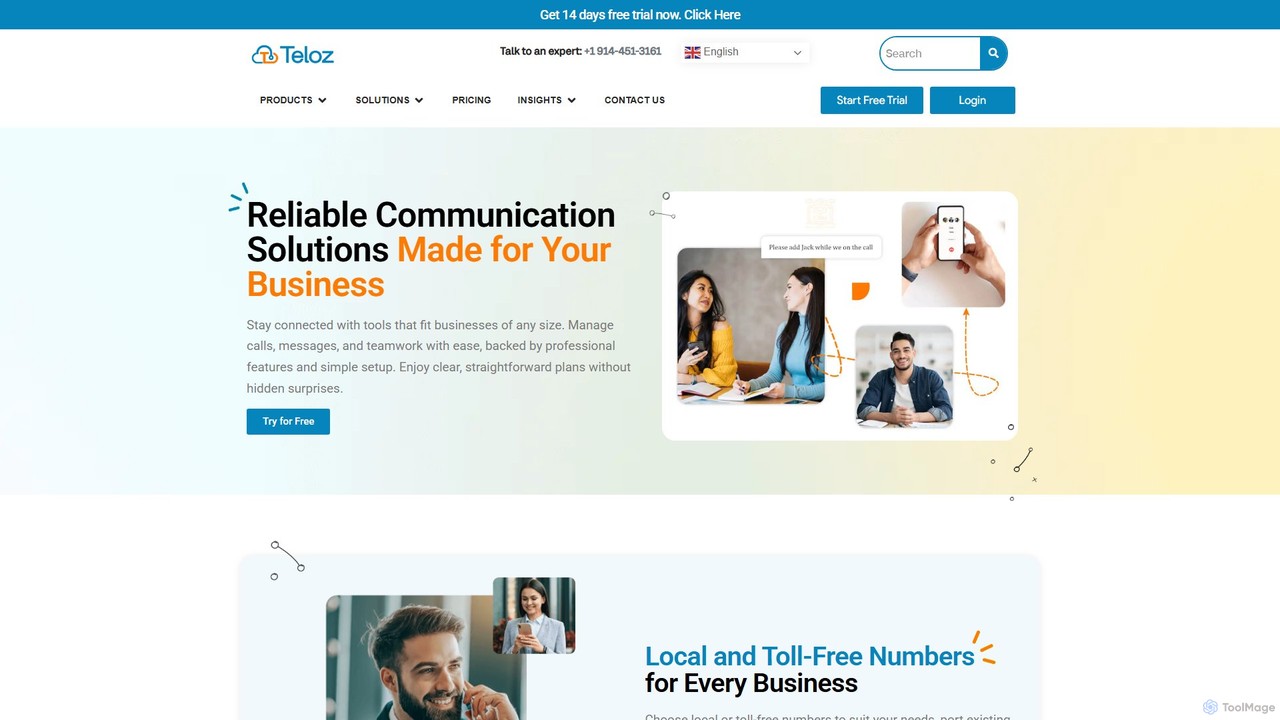
Teloz is a cloud-based business phone system and contact center solution designed for businesses of all sizes. It offers local and toll-free numbers, team collaboration tools, and AI-powered features like voicemail transcription and auto-attendant. Manage calls, messages, and teamwork seamlessly across any device, enhancing your professional presence with an easy-to-use, scalable, and affordable platform.
About Voice
Voice AI tools are a specialized segment of AI assistants that focus on processing, understanding, and generating human speech. These tools leverage advanced natural language processing and machine learning to convert spoken words into text, synthesize natural-sounding speech from text, or even clone unique voices. They enhance human-computer interaction, automate communication, and provide accessibility solutions across various digital platforms. By enabling seamless voice interaction, they transform how users engage with technology and information.
Core Features
- Speech-to-Text (STT): Accurately transcribes spoken language into written text, supporting multiple languages and accents.
- Text-to-Speech (TTS): Generates natural-sounding human speech from written text, often with customizable voices and emotional tones.
- Voice Cloning/Synthesis: Replicates specific vocal characteristics to create new speech in a target voice from text input.
- Voice Recognition & Biometrics: Identifies speakers or verifies identities based on unique voice patterns.
- Emotion Detection: Analyzes vocal nuances to identify and interpret emotional states in spoken language.
Use Cases
Voice AI tools are widely adopted in customer service for automated call centers, in content creation for generating audiobooks or podcasts, and in healthcare for transcribing medical notes. They also power smart home devices for voice commands and assist individuals with disabilities through accessible interfaces.
How to Choose
When selecting a Voice AI tool, consider the accuracy of its speech recognition or synthesis for your target language and accents. Evaluate the naturalness and customization options of generated voices. Assess its integration capabilities with existing platforms and the scalability of its API. Finally, review privacy policies, especially for voice cloning or biometric applications, and compare pricing models based on usage volume.
VoiceUse Cases
Automated Customer Service with Voicebots
Customer service departments and businesses with high call volumes can leverage Voice AI to handle routine customer inquiries and provide instant 24/7 support. Voice AI tools power interactive voice response (IVR) systems, understanding spoken questions and providing relevant answers or routing calls to human agents. This reduces agent workload, improves response times, and enhances overall customer satisfaction.
Generating Audio Content for Media
Content creators, podcasters, audiobook publishers, and e-learning platforms can convert written scripts, articles, or books into high-quality audio content without hiring voice actors. Text-to-Speech (TTS) and voice cloning tools synthesize natural-sounding narration from text, often with customizable voices and emotional inflections. This accelerates content production, reduces costs, and expands reach to audio-preferred audiences.
Real-time Meeting Transcription and Summarization
Business professionals, researchers, and students can automatically document discussions during meetings, lectures, or interviews. Speech-to-Text (STT) tools transcribe spoken words into text in real-time, often identifying speakers and generating summaries of key points. This ensures accurate record-keeping, saves manual note-taking time, and facilitates efficient information sharing and follow-up actions.
Voice Control for Smart Devices and Applications
Consumers and developers of smart home systems or automotive infotainment can interact with devices or software hands-free using natural language commands. Voice recognition and natural language understanding (NLU) enable users to control lights, play music, set reminders, or navigate applications purely by speaking. This enhances user convenience, improves accessibility, and creates intuitive interaction experiences across various platforms.
Personalized Voice Assistant Development
Developers and enterprises building branded digital assistants can create unique, branded voice interfaces for products, services, or internal tools. Combining Speech-to-Text (STT), Text-to-Speech (TTS), and voice cloning technologies, they develop assistants that understand specific commands and respond in a consistent, recognizable brand voice. This strengthens brand identity, offers a distinctive user experience, and streamlines access to information or services.
Accessibility Solutions for Impaired Individuals
Individuals with visual, motor, or speech impairments, as well as accessibility product developers, can benefit from Voice AI. Text-to-Speech (TTS) tools read digital content aloud, while Speech-to-Text (STT) allows users to dictate commands or messages, providing a vital bridge for accessing information and expressing themselves. This empowers greater independence, expands digital inclusion, and provides essential communication aids for those who cannot easily type or read.