2-b.ai
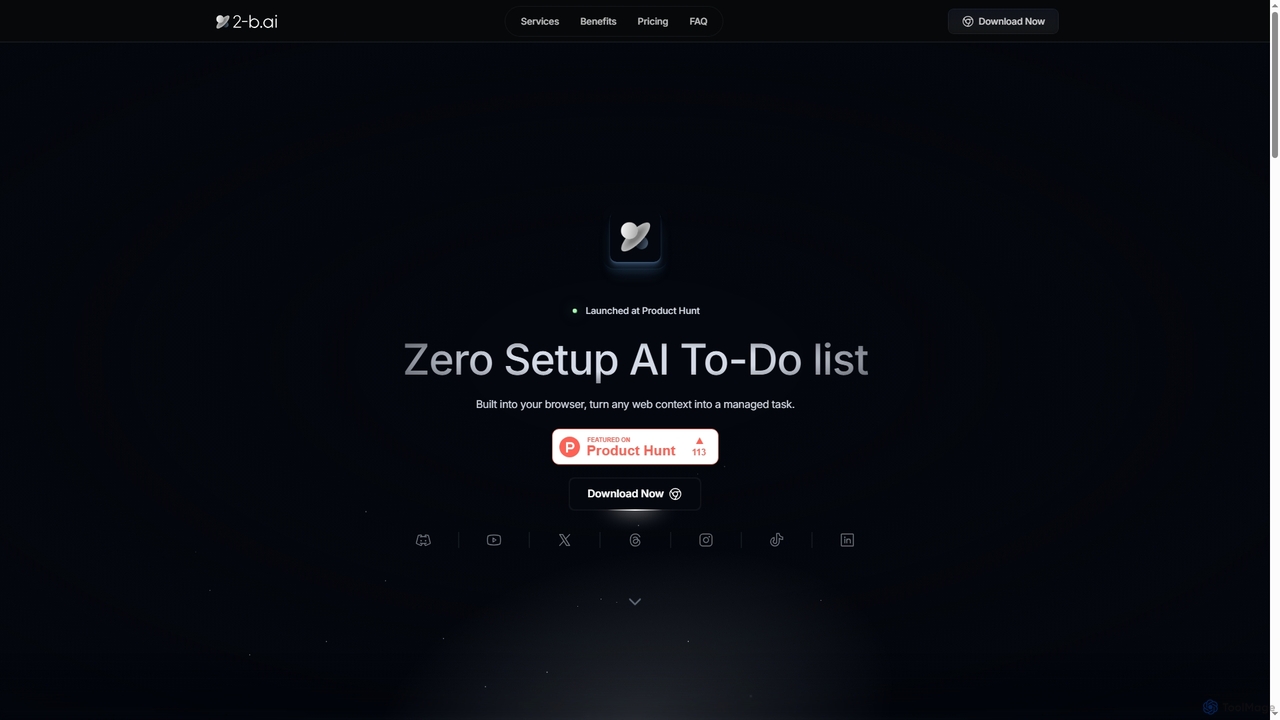
2-b.ai is a browser-based AI To-Do list extension that seamlessly transforms any web context into manageable tasks. It …
2-b.ai is a browser-based AI To-Do list extension that seamlessly transforms any web context into manageable tasks. It offers AI-powered task creation, breakdown, and an AI chat for workflow organization, integrating with Google Calendar to enhance productivity directly within your browser.
Dex
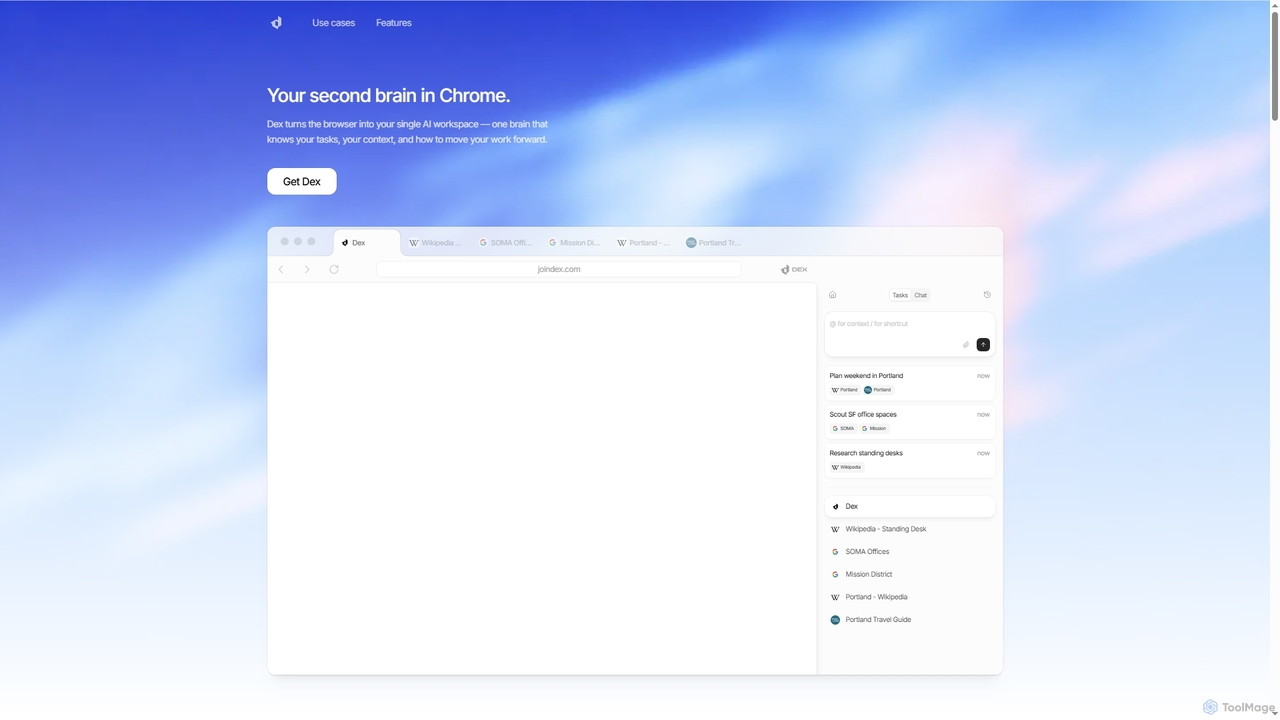
Dex is an AI-powered Chrome extension that transforms your browser into a smart, integrated workspace. It acts as …
Dex is an AI-powered Chrome extension that transforms your browser into a smart, integrated workspace. It acts as your second brain, managing tasks, understanding context, and proactively moving your work forward by connecting with over 14 applications to eliminate context switching and boost productivity.
Simbli
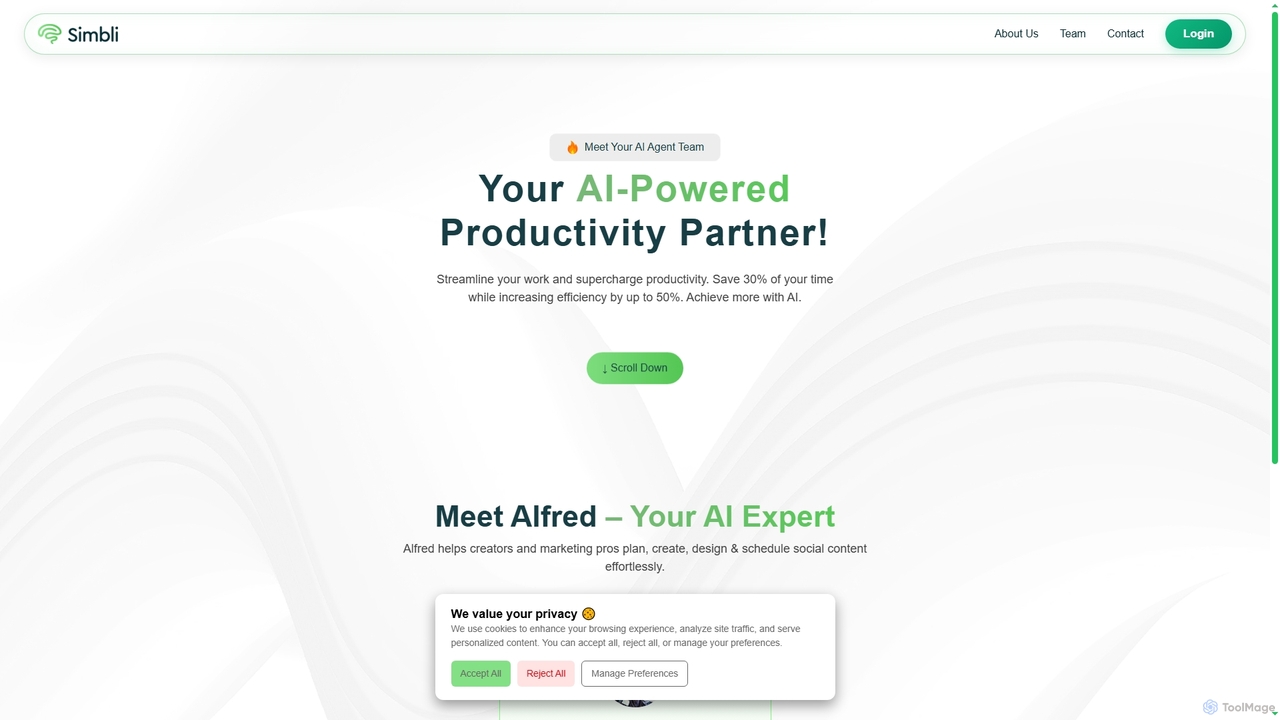
Simbli is an AI-powered productivity partner featuring human-like AI agents, such as Alfred, designed to streamline work and …
Simbli is an AI-powered productivity partner featuring human-like AI agents, such as Alfred, designed to streamline work and supercharge efficiency. It helps creators and marketing professionals plan, create, design, and schedule social media content effortlessly, aiming to save users up to 30% of their time and increase efficiency by up to 50%.
About Workflow Automation
Workflow Automation tools are AI-powered solutions designed to streamline and optimize repetitive tasks and complex processes across various business functions. As a specialized segment within AI Assistant tools, they leverage artificial intelligence to intelligently manage, execute, and monitor workflows, moving beyond simple rule-based automation. These tools enhance operational efficiency, reduce human error, and free up human capital for more strategic initiatives by automating decision-making, data processing, and inter-system communication.
Core Features
- Intelligent Task Orchestration: AI-driven scheduling and routing of tasks based on real-time data and predefined conditions.
- Natural Language Processing (NLP): Understanding and processing unstructured text data from emails, documents, or chat logs to trigger actions.
- Predictive Analytics: Forecasting potential bottlenecks or future needs within a workflow to proactively optimize processes.
- Adaptive Learning: Continuously improving automation rules and decision logic based on past performance and new data inputs.
- Integration Capabilities: Seamlessly connecting with existing enterprise systems, CRMs, ERPs, and communication platforms.
Applicable Scenarios
Workflow Automation tools are invaluable for organizations seeking to eliminate manual bottlenecks and accelerate operations. They are widely adopted by IT departments for incident management, HR for onboarding and offboarding processes, finance for invoice processing and expense approvals, and marketing teams for campaign execution and lead nurturing. Any department with high-volume, repetitive, or multi-step processes can significantly benefit from these AI-driven solutions.
How to Choose
When selecting a Workflow Automation tool, prioritize solutions that offer robust integration with your existing tech stack to ensure seamless data flow. Evaluate the AI capabilities, looking for features like NLP for unstructured data processing and adaptive learning for continuous improvement. Consider scalability to accommodate future growth and the complexity of workflows you intend to automate. Finally, assess the user-friendliness of the interface and the availability of pre-built templates to accelerate adoption.
Workflow AutomationUse Cases
Automated Customer Support Ticket Routing
Customer service teams can leverage workflow automation to automatically categorize incoming support tickets based on keywords, sentiment, or urgency. The AI then intelligently routes these tickets to the most appropriate department or agent, ensuring faster response times and specialized handling. This reduces manual sorting effort, improves customer satisfaction, and allows agents to focus on complex issues.
Automate Customer Support Ticket Routing
Customer service managers can utilize workflow automation to intelligently route incoming support tickets. By analyzing ticket content using NLP, the AI automatically categorizes issues, assigns them to the most appropriate agent or department, and prioritizes urgent requests. This reduces manual triage time, ensures faster response rates, and improves overall customer satisfaction by connecting customers with the right expert quickly.
Automated Marketing Email Sequence Triggering
Marketing professionals can automate personalized email sequences based on user behavior, such as website visits, product views, or abandoned carts. Workflow automation tools detect these triggers and automatically send relevant follow-up emails, nurturing leads through the sales funnel. This ensures timely and personalized communication, significantly increasing engagement and conversion rates without manual intervention.
Streamline Content Approval Processes
Marketing teams and content creators often face delays in content approval. Workflow automation tools can manage the entire lifecycle from draft submission to final publication. The system automatically sends content to relevant stakeholders (editors, legal, brand managers) for review, tracks feedback, and ensures all necessary approvals are obtained before publishing, significantly accelerating content delivery and compliance.
Automated Financial Expense Report Processing
Finance departments can streamline expense report processing by using workflow automation. Employees submit receipts via an app, and the AI automatically extracts data, verifies compliance with company policies, and routes the report for approval. Once approved, it can trigger automatic reimbursement and ledger entries, drastically reducing processing time and minimizing human error in financial operations.
Automate Data Entry and Synchronization
Finance or operations departments frequently deal with manual data entry across disparate systems. Workflow automation can extract data from invoices, forms, or spreadsheets using AI-powered OCR, validate it, and then automatically update records in ERP, CRM, or accounting software. This eliminates tedious manual input, reduces errors, and ensures data consistency across all platforms.
Automated HR New Employee Onboarding
HR departments can automate the complex new employee onboarding process. When a new hire is confirmed, the system automatically sends welcome emails, creates accounts in various internal systems (email, HRIS, project management), assigns initial training modules, and schedules introductory meetings. This ensures a consistent, efficient, and welcoming experience for new employees, freeing up HR staff for more strategic tasks.
Expedite Employee Onboarding and Offboarding
HR departments can leverage workflow automation to manage the complex tasks associated with employee lifecycle events. For onboarding, the system automatically triggers IT provisioning, sends welcome emails, assigns training modules, and schedules introductory meetings. For offboarding, it ensures all access is revoked, assets are returned, and final paperwork is processed efficiently, ensuring compliance and a smooth transition.
Automated Data Reporting and Analysis
Business analysts and managers can automate the generation of routine reports and dashboards. Workflow automation tools connect to various data sources (CRM, ERP, marketing platforms), extract relevant data, perform predefined analyses, and compile them into visual reports. These reports can be automatically distributed to stakeholders on a scheduled basis, providing timely insights without manual data aggregation and report creation.
Optimize Supply Chain Order Processing
Logistics and supply chain managers can automate the entire order-to-delivery process. From receiving customer orders, checking inventory availability, generating purchase orders for suppliers, to scheduling shipments and updating customers, AI-driven workflows can manage each step. This reduces processing time, minimizes stockouts, and provides real-time visibility into the supply chain.
Automated Supply Chain Order Processing
Logistics and operations teams can automate the entire order-to-delivery process. From receiving a customer order, the workflow automation system can automatically check inventory, generate purchase orders for low stock items, update the ERP, notify the warehouse for picking and packing, and send shipping notifications to customers. This reduces lead times, minimizes stockouts, and improves overall supply chain efficiency and transparency.
Personalize Marketing Campaign Execution
Digital marketing specialists can use workflow automation to create highly personalized customer journeys. Based on user behavior, demographics, or past interactions, the AI automatically triggers specific email sequences, sends targeted push notifications, or updates CRM profiles. This ensures timely and relevant communication, leading to higher engagement rates and improved conversion metrics.