Spacemintai
An AI-powered tool that transforms floor plans into fully staged, realistic interior visualizations in under a minute. Designed …
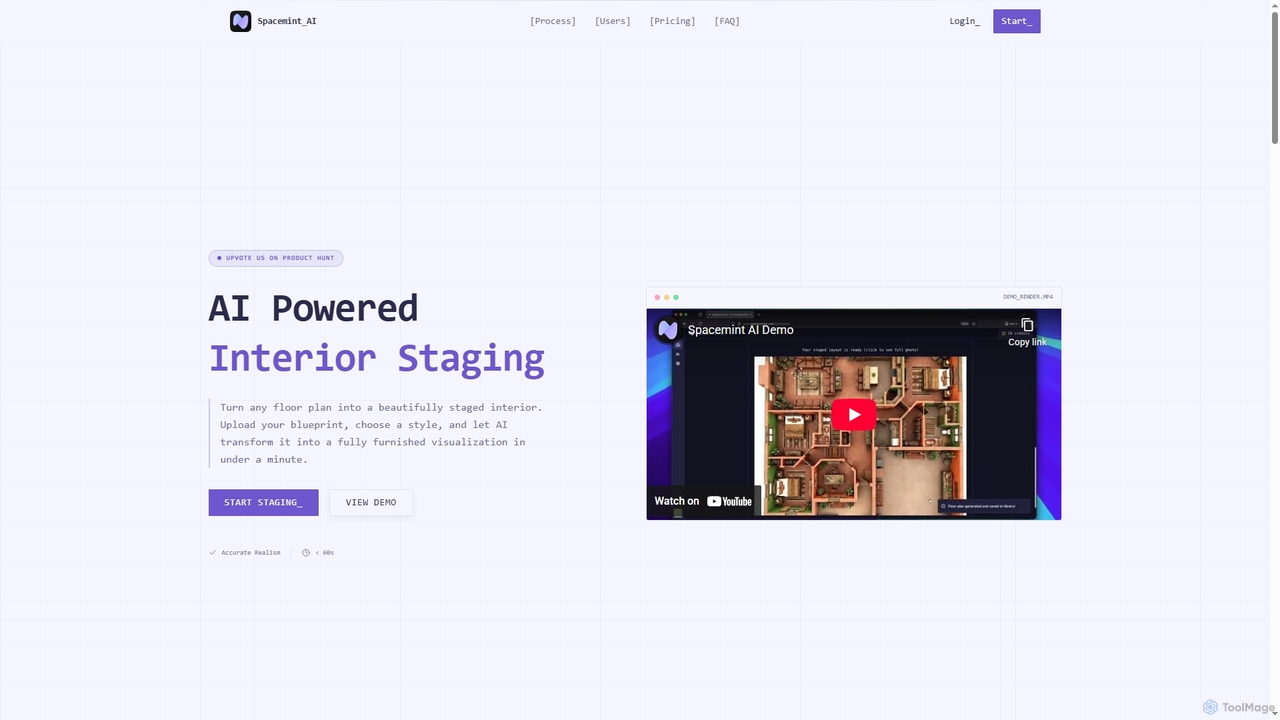
An AI-powered tool that transforms floor plans into fully staged, realistic interior visualizations in under a minute. Designed for real estate agents, interior designers, and developers to create compelling property presentations from simple blueprints.
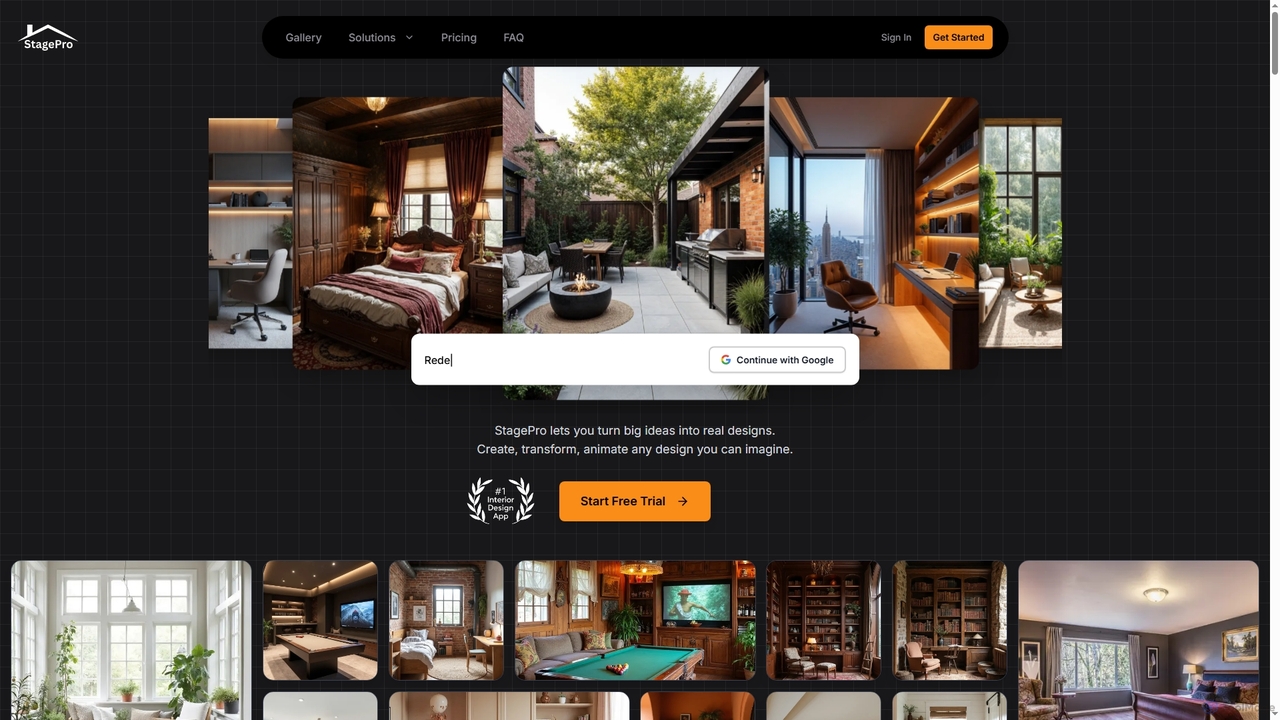
StagePro
StagePro is an advanced AI-powered interior and exterior design tool that transforms any space into photorealistic visualizations in …
StagePro is an advanced AI-powered interior and exterior design tool that transforms any space into photorealistic visualizations in seconds. It offers over 100 design styles, virtual staging, landscape planning, furniture try-on, and video generation, empowering real estate agents, designers, and homeowners to create stunning, market-ready visuals with ease.
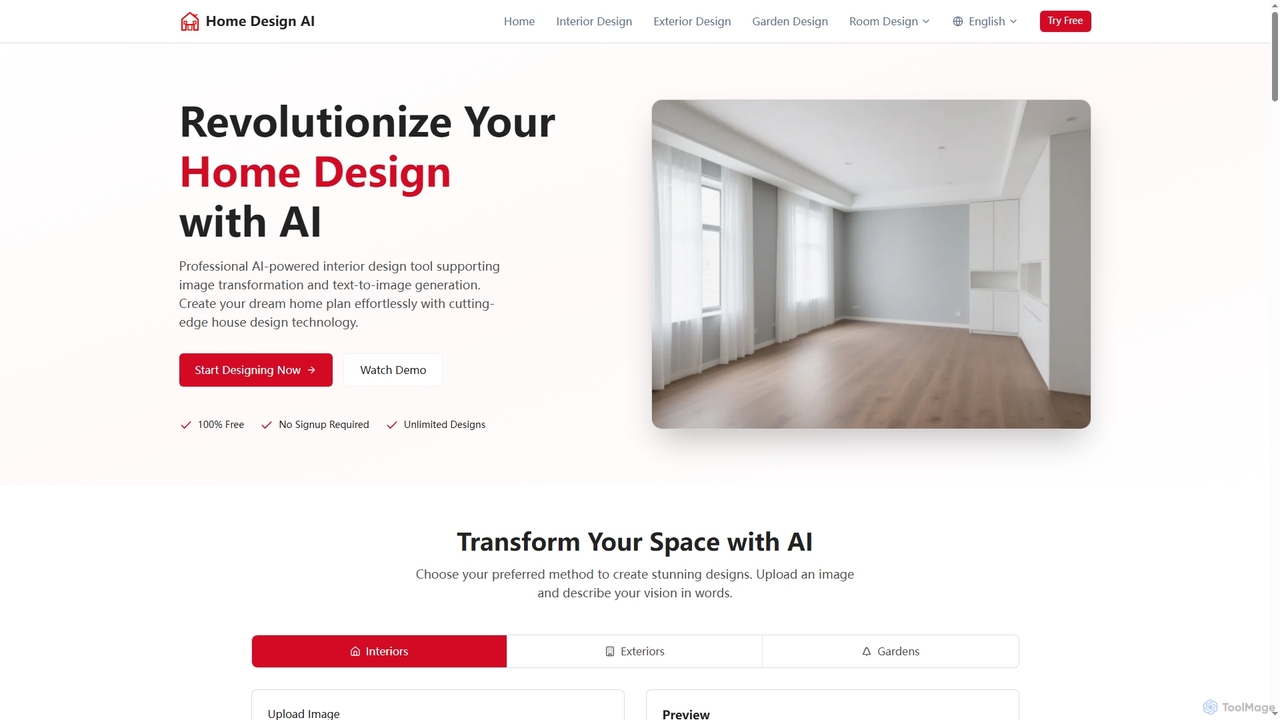
Home Design
Home Design is a professional AI-powered platform that revolutionizes interior, exterior, and garden design. It allows users to …
Home Design is a professional AI-powered platform that revolutionizes interior, exterior, and garden design. It allows users to transform existing spaces or generate new designs from text, offering stunning visualizations without requiring any signup or payment.
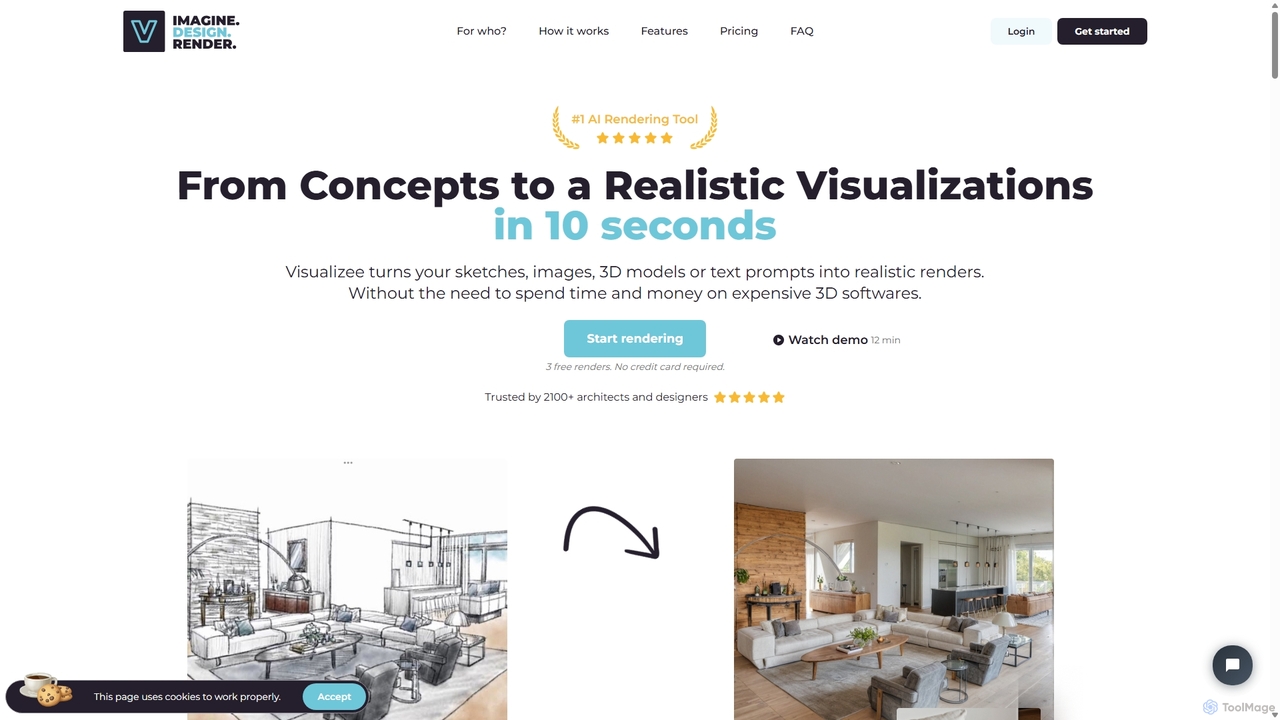
Visualizee.ai
Visualizee.ai is a leading AI rendering tool that transforms sketches, 3D models, and text prompts into high-resolution (up …
Visualizee.ai is a leading AI rendering tool that transforms sketches, 3D models, and text prompts into high-resolution (up to 8K) photorealistic visuals in seconds. Ideal for architects, designers, and creators, it features advanced tools like inpainting and upscaling to bring creative ideas to life with precision and speed.
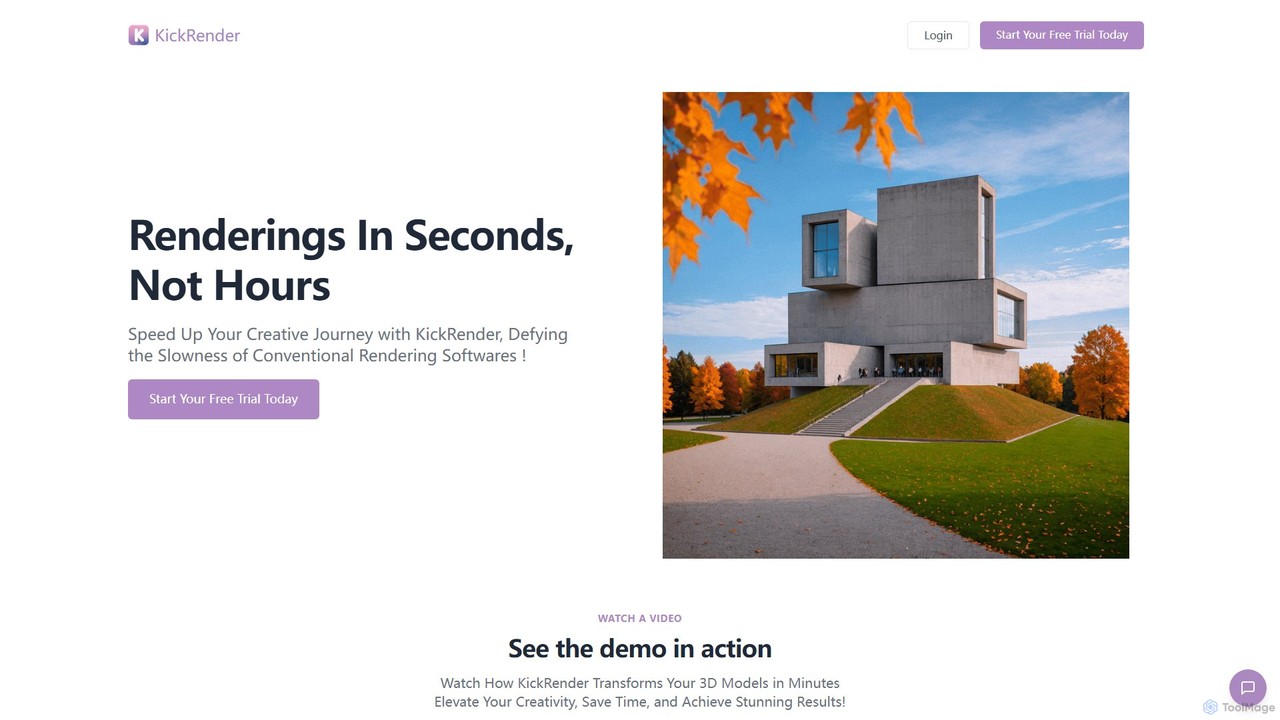
KickRender
KickRender is an AI-powered rendering tool that transforms 3D models and sketches into stunning visualizations in seconds. It …
KickRender is an AI-powered rendering tool that transforms 3D models and sketches into stunning visualizations in seconds. It integrates seamlessly with Rhino and supports image uploads from Archicad, Revit, and Sketchup. By using simple text prompts, designers and architects can rapidly iterate on ideas, bypassing the slow process of traditional rendering.
About Visualization
AI Visualization tools for architecture are a class of software that uses artificial intelligence to generate highly realistic images, animations, and interactive experiences from 2D or 3D models. These tools leverage generative models and real-time rendering engines to transform basic architectural designs into compelling visual narratives. They significantly accelerate the design iteration and client communication process by producing high-quality visuals in a fraction of the time required by traditional methods. This allows architects and designers to explore more creative options and present concepts with greater impact.
Core Features
- Photorealistic Rendering: Instantly generates high-fidelity images from 3D models, complete with realistic lighting, materials, and environments.
- Style Transfer & Ideation: Applies various architectural or artistic styles to a base model, enabling rapid exploration of different design aesthetics.
- Virtual Staging: Automatically furnishes empty spaces with realistic 3D assets based on style preferences, ideal for real estate marketing.
- Real-time Walkthroughs: Creates interactive, navigable 3D environments that allow clients to experience a space before it's built.
- Environment Generation: Populates scenes with realistic context, such as landscaping, people, and weather conditions, to enhance realism.
Use Cases
These tools are primarily used by architects, interior designers, real estate developers, and urban planners. They are essential in the early conceptual design phase for quick ideation, during client presentations to communicate vision effectively, and in the marketing phase to create compelling promotional materials for properties not yet constructed.
How to Choose
When selecting an AI visualization tool, consider the quality and realism of the output. Evaluate its integration capabilities with your existing CAD or BIM software (like Revit, SketchUp, or ArchiCAD). Assess the rendering speed and ease of use, particularly whether it uses simple text prompts or requires more complex parameter adjustments. Finally, review the available asset libraries and pricing models to ensure they align with your project needs and budget.
VisualizationUse Cases
Generating Photorealistic Renders for Real Estate Marketing
A real estate marketing team needs to create compelling visuals for a new apartment complex that is still under construction. Instead of waiting weeks for a traditional rendering studio, they upload the basic 3D model to an AI visualization tool. Using text prompts like 'modern Scandinavian living room, afternoon sun, oak flooring,' the tool generates dozens of high-resolution, fully-staged images in minutes. This allows them to launch their marketing campaign months earlier, populating brochures, websites, and social media with stunning visuals that attract potential buyers long before the property is finished.
Rapid Interior Design Ideation and Client Feedback
An interior designer is working with a client who is unsure about the style for their new home. The designer uses an AI visualization tool to quickly iterate on design concepts. They take a simple 3D model of the living room and apply different styles instantly. In a single session, they can show the client the same room in minimalist, industrial, art deco, and coastal styles. The client can immediately react, providing clear feedback like 'I like the lighting from the industrial style but the furniture from the coastal one.' This drastically shortens the concept phase from weeks to a single meeting, leading to faster client approval.
Creating Interactive VR Walkthroughs for Client Presentations
An architectural firm is pitching a design for a new corporate headquarters. To provide an immersive experience, they use an AI visualization tool to convert their BIM model into a real-time, interactive VR walkthrough. During the presentation, stakeholders can put on a VR headset and 'walk' through the proposed building, experiencing the scale of the atrium, the flow between departments, and the views from executive offices. This level of immersion is far more persuasive than static images or pre-rendered videos, helping the firm to secure the contract by allowing clients to truly feel the space.
Urban Planning and Environmental Impact Simulation
An urban planning department is evaluating the visual impact of a proposed skyscraper on the city skyline. They use an AI visualization tool to place the 3D model of the building into a digital twin of the city. The tool can simulate how the building will look at different times of day, casting realistic shadows and reflections. It can also generate visuals under various weather conditions, like a rainy evening or a sunny morning. This allows planners and community stakeholders to accurately assess the aesthetic and environmental impact before any construction begins, facilitating more informed public consultations and decision-making.
Automated Virtual Staging for Property Listings
A real estate agent has photos of a vacant property and wants to make it more appealing to potential buyers online. Using an AI virtual staging tool, they upload the photos of the empty rooms. The AI automatically detects the room type (e.g., bedroom, kitchen), dimensions, and lighting. The agent then selects a style like 'contemporary' or 'farmhouse,' and the tool populates the rooms with appropriate, high-quality 3D furniture and decor. The entire process takes less than an hour for a whole house, compared to days of work for a manual 3D artist. The resulting staged photos significantly increase online engagement and help buyers visualize themselves living in the space.
Conceptual Massing and Façade Design Exploration
During the early stages of a project, an architect needs to explore various options for a building's overall form (massing) and exterior appearance (façade). They use an AI visualization tool that can generate design variations from a simple sketch or block model. By providing prompts like 'deconstructivist façade with glass and steel' or 'brutalist concrete form with deep-set windows,' the architect can see dozens of unique conceptual designs in minutes. This allows for a much broader exploration of creative possibilities than manual sketching or modeling would permit in the same timeframe, leading to more innovative and refined final designs.