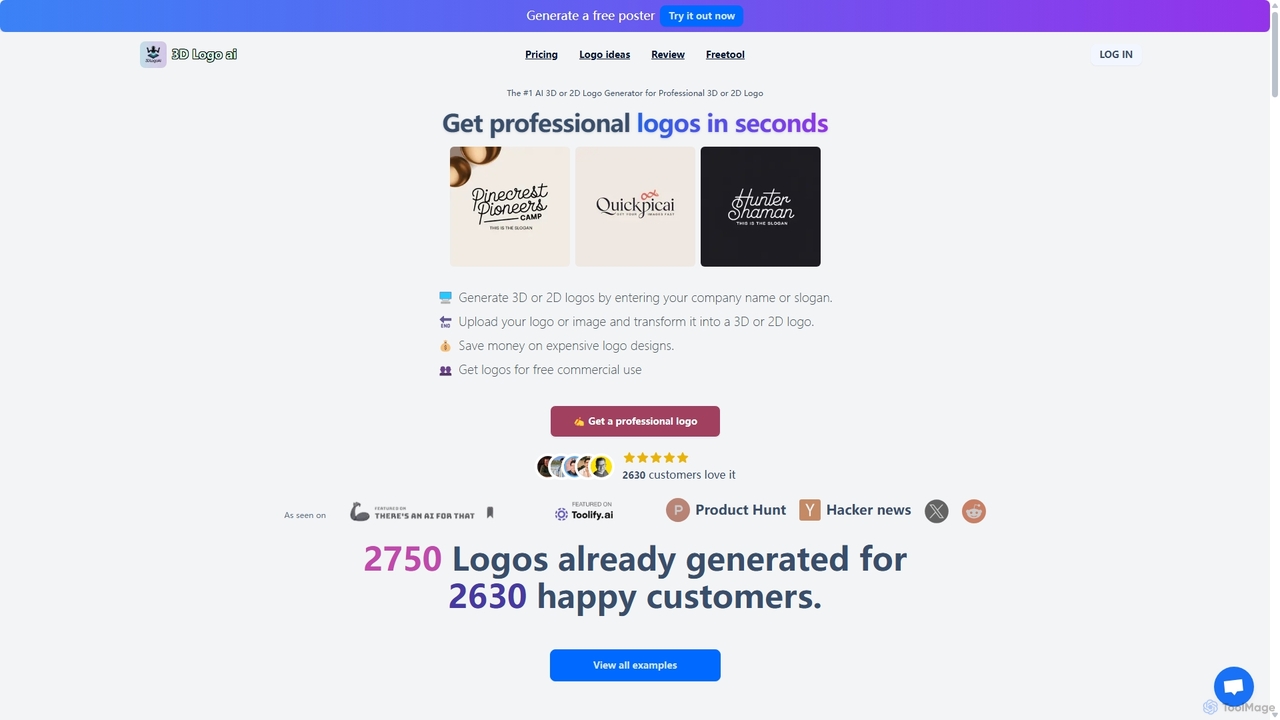
3D Design tools leverage artificial intelligence to streamline and enhance the creation of three-dimensional models, scenes, and animations. These AI-powered platforms utilize advanced algorithms for tasks like generative modeling, texture synthesis, and automated rigging. They empower artists, designers, and developers to rapidly prototype, visualize concepts, and produce high-quality 3D assets with unprecedented efficiency. This integration of AI significantly lowers the barrier to entry for complex 3D workflows, making sophisticated design accessible to a broader audience.
Core Features
- Generative Modeling: Automatically creates 3D shapes and structures from text prompts or 2D inputs.
- Texture Synthesis: Generates realistic or stylized textures and materials for 3D models.
- Automated Rigging & Animation: Simplifies the process of adding skeletons and movement to characters.
- Scene Generation: Constructs entire 3D environments, including objects, lighting, and atmospheric effects.
- Style Transfer: Applies artistic styles from images or other 3D models to new creations.
Use Cases
These tools are invaluable for rapidly prototyping product designs, creating immersive virtual environments for gaming, and generating realistic architectural visualizations. They streamline complex workflows, allowing designers to focus more on creative iteration and less on repetitive manual tasks.
How to Choose
When selecting an AI 3D design tool, consider its generative capabilities (e.g., text-to-3D, image-to-3D), the range of supported output formats, and its integration with existing design pipelines. Evaluate the learning curve, community support, and pricing model, ensuring it aligns with your project's complexity and budget.