ToolMage
Sign in

Best 1 Anime Generation AI tools for Art

Popular Anime Generation AI tools in Art include Komiko, helping you work more efficiently.

Komiko
Freemium

Komiko

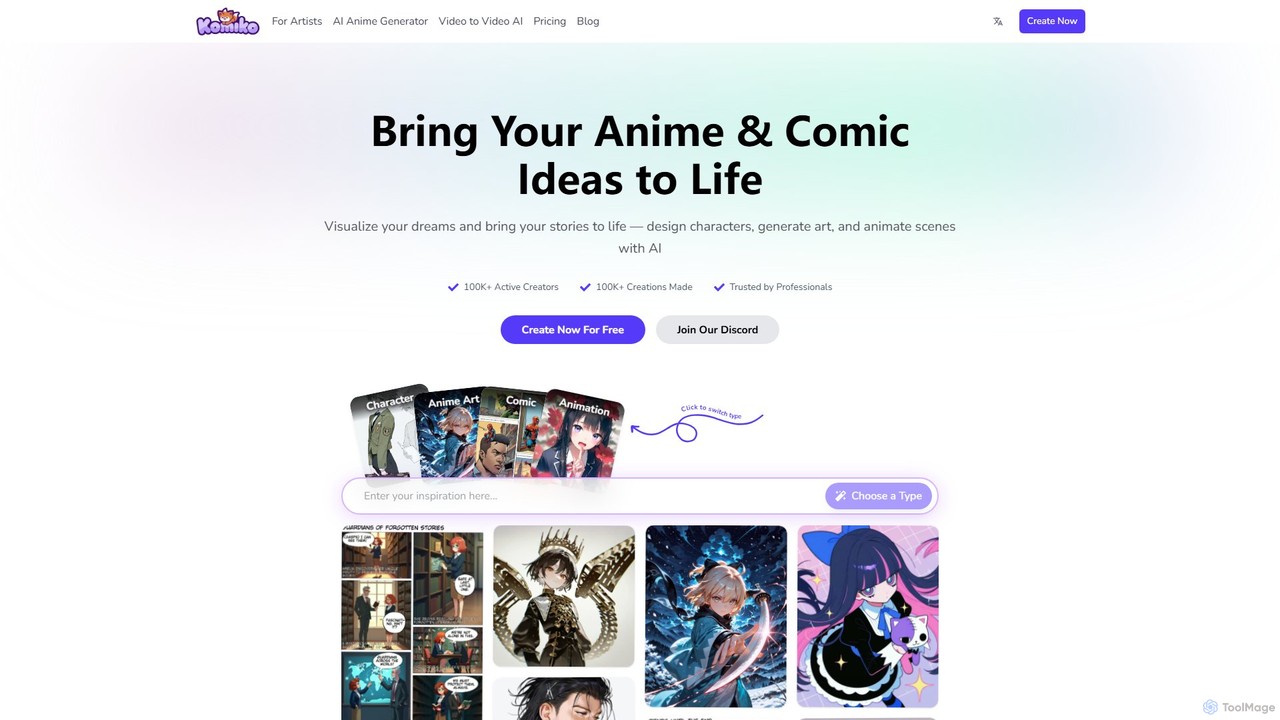
Komiko is an all-in-one AI-powered platform designed for creating anime, manga, comics, and animations. It offers a suite of tools for consistent character design, art generation, comic layout, and video animation, catering to both professional artists and hobbyists.

Anime Generation
Visits 1.3MFavorites 131Likes 140

About Anime Generation

AI Anime Generation tools are a specialized category of art generators that use artificial intelligence to create high-quality, anime-style images from text prompts. These tools are trained on vast datasets of anime and manga art, enabling them to understand specific stylistic nuances, character archetypes, and aesthetic elements unique to the genre. They empower artists, creators, and fans to rapidly visualize characters, scenes, and concepts with remarkable stylistic accuracy. This specialization allows for greater control over details like eye shape, hair color, and clothing styles compared to general-purpose image models.

Core Features

  • Anime-Specific Style Models: Generate images in distinct styles like modern, retro, chibi, or ink wash.
  • Character Consistency: Maintain a character's appearance across multiple images using techniques like LoRA or character sheets.
  • Precise Pose and Composition Control: Define specific character poses, hand gestures, and camera angles for dynamic scenes.
  • Advanced Prompt Interpretation: Understands niche anime terminology, character traits (e.g., tsundere), and specific clothing.
  • Integrated Background Generation: Create detailed backgrounds that stylistically match the foreground characters.

Use Cases

These tools are widely used by indie game developers for creating character sprites and visual novel assets, by manga artists for storyboarding and concept art, and by content creators for designing unique avatars and promotional materials. They also serve hobbyists and writers who wish to bring their original characters to life.

How to Choose

When selecting a tool, consider the variety of available anime styles, the effectiveness of its character consistency features, and the level of control offered for poses and composition. Also, evaluate the user interface's complexity and the pricing model, whether it's subscription-based or uses a credit system, to find the best fit for your project's needs and budget.

Anime Generation use cases

1

Character Design for Visual Novels & Games

Indie game developers and visual novel creators use AI Anime Generation to accelerate their asset creation pipeline. By inputting detailed character descriptions—including personality, clothing, and color schemes—they can generate dozens of high-resolution character sprites and portraits in minutes. This process allows for rapid iteration on designs without needing to draw each concept from scratch. The ability to specify expressions and poses is particularly valuable for creating the diverse set of assets required for dialogue scenes and character cut-ins, significantly reducing production time and costs.

2

Concept Art & Storyboarding for Manga

Manga artists and doujinshi creators leverage these tools to quickly explore visual ideas. Instead of spending hours sketching initial concepts, they can generate multiple variations of a character, scene, or environment based on a simple prompt. This is useful for establishing a character's final look or blocking out complex action sequences for a storyboard. The generated images serve as a strong visual reference, helping to refine composition, lighting, and character placement before committing to the final line art, streamlining the pre-production phase of their work.

3

Creating Custom VTuber Avatars & Assets

Aspiring and established VTubers utilize AI Anime Generation to design their digital personas. They can experiment with countless combinations of hair styles, eye colors, outfits, and accessories to create a truly unique avatar. Beyond the main character model, these tools can also generate related assets like emotes, stream overlays, and promotional art in a consistent style. This provides a cost-effective alternative to commissioning an artist for every single visual element, enabling creators to build a cohesive brand identity on a budget.

4

Visualizing Original Characters (OCs) for Writers

Fanfiction writers and authors of original stories often use AI Anime Generation to create visual representations of their characters. Translating written descriptions into images helps them solidify a character's appearance and share it with their audience. By providing detailed prompts about physical traits, attire, and even the character's mood, writers can generate portraits that perfectly match their vision. This visual aid enhances the creative process and fosters a deeper connection between the author, the characters, and the readers.

5

Personalized Avatars and Profile Pictures

Social media users and online community members turn to AI Anime Generation to create distinctive profile pictures (PFPs) that reflect their personality. Instead of using generic images or pre-made avatars, they can generate a custom anime-style portrait of themselves or an idealized character. Users can fine-tune details like hairstyle, accessories, and background to craft an image that stands out. This allows for a high degree of personal expression and is a popular way to create a unique online identity across platforms like Discord, Twitter, and gaming forums.

6

Generating Character Portraits for TTRPGs

Players of tabletop role-playing games like Dungeons & Dragons or Pathfinder use these tools to create custom portraits for their characters. They can input their character's race, class, equipment, and key features to generate a visual that brings their hero to life. Game Masters (GMs) also use this to quickly create portraits for non-player characters (NPCs), adding visual depth to their campaigns. This enhances immersion for the entire group and provides a clear visual reference during gameplay sessions, making the fantasy world feel more tangible.

Anime Generation FAQ

What is AI Anime Generation?

AI Anime Generation refers to a specialized class of AI art tools designed specifically to create images in the Japanese anime and manga style. Unlike general models, they are trained on datasets rich with anime art, allowing them to accurately interpret and render genre-specific traits, character archetypes, and aesthetics from text prompts. Key features often include precise style controls, character consistency mechanisms, and an understanding of anime-related terminology.

How do I choose the right AI Anime Generation tool?

To choose the right tool, consider these four factors:

  • Style Variety & Quality: Does the tool offer the specific anime aesthetic you need (e.g., 90s retro, modern, chibi) and is the output quality high?
  • Character Consistency: Does it have features like LoRA support or character sheets to recreate the same character in different scenes?
  • Control & Customization: How much control do you have over poses, composition, and specific details through prompts or features like ControlNet?
  • Cost and Usage Model: Is it a subscription, a one-time purchase, or a pay-per-generation credit system? Choose one that aligns with your budget and expected usage.
What's the difference between AI Anime Generators and general AI Image Generators?

The primary difference lies in their training data and specialization. AI Anime Generators are fine-tuned on massive datasets of anime and manga, giving them a native understanding of the style's conventions. This results in more authentic outputs and better interpretation of anime-specific prompts (e.g., 'ahoge', 'seifuku'). General image generators can attempt an anime style, but often produce generic or inconsistent results, lacking the specific nuances and control that specialized tools provide.

Can I create a consistent character across multiple images?

Yes, many advanced AI Anime Generation tools offer features specifically for character consistency. This is often achieved through methods like training a small, custom model on your character's images (known as a LoRA), using a 'character sheet' feature where you upload reference images, or by using the same seed number with very similar prompts. These features are crucial for projects like visual novels, comics, or any narrative that requires a character to appear repeatedly.

Who are AI Anime Generation tools best suited for?

These tools are ideal for a wide range of users. This includes professional and hobbyist artists, indie game developers, manga and comic creators, and VTubers who need to produce high-quality anime-style art efficiently. They are also popular among writers who want to visualize their original characters, tabletop RPG players creating character portraits, and anyone looking to create unique anime-style avatars or fan art for personal use.