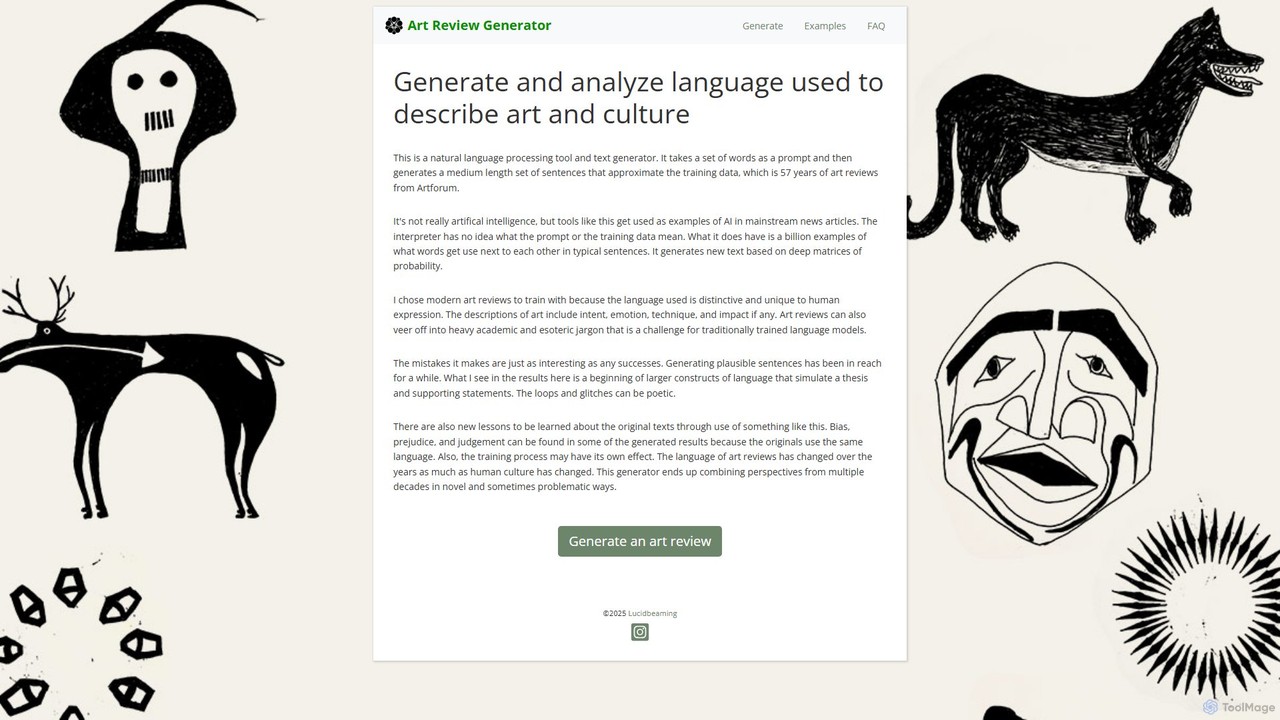
AI Art Criticism tools are a specialized class of software that uses artificial intelligence to analyze and evaluate visual artworks. These tools employ computer vision and machine learning models, trained on vast datasets of art history and aesthetic principles, to deconstruct elements like composition, color harmony, and style. They provide objective, data-driven feedback that can help artists, students, and enthusiasts understand the technical and stylistic strengths of a piece. Unlike general art software, their primary function is interpretive analysis rather than creation or editing.
Core Features
- Compositional Analysis: Evaluates the balance, structure, and flow of an artwork, identifying elements like the rule of thirds, leading lines, and focal points.
- Color Theory Evaluation: Analyzes the color palette for harmony, contrast, and emotional impact, suggesting potential improvements based on established theories.
- Style Identification: Classifies the artwork's style (e.g., Impressionism, Cubism, Abstract) by comparing it against a large database of historical art.
- Technical Feedback: Provides insights into technical aspects such as brushwork, lighting, perspective, and line quality.
- Comparative Analysis: Benchmarks an artwork against established masterpieces or other pieces within a similar genre to highlight unique attributes.
Applicable Scenarios
These tools are highly valuable for art students seeking instant, unbiased feedback on their assignments. Professional artists use them to gain a fresh, objective perspective on works-in-progress, helping to identify areas for refinement. Galleries and collectors can also utilize them for preliminary screening and analysis of new or submitted artworks.
How to Choose
When selecting an AI Art Criticism tool, consider the depth of its analytical reports—does it offer surface-level comments or detailed breakdowns? Evaluate the range of art styles and media it supports (e.g., painting, photography, digital art). The quality of its reference database for stylistic comparison is crucial, as is the clarity and actionability of the feedback provided. Finally, consider the user interface and whether it allows for easy uploading and interpretation of results.