Art Best in category 1 results Calligraphy AI Tool

Popular AI tools in the Calligraphy field of Art include Refont, etc., helping you quickly improve efficiency.

Free
Refont

Refont

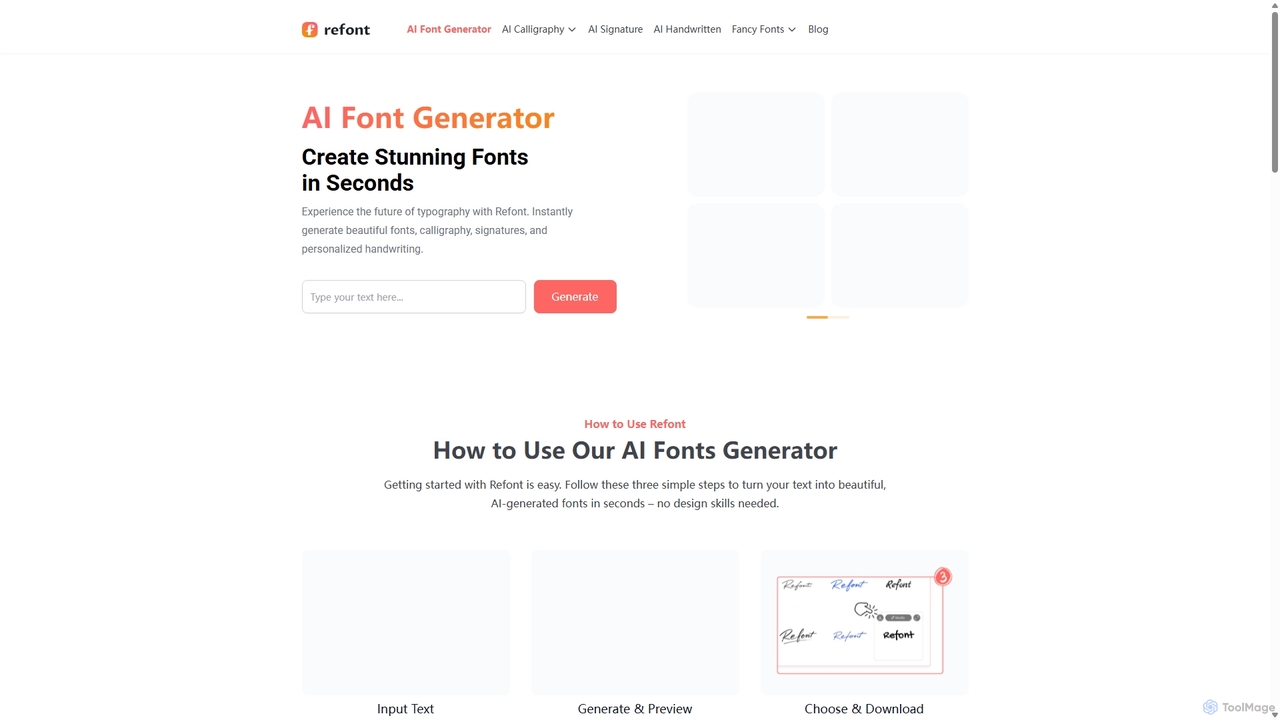
Refont is a powerful AI font generator that instantly creates stunning calligraphy, personalized signatures, realistic handwriting, and fancy …

211.6K

About Calligraphy

AI Calligraphy tools are a specialized category of art generators that use machine learning to create or replicate calligraphic styles. They analyze vast datasets of historical and modern calligraphy to generate new text and artistic pieces with specific brush strokes, styles, and layouts. These tools empower designers and artists to produce unique calligraphic art for digital media, branding, and personal projects without extensive manual expertise. They effectively bridge the gap between traditional artistry and modern digital creation.

Core Features

  • Style Emulation: Replicates specific historical and modern styles like Cursive Script, Seal Script, or brush lettering.
  • Brush Stroke Simulation: Generates realistic brush effects, including ink diffusion, pressure sensitivity, and texture.
  • Customizable Parameters: Allows adjustment of character spacing, stroke thickness, ink color, and overall composition.
  • Vector & Raster Output: Exports creations in scalable vector formats (SVG) or high-resolution raster images (PNG).

Use Cases

These tools are primarily used in graphic design for creating logos and branding materials, in digital art for unique textual elements, and in cultural education for demonstrating calligraphic forms. They are also valuable for personalizing invitations, posters, and social media content, offering an artistic touch that standard fonts cannot provide.

How to Choose

When selecting an AI Calligraphy tool, consider the library of available styles and scripts (e.g., Latin, East Asian, Arabic). Evaluate the level of customization for strokes and composition. Check for essential output formats like SVG for professional use. Finally, assess the user interface's ease of use, especially for users who are not professional calligraphers.

CalligraphyUse Cases

1

Creating Unique Brand Logos

A graphic designer for a new tea brand uses an AI calligraphy tool to generate a logo in a traditional Chinese seal script. They input the brand name, select the script style, and adjust the character composition and stroke weight. The tool generates multiple variations, allowing the designer to choose the most balanced and aesthetically pleasing option. The final logo is exported as an SVG file, ensuring scalability for all marketing materials, from packaging to digital ads.

2

Designing Personalized Wedding Invitations

A couple planning their wedding uses an AI tool to design custom invitations. They input their names and event details, then select an elegant copperplate script. The tool allows them to experiment with different flourishes, ligatures, and layouts to achieve a sophisticated, handcrafted look. This process avoids the high cost of a professional calligrapher while still producing a unique and personal design that can be easily printed or shared digitally.

3

Generating Digital Art and NFTs

A digital artist is creating a series of NFTs that combine modern visuals with classic poetry. They use an AI calligraphy generator to render verses from Japanese Haiku in a dynamic 'sōsho' (cursive) style. The AI provides unique variations for each verse, ensuring no two pieces are identical. This adds a layer of expressive, organic text that complements the visual art, enhancing the overall value and uniqueness of the NFT collection.

4

Enhancing Social Media Content

A content creator for a cultural institution needs to make posts about historical artifacts. To add an authentic and visually engaging layer, they use an AI tool to generate titles and quotes in a script style that matches the artifact's era. For a medieval manuscript, they might use a Blackletter style. This approach makes the social media posts on platforms like Instagram more immersive and educational, capturing audience attention more effectively than standard text overlays.

5

Prototyping Tattoo Designs

A tattoo artist is working with a client who wants a phrase in Arabic calligraphy. Instead of spending hours manually sketching different styles, the artist uses an AI tool to quickly generate multiple design options in various scripts like Thuluth or Naskh. This allows the client to visualize and compare different aesthetics in real-time. The chosen design serves as a high-quality reference for the artist to create the final stencil, streamlining the creative process and improving client satisfaction.

6

Creating Educational Materials

A language teacher is creating learning materials for a Mandarin class. They use an AI calligraphy tool to demonstrate the correct stroke order and aesthetic form of Chinese characters. The tool can generate animated GIFs or step-by-step images showing how a character is written. This visual and interactive approach makes learning more intuitive and engaging for students compared to static diagrams in a textbook, helping them better appreciate the art form behind the language.

CalligraphyFrequently Asked Questions