ToolMage
Sign in

Best 1 Generators for Art

Popular Generators in Art include hotgens, helping you work more efficiently.

hotgens
Freemium

hotgens

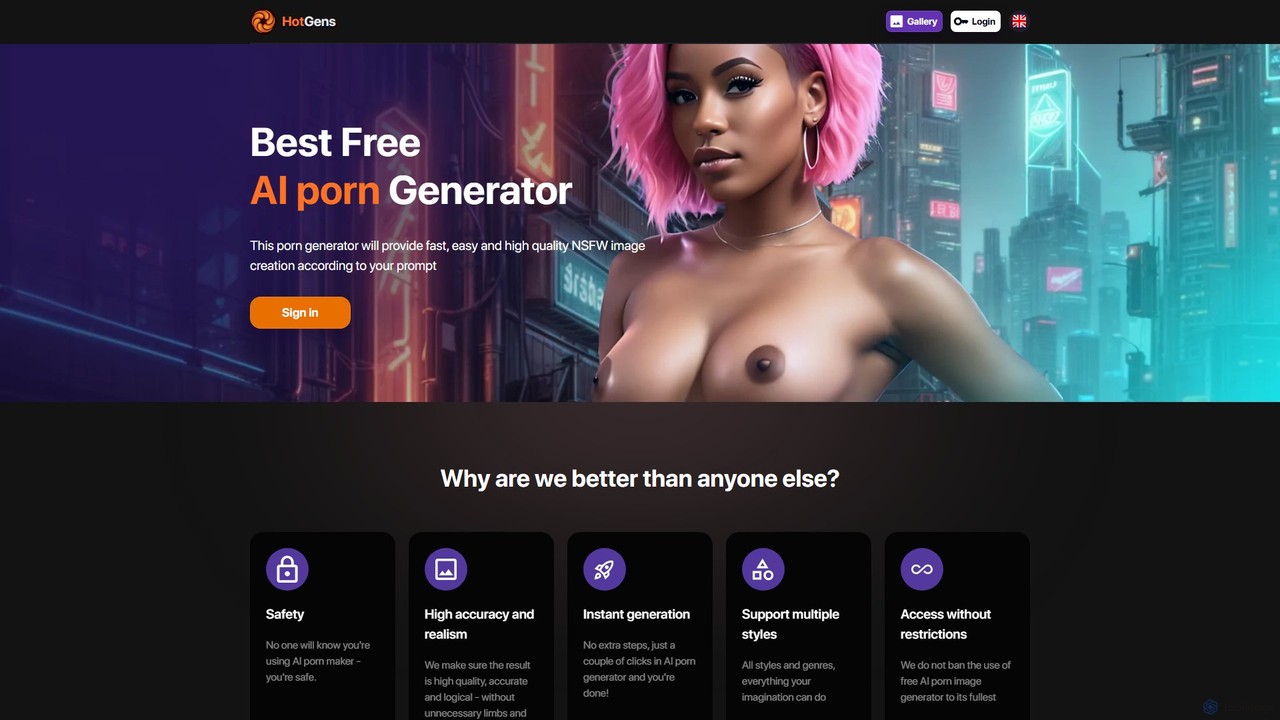
Hotgens is a specialized AI generator for creating custom NSFW images and videos from text prompts. It offers a wide range of styles, including anime, furry, and photorealistic, with a focus on high accuracy, user privacy, and fast generation. A free tier is available for basic use.

Generators
Visits 56.9KFavorites 130Likes 126

About Generators

AI Generators are a category of AI-powered tools that automatically create various forms of digital content, often visual or auditory, based on user prompts or data. Within the realm of Art, these tools leverage advanced deep learning models like Diffusion Models to transform textual descriptions, sketches, or existing images into unique artworks, designs, or media. They empower artists, designers, marketers, and hobbyists to rapidly prototype ideas, explore creative variations, and produce unique content without extensive manual effort, significantly accelerating creative workflows and democratizing content creation.

Core Features

  • Text-to-Image Generation: Creates diverse visual content from descriptive text prompts.
  • Style Transfer & Blending: Applies artistic styles from reference images to new or existing visuals.
  • Image-to-Image Transformation: Modifies or reinterprets existing images based on new prompts or parameters.
  • Variations & Iterations: Generates multiple distinct versions of an output for creative exploration.
  • Content Synthesis: Produces novel textures, patterns, or abstract compositions.

Applicable Scenarios

These tools are invaluable for professionals and enthusiasts across various creative fields. Game developers use them for rapid concept art generation, while marketing teams leverage them to produce unique social media visuals and ad campaigns. Individual artists find them useful for overcoming creative blocks and exploring new styles, and designers utilize them for quick mock-ups and mood boards.

How to Choose

When selecting an AI Generator, consider the desired output quality and aesthetic style, as different models excel in various artistic domains. Evaluate its prompt understanding capabilities and the level of creative control offered, such as negative prompting or inpainting features. Assess the generation speed, pricing structure, and whether it integrates seamlessly with your existing creative software or workflow. Finally, consider the licensing terms for commercial use of generated content.

Featured tool rankings

Generators use cases

1

Concept Art for Game Development

Game artists and designers utilize AI Generators to quickly produce a wide array of character, environment, and item concepts from textual descriptions. This accelerates the initial design phase, allowing for rapid iteration and exploration of diverse visual styles before committing to detailed production.

2

Social Media Content Creation

Marketing professionals and content creators employ AI Generators to generate unique, eye-catching visuals for daily social media posts, advertisements, and campaigns. This ensures a consistent brand aesthetic and a constant stream of fresh content, saving significant time compared to manual design.

3

Personalized Marketing Visuals

E-commerce businesses and advertisers use AI Generators to create unique product images, lifestyle shots, or ad banners tailored to specific customer segments or promotional themes. This allows for highly targeted visual marketing without the need for extensive photoshoots or graphic design resources.

4

Storyboarding and Pre-visualization

Filmmakers, animators, and video producers leverage AI Generators to quickly create visual sequences for storyboards, animatics, or scene pre-visualization. By inputting scene descriptions, they can rapidly generate multiple visual interpretations, aiding in planning shots and refining narrative flow.

5

Interior Design Mock-ups

Interior designers use AI Generators to produce various design concepts for rooms or spaces. By inputting descriptions of desired styles, furniture, and color schemes, they can generate diverse mock-ups for client presentations, helping visualize potential outcomes and gather feedback efficiently.

6

Unique Texture and Pattern Design

Graphic designers, 3D artists, and web developers utilize AI Generators to create seamless textures, abstract patterns, or unique background images. This provides a vast library of original assets for digital art, game environments, website designs, or textile patterns, enhancing visual richness.

Generators FAQ

What are AI Generators in the context of Art?

AI Generators in art are artificial intelligence tools designed to create new, original visual or auditory content based on user input. They leverage advanced machine learning models, such as diffusion models, to interpret text prompts, sketches, or reference images and produce unique artworks, illustrations, photographs, or even music. Their primary function is to synthesize novel creative assets, rather than merely editing existing ones.

How do AI Generators differ from AI Image Editors?

The fundamental difference lies in their primary function: AI Generators focus on creating new content from scratch or minimal input, like a text prompt (e.g., generating an image of "a cat in space"). AI Image Editors, conversely, focus on modifying or enhancing existing images (e.g., removing a background from a photo of a cat, upscaling its resolution, or changing its colors). While some tools offer both capabilities, their core purpose is distinct.

What types of artistic content can AI Generators create?

AI Generators can produce a wide array of artistic content. This includes photorealistic images, abstract art, illustrations in various styles (e.g., anime, comic, oil painting), concept art for games and films, unique textures, patterns, and even basic 3D models or musical compositions. The versatility depends heavily on the specific model and its training data, allowing for diverse creative outputs across visual and auditory domains.

Who benefits most from using AI Generators in art and design?

A broad range of individuals and professionals benefit from AI Generators. Artists and designers use them for rapid prototyping, exploring diverse creative concepts, and overcoming creative blocks. Marketing and content creation teams leverage them for quickly generating unique visuals for campaigns and social media. Game developers find them invaluable for concept art and asset creation. Hobbyists and educators also use them to explore new artistic avenues and learn about generative AI.

What factors should I consider when choosing an AI Generator for creative projects?

When selecting an AI Generator, consider several key factors. First, evaluate the quality and style of its output to ensure it aligns with your artistic vision. Second, assess the level of creative control it offers, such as prompt engineering capabilities, negative prompts, or inpainting/outpainting features. Third, look into the speed and cost of generation, especially for large-scale projects. Finally, understand the licensing and usage rights for the generated content, particularly if you intend to use it commercially.