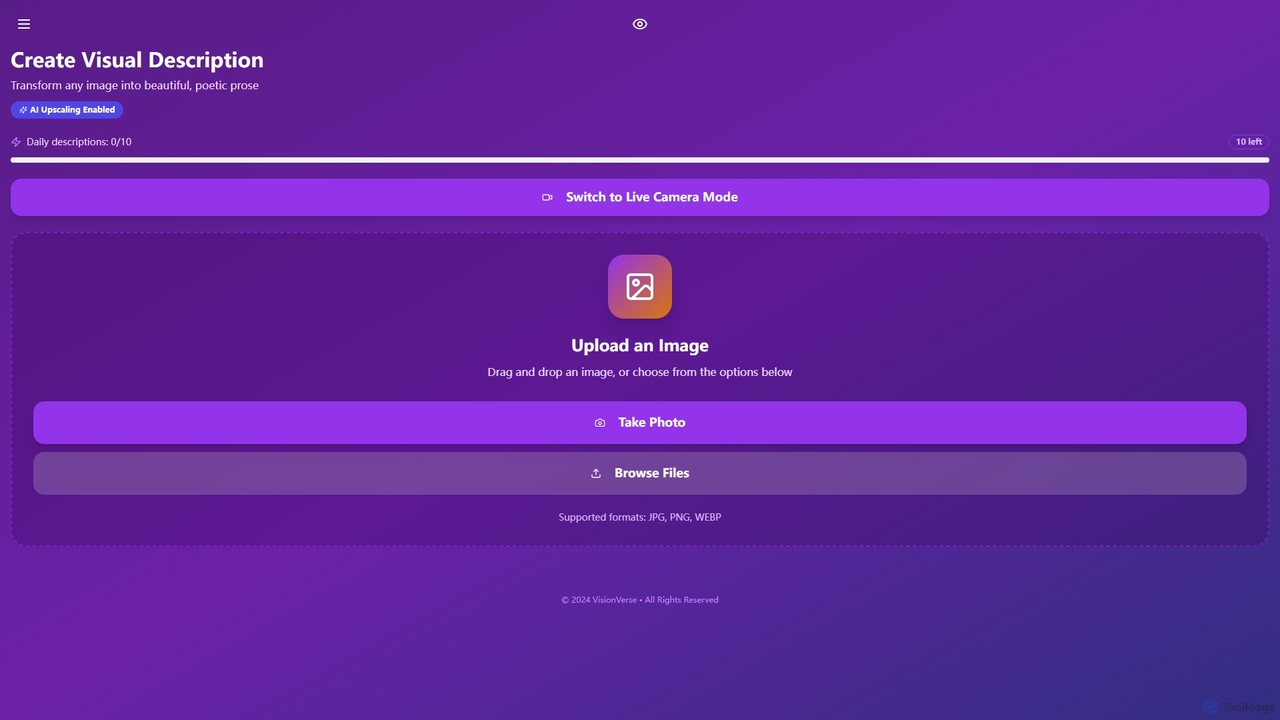
Poetry Generation tools are a specialized class of AI art software that automatically create original poems from user prompts. These tools leverage large language models (LLMs) trained on vast literary corpora to understand poetic structures, rhyme schemes, meter, and figurative language. They serve as creative partners for writers seeking inspiration, educators developing engaging lesson plans, or individuals looking to express emotions through verse. Unlike general text generators, they are fine-tuned to produce content with artistic and emotional depth, often allowing precise control over style, tone, and form.
Core Features
- Style and Form Control: Generate poems in specific forms like sonnets, haikus, limericks, or free verse.
- Rhyme and Meter Customization: Define rhyme schemes (e.g., AABB, ABAB) and metrical patterns like iambic pentameter.
- Thematic and Emotional Input: Create poetry based on specific themes, keywords, moods, or emotions.
- Figurative Language Generation: Intelligently incorporate metaphors, similes, personification, and other literary devices.
- Revision and Suggestion: Offer alternative lines, word choices, or phrasing to refine the poem.
Use Cases
These tools are widely used by poets and writers to overcome creative blocks and explore new ideas. In education, teachers use them to demonstrate complex poetic forms in an interactive way. Marketers and copywriters also employ them to create lyrical and memorable content for advertising campaigns or social media, helping brands connect with audiences on an emotional level.
How to Choose
When selecting a Poetry Generation tool, consider the variety of poetic forms it supports and the level of control offered over structure, rhyme, and meter. Evaluate the quality and creativity of the output—does it sound natural and evocative? Also, assess the user interface for ease of use and check the pricing model to ensure it aligns with your needs, whether it's a subscription, pay-per-use, or a free service.