ToolMage
Sign in

Best 4 Prompt Generation AI tools for Art

Popular Prompt Generation AI tools in Art include Drawing Prompt, ArtiverseHub, PromptxArt, and Kiswani, helping you work more efficiently.

ArtiverseHub
Freemium

ArtiverseHub

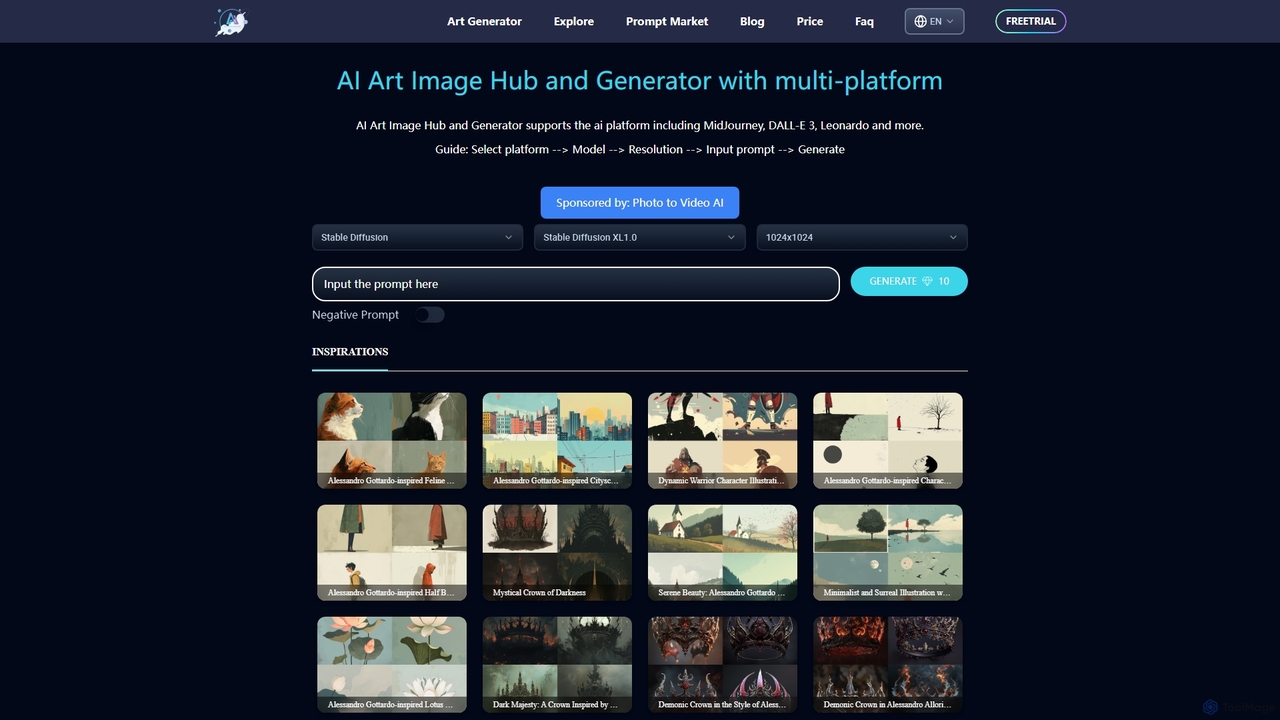
ArtiverseHub is a comprehensive AI art hub integrating top generators like MidJourney, DALL-E 3, and Stable Diffusion. It features a powerful image generator, an extensive prompt marketplace, and an inspiration gallery. Ideal for artists, designers, and content creators to explore, create, and share stunning AI-generated visuals from a single, user-friendly platform.

Prompt Generation
Visits 5.7KFavorites 140Likes 153
Drawing Prompt
Free

Drawing Prompt

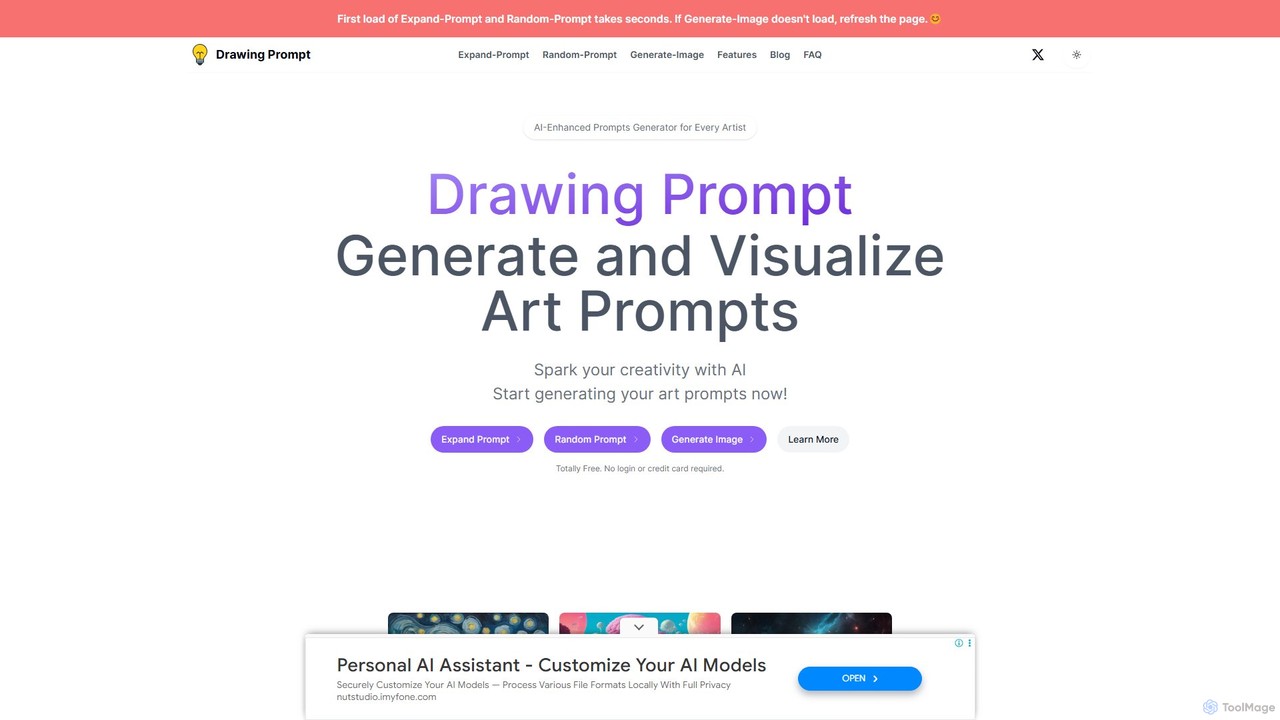
Drawing Prompt is a free AI-powered tool for artists to overcome creative blocks. It generates, expands, and visualizes art prompts using advanced LLMs and the SDXL image model. Turn simple words into detailed prompts or create stunning images directly, with no login or fees required.

Prompt Generation
Visits 6.2KFavorites 132Likes 136
PromptxArt
Freemium

PromptxArt

PromptxArt is an AI-powered online tool designed to help users generate detailed and creative prompts for text-to-image art generators like Midjourney, Stable Diffusion, and DALL-E. It simplifies the complex process of prompt engineering, enabling both beginners and professionals to create stunning visual art by transforming simple ideas into sophisticated, well-structured prompts.

Prompt Generation
Visits 5.4KFavorites 148Likes 149
Kiswani
Paid

Kiswani

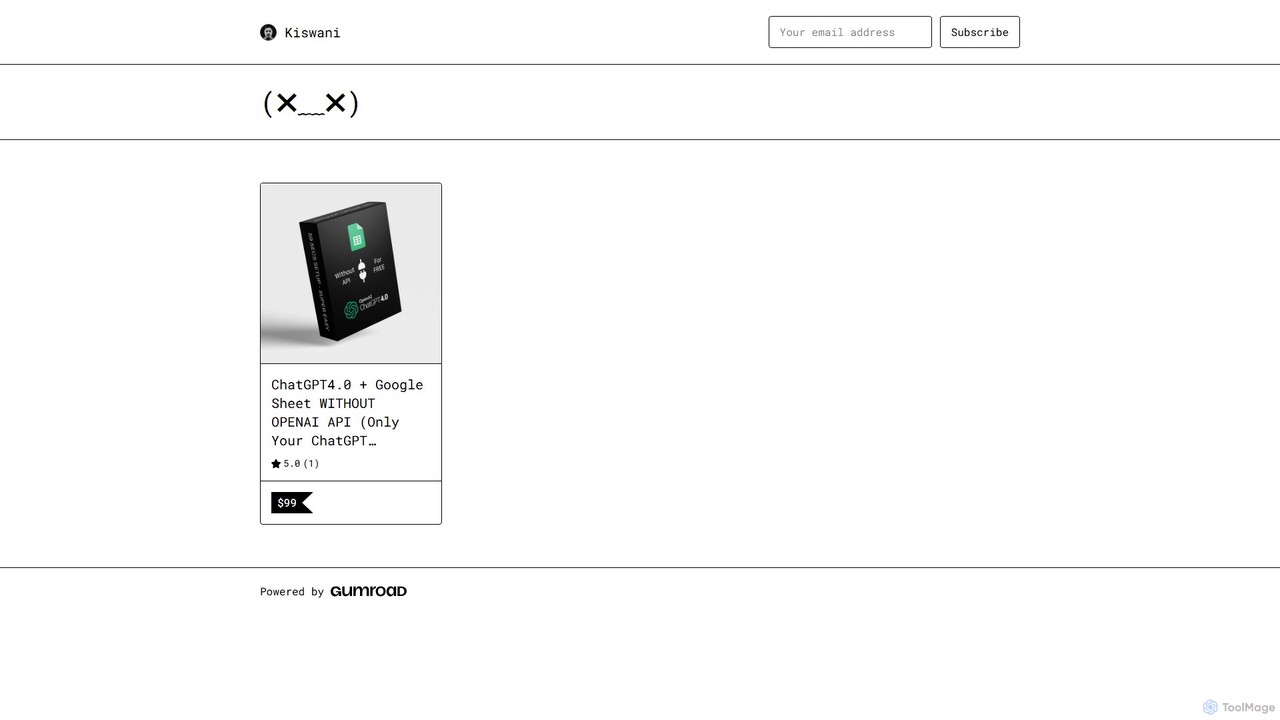
Kiswani offers a collection of premium digital products, including expertly crafted prompt packs and comprehensive guides for AI art generators like Stable Diffusion. These resources are designed to help artists, designers, and enthusiasts create stunning, high-quality visuals by providing advanced techniques and ready-to-use prompts, saving time and inspiring creativity.

Prompt Generation
Visits 5.3KFavorites 110Likes 101

About Prompt Generation

Prompt Generation tools are specialized utilities designed to help users construct, refine, and optimize text prompts for generative AI models. They function as intelligent assistants, translating a user's creative idea into the precise language that AI art or text generators can understand and execute effectively. By offering features like keyword suggestions, structural templates, and parameter controls, these tools empower users to unlock more complex and nuanced results from AI. This makes them valuable for anyone looking to move beyond basic prompts and achieve professional-grade artistic or written outputs.

Core Features

  • Keyword Suggestion: Recommends relevant artistic styles, artists, camera angles, and descriptive terms to enrich prompts.
  • Prompt Structuring: Provides templates and a guided interface to organize prompts with proper syntax and weighting.
  • Negative Prompt Assistance: Helps users define what they want to exclude from the generated output, improving image quality and coherence.
  • Visual Prompt Builder: Allows users to select styles, compositions, and elements visually, which are then translated into a text prompt.
  • Prompt Library & Management: Offers a collection of pre-made, effective prompts and allows users to save and organize their own creations.

Use Cases

These tools are widely used by digital artists, designers, and content creators who need to produce highly specific AI-generated images for concept art, marketing materials, or social media. Game developers also use them to rapidly prototype visual assets. For AI art hobbyists and writers, they serve as a creative partner, simplifying the process of exploring different artistic styles and generating inspirational visuals.

How to Choose

When selecting a Prompt Generation tool, consider which AI models it supports (e.g., Stable Diffusion, Midjourney). Evaluate its feature set—do you need a simple keyword helper or an advanced visual builder? The user interface is also crucial; some are beginner-friendly, while others offer more granular control for experts. Finally, check for community features like a shared prompt library, which can be a valuable source of inspiration and learning.

Prompt Generation use cases

1

Crafting Detailed Concept Art for Games

A game artist or designer needs to visualize a new character described as a 'cyberpunk druid in a neon-lit forest.' Instead of struggling with basic prompts, they use a Prompt Generation tool. The tool suggests keywords like 'glowing tattoos,' 'mechanical animals,' 'holographic leaves,' and 'volumetric lighting.' It helps structure the prompt with correct weighting, such as '(cyberpunk druid:1.3), (neon forest:1.2).' The artist can also add negative prompts like 'blurry, cartoon, deformed' to ensure a high-quality, realistic output. This process allows them to generate dozens of high-fidelity concept variations in minutes, dramatically accelerating the creative ideation phase.

2

Generating On-Brand Social Media Visuals

A marketing manager for a sustainable fashion brand needs a consistent stream of unique images for their Instagram feed. They use a Prompt Generation tool to create a master prompt template that includes brand-specific keywords like 'earth tones,' 'natural fabrics,' 'soft morning light,' and 'minimalist aesthetic.' For each new post, they only need to change the main subject (e.g., 'woman wearing a linen dress,' 'close-up of a wooden button'). The tool ensures the core stylistic elements remain consistent across all generated images, saving hours of manual editing and maintaining a cohesive brand identity online.

3

Exploring Artistic Styles for AI Hobbyists

An AI art enthusiast wants to experiment with different artistic movements but doesn't know the specific terminology. Using a visual prompt builder, they can click on style cards like 'Impressionism,' 'Art Nouveau,' or 'Bauhaus.' The tool automatically adds relevant artists (e.g., 'in the style of Monet,' 'inspired by Alphonse Mucha') and technical terms ('thick brush strokes,' 'curvilinear lines') to the prompt. This enables them to learn about art history while creating beautiful, stylistically accurate images, making the complex world of AI art generation accessible and educational.

4

Prototyping Architectural Visualizations

An architect wants to quickly show a client different design possibilities for a modern residential home. They use a Prompt Generation tool to build a base prompt describing the core structure: 'a minimalist two-story house with large glass windows and a flat roof.' Then, they use the tool's features to easily swap materials ('concrete facade,' 'cedar wood cladding'), environments ('located in a snowy forest,' 'on a cliff overlooking the ocean'), and lighting conditions ('golden hour,' 'overcast day'). This allows for the rapid creation of dozens of photorealistic renderings, facilitating client communication and speeding up the design approval process.

5

Creating Illustrations for Digital Storytelling

A self-publishing author needs cover art and chapter illustrations for their fantasy novel. They are not a professional artist but have a clear vision. Using a Prompt Generation tool, they can describe scenes from their book in natural language. The tool helps them add artistic specifiers like 'ethereal fantasy art,' 'detailed ink drawing,' 'cinematic lighting,' and 'epic composition.' By saving a template with their main character's description, they can ensure visual consistency across all illustrations. This empowers the author to create professional-quality visuals that match their story's tone without a large budget.

6

Optimizing Prompts for A/B Testing Ad Creatives

A performance marketer is running a campaign for a new mobile app and needs to test which ad visuals perform best. They use a Prompt Generation tool to create a structured base prompt for their product. The tool then helps them systematically generate variations by changing single parameters, such as the background color, the model's expression (e.g., 'smiling,' 'surprised'), or the call-to-action element. This creates a controlled set of ad creatives for A/B testing. By analyzing the performance data, the marketer can identify which prompt elements drive the highest engagement, thereby optimizing their ad spend and campaign ROI.

Prompt Generation FAQ

What are AI Prompt Generation tools?

AI Prompt Generation tools are specialized software that help users create and refine text descriptions (prompts) for generative AI models. Instead of just typing a simple phrase, these tools provide a structured environment with features like keyword suggestions, style templates, and parameter controls. Their primary purpose is to translate a user's creative intent into a detailed, effective prompt that produces higher quality and more accurate results from AI systems like image or text generators. They act as a bridge between human ideas and the complex language of AI.

What is the difference between a Prompt Generator and an AI Image Generator?

The key difference lies in their function: a Prompt Generator creates the input, while an AI Image Generator creates the output.

  • Prompt Generator: This is a tool to help you write a better text description. It suggests words, helps structure the prompt, and adds parameters, but it does not create any images itself.
  • AI Image Generator (e.g., Midjourney, Stable Diffusion): This is the actual AI model that takes a text prompt as input and produces an image as output.
In short, you use a Prompt Generation tool to build a high-quality recipe (the prompt), and then you give that recipe to the AI Image Generator (the chef) to cook the final dish (the image).

How do I choose the right Prompt Generation tool?

Choosing the right Prompt Generation tool depends on your needs. First, check for compatibility with the AI models you use (e.g., Stable Diffusion, DALL-E 3). Second, evaluate the features: beginners might prefer a simple tool with keyword suggestions and pre-made styles, while advanced users may need features like prompt weighting, API access, or a visual builder. Third, consider the user interface and ease of use. Finally, look for community resources like a shared prompt library or tutorials, as these can significantly accelerate your learning and creative process.

What are the main benefits of using a Prompt Generation tool?

The main benefits are improved quality, efficiency, and creativity. By providing relevant keywords and proper structure, these tools help you generate more detailed and coherent outputs from AI models. They save time by automating the process of finding the right terms and syntax, eliminating much of the trial-and-error. They also foster creativity by introducing you to new styles, artists, and techniques you might not have discovered on your own. Ultimately, they make the power of advanced prompt engineering accessible to users of all skill levels.

Who should use Prompt Generation tools?

Prompt Generation tools are beneficial for a wide range of users. Digital artists and designers use them to achieve precise control over their AI-generated artwork. Marketers and content creators use them to produce consistent, on-brand visuals efficiently. AI art hobbyists and beginners find them invaluable for learning prompt crafting and exploring different creative styles without a steep learning curve. Even developers and researchers use them to create structured prompts for systematically testing and evaluating AI models. Anyone looking to get more than just basic results from generative AI can benefit.