ToolMage
Sign in

Best 2 Prompt Generator for Art

Popular Prompt Generator in Art include Public Prompts and PromptWall, helping you work more efficiently.

PromptWall
Free

PromptWall

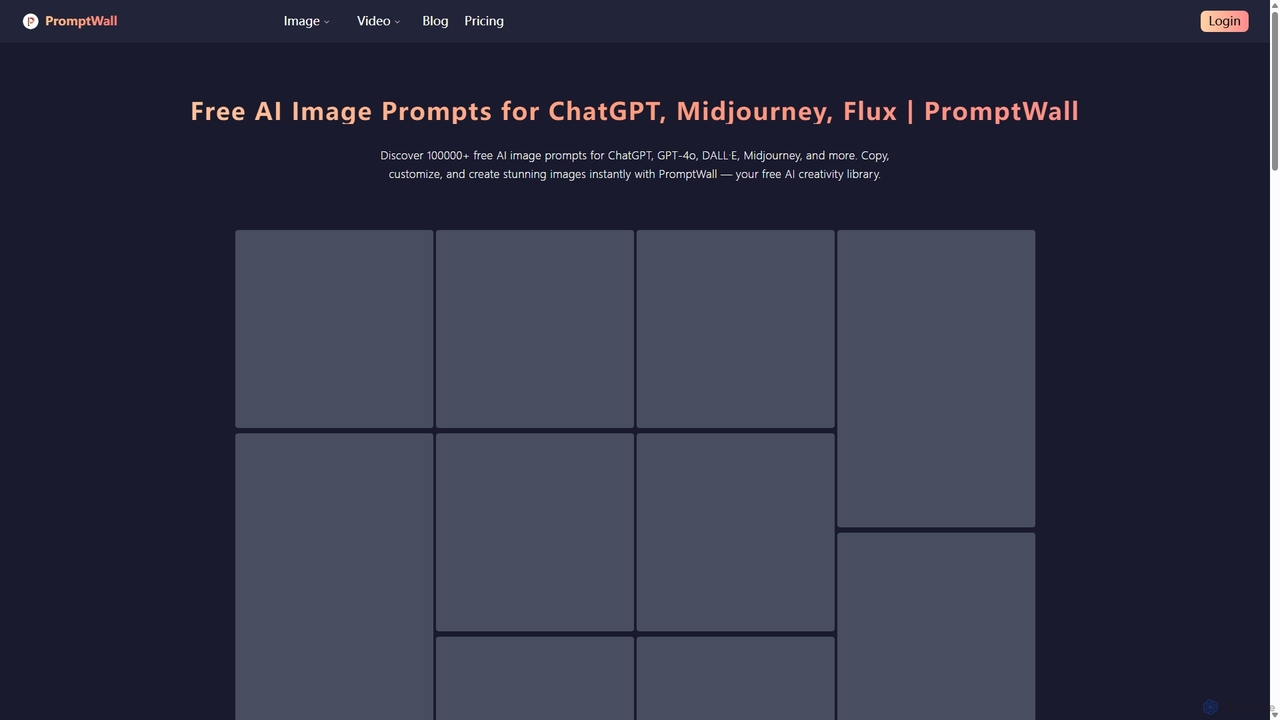
PromptWall is a free, extensive library with over 100,000 AI image prompts. It's designed for creators using tools like ChatGPT, GPT-4o, Midjourney, and DALL-E, allowing them to discover, copy, and customize high-quality prompts to generate stunning images instantly and spark creativity.

Prompt Generator
Visits 17.7KFavorites 122Likes 133
Public Prompts
Free

Public Prompts

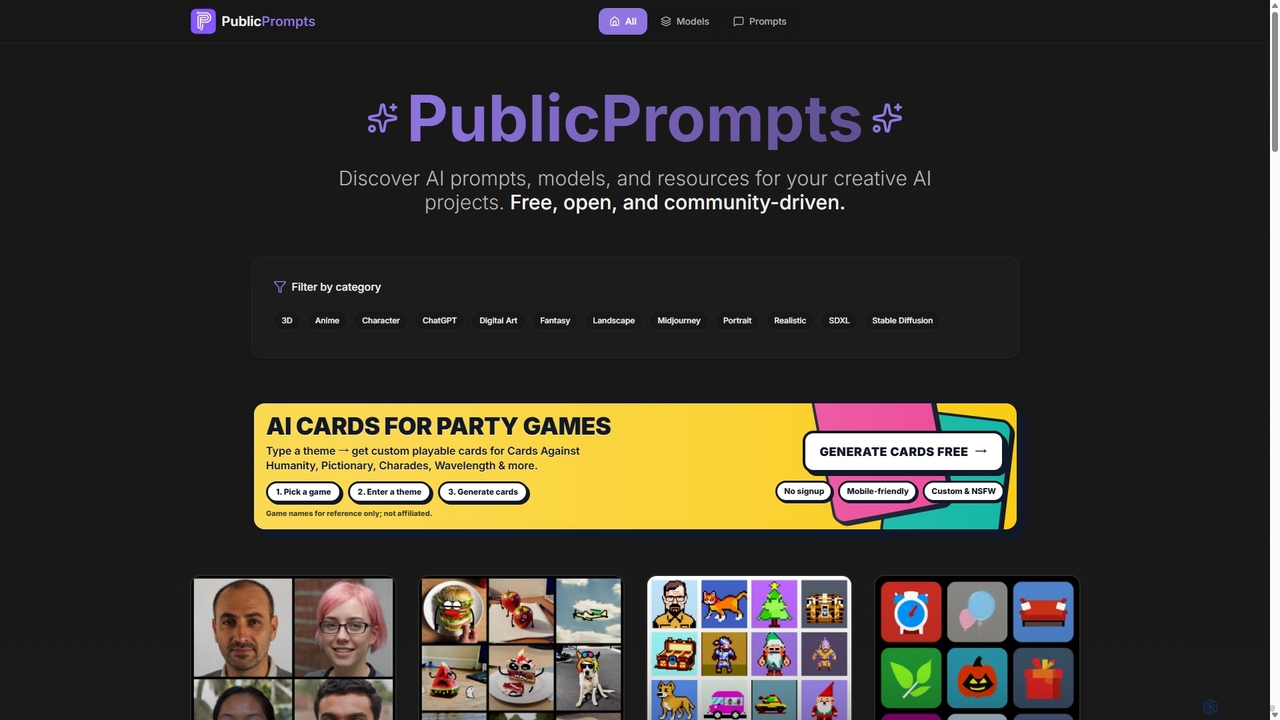
Public Prompts is a free, open, and community-driven platform offering a vast collection of AI prompts, models, and resources for creative projects. It provides high-quality prompts for image generators like Midjourney and Stable Diffusion, as well as fine-tuned models to achieve specific artistic styles, empowering creators to accelerate their workflows.

Image Generation
Visits 19.2KFavorites 104Likes 101

About Prompt Generator

Prompt Generators are AI-powered tools designed to assist users in crafting effective and detailed prompts for various generative AI models, particularly within the realm of AI art creation. These tools leverage natural language processing and machine learning to understand user intent and expand upon initial ideas, transforming simple keywords into rich, structured instructions. By automating the prompt engineering process, Prompt Generators enable creators to achieve more precise and imaginative outputs from AI art generators, text-to-image models, and other generative AI applications, significantly enhancing creative workflows and reducing the learning curve for complex AI interactions.

Core Features

  • Keyword Expansion: Automatically expands basic keywords into detailed, descriptive phrases suitable for AI models.
  • Style & Attribute Selection: Offers options to specify artistic styles, lighting, composition, and other visual attributes.
  • Negative Prompt Generation: Helps create prompts to exclude unwanted elements, refining the AI's output.
  • Prompt Variation & Iteration: Generates multiple prompt variations from a single input, facilitating creative exploration.
  • Structured Prompt Building: Guides users through adding specific parameters like aspect ratios, model versions, and weights.

Use Cases

Prompt Generators are invaluable for digital artists, graphic designers, and content creators who utilize AI for visual or textual content. They streamline the process of translating creative visions into AI-understandable commands, allowing for rapid prototyping of concepts, exploration of diverse artistic styles, and efficient generation of high-quality assets for marketing, game development, or personal projects. These tools democratize access to advanced AI capabilities by simplifying the often complex art of prompt engineering.

How to Choose

When selecting a Prompt Generator, consider its compatibility with your preferred AI models (e.g., Midjourney, Stable Diffusion, DALL-E). Evaluate the depth of its customization options, including style presets, attribute controls, and negative prompt capabilities. Look for tools that offer intuitive interfaces and robust variation features to support your creative workflow. Finally, assess the community support and the quality of prompts it generates, ensuring they consistently lead to desirable AI outputs.

Prompt Generator use cases

1

Designing Concept Art for Games

Game developers and concept artists use Prompt Generators to quickly iterate on character designs, environment concepts, and prop ideas. By inputting basic themes like "futuristic warrior" or "enchanted forest," the generator expands these into detailed prompts specifying armor types, lighting, mood, and architectural styles, allowing artists to explore hundreds of visual directions in minutes for their AI art tools.

2

Creating Marketing Visuals for Campaigns

Marketing professionals and advertisers leverage Prompt Generators to produce diverse visual assets for social media, ads, and website banners. They input campaign themes or product descriptions, and the tool generates prompts for various artistic styles, color palettes, and compositions, enabling rapid creation of engaging and on-brand imagery without extensive design skills.

3

Generating Unique Illustrations for Blog Posts

Content creators and bloggers utilize Prompt Generators to produce custom, high-quality illustrations that perfectly match their article topics. Instead of searching for stock photos, they describe their desired image, and the generator crafts detailed prompts for AI art models, ensuring unique, relevant, and copyright-free visuals that enhance reader engagement.

4

Exploring Artistic Styles for Personal Projects

Hobbyists and aspiring artists use Prompt Generators to experiment with different artistic movements and techniques without needing deep art history knowledge. They can input a subject and then select various styles like "Impressionist," "Cyberpunk," or "Baroque," allowing the generator to craft prompts that explore how AI interprets these styles, fostering creative learning and discovery.

5

Developing Storyboard Frames for Video Production

Filmmakers and animators employ Prompt Generators to visualize storyboard frames or scene concepts. By describing key moments, characters, and settings, the generator creates prompts that produce visual representations, helping to plan shots, lighting, and mood before committing to full production, streamlining the pre-visualization process.

6

Crafting Detailed Prompts for 3D Model Textures

3D artists and designers use Prompt Generators to create intricate and specific texture maps for their models. They input material types (e.g., "worn leather," "ancient stone," "sci-fi metal") and the generator adds details about patterns, wear, reflections, and imperfections, resulting in highly realistic and unique textures when fed into AI texture generation tools.

Prompt Generator FAQ

What are Prompt Generators?

Prompt Generators are AI-powered tools that help users create detailed and effective text prompts for generative AI models, especially those used in AI art and content creation. They take simple ideas or keywords and expand them into rich, structured instructions, making it easier to guide AI models to produce desired outputs. These tools are crucial for prompt engineering, transforming vague concepts into precise commands for AI.

How do Prompt Generators enhance AI art creation?

Prompt Generators significantly enhance AI art creation by providing artists with precise control over the AI's output. They help translate abstract artistic visions into concrete textual descriptions, allowing users to specify styles, moods, subjects, and technical details like lighting or camera angles. This precision leads to higher quality, more consistent, and more imaginative AI-generated artworks, saving artists time and reducing trial-and-error.

What's the difference between a Prompt Generator and an AI Image Generator?

A Prompt Generator is a tool that creates the text instructions (prompts) for an AI. An AI Image Generator is the tool that takes those prompts and generates the actual images. Essentially, the Prompt Generator is the "idea assistant" that helps you articulate your vision, while the AI Image Generator is the "artist" that brings that vision to life based on the articulated prompt. They often work in tandem, with the former feeding into the latter.

What features should I look for in a good Prompt Generator?

A good Prompt Generator should offer robust keyword expansion, allowing you to turn simple ideas into rich descriptions. Look for features like style presets, attribute controls (e.g., lighting, composition), and the ability to generate negative prompts to exclude unwanted elements. Compatibility with various AI models, an intuitive user interface, and options for prompt variation and iteration are also key for an effective tool.

Who can benefit most from using Prompt Generators?

Prompt Generators are highly beneficial for anyone working with generative AI, particularly digital artists, graphic designers, content creators, marketers, and game developers. They are also excellent for hobbyists and beginners who want to explore AI art without mastering complex prompt engineering techniques. Essentially, anyone looking to achieve more precise, creative, and efficient results from AI models will find these tools invaluable.