ToolMage
Sign in

Best 1 Resources AI tools for Art

Popular Resources AI tools in Art include mjsrefcode, helping you work more efficiently.

mjsrefcode
Freemium

mjsrefcode

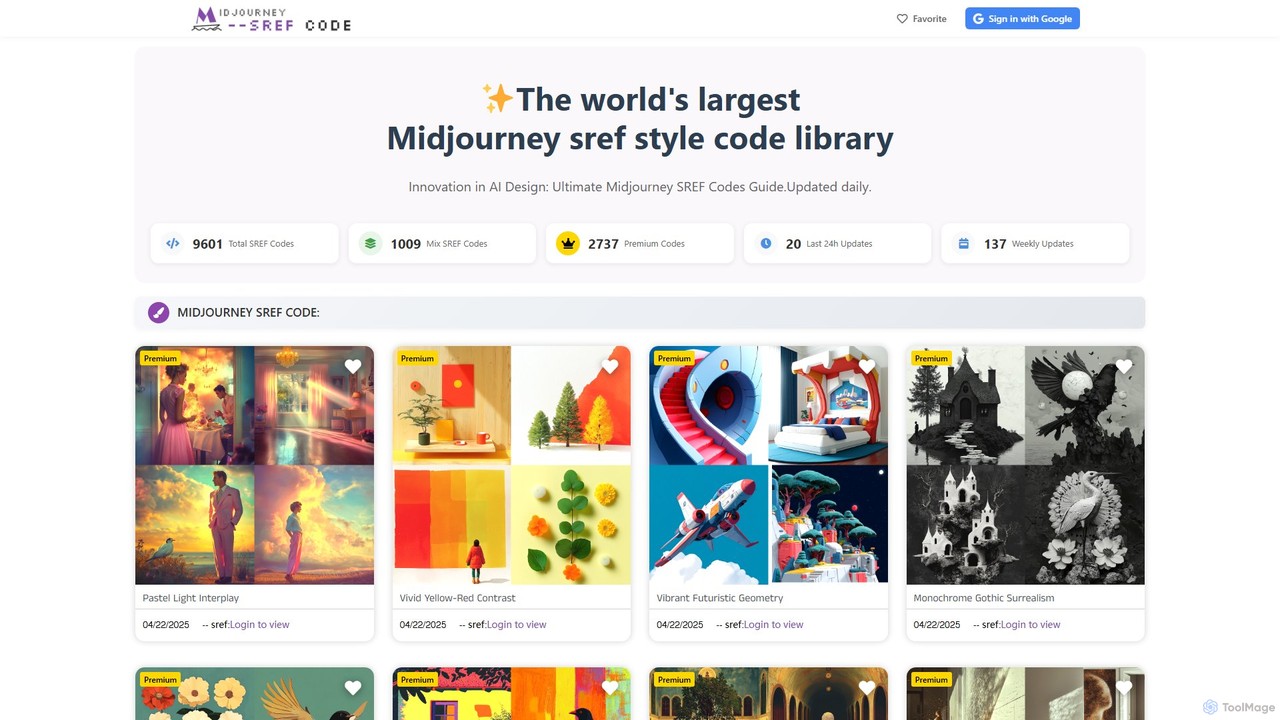
mjsrefcode is the world's largest library of Midjourney Style Reference (SREF) codes, updated daily. It provides thousands of free and premium style codes, enabling artists, designers, and creators to easily apply consistent and complex artistic styles to their AI-generated images. The platform saves significant time on prompt engineering and serves as a vast source of creative inspiration.

Resources
Visits 7.3KFavorites 178Likes 177

About Resources

AI Art Resources are specialized AI-powered tools designed to provide artists and creators with essential inputs, inspiration, and foundational elements for their AI art generation workflows. These tools leverage advanced AI algorithms to curate, suggest, or even generate creative assets like prompts, style references, color palettes, and thematic concepts. Their primary purpose is to streamline the initial stages of artistic creation, helping users overcome creative blocks, explore new aesthetics, and efficiently gather the necessary components to guide their AI art projects, ultimately expanding the possibilities of artistic expression.

Core Features

  • AI Prompt Generation: Automatically generates diverse and detailed text prompts optimized for various AI image generation models.
  • Style & Aesthetic Exploration: Suggests artistic styles, color schemes, and compositional elements based on user input or existing art.
  • Reference Image Curation: Gathers and organizes visual references, mood boards, or thematic collections to inspire and guide creative projects.
  • Creative Concept Brainstorming: Provides AI-driven ideas for themes, narratives, or visual motifs to kickstart new artistic endeavors.

Use Cases

Artists, designers, and content creators utilize AI Art Resources to enhance their creative process. For instance, concept artists use these tools to quickly generate diverse visual ideas and stylistic directions for character or environment designs. Digital illustrators leverage them to discover unique color palettes and artistic styles, while graphic designers employ them to find thematic inspiration and reference imagery for marketing campaigns or branding projects.

How to Choose

When selecting AI Art Resources, consider the diversity and quality of the resources offered, such as the range of prompt styles or aesthetic suggestions. Evaluate the AI's accuracy and relevance in generating or curating content that aligns with your artistic vision. Look for integration capabilities with your existing AI art generators or design software, and assess the tool's user-friendliness and customization options to ensure it fits your specific creative workflow and artistic needs.

Resources use cases

1

Generating Detailed AI Art Prompts

A digital artist struggling with creative block uses an AI prompt generator to receive a variety of unique and descriptive text prompts. By inputting keywords like "futuristic city" and "cyberpunk," the tool suggests prompts incorporating specific lighting, architectural styles, and atmospheric elements, saving hours of brainstorming and providing fresh starting points for their AI image generation.

2

Exploring New Artistic Styles and Palettes

A graphic designer wants to experiment with a new visual identity for a client. They use an AI resource tool to explore different artistic movements, color schemes, and texture combinations. The tool analyzes their input and suggests complementary palettes and stylistic elements, helping them quickly iterate on design concepts and present diverse options to the client.

3

Curating Visual Reference Boards for Projects

A concept artist working on a fantasy game needs to gather extensive visual references for creature designs and environments. An AI resource tool helps them by automatically curating images based on specific themes like "mythical beasts" or "enchanted forests," organizing them into mood boards, and even suggesting related artistic motifs, significantly reducing manual search time.

4

Overcoming Creative Blocks with AI Inspiration

A content creator feels stuck on their next project. They turn to an AI inspiration tool that generates abstract concepts, narrative hooks, or visual metaphors based on a broad theme. This helps them break free from conventional thinking, providing unexpected angles and fresh perspectives that spark new ideas for their videos or illustrations.

5

Optimizing AI Model Training Data

An advanced AI artist fine-tuning a custom image generation model requires a diverse and high-quality dataset. They use an AI resource tool to identify and curate specific types of images or artistic elements from large datasets, ensuring the training data is relevant and balanced, leading to more refined and consistent outputs from their custom model.

6

Managing and Categorizing AI-Generated Assets

A studio frequently generates hundreds of AI images for various projects. An AI resource management tool automatically tags, categorizes, and organizes these outputs based on content, style, and project. This allows artists to quickly search and retrieve specific assets, preventing clutter and improving the efficiency of their asset library.

Resources FAQ

What are AI Art Resources?

AI Art Resources are AI-powered tools that provide foundational elements and inspiration for creating AI art. They leverage artificial intelligence to generate or curate assets such as detailed prompts, artistic style suggestions, color palettes, and visual references. These tools aim to assist artists in the initial conceptualization and planning phases, enhancing creativity and efficiency before the actual image generation process begins.

How do AI Art Resources differ from AI Image Generators?

AI Art Resources primarily focus on providing inputs and inspiration for the creative process, such as generating prompts or suggesting styles. In contrast, AI Image Generators are the tools that take these inputs (like prompts) and directly produce visual artworks. Resources tools help you decide what to create and how to describe it, while generators actually create the image based on that description. They are complementary, with resources feeding into generators.

What types of resources can AI Art Resource tools provide?

AI Art Resource tools can offer a wide array of creative assets. This includes sophisticated text prompts for AI image models, suggestions for artistic styles (e.g., "impressionistic," "cyberpunk"), color palettes, compositional ideas, and curated collections of reference images or mood boards. Some tools also provide thematic concepts, narrative elements, or even sound design inspirations relevant to visual art projects.

Who benefits most from using AI Art Resources?

Artists, designers, content creators, and anyone involved in visual media production can greatly benefit. Concept artists use them for rapid ideation, illustrators for style exploration, and marketers for campaign visual planning. They are particularly useful for individuals facing creative blocks, seeking to expand their artistic vocabulary, or needing to streamline the initial research and conceptualization stages of their projects.

How to choose the best AI Art Resource tool for my needs?

To choose the best tool, consider the specific type of resource you need most (e.g., prompts, styles, references). Evaluate the quality and diversity of the AI-generated or curated content. Check for compatibility with your preferred AI image generators or design software. User interface, customization options, and the tool's ability to learn from your preferences are also important factors to ensure it seamlessly integrates into your creative workflow.