
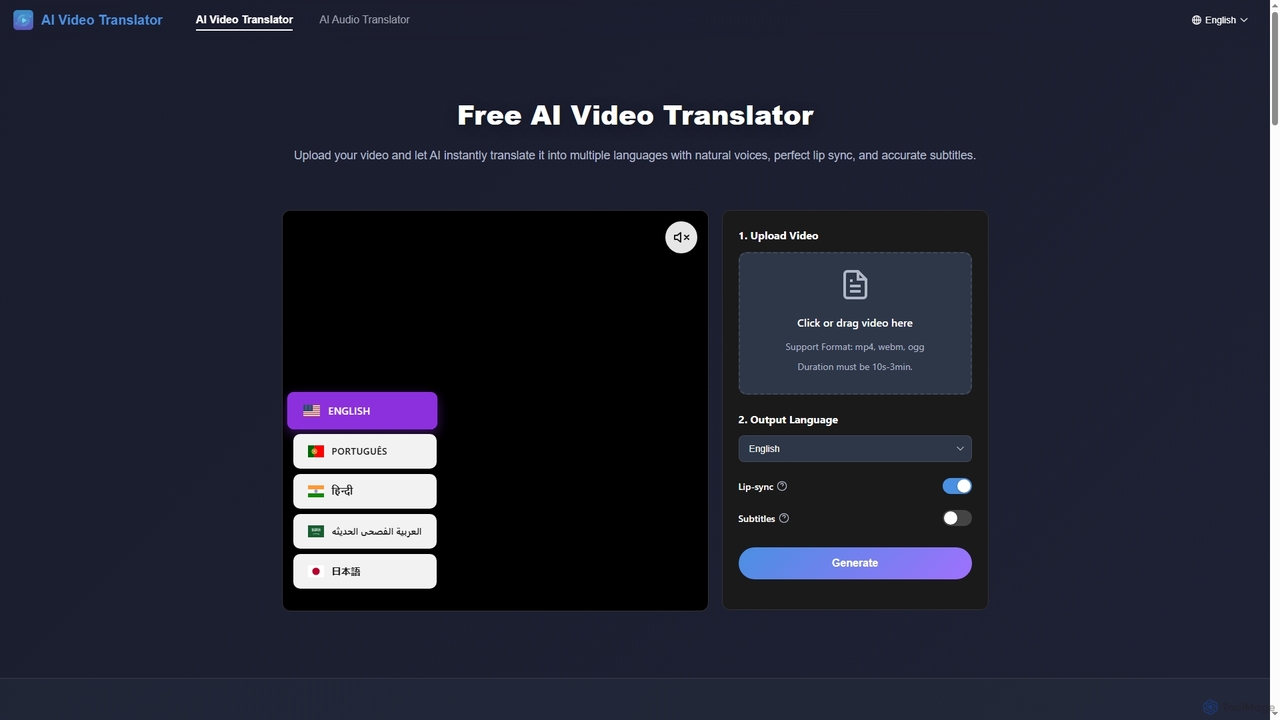
AIVideoTranslator
AIVideoTranslator is a powerful AI tool that instantly translates videos and audio into multiple languages with natural voices, …
AIVideoTranslator is a powerful AI tool that instantly translates videos and audio into multiple languages with natural voices, perfect lip synchronization, and accurate subtitles. It helps content creators, businesses, and educators reach a global audience effortlessly, offering fast processing and advanced voice customization without requiring sign-up for video translation.
About Audio Dubbing
AI Audio Dubbing tools are a specialized category of audio editing software that automatically replaces the original dialogue in a video with a translated version. These tools utilize advanced technologies like voice cloning, speech-to-text, machine translation, and lip-sync analysis to generate new audio tracks that match the speaker's voice and on-screen mouth movements. The primary value of AI Audio Dubbing is to rapidly and cost-effectively localize video content for global audiences, breaking down language barriers for creators and businesses. This technology preserves the original speaker's vocal identity while delivering natural-sounding dialogue in multiple languages.
Core Features
- Voice Cloning and Preservation: Clones the original speaker's voice characteristics (timbre, pitch) to maintain vocal consistency in the dubbed language.
- Automated Lip-Sync: Analyzes the speaker's mouth movements in the video and adjusts the timing of the dubbed audio for precise synchronization.
- Multi-Language Translation: Integrates machine translation engines to automatically convert the original script into various target languages.
- Speaker Separation: Identifies and isolates individual speakers in the original audio, allowing for distinct voices in the final dubbed version.
- Emotion and Intonation Transfer: Captures the emotional tone and intonation of the original performance and attempts to replicate it in the translated audio.
Use Cases
AI Audio Dubbing is widely used by content creators, marketing teams, and media companies to expand their international reach. For example, a YouTuber can dub their videos into Spanish and Hindi to grow their audience. E-learning platforms use it to offer courses in multiple languages, and film studios leverage it for rapid localization of trailers and promotional content, significantly reducing the time and cost compared to traditional studio dubbing.
How to Choose
When selecting an AI Audio Dubbing tool, consider the quality of its voice cloning; more realistic voices provide a better viewer experience. Evaluate the accuracy of the lip-sync technology, as poor synchronization can be distracting. Check the range of supported languages and the quality of the underlying translation engine. Finally, assess the tool's workflow, integration with video editing software, and pricing model to ensure it fits your production needs and budget.
Audio DubbingUse Cases
Localizing Marketing Videos for Global Campaigns
A corporate marketing team needs to launch a new product video across Europe and Latin America. Instead of hiring multiple voice actors and studios, they use an AI Audio Dubbing tool. They upload their English video, and the platform automatically generates high-quality dubs in Spanish, French, and German. The AI preserves the original narrator's confident tone and clones their voice, maintaining brand consistency. The lip-sync feature ensures the dubbed audio matches the on-screen speaker perfectly, resulting in professional, localized videos ready for distribution in a fraction of the time and cost.
Dubbing E-Learning Courses for International Students
An online education provider wants to make its popular data science course accessible to a global audience. Manually dubbing over 50 hours of video content is unfeasible. They use an AI Audio Dubbing tool to translate and dub the entire course into Japanese and Portuguese. The tool accurately separates the instructor's voice from background noise and applies a cloned voice that sounds natural and authoritative. This allows them to quickly enter new markets and provide a better learning experience for non-English-speaking students, increasing enrollment and course completion rates.
Rapid Dubbing of Social Media Content
A content creator focusing on short-form videos for platforms like TikTok and YouTube Shorts wants to expand their reach beyond their native language. Speed is critical. They use an AI dubbing tool to quickly create multiple language versions of their daily videos. After recording a video in English, they upload it, and within minutes, they have versions dubbed in Spanish and French, complete with accurate lip-sync. This allows them to post simultaneously to different language-specific accounts, maximizing engagement and growing a diverse, international follower base without a complex production workflow.
Creating Multilingual Versions of Indie Films
An independent filmmaker wants to submit their documentary to international film festivals but lacks the budget for traditional, professional dubbing services. They use an AI Audio Dubbing tool to create English and French voice-overs for their original Spanish film. The tool's emotion transfer feature helps maintain the dramatic impact of the interviews. While the quality may not match a high-end studio, it provides a cost-effective way to make the film accessible to festival judges and international audiences, increasing its chances of being selected and gaining wider recognition.
Localizing Corporate Training Videos
A multinational corporation needs to deploy a mandatory safety training video to its employees in Japan, Mexico, and Germany. To ensure comprehension and compliance, the video must be in the local language. The HR department uses an AI dubbing platform to translate the English narration. The platform's speaker separation feature correctly identifies the two narrators in the original video and applies distinct, cloned voices for each in the dubbed versions. This ensures clarity and professionalism, allowing the company to efficiently meet its global training obligations without high localization costs.
Making News Reports Accessible to a Broader Audience
An independent news agency produces in-depth video reports on global issues. To increase their impact, they want to reach non-English speaking audiences. Using an AI dubbing tool, they can quickly produce Spanish and Mandarin Chinese versions of their reports. The AI maintains the serious, journalistic tone of the original reporter. This allows them to publish timely, multilingual content on their website and social channels, fostering a better-informed global community and expanding their readership without the delay and expense of traditional dubbing studios.