TuneBlades
TuneBlades is an AI-powered music editing tool that automatically remixes, shortens, or extends any song to a specific …
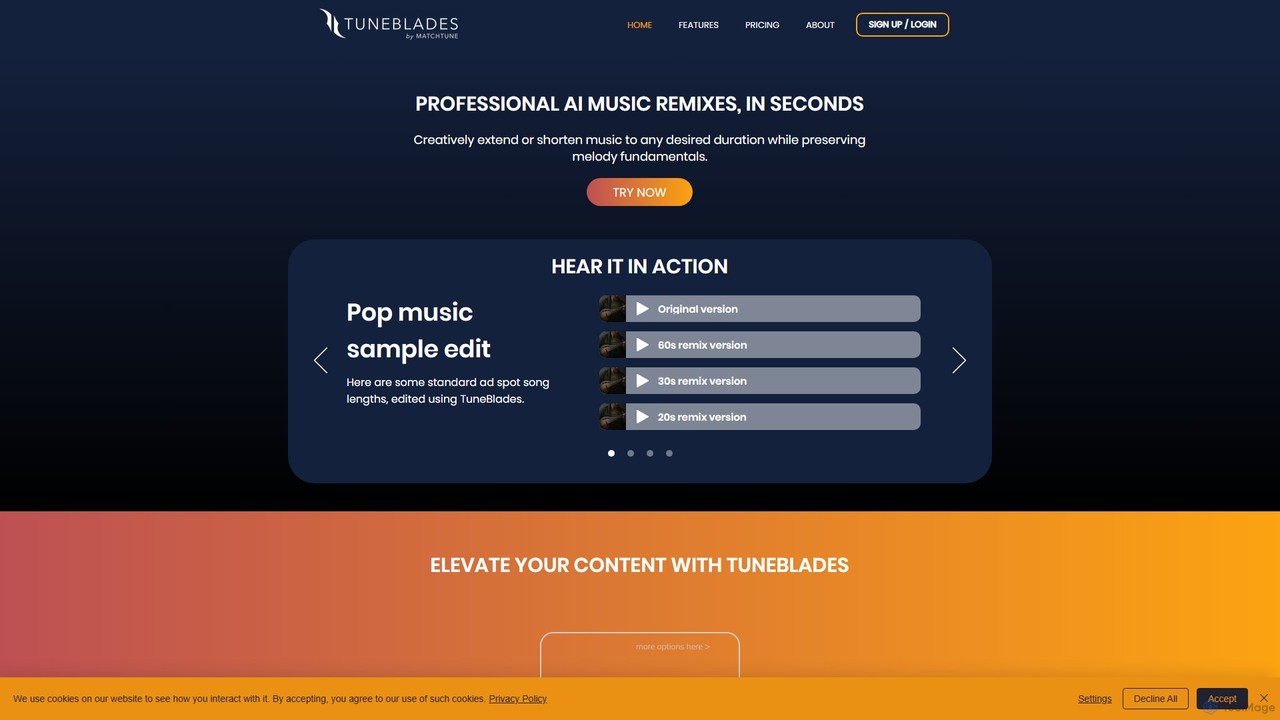
TuneBlades is an AI-powered music editing tool that automatically remixes, shortens, or extends any song to a specific duration. It preserves the core melody, vocals, and tempo, making it perfect for content creators, video editors, and marketers who need perfectly timed background music in seconds.
About Music Remixing
AI Music Remixing tools are specialized applications that use artificial intelligence to deconstruct, analyze, and creatively reassemble existing audio tracks. These tools leverage advanced algorithms for stem separation, tempo and key detection, and generative synthesis to isolate individual musical elements. This enables DJs, producers, and creators to easily create unique remixes, mashups, and instrumentals from a single audio file. Unlike general audio editors, these tools automate complex processes that traditionally required significant manual effort and technical expertise.
Core Features
- Stem Separation: Isolate specific elements like vocals, drums, bass, and melodies from a complete song.
- Tempo & Key Matching: Automatically detect and synchronize the tempo (BPM) and musical key of different tracks for seamless blending.
- Generative Recomposition: Create new musical patterns or variations based on the harmonic and rhythmic content of the original audio.
- Style Transfer: Apply the stylistic characteristics of one track, such as genre or mood, to another.
- Intelligent Mashup Creation: Intelligently combine elements from multiple songs to produce a cohesive new piece.
Use Cases
These tools are widely used by professional DJs for creating live sets and unique track edits. Music producers utilize them for sampling, bootleg creation, and rapid idea prototyping. Content creators also employ them to generate custom, royalty-free background music for videos by remixing existing public domain material.
How to Choose
When selecting an AI Music Remixing tool, evaluate the quality of its stem separation, looking for minimal artifacts. Consider whether it offers real-time processing for live performance or offline processing for studio work. Check for compatibility with essential audio formats (WAV, MP3, FLAC) and its ability to integrate with Digital Audio Workstations (DAWs), for instance, through VST plugin support.

Music RemixingUse Cases
Creating DJ-Ready Acapellas and Instrumentals
A DJ needs to isolate the vocals from a popular track to create a custom mashup for their live set. They use an AI Music Remixing tool to upload the song, which automatically separates it into high-quality stems: vocals, drums, bass, and melody. The DJ can then download the clean acapella and instrumental versions individually. This process saves hours of complex manual work involving equalization and phase inversion, providing studio-quality components for creative mixing in minutes.
Producing a Modern Bootleg Remix
A music producer wants to create a bootleg remix of a classic funk song in a modern house style. They use the tool to extract the iconic bassline and vocal snippets. Next, they use the tempo and key shifting feature to perfectly match these elements to their new 124 BPM house beat. The AI ensures everything remains harmonically compatible, streamlining the creative process and allowing the producer to focus on arrangement and sound design rather than tedious pitch correction.
Generating Unique Background Music for Videos
A YouTuber needs royalty-free background music for their travel vlog but finds stock music libraries generic. They use an AI remixing tool to take a simple public domain melody and apply a 'lo-fi hip hop' style transfer. The tool analyzes the melody and regenerates it with new instrumentation, drum patterns, and textures that match the chosen style. It can produce several variations, providing a unique, mood-appropriate soundtrack without copyright concerns.
Music Education and Compositional Analysis
A music student is studying the arrangement of a complex jazz piece. They use a stem separation tool to isolate each instrument—piano, bass, drums, and saxophone. This allows them to listen to each part individually, making it easier to transcribe solos, understand the harmonic voicings of the piano, and analyze how the rhythm section interacts. It provides a deeper level of insight into the composition that is not possible by just listening to the final mix.
Creating Karaoke and Backing Tracks
A singer wants to practice a song for an audition but cannot find a high-quality instrumental version. They upload the original song to a music remixing tool. The AI's stem separation feature effectively removes the lead vocals, creating a clean backing track. They can even use the key-shifting feature to adjust the song to better suit their vocal range, making practice sessions more effective and personalized. This is also useful for bands needing to create practice tracks for their members.
Rapid Prototyping for Music Producers
A producer is exploring ideas for a new track. Instead of building a beat from scratch, they use an AI remixing tool to deconstruct a reference track they admire. They isolate the drum loop and bassline, then use the generative recomposition feature to create new variations. This allows them to quickly test different rhythmic and harmonic ideas based on a proven foundation, significantly speeding up the initial stages of music creation and overcoming creative blocks.