ToolMage
Sign in

Best 169 Analytics AI tools for Business

Popular Analytics AI tools in Business include Ashby, Haller.ai, UserTesting, ManageEngine, Mixpanel, Amplitude, Dynatrace, Triple Whale, Seismic, and Mulerun, helping you work more efficiently.

timemaster
Freemium

timemaster

timemaster is an AI-powered, privacy-first time and productivity tracker for macOS. It automatically monitors your activities in the background, providing insightful analytics to help you understand your work habits, minimize distractions, and supercharge your focus to achieve more every day.

Analytics
Visits 6.5KFavorites 104Likes 107
screentime
Freemium

screentime

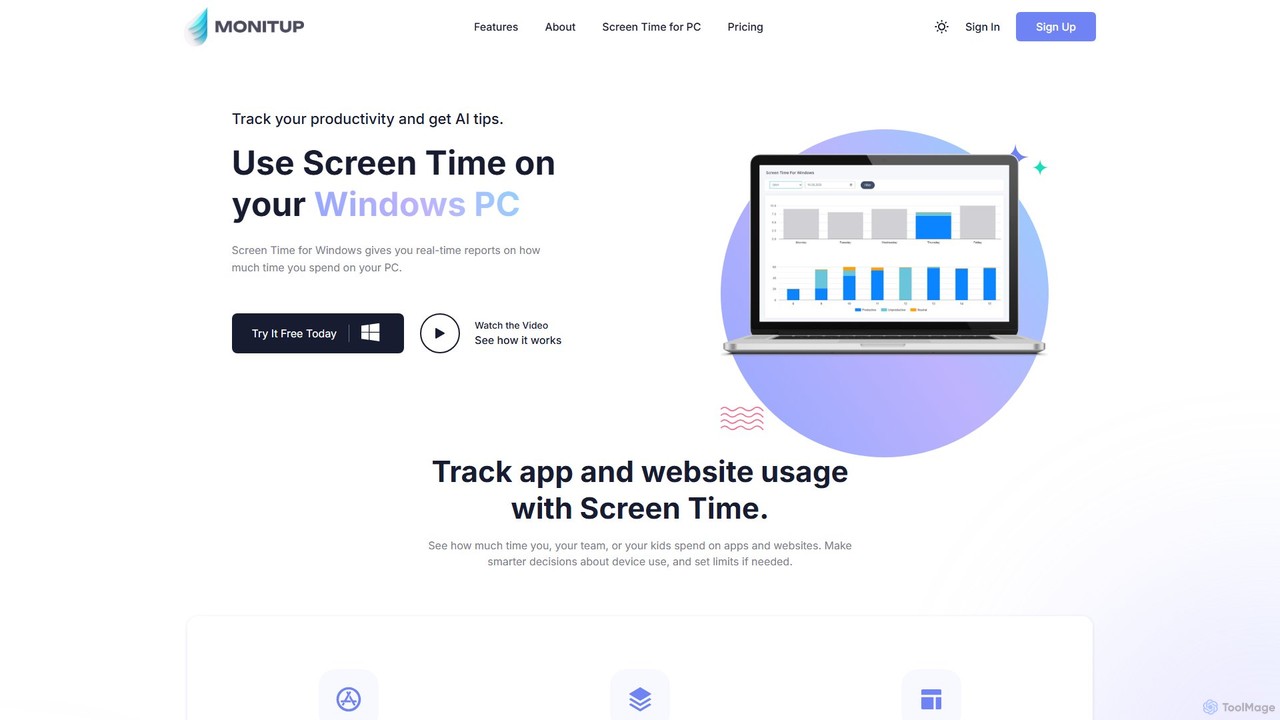
An AI-powered time management tool for Windows that tracks your PC usage on apps and websites. It provides personalized suggestions to help you understand your habits, eliminate distractions, and significantly boost your productivity.

Analytics
Visits 5.6KFavorites 130Likes 112

About Analytics

AI Analytics tools are a class of software that use machine learning and natural language processing to uncover deep insights from complex datasets. These tools automate the process of data interpretation, identifying patterns, predicting future trends, and generating actionable recommendations. Businesses use AI Analytics to move beyond descriptive reporting and enable predictive and prescriptive decision-making. Unlike traditional Business Intelligence (BI) systems, they can often process unstructured data like text and images, providing a more holistic view of business operations.

Core Features

  • Predictive Forecasting: Utilizes historical data and machine learning algorithms to project future outcomes, such as sales, demand, or customer churn.
  • Anomaly Detection: Automatically identifies unusual patterns or outliers in data that could signify fraud, system failures, or new opportunities.
  • Natural Language Query (NLQ): Allows users to ask questions about their data in plain language, making data exploration accessible to non-technical staff.
  • Automated Insights: Proactively surfaces significant trends, correlations, and key business drivers without requiring manual analysis.
  • Sentiment Analysis: Analyzes text data from customer reviews, social media, or surveys to gauge public opinion and brand perception.

Use Cases

AI Analytics tools are widely adopted across various business functions. Marketing teams use them to predict customer churn and optimize campaign performance. Financial departments leverage them for fraud detection and risk assessment. In operations, they help optimize supply chains and forecast inventory needs. Executives use them for strategic planning by understanding market trends and competitive landscapes.

How to Choose

When selecting an AI Analytics tool, consider its integration capabilities with your existing data sources (e.g., CRM, ERP). Evaluate the transparency and customizability of its machine learning models. Assess the user interface, particularly the effectiveness of its Natural Language Query feature for your team. Finally, consider the tool's scalability to handle growing data volumes and the level of technical support provided.

Featured tool rankings

Analytics use cases

1

Predicting Customer Churn for SaaS Companies

A marketing manager at a SaaS company uses an AI analytics tool to reduce customer churn. By connecting the tool to their CRM and product usage data, it automatically analyzes user behavior patterns, such as decreased login frequency, reduced feature usage, and recent support ticket history. The AI model identifies customers with a high probability of churning in the next 30 days. This allows the marketing team to proactively engage these at-risk users with targeted retention campaigns, such as special offers or personalized support, effectively lowering the overall churn rate.

2

Optimizing Retail Inventory with Demand Forecasting

A retail operations manager uses an AI analytics platform to improve inventory management. The tool analyzes historical sales data, seasonality, promotional events, and even external factors like weather forecasts. It generates highly accurate demand forecasts for thousands of products across different store locations. Based on these predictions, the system recommends optimal stock levels, preventing both stockouts of popular items and overstocking of slow-moving goods. This leads to increased sales, reduced carrying costs, and improved customer satisfaction.

3

Detecting Financial Fraud in Real-Time

A financial analyst at a bank employs an AI analytics system to detect fraudulent transactions. The system continuously monitors millions of transactions, building a baseline of normal customer behavior. Using anomaly detection algorithms, it instantly flags transactions that deviate significantly from this baseline, such as unusually large purchases from a new location. This real-time alert allows the fraud prevention team to immediately investigate and block potentially fraudulent activity, protecting both the customer and the institution from financial loss.

4

Gauging Market Sentiment from Social Media

A brand strategist wants to understand public perception of a new product launch. They use an AI analytics tool to ingest thousands of posts, comments, and reviews from social media platforms. The tool's sentiment analysis feature automatically classifies the text as positive, negative, or neutral and identifies key themes and topics of discussion. This provides the strategist with a clear, data-backed overview of market reaction, highlighting what customers love and what needs improvement, all without manually reading through countless posts.

5

Automating Business Reporting with Natural Language

A business executive needs a quick summary of last quarter's sales performance in the European market. Instead of asking an analyst to pull data and create a report, which could take hours, they type a simple question into the AI analytics tool: "What were our top 5 products by revenue in Europe last quarter?" The tool's Natural Language Query (NLQ) engine understands the request, processes the relevant sales data, and instantly generates a clear chart and a summary table, providing an immediate answer and saving valuable time.

6

Optimizing Supply Chain Logistics

A logistics coordinator for a large distribution company uses an AI analytics tool to identify inefficiencies in their supply chain. The tool integrates data from multiple sources, including shipping manifests, GPS tracking, weather reports, and warehouse inventory levels. By analyzing this complex dataset, the AI identifies recurring bottlenecks, predicts potential delivery delays, and suggests more efficient routing options. This proactive approach helps the company reduce fuel costs, improve on-time delivery rates, and better manage warehouse capacity.

Analytics FAQ

What are AI Analytics tools?

AI Analytics tools are advanced software applications that use artificial intelligence, particularly machine learning and natural language processing, to analyze data. They go beyond traditional Business Intelligence (BI) by not just describing what happened, but also predicting what will happen and suggesting actions. Key features include automated data discovery, predictive forecasting, and the ability to process unstructured data like customer feedback, enabling deeper, more forward-looking business insights.

How do AI Analytics differ from traditional Business Intelligence (BI)?

The primary difference lies in their focus and capabilities. Traditional BI is primarily descriptive, focusing on historical data to answer "what happened?". AI Analytics is predictive and prescriptive, using machine learning to answer "why did it happen?", "what will happen next?", and "what should we do?". Additionally, AI tools can often handle a wider variety of data, including unstructured text and images, whereas traditional BI tools are typically optimized for structured, numerical data in databases.

What skills are needed to use AI Analytics tools?

While data science expertise is beneficial, many modern AI Analytics tools are designed for business users with no coding background. Key skills include:

  • Business Acumen: Understanding business goals to ask the right questions and interpret results in context.
  • Data Literacy: A basic understanding of data concepts to evaluate the quality of inputs and outputs.
  • Critical Thinking: The ability to question the AI's findings and not accept them blindly.
Many tools feature user-friendly interfaces, drag-and-drop functionality, and Natural Language Query, significantly lowering the technical barrier to entry.

How do I choose the right AI Analytics tool for my business?

Choosing the right tool depends on your specific needs. Consider the following factors:

  • Data Sources: Ensure the tool can easily connect to your existing databases, cloud services, and applications (e.g., Salesforce, Google Analytics).
  • Ease of Use: Evaluate the user interface. Is it intuitive for your team? Does it have a strong Natural Language Query feature?
  • Model Transparency: For critical applications, you may need a tool that explains how it reached its conclusions (explainable AI).
  • Scalability: Select a tool that can grow with your data volume and user base.
Start by identifying a specific business problem you want to solve, then look for a tool with features tailored to that problem.

Can AI Analytics tools work with real-time data?

Yes, many advanced AI Analytics platforms are designed to process and analyze data in real-time or near real-time. This capability is crucial for applications like fraud detection, monitoring website traffic for anomalies, or optimizing logistics based on live tracking data. When evaluating tools, check their specifications for data ingestion capabilities and processing latency to ensure they meet your real-time requirements. This allows businesses to react instantly to changing conditions rather than waiting for periodic reports.