Visibility
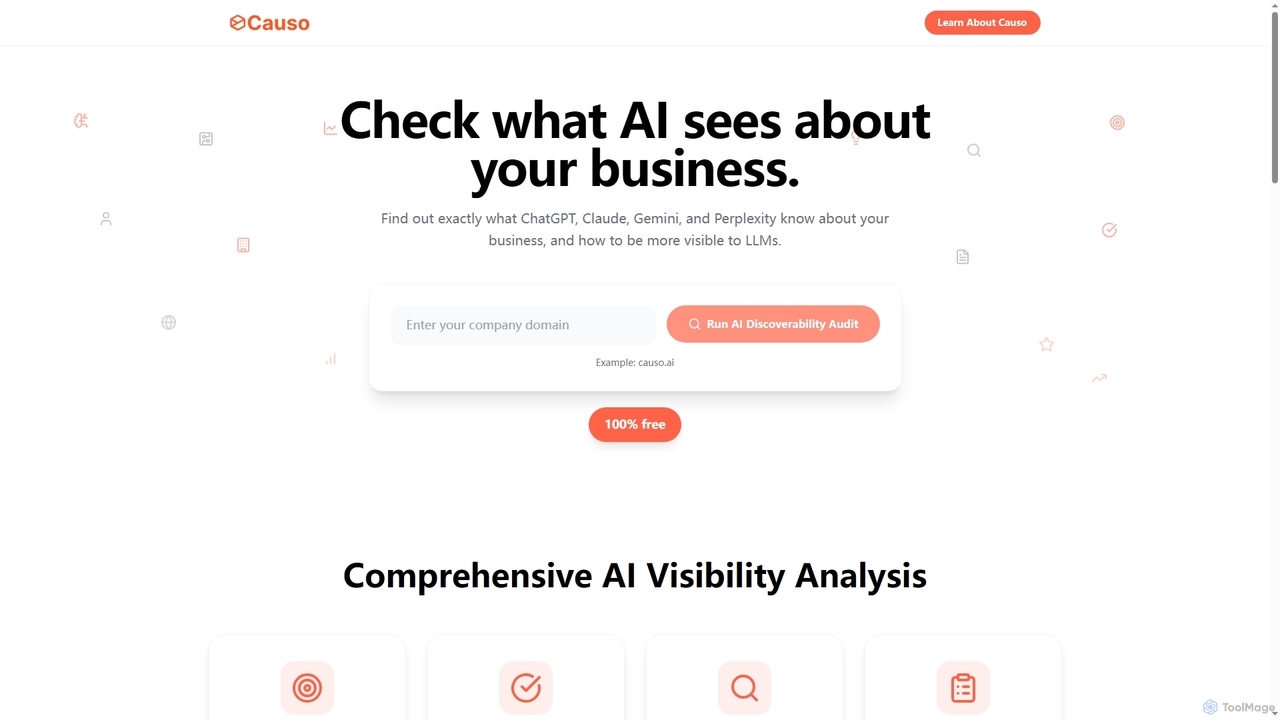
A free AI-powered tool that audits your business's visibility across major LLMs like ChatGPT, Claude, Gemini, and Perplexity. …
A free AI-powered tool that audits your business's visibility across major LLMs like ChatGPT, Claude, Gemini, and Perplexity. It provides a detailed report based on 10 criteria and offers actionable steps to improve your AI discoverability.
Cuchame
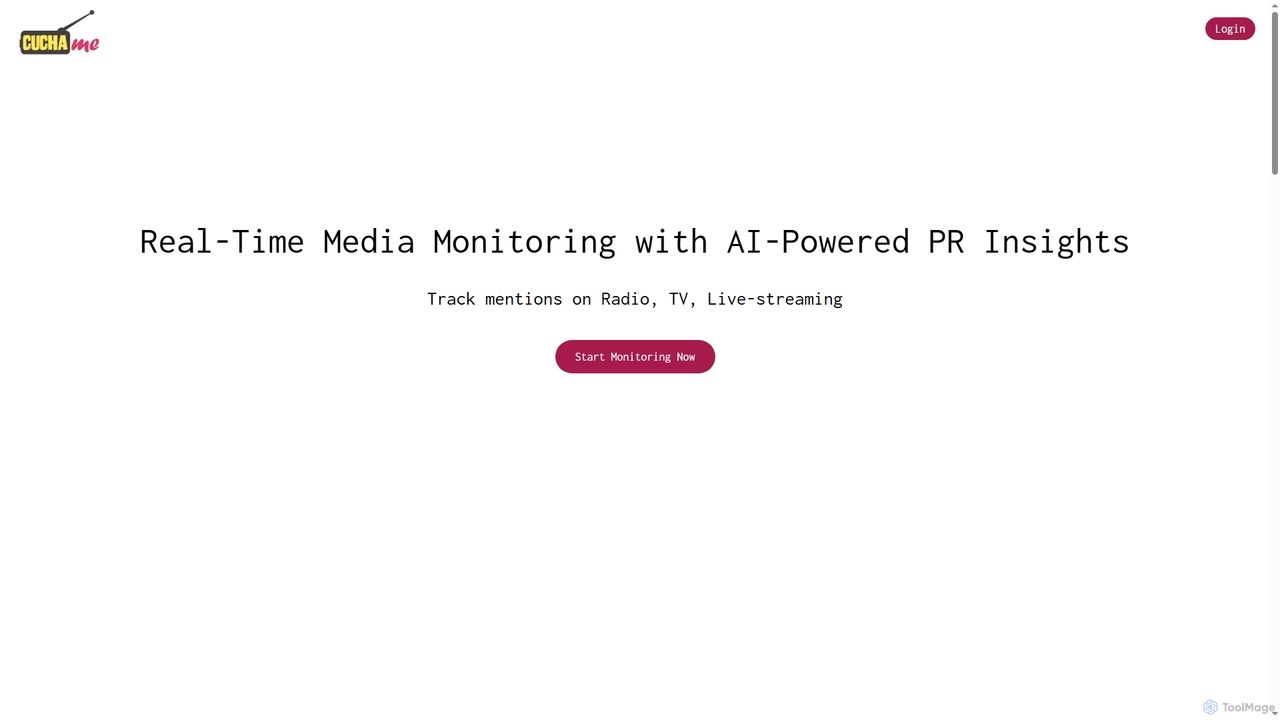
Cuchame is an AI-powered, real-time media monitoring tool for live streams. It enables users to track multiple concurrent …
Cuchame is an AI-powered, real-time media monitoring tool for live streams. It enables users to track multiple concurrent broadcasts, set up custom alerts for specific keywords or topics, and receive intelligent insights. Ideal for brand monitoring, PR, and competitive analysis.
ChatRank
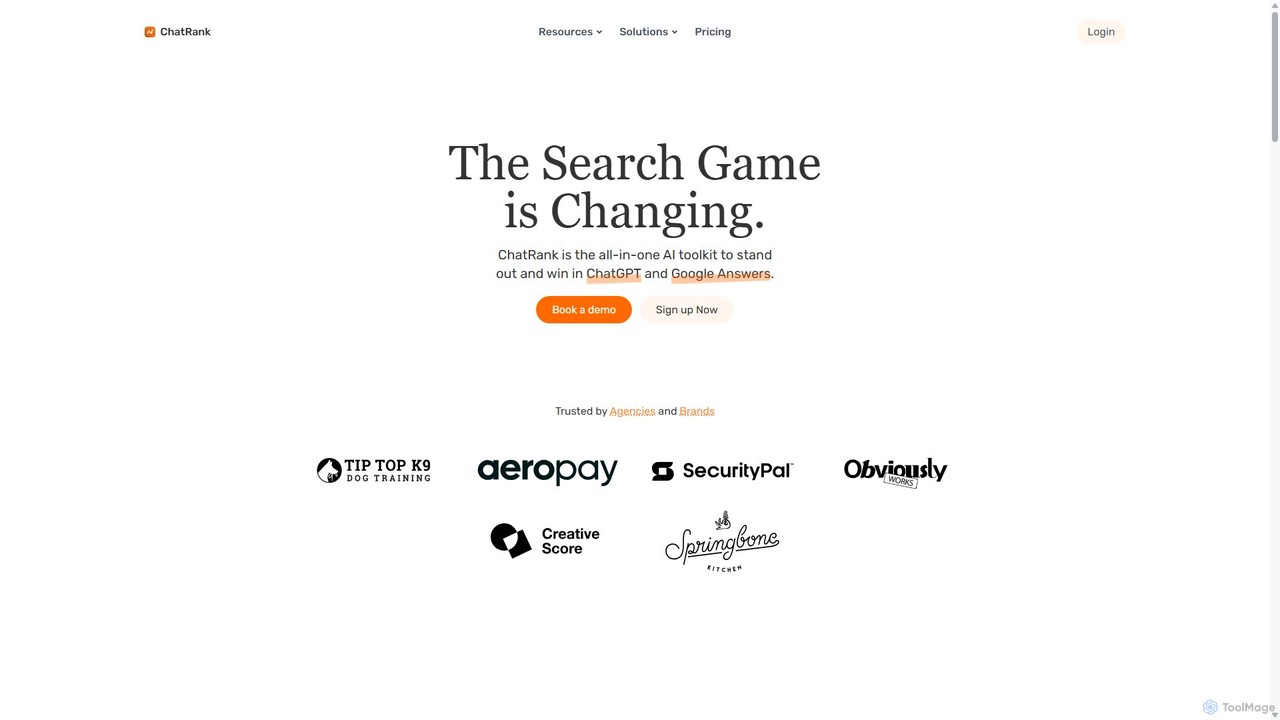
ChatRank is an all-in-one AI Optimization (AIO) toolkit designed for brands and agencies to monitor, analyze, and enhance …
ChatRank is an all-in-one AI Optimization (AIO) toolkit designed for brands and agencies to monitor, analyze, and enhance their visibility in AI-powered search results like ChatGPT and Google AI Overviews. It provides actionable insights, content recommendations, and performance analytics to help businesses win in the new era of search.
Weavel
Weavel is an AI-powered storytelling platform for modern companies. It helps businesses define their brand voice, generate consistent …
Weavel is an AI-powered storytelling platform for modern companies. It helps businesses define their brand voice, generate consistent and compelling narratives, and scale content creation across marketing, sales, and internal communications.
About Brand Management
AI Brand Management tools are a specialized class of software that uses artificial intelligence to monitor, analyze, and protect a brand's public image and consistency. These tools employ Natural Language Processing (NLP) and computer vision to scan vast amounts of data from social media, news sites, forums, and review platforms. This enables businesses to proactively manage their reputation, ensure messaging is cohesive across all channels, and gain deep insights into public sentiment and brand health. Unlike general social media tools that focus on publishing, these platforms excel at comprehensive listening and analysis.
Core Features
- Sentiment Analysis: Automatically determines the emotional tone (positive, negative, neutral) behind online brand mentions.
- Brand Consistency Auditing: Scans digital assets to ensure adherence to brand guidelines for logos, colors, and messaging.
- Real-time Mention Tracking: Monitors the web and social media for brand keywords, providing immediate alerts on important conversations.
- Reputation Risk Detection: Identifies potential PR crises or negative trends before they escalate by analyzing conversation patterns.
- Competitive Intelligence: Tracks the public perception, share of voice, and marketing strategies of competitors.
Use Cases
These tools are essential for marketing departments, public relations (PR) agencies, and corporate communications teams. They are used for tracking campaign effectiveness by measuring public sentiment, managing potential crises by catching negative feedback early, and maintaining a unified brand identity across global markets and diverse product lines.
How to Choose
When selecting an AI Brand Management tool, consider the breadth of data sources it monitors (e.g., social media, news, blogs, review sites). Evaluate the accuracy and granularity of its sentiment analysis. Check for integration capabilities with your existing marketing and communication platforms. Finally, assess the customizability of its reporting dashboards and the timeliness of its alert system for critical issues.

Brand ManagementUse Cases
Proactive Crisis Management
A public relations manager at a consumer electronics company receives an automated alert about a sudden spike in negative mentions related to a new product's battery life. The AI tool aggregates posts from Twitter, Reddit, and tech forums, identifying a potential defect issue before it hits mainstream news. The PR team uses these insights to quickly draft a public statement, prepare the customer support team with accurate information, and collaborate with engineering to address the problem, mitigating a potential large-scale reputation crisis.
Ensuring Global Brand Consistency
A global brand manager for a fast-food chain uses an AI tool to audit digital assets across 50+ countries. The tool's computer vision capabilities scan thousands of social media images, local websites, and digital ads to flag instances of incorrect logo usage, outdated color palettes, or off-brand messaging. This automated process replaces months of manual work, providing a centralized dashboard to ensure that all regional marketing efforts align with the core brand identity, maintaining a consistent customer experience worldwide.
Measuring Campaign Sentiment and ROI
A marketing analyst for a beverage company launches a major summer campaign. Instead of just tracking likes and shares, they use an AI brand management tool to analyze the sentiment of conversations surrounding the campaign hashtag. The tool reveals that while the campaign has high engagement, a significant portion of the sentiment is neutral or slightly negative due to a controversial celebrity endorsement. This allows the team to adjust their messaging mid-campaign and provides a more nuanced understanding of ROI beyond simple engagement metrics.
Vetting Influencer Partnerships
A social media manager for a sustainable fashion brand wants to partner with influencers. Before reaching out, they use a brand management tool to analyze the historical content of potential candidates. The AI scans years of posts for keywords related to controversial topics, analyzes the sentiment of their audience's comments, and verifies that their visual aesthetic aligns with the brand's guidelines. This data-driven approach helps them select influencers who are a genuine fit, reducing the risk of a partnership that could damage the brand's reputation.
Competitive Brand Positioning Analysis
A product marketing manager at a SaaS startup uses a brand management tool to monitor conversations about their competitors. The tool tracks the 'share of voice' for key industry features and analyzes the sentiment associated with each competitor's brand name. They discover that while their main competitor is mentioned more often, the sentiment is frequently negative, citing poor customer support. This insight allows the startup to double down on their customer support messaging in their marketing, carving out a strong, positive position in the market.
Aggregating Customer Feedback from Reviews
A customer experience manager for a hotel chain uses an AI tool to aggregate and analyze guest reviews from dozens of platforms like TripAdvisor, Google, and Booking.com. The tool's NLP capabilities identify recurring themes, such as 'slow check-in' or 'excellent breakfast,' across thousands of reviews. This provides actionable data to improve operations at specific hotel locations and allows the corporate team to track brand perception and service quality trends over time, without manually reading every single review.