Business Best in category 5 results Construction AI Tool

Popular AI tools in the Construction field of Business include Precip、Constructable、Downtobid、Buildots、opteam, etc., helping you quickly improve efficiency.

Downtobid

Downtobid

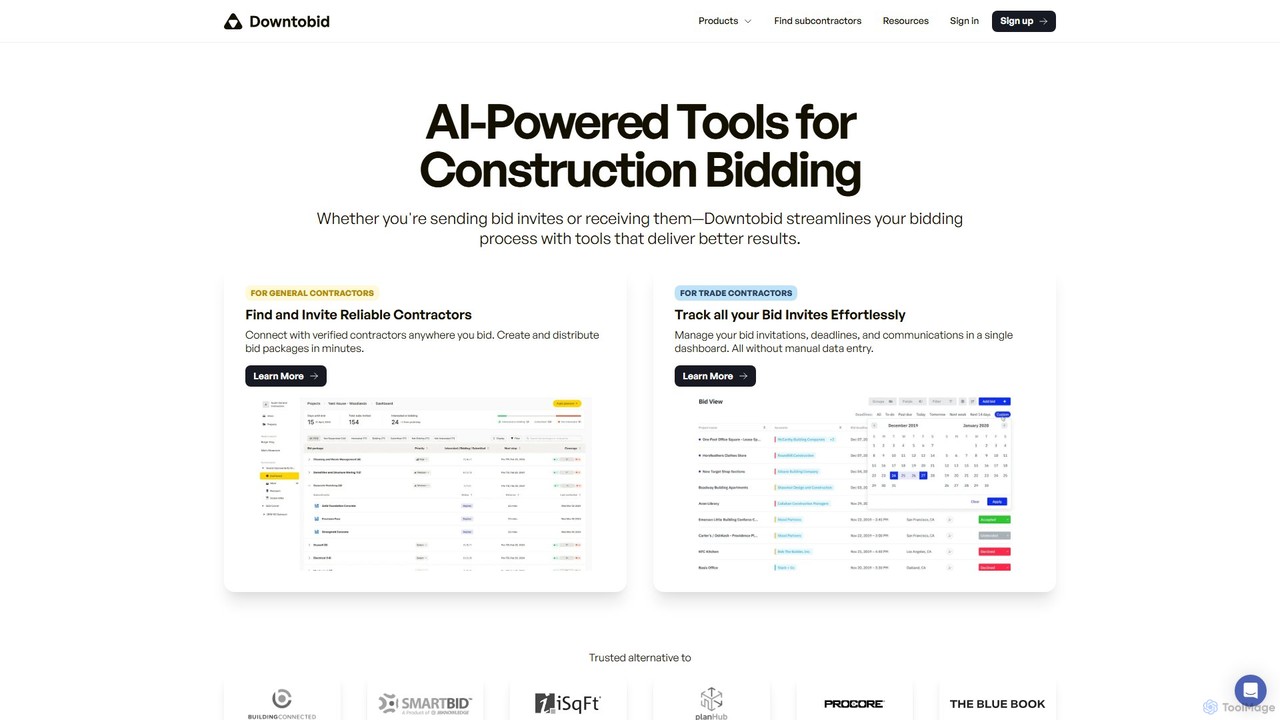
Downtobid is an AI-powered platform for the construction industry that streamlines the bidding process. It helps general contractors …

34.4K
Buildots

Buildots

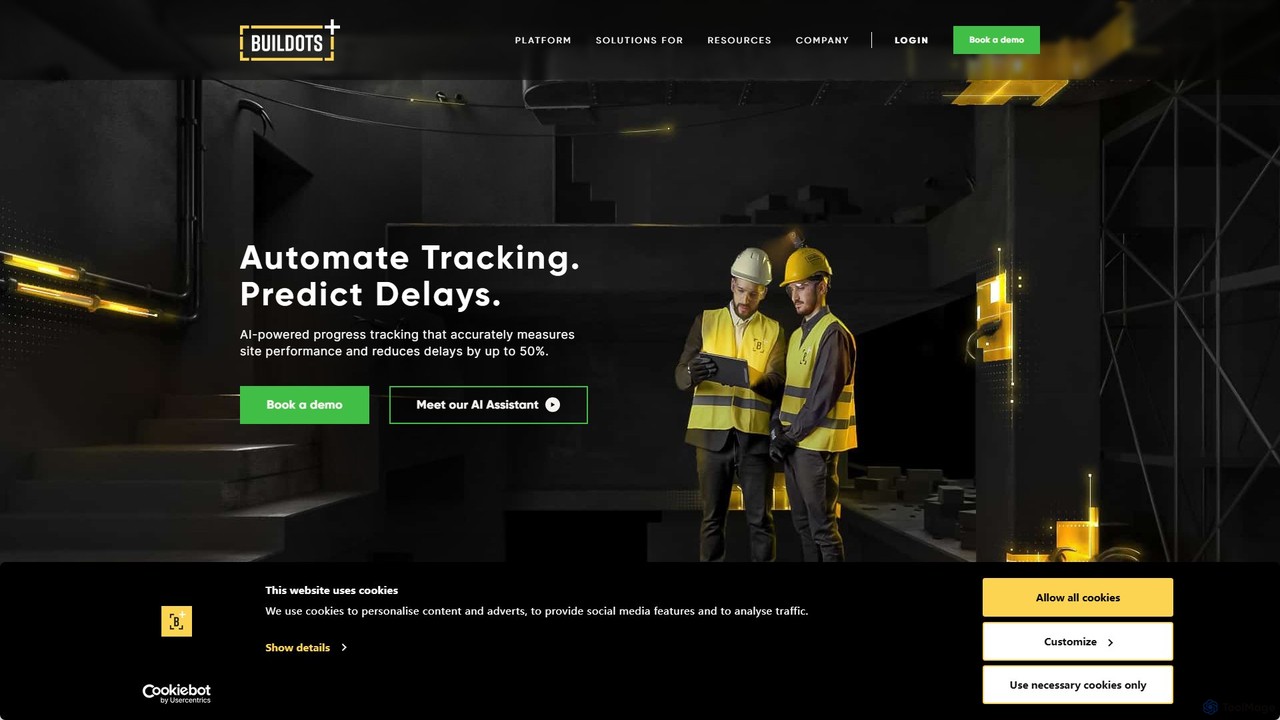
Buildots is an AI-powered construction management platform that provides end-to-end visibility and control over projects. By capturing 360° …

29.4K
opteam

opteam

opteam is an AI-driven construction project management software designed to provide full visibility and real-time control over projects. …

18.6K
Constructable

Constructable

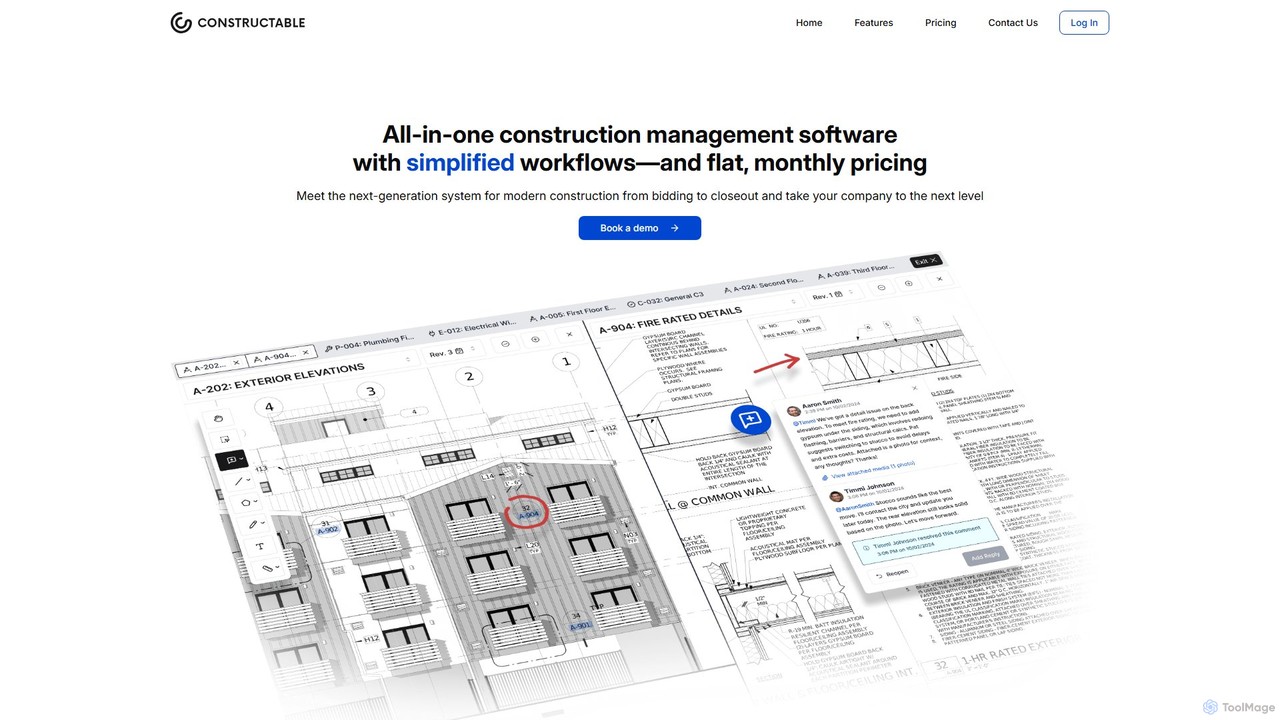
Constructable is an AI-powered construction management platform designed for modern construction teams. It streamlines project workflows, enhances team …

34.6K
Precip

Precip

Precip provides hyper-local, highly accurate rainfall totals and historical weather data through a web dashboard and a powerful …

422.0K

About Construction

AI Construction tools are specialized AI-powered solutions designed to optimize various stages of building and infrastructure projects. These tools leverage machine learning, computer vision, and data analytics to enhance planning, design, execution, and maintenance. They aim to improve efficiency, reduce costs, and bolster safety across the construction lifecycle. From automating site monitoring to predictive maintenance, AI in construction is transforming traditional practices.

Core Features

  • Project Planning & Optimization: AI algorithms analyze vast datasets to optimize project schedules, resource allocation, and budget forecasting, identifying potential risks and efficiencies.
  • Automated Site Monitoring: Computer vision and drone technology powered by AI continuously monitor construction progress, detect safety hazards, and track equipment and materials in real-time.
  • Generative Design & BIM Integration: AI assists in generating optimal design alternatives, performing structural analysis, and integrating seamlessly with Building Information Modeling (BIM) platforms for enhanced collaboration.
  • Predictive Maintenance: Machine learning models predict equipment failures and maintenance needs, minimizing downtime and extending asset lifespan on construction sites.
  • Quality Control & Defect Detection: AI-driven image analysis identifies construction defects, ensuring adherence to quality standards and reducing rework.

Applicable Scenarios

Construction companies, project managers, and engineers utilize these tools to streamline complex operations. For instance, AI can automate progress tracking on large-scale infrastructure projects or optimize material procurement for commercial buildings. They also assist in identifying potential design clashes early in the planning phase.

How to Choose

When selecting AI Construction tools, consider the specific project phase you aim to optimize (e.g., planning, execution, maintenance). Evaluate the tool's integration capabilities with existing BIM software and project management systems. Assess the accuracy of its predictive models and its ability to handle diverse data inputs. Finally, consider the vendor's industry expertise and support for construction-specific challenges.

ConstructionUse Cases

1

Automating Construction Site Progress Monitoring

Project managers and site supervisors can deploy AI-powered computer vision systems, often integrated with drone footage, to automatically track construction progress. These tools analyze images and videos to compare actual progress against BIM models and schedules, identifying delays or deviations in real-time. This reduces the need for manual inspections, provides objective data for reporting, and enables proactive adjustments to project timelines and resource allocation, significantly improving oversight efficiency.

2

Optimizing Material Procurement and Logistics

Supply chain managers in construction leverage AI to predict material demand, optimize procurement strategies, and manage logistics. AI algorithms analyze historical project data, market prices, and supplier performance to recommend optimal ordering quantities and delivery schedules. This minimizes waste, reduces storage costs, prevents material shortages, and streamlines the entire supply chain, ensuring materials arrive on-site precisely when needed for various construction phases.

3

Enhancing Safety and Hazard Detection on Sites

Site safety officers utilize AI-driven surveillance and sensor systems to continuously monitor construction environments for potential hazards. AI can detect workers without proper PPE, identify unsafe equipment operation, or flag unauthorized access to restricted areas. Real-time alerts are sent to supervisors, enabling immediate intervention. This proactive approach significantly reduces accident risks, improves compliance with safety regulations, and fosters a safer working environment for all personnel.

4

Predictive Maintenance for Heavy Construction Equipment

Equipment managers employ AI and IoT sensors to monitor the health and performance of heavy machinery like excavators, cranes, and bulldozers. AI models analyze sensor data (vibration, temperature, fuel consumption) to predict potential mechanical failures before they occur. This allows for scheduled maintenance during off-peak hours, minimizing unexpected downtime, extending equipment lifespan, and reducing costly emergency repairs, thereby ensuring project continuity.

5

Generative Design for Structural Optimization

Architects and structural engineers use AI-powered generative design tools to explore thousands of design alternatives for building components or entire structures. By inputting performance criteria such as load-bearing capacity, material efficiency, and cost constraints, AI can rapidly generate optimized designs that meet specific requirements. This accelerates the design phase, uncovers innovative structural solutions, and can lead to significant material savings and improved building performance.

6

Automated Quality Control and Defect Identification

Quality control teams deploy AI-driven image recognition systems to inspect newly completed construction work for defects or non-compliance. Cameras capture high-resolution images of concrete pours, facade installations, or finishing work, which AI then analyzes to identify cracks, misalignments, or incomplete elements. This automates a labor-intensive process, ensures consistent quality across large projects, and allows for early detection and rectification of issues, preventing costly rework.

ConstructionFrequently Asked Questions