ToolMage
Sign in

Best 1 Contract Analysis AI tools for Business

Popular Contract Analysis AI tools in Business include ChatPDF, helping you work more efficiently.

ChatPDF
Freemium

ChatPDF

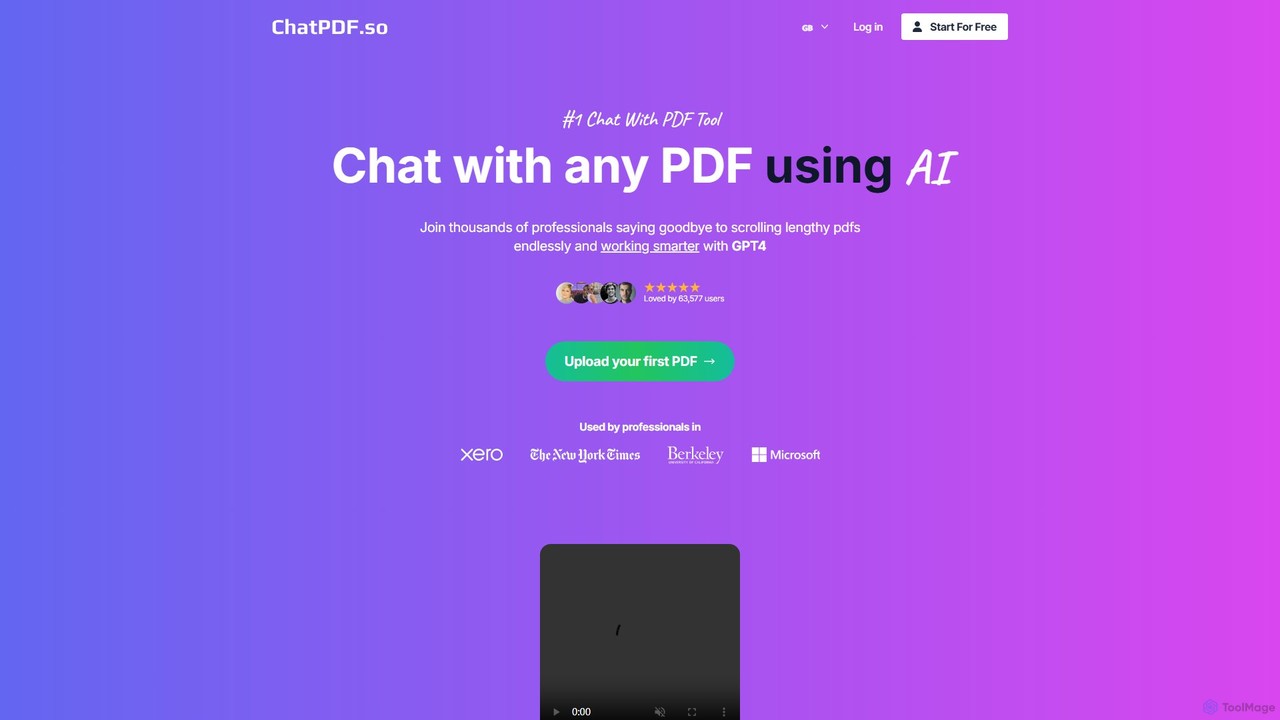
ChatPDF is an AI-powered tool that allows you to interact with your PDF documents. Simply upload a file and ask questions, get summaries, and extract key information instantly. It's designed for students, researchers, and professionals to enhance productivity and understanding of complex materials.

Contract Analysis
Visits 6.4KFavorites 164Likes 171

About Contract Analysis

AI Contract Analysis tools are specialized business applications that use natural language processing (NLP) to automatically review, interpret, and manage legal documents. These platforms are trained on vast legal datasets to understand complex clauses, identify risks, and extract critical data points with high accuracy. They streamline legal workflows by automating repetitive review tasks, reducing human error, and providing data-driven insights for negotiation and compliance. Unlike general document readers, they possess a deep contextual understanding of legal terminology and contract structures.

Core Features

  • Clause Extraction & Classification: Automatically identifies and categorizes key provisions like termination, liability, and confidentiality clauses.
  • Risk Identification: Flags non-standard, ambiguous, or potentially unfavorable terms based on predefined legal playbooks.
  • Data Extraction: Pulls specific information such as dates, party names, monetary values, and obligations into a structured format.
  • Automated Redlining: Compares different contract versions to instantly highlight all additions, deletions, and modifications.
  • Obligation Management: Tracks key dates and commitments to ensure post-signature compliance and prevent missed deadlines.

Applicable Scenarios

These tools are essential for corporate legal departments, law firms, procurement teams, and sales operations. They are frequently used during M&A due diligence to rapidly assess large volumes of contracts, for managing vendor agreements to ensure favorable terms, and for standardizing sales contracts to accelerate the deal cycle.

Selection Criteria

When choosing a tool, consider its specialization in specific contract types (e.g., SaaS, real estate). Evaluate its integration capabilities with your existing CRM or document management systems. Assess the level of customization available for risk models and legal playbooks, and confirm it supports the languages and jurisdictions relevant to your business.

Contract Analysis use cases

1

Accelerate M&A Due Diligence

For corporate lawyers and M&A analysts facing tight deadlines, reviewing thousands of contracts from a target company is a monumental task. By uploading the entire contract portfolio to an AI analysis tool, they can automate the process. The AI rapidly extracts critical clauses like change of control, assignment restrictions, and unusual liabilities. This transforms a weeks-long manual review into a process of days, enabling the deal team to identify critical risks early and receive a comprehensive, data-driven summary for strategic decision-making.

2

Standardize Sales Contract Reviews

Sales operations managers and in-house counsel need to ensure all outgoing agreements comply with company policy. Instead of manually reviewing each contract, they can implement an AI tool. When a sales representative submits a draft, the AI automatically checks it against the company's legal playbook, flagging any deviations from standard terms regarding liability, payment, or termination. This enforces consistency, significantly speeds up the sales cycle by reducing legal bottlenecks, and minimizes negotiation risks with clients.

3

Optimize Procurement and Vendor Management

Procurement managers oversee hundreds of supplier contracts, each with unique terms. Using an AI analysis tool, they can create a centralized, searchable database of all agreements. The AI extracts key data like renewal dates, payment terms, and service-level agreements (SLAs). This system automatically sends alerts for upcoming renewals, provides a clear overview of all vendor obligations, and offers data-driven insights for negotiating better terms in the future, ensuring cost savings and compliance.

4

Manage Large Real Estate Lease Portfolios

Commercial real estate managers are responsible for vast portfolios of property leases. Manually tracking critical dates and obligations is prone to error. An AI contract analysis tool can digitize and analyze all lease agreements, extracting key data points like rent escalation clauses, renewal options, and maintenance responsibilities. This creates a dynamic dashboard for the entire portfolio, automating alerts for important dates and simplifying compliance reporting, ultimately protecting revenue and reducing operational risk.

5

Ensure Regulatory Compliance (e.g., GDPR, CCPA)

Compliance officers must audit countless third-party contracts to ensure they meet data privacy regulations like GDPR or CCPA. Manually searching for specific clauses is time-consuming. An AI tool can be configured to scan all contracts for required provisions, such as data processing agreements, liability for breaches, and data transfer restrictions. It quickly identifies non-compliant agreements, streamlines the remediation process, and generates an auditable trail of compliance efforts, mitigating significant legal and financial risks.

6

Streamline Litigation and e-Discovery

During litigation, paralegals and attorneys often need to sift through vast volumes of contracts to find relevant evidence. This e-discovery process is traditionally slow and costly. An AI contract analysis platform acts as a powerful search engine for legal documents. Users can instantly locate contracts containing specific terms, clauses, or party names relevant to a dispute. This drastically cuts down on manual review hours, reduces discovery costs, and allows legal teams to build their case strategy more efficiently.

Contract Analysis FAQ

What is AI Contract Analysis?

AI Contract Analysis is a technology that uses artificial intelligence, primarily Natural Language Processing (NLP), to automatically read, understand, and extract key information from legal contracts. Unlike a simple keyword search, it interprets legal language contextually to identify clauses, obligations, risks, and important data points. Its main purpose is to accelerate the contract review process, reduce human error, and provide structured data for better decision-making and management.

How to choose the right AI Contract Analysis tool?

When selecting a tool, consider these key factors:

  • Specialization: Ensure the tool is trained on the specific contract types you handle most frequently (e.g., NDAs, MSAs, leases).
  • Integration: Check for compatibility with your existing systems, such as document storage (Google Drive, SharePoint) and CRM (Salesforce).
  • Customization: Look for the ability to create custom rules, risk models, and legal playbooks that reflect your company's policies.
  • Security and Compliance: Verify that the platform meets high security standards (like SOC 2) and data privacy regulations relevant to your industry.
What's the difference between Contract Analysis and general Document AI?

The key difference is specialization. General Document AI is designed to extract structured data from a wide variety of documents like invoices, receipts, and forms. AI Contract Analysis tools are specifically trained on massive datasets of legal agreements. This gives them a deep, contextual understanding of legal terminology, complex clause structures, and the relationships between different provisions, allowing them to perform sophisticated tasks like risk assessment and compliance checking that general document tools cannot.

Who benefits most from using Contract Analysis tools?

Various professionals benefit significantly. Corporate legal departments and law firms use them to accelerate due diligence and manage high volumes of contracts efficiently. Procurement and sales teams leverage them to standardize agreements, reduce negotiation cycles, and manage vendor/client relationships. Additionally, compliance and finance departments rely on these tools to track obligations, manage risk, and ensure adherence to regulatory requirements across the entire organization.

How accurate is AI in analyzing contracts?

Modern AI contract analysis tools achieve very high accuracy, often exceeding 95% for extracting standard data points and classifying common clauses. However, accuracy can vary based on the quality of the source document (e.g., a clear digital file vs. a poor-quality scan) and the complexity of the legal language. These tools are best viewed as powerful assistants that augment human expertise. They handle the high-volume, repetitive work, allowing legal professionals to focus their time on strategic analysis, negotiation, and reviewing the AI's outputs for final validation.