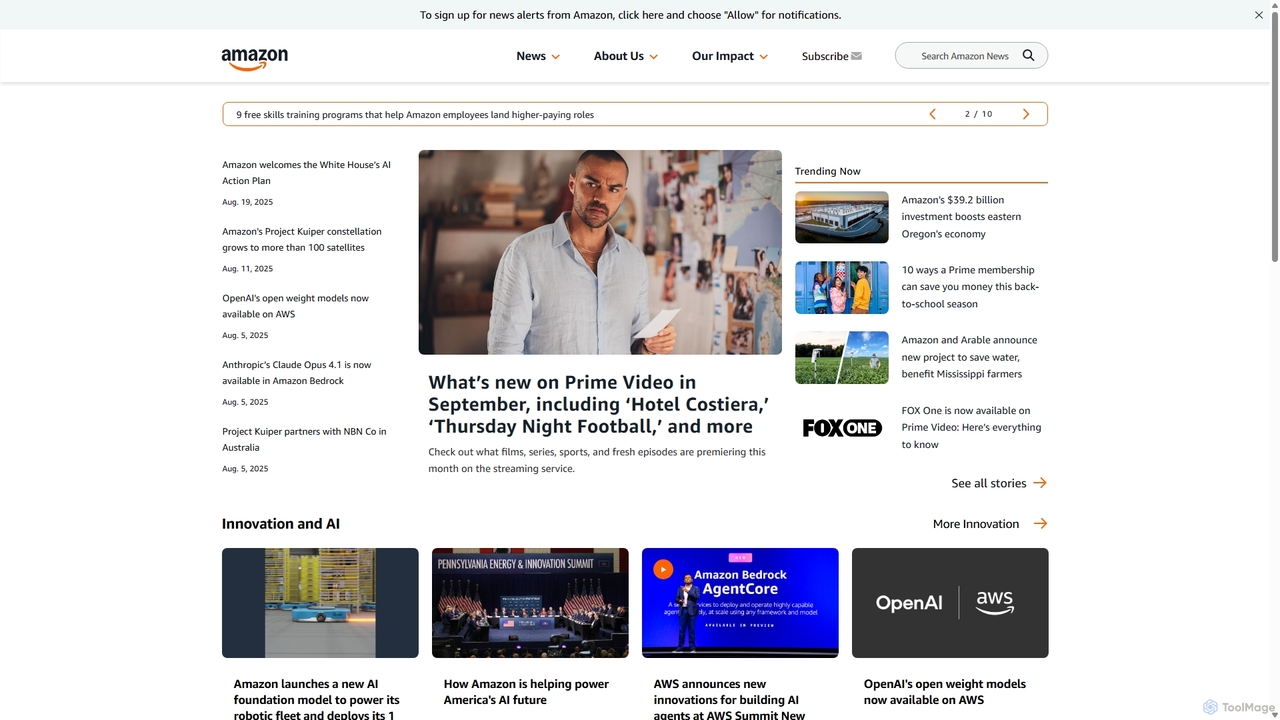
Aboutamazon
The official news and information hub for Amazon, providing breaking news, in-depth stories, and updates on the company's …
The official news and information hub for Amazon, providing breaking news, in-depth stories, and updates on the company's global operations. It offers key insights into Amazon's innovations in AI, cloud computing (AWS), sustainability, e-commerce, and corporate culture.

Animoto
Animoto is an intuitive online video maker that enables users to create professional-quality videos with ease. Using a …
Animoto is an intuitive online video maker that enables users to create professional-quality videos with ease. Using a drag-and-drop interface, you can combine photos, video clips, and screen recordings. It offers a vast library of templates, licensed music, and stock media from Getty Images, making it ideal for marketing, business communications, and personal projects without requiring any prior editing experience.
About Corporate Communications
Corporate Communications AI tools are specialized platforms that leverage artificial intelligence to enhance and automate various aspects of an organization's internal and external communication strategies. These tools utilize natural language processing (NLP), machine learning, and data analytics to streamline content creation, sentiment analysis, media monitoring, and stakeholder engagement. They empower businesses to maintain a consistent brand voice, respond proactively to public perception, and foster effective dialogue with employees, customers, investors, and the media, ultimately strengthening reputation and operational efficiency within the broader business context.
Core Features
- Content Generation: Automatically drafts press releases, internal memos, social media posts, and reports based on input data and brand guidelines.
- Sentiment Analysis: Monitors media mentions and social conversations to gauge public perception and identify potential reputational risks or opportunities.
- Media Monitoring & Insights: Tracks news coverage and online discussions across various channels, providing actionable insights into brand visibility and competitor activities.
- Personalized Internal Communications: Tailors messages to specific employee segments, improving engagement and information dissemination within the organization.
- Crisis Communication Support: Assists in drafting rapid response statements and identifying key stakeholders during critical events.
Applicable Scenarios
These tools are invaluable for public relations teams managing brand reputation, marketing departments optimizing messaging, human resources professionals enhancing employee engagement, and investor relations teams communicating financial updates. They are particularly useful for large enterprises with complex communication needs, agencies handling multiple clients, and any organization aiming for data-driven, efficient, and consistent communication across all channels.
How to Choose
When selecting Corporate Communications AI tools, consider the breadth of content generation capabilities, the accuracy and depth of sentiment analysis, the scope of media monitoring (e.g., traditional vs. social media), integration with existing communication platforms, and data security compliance. Evaluate the tool's ability to customize brand voice, support multiple languages, and provide clear, actionable analytics to ensure it aligns with your organization's specific communication objectives and regulatory requirements.
Corporate CommunicationsUse Cases
Automating Press Release Drafting and Distribution
Public relations specialists can use AI tools to rapidly generate drafts of press releases for product launches, company announcements, or event summaries. By inputting key facts and desired tone, the AI crafts compelling narratives, saving hours of manual writing. This allows PR teams to focus on strategic outreach and media relations, ensuring timely and consistent communication with journalists and stakeholders.
Real-time Brand Sentiment Monitoring
Marketing and PR teams leverage AI to continuously scan news articles, social media, and online forums for mentions of their brand, products, or key executives. The AI analyzes the sentiment (positive, negative, neutral) of these mentions, alerting communicators to emerging issues or positive trends. This enables proactive reputation management and data-driven adjustments to communication strategies.
Personalizing Internal Employee Communications
HR and internal communications managers utilize AI to segment employees based on roles, departments, or interests, and then personalize internal memos, newsletters, and announcements. This ensures that each employee receives relevant information in a tailored format, increasing engagement and reducing information overload. For example, AI can suggest content topics or optimize delivery times for different employee groups.
Drafting Crisis Communication Statements
During a crisis, speed and accuracy are paramount. AI tools can assist communication teams by quickly drafting initial holding statements, FAQs, and social media responses based on predefined crisis scenarios and company guidelines. This significantly reduces the time to respond, helps maintain a consistent message, and allows human experts to refine and approve critical communications under pressure.
Enhancing Investor Relations Reporting
Investor relations professionals can use AI to analyze financial reports, market data, and regulatory filings to generate concise summaries and draft sections of quarterly or annual reports. AI can also help identify key trends and talking points for investor calls, ensuring clear, data-backed communication with shareholders and financial analysts, improving transparency and trust.
Optimizing Social Media Communication Strategy
Social media managers employ AI to analyze audience engagement patterns, trending topics, and competitor activity to recommend optimal content types, posting times, and messaging for various platforms. AI can also assist in drafting engaging captions and responses, ensuring the brand's social media presence is consistent, relevant, and effectively reaches target audiences, driving engagement and brand loyalty.