getnuvo
getnuvo is an AI-powered data import solution for SaaS businesses. It provides an embeddable SDK and automated pipelines …
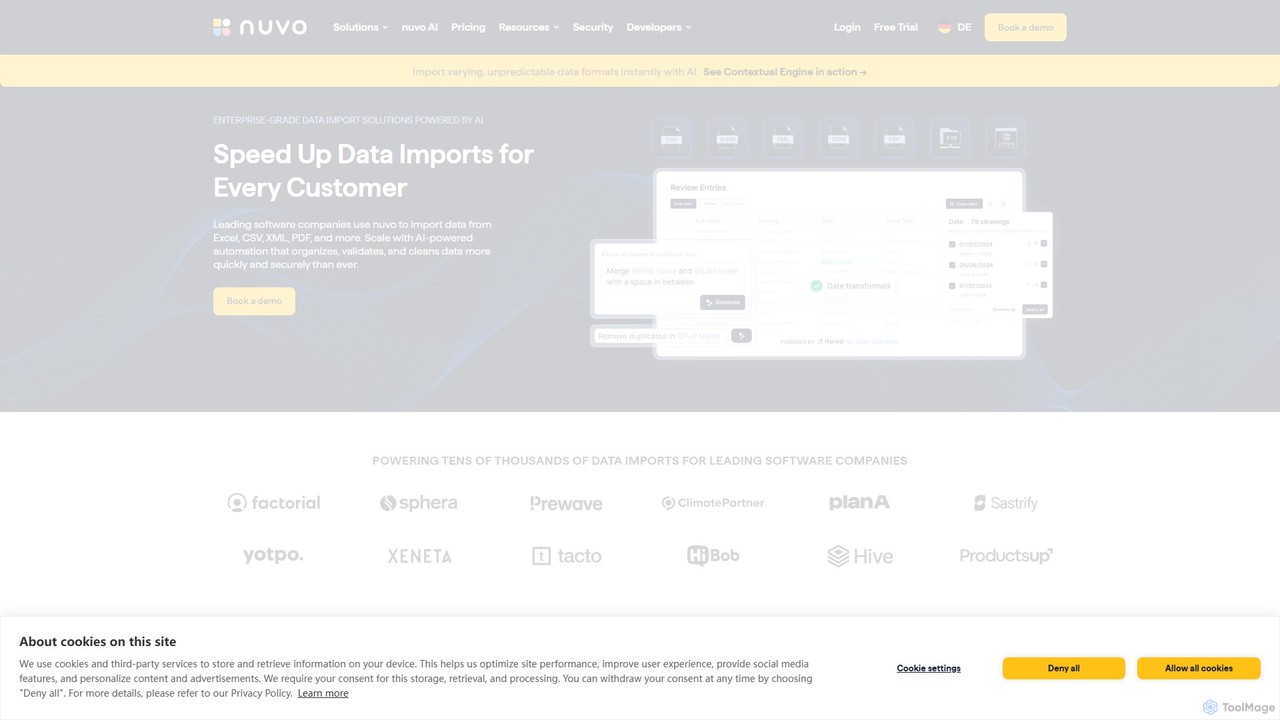
getnuvo is an AI-powered data import solution for SaaS businesses. It provides an embeddable SDK and automated pipelines to instantly import, map, clean, and validate customer data from any format (CSV, Excel, JSON, etc.). This streamlines customer onboarding, reduces manual effort, and saves developer resources.
Stonly
Stonly is an AI-powered knowledge platform designed for customer service. It helps businesses create interactive guides, knowledge bases, …
Stonly is an AI-powered knowledge platform designed for customer service. It helps businesses create interactive guides, knowledge bases, and AI-driven answers to enhance customer self-service, reduce support tickets, and accelerate agent training. By delivering personalized and contextual knowledge, Stonly improves resolution times and overall customer satisfaction.
About Customer Onboarding
Customer Onboarding AI tools are designed to automate and personalize the process of integrating new users into a product or service. Leveraging AI, these platforms streamline initial setup, provide tailored guidance, and proactively address user needs, ensuring a smooth and engaging start. They aim to enhance user adoption, reduce churn, and improve overall customer satisfaction from the outset, making the initial customer journey more efficient and effective. These tools are a critical component within the broader category of Business AI solutions.
Core Features
- Personalized Welcome Flows: Automatically create and deliver customized onboarding journeys based on user segments and behaviors.
- Automated Product Tours: Guide users through key features with interactive, AI-driven tutorials and contextual help.
- Proactive Support & FAQs: Identify potential user roadblocks and offer relevant support articles or chatbot assistance before issues escalate.
- Usage Analytics & Insights: Track user engagement during onboarding to pinpoint areas of friction and optimize the process.
- Feedback Collection & Analysis: Gather and analyze new user feedback to continuously refine the onboarding experience.
Applicable Scenarios
SaaS companies use these tools to guide new subscribers through complex software features, ensuring they quickly grasp the value proposition. E-commerce platforms deploy AI onboarding to help first-time buyers navigate product discovery and complete their initial purchase smoothly. Financial services leverage AI to simplify account setup and compliance checks for new clients, reducing manual effort and errors.
How to Choose
When selecting Customer Onboarding AI tools, consider the depth of personalization offered, ensuring it can adapt to diverse user segments. Evaluate its integration capabilities with existing CRM, marketing automation, and product analytics platforms. Assess the robustness of its analytics and reporting features for continuous optimization. Finally, review the level of automation for support and guidance, balancing AI-driven assistance with human touchpoints where necessary.

Customer OnboardingUse Cases
Automating SaaS Product Tours for New Users
A SaaS company's product manager uses Customer Onboarding AI tools to create dynamic, personalized product walkthroughs for new subscribers. By analyzing initial user data and stated goals, the AI highlights features most relevant to each user, guiding them through complex functionalities. This leads to faster feature adoption and a significant reduction in the time users take to achieve their first 'aha!' moment, improving overall retention.
Streamlining E-commerce First Purchase Experience
An online retailer deploys Customer Onboarding AI to guide new shoppers through account creation, product search, and checkout. The AI offers contextual help, personalized product recommendations based on browsing history, and proactive assistance to resolve common queries. This significantly reduces cart abandonment rates by 15% and increases the conversion rate for first-time buyers, ensuring a smoother initial shopping journey.
Simplifying Financial Account Setup and Compliance
A fintech platform utilizes Customer Onboarding AI to assist new clients with complex KYC (Know Your Customer) and account setup processes. The AI provides real-time validation of submitted documents, clarifies requirements through interactive prompts, and answers compliance-related FAQs. This accelerates the onboarding time by 30%, reduces manual review errors, and significantly improves the client's perception of ease and trustworthiness during a critical initial phase.
Personalizing EdTech Course Enrollment for Students
An online learning platform uses Customer Onboarding AI to personalize the enrollment experience for new students. Based on their stated learning objectives, prior knowledge, and preferred learning styles, the AI recommends initial courses and guides them through platform features like progress tracking and community forums. This leads to a 20% increase in course completion rates and higher student engagement from day one.
Enhancing Mobile App Adoption and Engagement
A mobile app developer integrates Customer Onboarding AI to introduce new users to core app functionalities through interactive tutorials and contextual tips. The AI identifies user drop-off points during initial usage and proactively offers mini-tutorials or FAQs to overcome friction. This results in a 25% increase in feature discovery and a 10% improvement in 7-day retention rates, fostering deeper engagement with the app.
Optimizing Enterprise Software Implementation for New Teams
Large enterprises use Customer Onboarding AI to guide new employees or client teams through the initial setup and configuration of complex enterprise software. The AI provides step-by-step instructions, contextual troubleshooting assistance, and personalized learning paths based on roles and permissions. This reduces the burden on IT support by 40% and accelerates the time-to-productivity for new users, ensuring a smoother rollout of critical business systems.