Nowadays
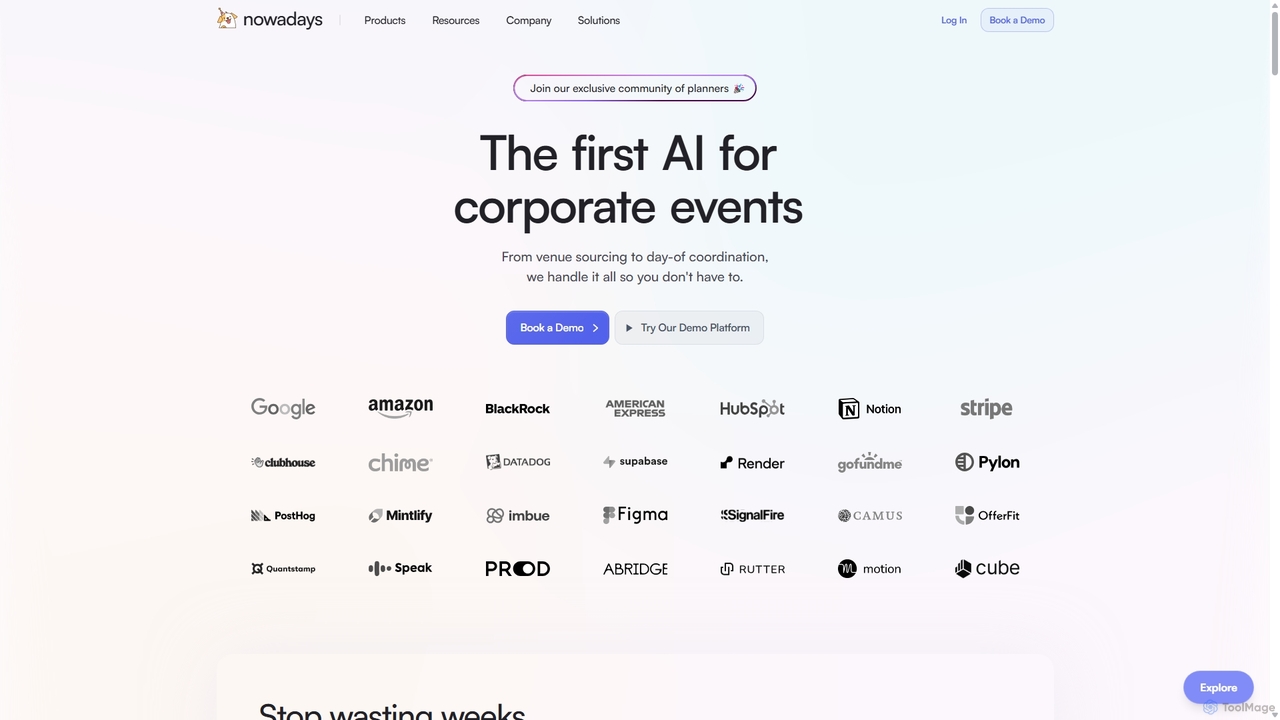
Nowadays is an AI-powered event planning platform for corporate teams. It automates and streamlines the entire event lifecycle, …
Nowadays is an AI-powered event planning platform for corporate teams. It automates and streamlines the entire event lifecycle, from venue sourcing and budget estimation to vendor negotiation and day-of coordination, saving teams weeks of manual work.
About Event Management
AI Event Management tools are specialized platforms that leverage artificial intelligence to streamline and optimize the entire lifecycle of an event. They use machine learning algorithms to automate tasks like scheduling, marketing, and attendee engagement, transforming complex planning into a data-driven process. These tools help organizers create more personalized experiences, improve logistical efficiency, and gain deep analytical insights into event performance. By handling repetitive tasks and providing predictive recommendations, they allow event professionals to focus on strategic and creative elements.
Core Features
- Predictive Scheduling: Analyzes attendee availability and historical data to suggest optimal event dates and times.
- Personalized Agenda Creation: Automatically generates custom schedules for attendees based on their interests and networking goals.
- Automated Marketing Campaigns: Creates and targets promotional content, such as emails and social media posts, to relevant audiences.
- Intelligent Networking: Facilitates connections between attendees, speakers, and sponsors through AI-powered matchmaking.
- Real-time Analytics: Provides live dashboards on attendee engagement, session popularity, and overall event ROI.
Use Cases
These tools are widely used by corporate event planners, conference organizers, marketing teams, and wedding planners. They are suitable for managing large-scale conferences, trade shows, virtual summits, and even intimate corporate gatherings. For example, a marketing manager can use AI to predict ticket sales for a product launch, while a conference organizer can optimize session layouts to manage crowd flow effectively.
How to Choose
When selecting an AI Event Management tool, consider the scale and type of your events. Evaluate its integration capabilities with your existing CRM and marketing platforms. Assess the depth of its analytics and reporting features to ensure it can measure the metrics you care about. Finally, consider the user interface and the level of customer support provided, as these are crucial for successful adoption by your team.

Event ManagementUse Cases
Plan a Large-Scale Corporate Conference
An event manager for a multinational corporation is tasked with organizing an annual conference for over 2,000 attendees. Using an AI event management tool, they input attendee profiles and past event data. The AI recommends an optimal city and venue based on travel costs and attendee location. It then generates a multi-track agenda that minimizes session conflicts and creates personalized schedules for each participant based on their job role and stated interests. This reduces planning time by weeks and increases attendee satisfaction scores by a reported 15%.
Automate Marketing for a Music Festival
A marketing team for a summer music festival needs to maximize ticket sales with a limited budget. They use an AI platform to analyze social media data and identify micro-influencers and audience segments most likely to attend. The tool automatically generates dozens of ad variations and social media posts, A/B testing them in real-time to optimize for engagement and conversions. The AI also predicts sales velocity, allowing the team to adjust pricing and promotional offers dynamically, resulting in a sell-out event.
Enhance Networking at a Virtual Trade Show
Organizers of a virtual trade show want to provide tangible value to exhibitors by facilitating meaningful connections. Their event platform uses an AI matchmaking engine. Attendees and exhibitors fill out detailed profiles with their business goals. The AI then suggests high-compatibility meetings, acting like a virtual concierge. It automatically finds mutual availability in calendars and schedules video calls directly within the platform, increasing the number of qualified meetings per exhibitor by over 50% compared to manual methods.
Manage Guest Logistics for a Wedding
A professional wedding planner manages multiple clients and complex guest lists. They use an AI-powered tool to handle RSVPs, dietary restrictions, and seating arrangements. The planner uploads the guest list, and the AI automatically creates a seating chart that considers family relationships and social dynamics to minimize potential conflicts. It also sends automated reminders to guests for key deadlines and provides a real-time dashboard of attendance, streamlining what was once a highly manual and stressful part of the planning process.
Analyze Engagement at a Hybrid Event
A company hosts a hybrid event with both in-person and virtual attendees. They need to understand engagement across both audiences. An AI event management tool collects data from various touchpoints: app usage, session attendance (physical and virtual), poll responses, and chat messages. After the event, the AI generates a comprehensive report that visualizes engagement hotspots, identifies the most popular speakers, and uses sentiment analysis on chat logs to gauge audience mood. This provides actionable insights for improving future hybrid events.
Streamline Speaker and Content Management
A scientific conference organizer must manage hundreds of abstract submissions and speaker proposals. They use an AI tool to automate the initial review process. The AI categorizes submissions by topic, checks for completeness, and flags potential plagiarism. It then assists the review committee by suggesting relevant reviewers for each paper based on their expertise. This system significantly reduces the administrative burden, speeds up the selection process, and helps build a high-quality, coherent conference program.